Why Running Outside Right After an Earthquake Can Be Dangerous
Minjin Park
·
Learn why rushing outside immediately after earthquake shaking stops can be risky, what hazards may still be present, and how to leave a building more safely when needed.
When an earthquake stops, the first feeling many people have is relief. The floor is no longer moving. The rattling has quieted. The loudest part seems over.
Then comes the instinct to run outside.
That reaction is completely understandable. After feeling a building shake, most people want space, fresh air, and distance from walls and ceilings. But leaving immediately without looking around can create a new set of risks. The shaking may have stopped, but the danger does not always end at that moment.
Earthquakes can leave behind broken glass, unstable furniture, damaged stairwells, loosened ceiling materials, cracked walls, gas leaks, electrical hazards, and falling debris outside the building. Aftershocks can also follow the main quake, sometimes minutes, hours, or even days later. Ready.gov specifically reminds people to expect aftershocks after the largest shock in an earthquake sequence.
The safest choice is not always “stay inside forever” or “run outside right now.” The better habit is to pause, check your surroundings, protect your head and feet, and leave carefully if the building appears damaged or if officials tell you to evacuate.
The Biggest Problem: Aftershocks Can Happen Soon
One reason it can be risky to run outside immediately is that another round of shaking may follow.
Aftershocks are smaller earthquakes that happen after the main earthquake. They can still be strong enough to knock down loosened objects, break already weakened materials, and make damaged buildings more dangerous.
This is why walking out carefully matters. The CDC advises people to be careful near damaged buildings and not to enter a damaged building until local authorities say it is safe. It also warns people to leave if they hear shifting or unusual noises, because those sounds may mean a building is becoming unstable.
If you rush through a hallway, stairwell, lobby, or doorway during an aftershock, you may be passing through areas where glass, ceiling tiles, bricks, signs, or light fixtures could fall.
That does not mean you should ignore danger inside. It means the decision to leave should be deliberate, not panicked.
Doorways, Sidewalks, and Building Edges Can Be Risky
A lot of people imagine that getting outside automatically means getting safer. But right outside a building is often one of the worst places to stop.
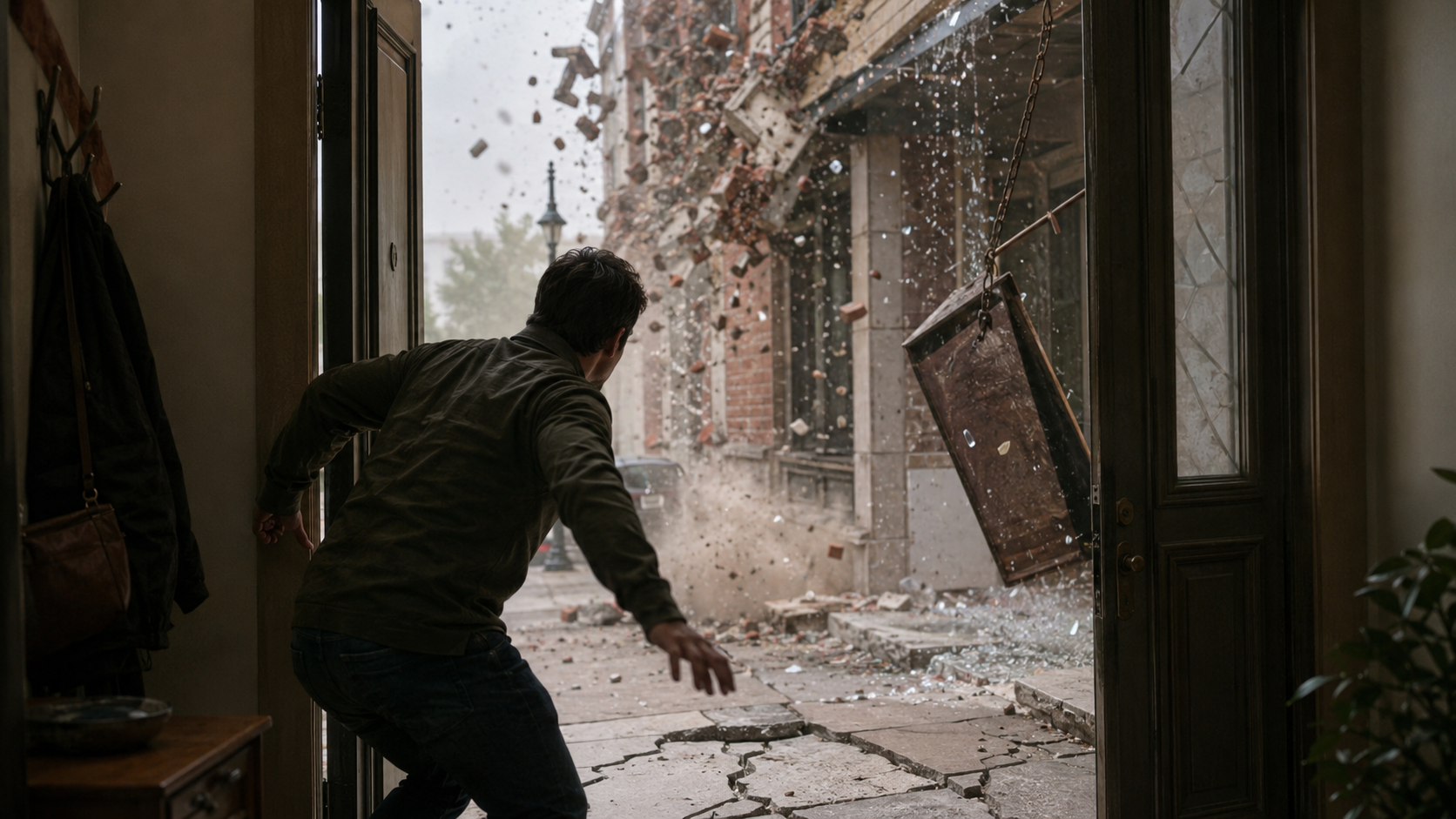
Earthquakes can loosen bricks, roof tiles, chimneys, glass, signs, balconies, exterior lights, gutters, and decorative building materials. These items may not fall during the main shaking. They may fall afterward, especially during aftershocks or when people begin moving around.
This is why, if you do leave, the goal is not to stand in the doorway or just outside the entrance. The goal is to move carefully to an open area away from buildings, power lines, trees, and other overhead hazards.
The Red Cross advises people outside during an earthquake to stay away from buildings, power lines, and trees. That advice is useful after the shaking too, especially if the area around the building has visible damage.
Running Can Make Injuries More Likely
After an earthquake, the floor may be covered with things you do not expect: broken glass, fallen picture frames, dishes, books, ceiling dust, spilled liquids, loose nails, cracked tiles, or furniture pieces.
Running through that kind of space increases the chance of slipping, falling, cutting your feet, or tripping over something. It is even worse if you are barefoot, which many people are at home during the evening or night.
A better first step is to breathe, look around, and protect yourself before moving. Put on sturdy shoes if they are nearby. Grab glasses if you need them to see. Watch for broken glass and sharp objects. If you have children, older adults, or pets with you, speak clearly and move together.
The goal is quick, but not reckless.
Elevators May Not Be Safe After Shaking
If you live or work in a multi-story building, your first thought may be to get downstairs as fast as possible. But elevators can be unreliable after an earthquake.
OSHA advises using stairs, not elevators, if you must leave a building after the shaking stops. It also says to look for falling debris because earthquakes can trigger fire alarms and sprinklers, and elevators may have been compromised.
Stairs are not automatically risk-free either. They can be cracked, cluttered, dark, or crowded. That is another reason not to run. Hold the handrail if it seems secure, watch your footing, and be alert for aftershocks.
In offices, schools, apartments, hotels, and shopping centers, follow posted emergency instructions and the direction of building staff when available.
Damaged Utilities Can Create Hidden Hazards
The danger after an earthquake is not only falling objects. Utilities can also be damaged.
The CDC notes that damaged buildings, power lines, and leaking gas and water lines are among the hazards people may face after an earthquake.
That means you should pay attention to warning signs before deciding how and when to move. Smell of gas, sparks, smoke, exposed wires, broken water lines, unusual sounds from the building, or visible structural damage are all reasons to treat the area seriously.
If there are signs of fire, gas, major structural damage, or instructions to evacuate, leaving may be the right choice. But even then, it should be done carefully. Do not stop near the building once outside. Move toward a safer open area if you can do so without crossing obvious hazards.
What to Do Immediately After the Shaking Stops
Take a Few Seconds to Look Around
Before moving, quickly scan your surroundings. Are heavy objects still shifting? Is glass on the floor? Is a bookshelf leaning? Are ceiling pieces loose? Are there sparks, smoke, or the smell of gas?
Those few seconds can help you avoid stepping directly into danger.
Check Yourself and Nearby People
Look for obvious injuries and make sure everyone can move. Keep this simple. You are not trying to conduct a full inspection in the middle of a stressful moment. You are checking whether someone needs help standing, seeing, walking, or getting out.
Put on Shoes If You Can
If sturdy shoes are within reach, put them on. After earthquakes, broken glass and sharp debris are common household hazards. Shoes can make a careful exit much safer.
Take Essentials Only If They Are Right There
This is not the time to pack a bag, search for valuables, or collect every device. If your phone, keys, flashlight, or emergency bag is right beside you, take it. If not, do not delay a needed exit just to find things.
When It Makes Sense to Leave the Building
You do not need to run outside after every small earthquake. In many situations, it may be safer to stay put briefly, assess conditions, and follow official guidance.
However, leaving may be appropriate if the building appears damaged, if you smell gas, if there is fire or smoke, if you hear cracking or shifting sounds, if authorities instruct evacuation, or if you are in a structure that does not feel safe.
Ready.gov says that if you are in a damaged building, you should go outside and quickly move away from the building. The important words are “damaged building” and “move away.” The goal is not panic. It is careful evacuation followed by distance from hazards.
Safer Ways to Exit After an Earthquake
If you decide you need to leave, move with awareness.
Use stairs instead of elevators. Watch for broken glass, loose ceiling materials, damaged railings, and fallen objects. Keep one hand free if possible so you can steady yourself. Avoid touching exposed wires, damaged electrical panels, or wet areas near electrical equipment.
Once outside, do not stand next to the building. Move away from exterior walls, windows, signs, chimneys, power lines, trees, and anything that could fall.
If you are in a neighborhood with narrow sidewalks and tall buildings, move toward the most open safe area available. That might be a parking lot, open field, wide street area away from traffic, or designated assembly point.
Common Mistakes People Make
Mistake 1: Standing in the Doorway
Many people still believe doorways are always the safest place during an earthquake. In modern homes, that is usually not the best advice. Doorways do not protect you from most falling objects, and after shaking stops, standing in a doorway can put you near swinging doors, broken glass, and falling exterior debris.
Mistake 2: Running Barefoot
At home, earthquakes often happen when people are barefoot. Running across broken glass or fallen objects can turn a scary moment into a painful one. Keep a pair of shoes near your bed if you live in an earthquake-prone area.
Mistake 3: Grabbing Too Many Belongings
Phones, wallets, laptops, documents, and bags feel important. But trying to collect them can delay you or send you into damaged rooms. Take only what is immediately available if you need to leave.
Mistake 4: Going Back Inside Too Soon
After leaving a damaged building, do not go back in just because the shaking stopped. The CDC advises not entering damaged buildings until local authorities say it is safe.
Mistake 5: Forgetting About Aftershocks
The first quake may not be the only one. Keep expecting aftershocks and stay alert even after you have moved to a safer location.
What If You Are in Bed When It Happens?
Nighttime earthquakes can be especially disorienting. You may wake up confused, in the dark, and unsure how strong the shaking was.
After the shaking stops, do not jump up and run across the room barefoot. Take a moment to locate shoes, glasses, and a flashlight if they are nearby. Watch for broken items on the floor.
If your home appears undamaged and there are no signs of gas, fire, or structural danger, you may not need to rush outside. If there is damage or you feel unsafe, leave carefully and move away from the building.
A simple bedside setup can help: shoes, flashlight, glasses, and a small emergency bag in the same place every night.
What If You Are in an Apartment or High-Rise?
In apartments and high-rises, rushing outside may mean entering stairwells with many other people. Crowding, darkness, alarms, debris, and aftershocks can make that risky.
After the shaking stops, check for immediate hazards. If evacuation is needed, use the stairs and avoid elevators. Move steadily, not frantically. Follow building emergency procedures if they are available.
Once outside, move away from the building. Tall buildings can shed glass, facade materials, signs, and other objects after shaking.
If you are not sure whether to evacuate and there is no visible damage or immediate danger, listen for official instructions from building management, emergency alerts, or local authorities.
What If You Are Already Outside?
If you are outside when the earthquake happens, stay outside and move away from buildings, trees, utility wires, and other things that could fall. The danger is often near building exteriors and overhead hazards.
After shaking stops, do not rush toward a building entrance to check on things unless it is safe and necessary. Exterior walls, windows, signs, and power lines may still be dangerous.
Find an open area and stay alert for aftershocks.
How to Prepare Before an Earthquake Happens
The best post-earthquake decisions are easier when you have prepared ahead of time.
Secure tall furniture to walls. Keep heavy items off high shelves. Know where your sturdy shoes are. Store a flashlight near your bed. Learn your building’s evacuation routes. Talk with family members about where to meet outside if evacuation is needed.
If you have children, practice simple language: “When shaking stops, we look, put on shoes, and move carefully.” Avoid making the plan scary. Make it familiar.
If you live in an earthquake-prone area, keep emergency supplies in a place you can reach without walking through the most cluttered or damage-prone parts of your home.
A Calm Rule to Remember
After an earthquake, do not think, “Run outside.”
Think: Pause. Look. Protect. Leave carefully if needed. Move away from hazards.
That simple order helps slow panic without wasting time. It reminds you that the shaking may be over, but broken glass, unstable objects, damaged utilities, aftershocks, and falling exterior debris may still be present.
Conclusion: Don’t Rush, Move Wisely
Running outside immediately after an earthquake feels natural, but it is not always the safest first move. The area between your room and the outdoors may contain broken glass, unstable furniture, damaged stairs, electrical hazards, or falling debris. Outside, building edges, power lines, trees, and loosened materials can also be dangerous.
The safer response is calm and practical. When the shaking stops, take a few seconds to look around. Put on shoes if you can. Check the people near you. Watch for signs of damage, gas, smoke, sparks, or shifting sounds. If the building seems damaged or you are told to evacuate, leave carefully using the stairs and move away from the structure.
Earthquake safety is not about freezing in place or panicking toward the exit. It is about making the next move with your eyes open. A careful exit, when needed, is much safer than a blind rush out the door.
Hi, I’m the creator and editor behind ZestyHabit. I research everyday safety, first aid, and practical wellness topics using official guidance and reliable public sources, then turn that information into clear, realistic steps for daily life.
My goal is to help readers make safer, better-informed choices at home and beyond.