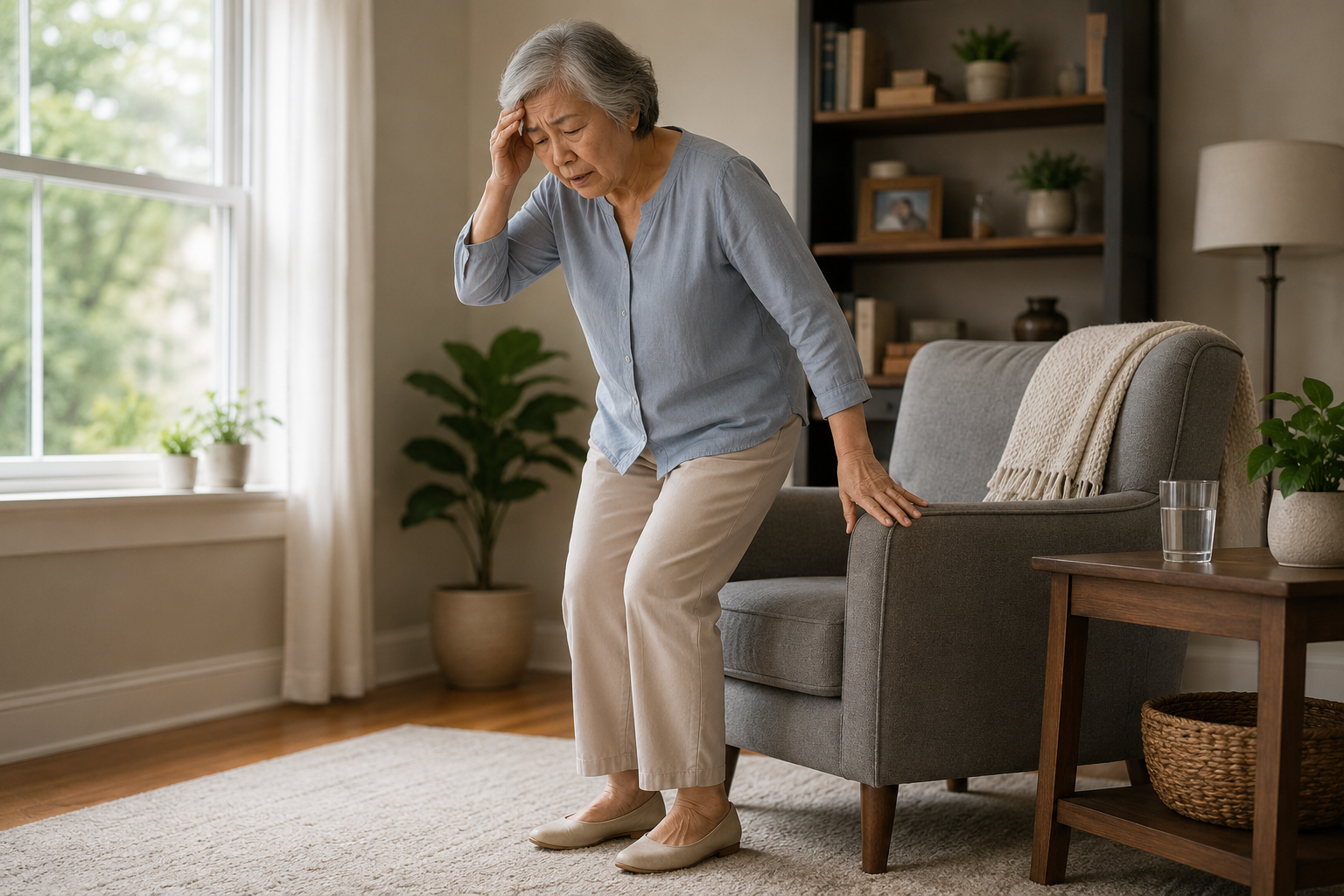
Why Older Adults May Feel Dizzy When Standing Up From a Chair
Minjin Park
·
Learn why older adults may feel dizzy when standing up from a chair, what everyday factors can make it worse, and simple safety habits that may help reduce fall risk at home.
Most of us stand up from a chair dozens of times a day without thinking about it. We get up from the couch to answer the door, rise from the dining table after dinner, or stand from a waiting room chair when our name is called.
But for many older adults, that simple movement can come with an unpleasant surprise: a wave of dizziness, lightheadedness, weakness, or “almost fainting” feeling.
It may last only a few seconds. Sometimes it passes quickly. Other times, it makes a person reach for the wall, grab the arm of a chair, or sit back down.
This matters because standing up is one of those everyday moments when falls can happen. A person may not feel “sick” in the usual sense. They may simply stand too quickly, feel briefly unsteady, and lose balance before they have time to react.
The good news is that many everyday habits can make this moment safer. Understanding why dizziness can happen is the first step.
The Simple Body Change That Happens When You Stand
When someone is sitting, blood is distributed through the body in one way. When they stand, gravity pulls more blood downward toward the legs and lower body.
In a healthy response, the body quickly adjusts. Blood vessels tighten a little, the heart rate may shift slightly, and blood flow to the brain stays steady.
That adjustment happens fast, often without us noticing.
In older adults, the adjustment may be slower or less smooth. For a few moments, the brain may receive a little less blood flow than usual. That can create a dizzy, lightheaded, weak, or foggy feeling.
This is often discussed as a “postural” or “orthostatic” blood pressure change. In plain English, it means the body may have trouble keeping blood pressure steady when moving from sitting or lying down to standing.
Not every dizzy spell is caused by blood pressure. Balance problems, medications, dehydration, inner ear issues, vision changes, and other health factors can also play a role. Still, posture-related dizziness is common enough that it is worth taking seriously, especially when falls are a concern.
Why Older Adults Are More Likely to Notice It
Aging does not mean dizziness is “normal” or something to ignore. But it does mean the body may have less margin for sudden changes.
Blood Pressure May Adjust More Slowly
With age, blood vessels may not tighten as quickly when a person stands. The nervous system signals that help regulate blood pressure may also respond more slowly.
That does not always cause a major problem. But it can make quick movements more noticeable.
For example, an older adult may feel fine while watching TV. Then they stand quickly to get the phone, take a few steps, and suddenly feel lightheaded. The issue may not be the walking itself. It may be that the body did not have enough time to adjust after standing.
Muscles May Offer Less Support
Leg and core muscles help with balance, posture, and steady movement. If someone has lost strength over time, standing up may require more effort.
That extra effort can make the transition from sitting to standing feel shaky. A person may push off the chair, lean forward, stand, and then need a moment to find balance.
This is especially noticeable after sitting for a long time, such as during a movie, church service, long car ride, or family meal.
Balance and Vision Can Change
Standing safely depends on more than blood pressure. The body uses information from the eyes, inner ear, feet, joints, and muscles to stay balanced.
If vision is poor, lighting is dim, shoes are unstable, or the floor has rugs and clutter, a brief dizzy moment becomes more risky.
A younger person may recover quickly from a wobble. An older adult may have less time and strength to catch themselves.
Common Everyday Triggers
Dizziness when standing often shows up during ordinary routines. That is why small changes around the home can make a real difference.
Getting Up Too Fast
This is one of the most common mistakes.
Someone may hear the doorbell, remember food on the stove, or feel rushed to answer the phone. They stand quickly and immediately start walking.
A safer habit is to pause before moving. Stand up, hold the chair or armrest, take a breath, and wait a few seconds before taking the first step.
That short pause can give the body time to catch up.
Sitting for a Long Time
The longer someone sits, the more noticeable standing can feel. Blood may pool more in the lower body, joints may feel stiff, and muscles may be slower to respond.
This can happen after watching TV, using the computer, riding in a car, sitting in a recliner, or waiting in a medical office.
A helpful habit is to move the feet and legs before standing. Ankle circles, gentle foot taps, or a few seated marches can wake up the lower body.
Not Drinking Enough Fluids
Many older adults drink less than they realize. Some avoid drinking too much because they do not want frequent bathroom trips. Others simply feel less thirsty.
When the body is low on fluids, dizziness can become more likely. Warm weather, sweating, illness, or not eating much can make this worse.
This does not mean everyone should suddenly drink large amounts of water. Some people have medical reasons to limit fluids. But for everyday safety, it is worth noticing whether dizziness happens more on days with less drinking, more heat, or more activity.
Medication Effects
Many common medications can affect dizziness, balance, alertness, or blood pressure. This may include some blood pressure medicines, sleep aids, anxiety medicines, pain medicines, diuretics, and other prescriptions or over-the-counter products.
The important point is not to stop medication on your own. Instead, pay attention to patterns.
Did dizziness begin after a new medication? Is it worse after the morning dose? Does it happen after taking medicine on an empty stomach? These are useful details to bring up with a healthcare professional or pharmacist.
Standing After Meals
Some older adults feel more lightheaded after eating, especially after a large meal. Digestion sends more blood flow toward the stomach and intestines. For some people, this can make standing feel more unsteady.
This may show up after dinner when someone gets up from the table to clear dishes. A practical safety habit is to rise slowly after meals and avoid rushing to carry plates, hot drinks, or heavy items right away.
Heat and Hot Showers
Heat can widen blood vessels and make lightheadedness more noticeable. A hot shower, warm bathroom, heated room, or summer day may increase the chance of feeling dizzy when standing.
This is one reason bathroom safety matters so much. Bathrooms often have hard floors, tight spaces, water, and fewer soft places to land.
Good lighting, grab bars, non-slip mats, and taking time before stepping out of the shower can all help.
What Dizziness May Feel Like
People describe this feeling in different ways.
Some say, “The room spins.” Others say, “I feel like I might black out.” Some feel weak in the legs, blurry in the eyes, foggy in the head, or suddenly tired.
A few common descriptions include:
“I need to hold onto something.”
“I stood up and had to sit right back down.”
“My legs felt like they disappeared for a second.”
“I felt fine sitting, but strange as soon as I got up.”
These details matter. “Dizzy” can mean different things to different people. A spinning feeling may point in one direction. A faint, lightheaded feeling may point in another. Keeping track of what it feels like and when it happens can help someone explain it more clearly.
Common Mistakes That Increase Fall Risk
Most people do not fall because of one single thing. It is often a combination of small risks.
A person stands too quickly. The room is dim. Their slippers are loose. A rug corner is curled. They are holding a mug of tea. They feel dizzy for two seconds.
That is enough.
Reaching for Moving Objects
When dizziness hits, many people reach for whatever is nearby. But not everything is safe to grab.
A rolling chair, lightweight side table, TV tray, laundry basket, or open door may move unexpectedly. That can make the fall risk worse.
Sturdy armrests, counters, grab bars, and stable furniture are safer support points.
Carrying Items Immediately
Standing up while holding a laundry basket, grocery bag, hot coffee, or dinner plate can make balance harder.
It also keeps the hands from being free to steady the body.
A safer routine is to stand first, pause, check balance, and then pick up the item.
Walking in Socks or Loose Slippers
Socks can slide. Loose slippers can catch on flooring. Backless shoes can shift under the foot.
For someone who already feels briefly unsteady when standing, footwear matters. Supportive, well-fitting shoes or slippers with non-slip soles can make standing and walking safer.
Ignoring Repeated Episodes
A one-time dizzy moment after standing too quickly may not seem like a big deal. But repeated dizziness should not be brushed off as “just aging.”
Patterns are important. If dizziness happens often, leads to near-falls, causes fainting, or appears suddenly without a clear reason, it deserves attention.
Simple Steps to Make Standing Up Safer
Small habits can make the chair-to-standing transition much safer.
Use the “Pause Before Walking” Rule
This is one of the easiest habits to teach and remember.
First, sit upright near the edge of the chair. Place both feet flat on the floor. Use the armrests or a stable surface. Stand slowly. Then pause.
Count a few seconds before taking the first step.
This pause may feel unnecessary at first, but it can prevent that risky moment of standing and moving at the same time.
Move the Legs Before Standing
Before getting up, try a few gentle movements:
Tap the feet.
Circle the ankles.
Straighten and bend the knees.
March lightly while seated.
These movements may help the body transition from resting to standing. They also give the person a moment to notice stiffness, weakness, or dizziness before they are fully upright.
Keep a Stable Support Nearby
A favorite chair should be easy to get out of. Ideally, it should have armrests, a firm seat, and a height that does not require deep bending or rocking forward.
Very low couches, soft recliners, and chairs without arms can make standing harder.
If an older adult often feels dizzy when rising from one particular chair, the chair itself may be part of the problem.
Improve the First Few Steps
The area around the chair matters.
Keep pathways clear. Remove loose cords. Make sure rugs lie flat or are secured. Place a lamp within easy reach. Avoid clutter near the feet.
The first few steps after standing are often the most important. Make that space as simple and predictable as possible.
Be Careful During Nighttime Bathroom Trips
Standing up from bed or a chair at night can be especially risky. The body is sleepy, the room is dark, and the person may feel rushed.
A nightlight can help. So can sitting on the edge of the bed before standing, keeping glasses nearby, and wearing stable footwear.
For people who wake often to use the bathroom, the path should be clear and familiar.
Notice Hydration and Meals
It may help to observe whether dizziness is worse on hot days, after skipping meals, after large meals, or when fluid intake has been low.
A simple daily routine can help: keep water nearby, include fluids with meals, and avoid waiting until feeling very thirsty.
Again, people with fluid restrictions or medical conditions should follow their own care instructions. The basic safety idea is to avoid accidentally going through the day under-hydrated.
When to Pay Closer Attention
Not every dizzy spell is an emergency, but some signs should not be ignored.
It is wise to seek medical guidance if dizziness is frequent, getting worse, causing falls or near-falls, or happening with fainting. It is also important to take sudden new symptoms seriously, especially if they come with chest discomfort, trouble speaking, new weakness, severe headache, shortness of breath, confusion, or injury from a fall.
For everyday tracking, write down a few details:
What time did it happen?
Was the person standing from a chair, bed, toilet, or car?
Had they eaten recently?
Had they taken medication recently?
Did they feel spinning, faint, weak, or unsteady?
How long did it last?
Did they fall or almost fall?
This kind of record can make conversations with a healthcare professional much clearer.
How Family Members Can Help Without Hovering
Older adults often do not want to feel watched or treated like children. That is understandable.
The goal is not to make someone afraid of standing up. The goal is to make the environment and routine safer.
Family members can help by making small changes without turning everything into a lecture. For example, replace a slippery rug, add a brighter lamp, choose a sturdier chair, or suggest standing slowly before carrying dishes.
It also helps to use respectful language.
Instead of saying, “You’re going to fall if you keep doing that,” try, “Let’s make this chair easier to get out of,” or “I noticed you felt dizzy yesterday. Maybe we can clear this area so it’s easier to stand.”
Safety works best when it feels supportive, not controlling.
Chair Safety Matters More Than People Think
A chair is not just a place to sit. For an older adult, it can be part of fall prevention.
A safer chair usually has a firm seat, armrests, stable legs, and a height that allows the feet to rest flat on the floor. It should not slide when the person pushes down on the arms. It should not be so soft that the body sinks deeply into it.
Recliners can be comfortable, but some make standing harder because they place the body in a low or awkward position. Dining chairs without arms can also be challenging.
The best chair is not always the prettiest one. It is the one a person can rise from steadily.
A Simple Standing Routine to Practice
Here is an easy routine many households can remember:
Sit tall.
Place both feet flat.
Move the ankles and legs a little.
Use armrests or a stable surface.
Stand slowly.
Pause before walking.
Take the first few steps carefully.
This routine takes only a few seconds. It does not require special equipment. It simply creates a safer transition.
The key is consistency. It works best when it becomes automatic, like checking both ways before crossing the street.
Final Thoughts: Slow Down the Riskiest Moment
Feeling dizzy when standing up from a chair can be unsettling, especially for older adults who want to stay independent. But it is also a useful signal. It tells us that the body may need a little more time, support, or attention during position changes.
The safest approach is usually simple: stand slowly, pause before walking, keep stable support nearby, reduce clutter, wear secure footwear, and notice patterns.
A few seconds can make a big difference.
Getting older should not mean being afraid to move around the house. With calm awareness and practical habits, everyday moments like standing from a chair can become safer, steadier, and more comfortable.
Hi, I’m the creator and editor behind ZestyHabit. I research everyday safety, first aid, and practical wellness topics using official guidance and reliable public sources, then turn that information into clear, realistic steps for daily life.
My goal is to help readers make safer, better-informed choices at home and beyond.