Why Worn-Out Windshield Wipers Make Rainy Driving More Dangerous
Minjin Park
·
Old windshield wipers can reduce visibility, leave streaks, and make rainy driving more stressful. Learn the warning signs, common mistakes, and simple habits that help you stay safer on wet roads.
Rainy driving is already harder than driving on a clear, dry day. The road reflects headlights, tires spray water into the air, and it can be harder to see lane markings, pedestrians, brake lights, and signs. In those moments, your windshield wipers become more important than many drivers realize.
A good set of wipers can clear your view in seconds. A worn-out set can do the opposite. Instead of helping, old wipers may leave streaks, smear water across the glass, chatter loudly, skip over sections, or create blurry patches right where you need to see.
The tricky part is that wipers usually wear out slowly. One day they are fine, and a few months later you find yourself squinting through a messy windshield during a heavy downpour. Many people do not notice the problem until they are already driving in bad weather.
When you drive, your eyes are constantly scanning. You watch the car ahead, the road surface, traffic lights, mirrors, crosswalks, parked cars, and anything that might move into your path.
Rain makes all of that harder.
Water on the windshield can bend light, blur shapes, and create glare from headlights and streetlights. If your wipers are not clearing the glass properly, your reaction time may be affected simply because you cannot see as clearly.
Clear visibility does not make rainy driving effortless, but it gives you a better chance to notice changes early.
Wipers help you read the road
Good wipers do more than remove raindrops. They help you see lane lines, puddles, traffic movement, and the distance between vehicles.
This matters in everyday situations. Maybe you are merging onto a highway in the rain. Maybe you are turning left at a busy intersection. Maybe you are driving through a neighborhood where kids, cyclists, or pedestrians may be hard to spot.
If your wipers leave cloudy streaks across the windshield, those small details become harder to read.
Bad wipers add stress
Driving in rain can already feel tense. When your wipers are making noise, smearing water, or skipping across the glass, you may become more distracted.
Instead of focusing fully on the road, you may start thinking, “Why can’t I see?” or “I really need to replace these.” That extra stress is not helpful when road conditions already require more attention.
How Wipers Wear Out Over Time
Rubber breaks down
Most wiper blades use a rubber edge that presses against the windshield. Over time, that rubber dries out, cracks, stiffens, or loses its clean edge.
Sunlight, heat, cold, road grime, pollen, dust, and ice can all speed up wear. Even if you do not drive often, wiper rubber can age while the car sits outside.
Once the blade edge is damaged, it cannot wipe smoothly across the glass.
Dirt and debris cause uneven wiping
Windshields collect more than rain. They gather dust, bug residue, tree sap, road film, pollen, and small bits of debris. When wipers move across a dirty windshield, the rubber can drag over rough particles.
This can damage the blade and cause streaking.
A dirty windshield also makes old wipers look even worse because the blade spreads grime instead of clearing it.
Weather changes affect the blade
Hot summers can dry out rubber. Freezing winter weather can make it stiff. Snow and ice can bend the blade frame or tear the rubber edge if the wipers are used while frozen to the glass.
That is why wipers often seem to fail after seasonal changes. A blade that was barely holding up in the fall may perform badly during winter rain or spring storms.
Why Old Wipers Make Rainy Driving Riskier
They leave streaks in your line of sight
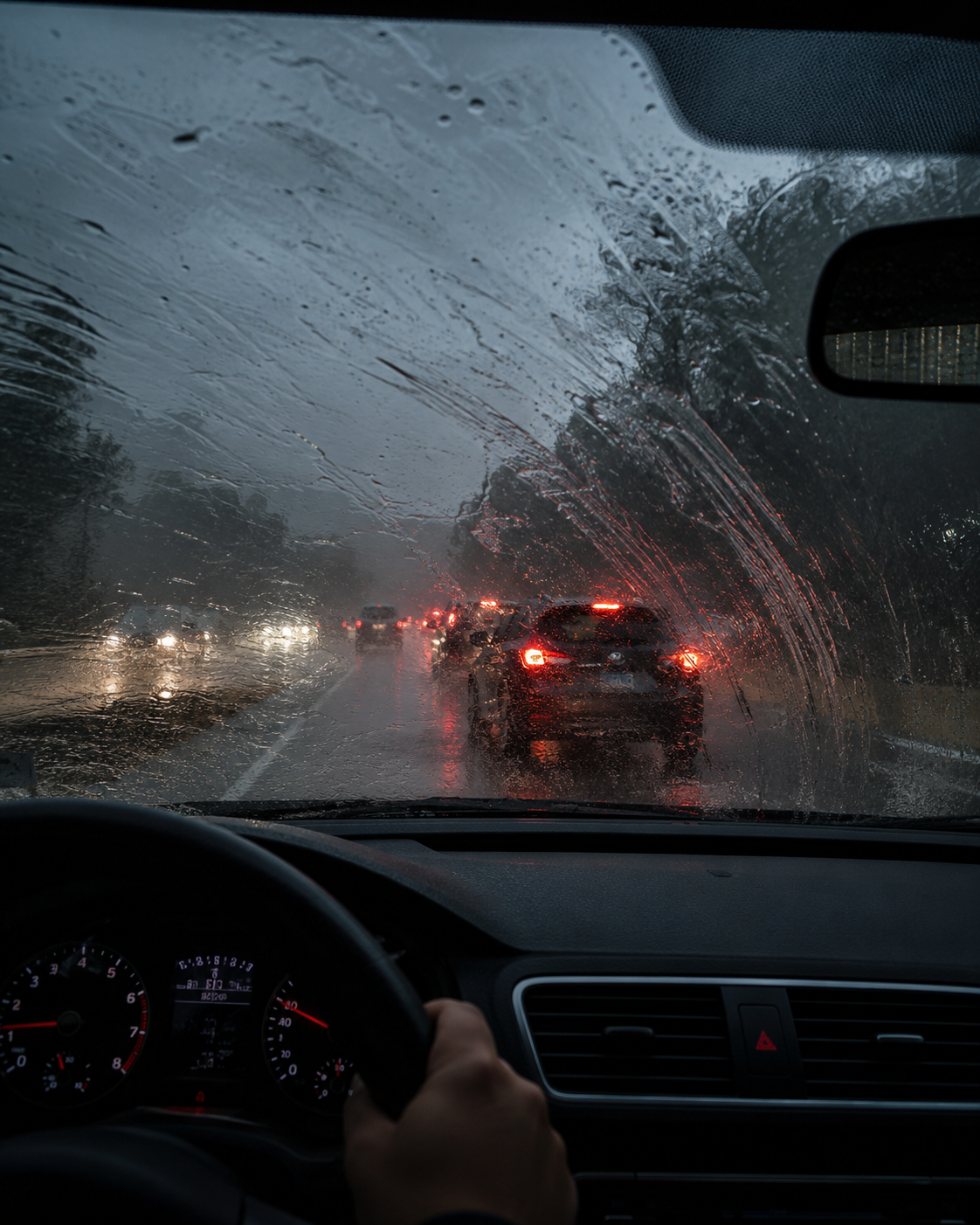
One of the most common problems with worn wipers is streaking. Instead of clearing water evenly, the blade leaves lines across the windshield.
A few light streaks may not seem serious on a quiet street. But at night, in traffic, or during heavy rain, those streaks can scatter light and make it harder to judge what is ahead.
Even one streak across the driver’s side can be distracting if it passes through your main viewing area.
They smear water instead of removing it
Old wipers may push water around without lifting it away cleanly. This creates a cloudy film that can make the windshield look foggy or greasy.
Smearing is especially frustrating because it may get worse with every wipe. The driver turns the wipers faster, but the view does not improve much.
This can happen when the rubber is worn, the windshield is dirty, or the blade is not making even contact with the glass.
They skip or chatter
If your wipers jump, skip, or chatter across the windshield, they are not maintaining smooth contact. This can leave patches of water behind.
Chattering also creates noise and distraction. It may happen when the rubber has hardened, the blade angle is off, or the windshield surface is dry, dirty, or uneven.
A wiper should glide smoothly. If it sounds like it is fighting the glass, something needs attention.
They may miss sections of the windshield
Sometimes a blade no longer presses evenly from end to end. You may see an untouched arc, a wet patch, or a section that never clears fully.
This can be caused by a bent wiper arm, worn blade frame, damaged rubber, or the wrong blade size.
Missing sections are easy to ignore until rain gets heavier. Then that small unclear area can become a real annoyance.
They make night driving worse
Rainy night driving is one of the times when old wipers are most noticeable. Headlights, taillights, streetlights, and reflections from wet pavement can all create glare.
If your wipers smear or streak, that glare spreads across the windshield. Instead of sharp points of light, you may see halos, lines, or blurry flashes.
This can make it harder to see lane markings, judge distance, or notice people crossing the road.
Warning Signs Your Wipers Need Attention
Streaks remain after each pass
If streaks appear every time the blade moves, the rubber may be worn or dirty. Try cleaning the blade and windshield first. If the streaks continue, replacement may be needed.
The wipers make squeaking or chattering sounds
Some light sound can happen when the glass is nearly dry, but loud squeaking, skipping, or repeated chattering during rain is a sign the blade is not working smoothly.
The rubber looks cracked or split
Lift the wiper gently and look at the rubber edge. If it is cracked, torn, uneven, or peeling away from the frame, it is time to replace it.
The blade leaves cloudy patches
Cloudy areas or water trails mean the blade is not making clean contact. This can be especially noticeable on the driver’s side.
You feel nervous driving in normal rain
Sometimes the best warning sign is your own comfort level. If ordinary rain suddenly feels harder to drive in because you cannot see well, check your wipers before assuming the weather is the only problem.
Common Mistakes Drivers Make With Wipers
Waiting until a storm to replace them
Many drivers only think about wipers during bad weather. Unfortunately, that is the worst time to discover they are worn out.
It is better to check them during dry weather, especially before rainy seasons, winter weather, or long road trips.
Using wipers on a dry windshield
Running wipers on dry glass can drag dirt across the windshield and wear the rubber faster. If the windshield is dusty or dirty, use washer fluid first.
Ignoring the rear wiper
If your vehicle has a rear wiper, it matters too. A dirty or streaky rear window can make backing up, changing lanes, and checking traffic more difficult.
Rear wipers often get forgotten because they are used less often.
Pulling frozen wipers loose
In cold weather, wipers can freeze to the windshield. Pulling them loose quickly may tear the rubber or damage the blade.
A safer habit is to warm the windshield gradually and clear ice carefully before using the wipers.
Buying the wrong size
Wiper blades come in different lengths and styles. The wrong size may not clear the windshield properly, or it may hit trim, overlap another blade, or leave gaps.
Check your owner’s manual, the blade packaging guide, or a reliable parts lookup before buying replacements.
Simple Ways to Keep Your Wipers Working Better
Clean your windshield regularly
A clean windshield helps your wipers do their job. Dirt, pollen, road film, and bug residue can all make wiping less effective.
Use proper glass cleaner or washer fluid, and wipe the glass with a clean cloth when needed. Do not forget the area where the wipers rest.
Wipe the blades gently
You can clean the rubber edge of the blades with a damp cloth. This removes dirt that may be causing streaks.
If the cloth comes away black, that is normal. Wiper blades collect grime over time. Cleaning them may improve performance, but it will not fix cracked or damaged rubber.
Replace blades before they fail completely
Many drivers replace wipers about once or twice a year, depending on climate, parking conditions, and use. Cars parked outside in sun, heat, snow, or heavy pollen may need replacement sooner.
The best schedule is the one based on performance. If the blades no longer clear the glass well, replace them.
Keep washer fluid filled
Washer fluid helps remove dirt and road spray. Driving with an empty washer fluid reservoir can make it harder to clear grime, especially after rain, snow, or highway driving.
Check the fluid regularly and use a type appropriate for your climate.
Inspect wipers during routine car checks
When you check tire pressure, oil level, or lights, take a quick look at the wipers too. It only takes a few seconds.
Look for cracked rubber, loose parts, bent arms, or uneven contact.
A Quick Wiper Safety Check Before Rainy Weather
Before a rainy day or long drive, spray washer fluid and run the wipers. Watch how they move across the windshield.
Do they clear the glass evenly? Do they leave streaks? Do they skip, squeak, or chatter? Is the driver’s side view clear? Does the rear wiper work if your car has one?
If anything looks off, take care of it before the weather gets worse.
This small check is especially helpful before commuting in a storm, driving at night, taking a road trip, or lending the car to a new driver.
Real-Life Examples
Imagine driving home after work in steady rain. Traffic is moving slowly, headlights are reflecting off the wet road, and your wipers leave a blurry streak right in front of your eyes. You can still drive, but you are squinting more than usual and feeling tense.
Or picture a parent taking kids to school on a rainy morning. The windshield fogs slightly, the wipers smear, and the drop-off line is full of cars and pedestrians. Clear wipers would make the situation calmer and easier to manage.
Another common example is highway driving. A truck passes, spraying water across your windshield. Good wipers clear it quickly. Worn-out wipers smear the spray and leave you with a cloudy view for several seconds.
These are ordinary driving moments. That is exactly why wipers matter.
When to Be Extra Careful
Worn wipers are especially noticeable in heavy rain, misty rain, night driving, highway spray, winter slush, and early morning glare.
You should also pay closer attention if your windshield already has dirt, oily film, or bug residue. Even new wipers may struggle on a very dirty windshield, and old wipers will struggle even more.
If visibility feels poor, slow down appropriately, increase following distance, and focus on getting to a safe place where you can address the issue. For general everyday safety, it is better to handle wiper problems before they become a problem on the road.
Building a Better Wiper Habit
One easy habit is to connect wiper checks to something you already do.
You can also keep an extra set of blades at home if you live somewhere with frequent rain or winter weather. That way, replacing them does not become a last-minute errand during bad weather.
For families with teen drivers, make wiper checks part of basic car care. New drivers may not realize how much worn blades can affect visibility until they experience it.
Conclusion
Old windshield wipers may seem like a small car maintenance issue, but they can make rainy driving noticeably more difficult. When wipers streak, smear, chatter, skip, or miss sections of glass, they reduce one of the most important things a driver needs: a clear view.
The safest approach is simple and practical. Pay attention to how your wipers perform before bad weather arrives. Clean the windshield and blades regularly. Replace worn blades before they fail completely. Keep washer fluid filled. Do a quick test before rainy commutes, night drives, or long trips.
Rainy roads already ask more from drivers. Good wipers help you meet those conditions with clearer vision and less stress.
A few minutes of maintenance can make a rainy drive feel calmer, safer, and much easier to handle.
Hi, I’m the creator and editor behind ZestyHabit. I research everyday safety, first aid, and practical wellness topics using official guidance and reliable public sources, then turn that information into clear, realistic steps for daily life.
My goal is to help readers make safer, better-informed choices at home and beyond.