
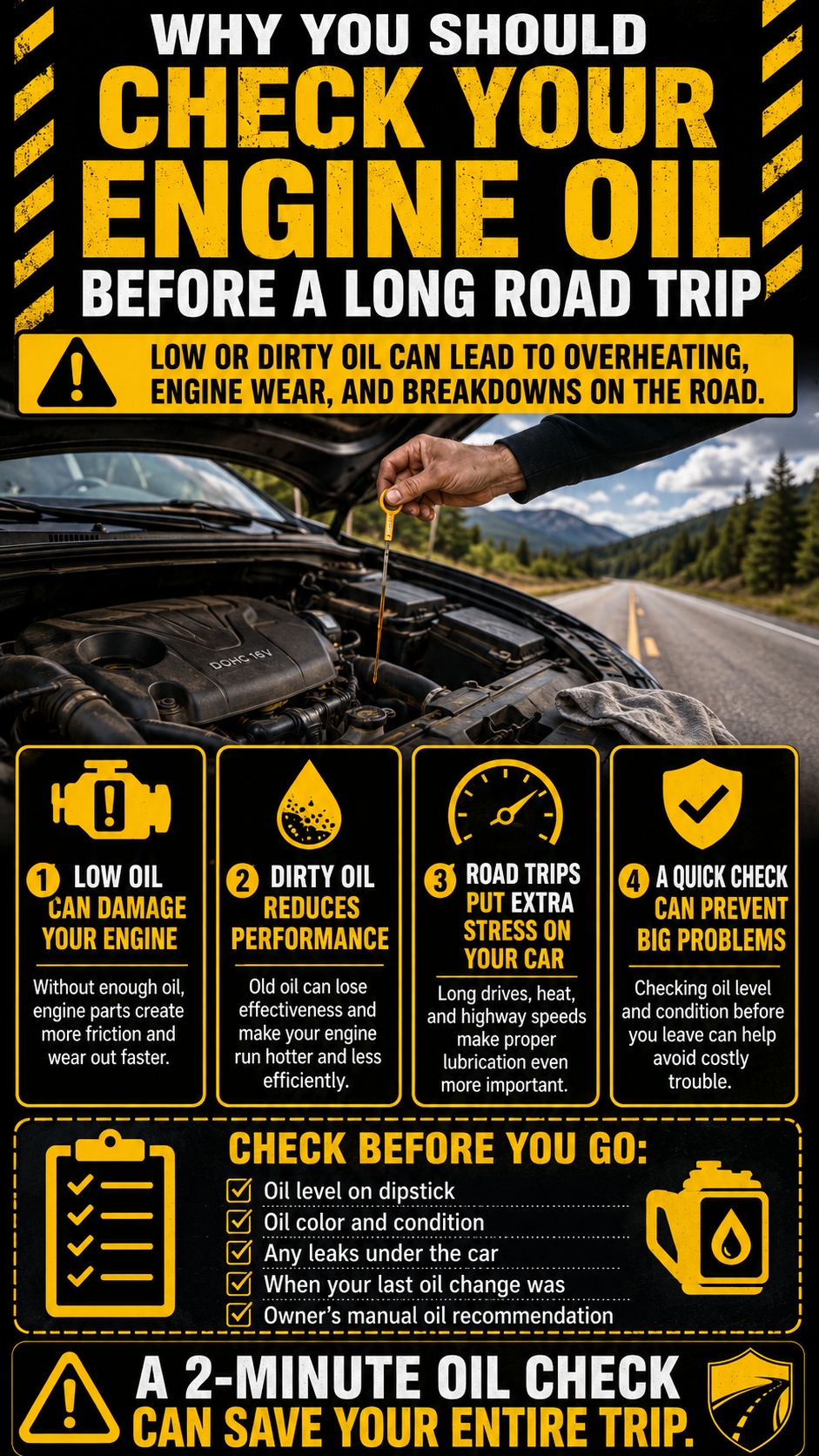

Before a long road trip, checking your engine oil can help prevent overheating, engine wear, roadside stress, and costly repairs. Learn simple oil-checking tips every driver should know.
Why Engine Oil Matters More on a Long Trip
A long road trip has a way of making a car feel dependable. You fill the gas tank, load the bags, set the GPS, and assume everything under the hood is ready to go. But one small fluid can make a big difference once you spend hours on the highway: engine oil.
Engine oil is easy to forget because it is not something you see while driving. It does not flash across your dashboard every day, and it does not need to be topped off as often as fuel. But inside the engine, oil is constantly working. It lubricates moving parts, helps reduce friction, carries heat away, and helps protect the engine from wear.
On a short drive around town, low or dirty oil may not seem obvious right away. On a long trip, the engine runs for hours at a steady pace, often through heat, hills, traffic, or heavy loads. That extra demand can turn a small maintenance issue into a stressful roadside problem.
Checking engine oil before a long trip is not complicated. It takes only a few minutes, and it can save you from worry, delays, and unnecessary repair costs.
What Engine Oil Actually Does
To understand why this check matters, it helps to know what oil does inside the engine.
It Reduces Friction
Your engine has many metal parts moving quickly. Without enough oil, those parts can rub together with too much friction. Friction creates heat and wear. Over time, that can damage engine components.
Oil creates a thin protective layer between moving parts. This helps them move smoothly instead of grinding against each other.
It Helps Control Heat
The cooling system handles much of the engine’s heat, but engine oil also helps. As oil circulates, it carries heat away from hot internal parts.
If the oil level is low or the oil is old and degraded, it may not protect the engine as well. During a long drive, especially in summer or stop-and-go traffic, that can matter.
It Helps Keep the Engine Cleaner
Engine oil also carries away tiny particles, residue, and byproducts from combustion. The oil filter catches much of this debris, while the oil keeps things moving through the system.
Over time, oil gets dirty and loses effectiveness. That is why regular oil changes are important, not just oil level checks.
It Helps Protect Against Wear
A healthy oil level and proper oil condition can help reduce long-term engine wear. You may not notice the benefit immediately, but your engine depends on it every mile.
A long road trip is not the time to discover that your oil is too low, too old, or leaking.
Why Long-Distance Driving Puts More Demand on Oil
Many people think highway driving is easier on a car than city driving. In some ways, that can be true. But long-distance travel still creates steady demand on your engine.
The Engine Runs for Hours
On a normal day, you may drive 10 or 20 minutes at a time. On a trip, the engine may run for three, five, or eight hours with only short breaks.
That means the oil has to keep circulating, lubricating, and protecting for a much longer stretch.
Heat Builds Over Time
Even if your temperature gauge looks normal, the engine is still operating under heat. Hot weather, mountain roads, traffic jams, and long climbs can add more stress.
If oil is low, the engine has less fluid available to help manage friction and heat.
Extra Cargo Adds Load
Road trips often mean extra weight. Suitcases, coolers, sports gear, camping equipment, pets, passengers, and roof boxes can all make the vehicle work harder.
A heavier vehicle may need more engine effort to accelerate, climb hills, and maintain highway speed. That makes oil protection even more important.
High Speeds Increase Demand
Driving at highway speeds for long periods keeps the engine working consistently. If oil is already low or overdue for a change, the problem may become more noticeable during extended driving.
That does not mean highway driving is bad. It just means your car should be prepared for it.
What Can Happen If You Do Not Check the Oil?
Skipping an oil check does not guarantee something will go wrong. Many people have driven long distances without checking and had no issue. But the problem is that you may not know whether your oil is low until symptoms appear.
And by then, the situation may already be stressful.
Low Oil Can Increase Engine Wear
If the oil level is too low, some parts may not receive enough lubrication. The engine may still run, but internal wear can increase.
This kind of damage may not be obvious right away. It can build gradually and lead to repairs later.
The Engine May Run Hotter
Low oil can make it harder for the engine to manage heat. This can be more noticeable during long drives, hot weather, mountain routes, or heavy traffic.
An overheating situation on a road trip can be inconvenient and expensive. It may also leave you stuck somewhere unfamiliar.
Warning Lights May Come On
Modern vehicles have warning lights for oil pressure or engine issues. But it is better not to wait for a warning light before checking.
An oil warning light can mean the situation needs immediate attention. It may not simply mean, “Add oil when you get a chance.” If you see an oil pressure warning, treat it seriously and follow your vehicle manual’s guidance.
You May End Up Delayed
Even if the issue is minor, dealing with it on the road can disrupt your trip. You may need to find a service station, buy the correct oil, wait for help, or adjust your route.
A quick check at home is much easier than figuring it out in a crowded gas station parking lot hours away.
Common Mistakes Drivers Make Before Road Trips
Engine oil checks are simple, but they are also easy to overlook. Here are some common mistakes.
Mistake 1: Assuming the Car Is Fine Because It Starts
A car can start normally even if the oil level is low. The engine may sound normal at first, especially if the level is not critically low.
Starting easily does not mean every fluid is ready for a long-distance drive.
Mistake 2: Relying Only on the Oil Change Sticker
The sticker on the windshield is helpful, but it does not tell the whole story. You may still have enough miles left before the next oil change, but the oil level could be low because of consumption or a small leak.
It is possible for a vehicle to be “not due yet” for an oil change and still need an oil level check.
Mistake 3: Checking Too Late
Some drivers remember oil right before leaving, when everyone is already in the car and the engine is hot. That makes the process rushed.
It is better to check the oil the day before your trip or at least when the car is parked safely and you have time to respond if something looks off.
Mistake 4: Using the Wrong Oil
Not all engine oil is the same. Vehicles require specific oil types and viscosity grades. Adding the wrong oil may not be ideal for your engine.
Before buying or adding oil, check your owner’s manual or the oil cap label. When in doubt, ask a qualified mechanic or auto parts professional for general guidance.
Mistake 5: Overfilling the Oil
Low oil is a problem, but too much oil can also cause issues. Overfilling may create pressure or foaming problems inside the engine.
If the dipstick shows the level is already in the correct range, do not keep adding oil “just to be safe.”
How to Check Engine Oil Before a Long Trip
The exact process can vary by vehicle, so your owner’s manual is the best guide. Still, the basic steps are similar for many cars.
Park on Level Ground
Park the vehicle on a flat surface. If the car is tilted, the dipstick reading may not be accurate.
A driveway, garage floor, or flat parking space works well.
Let the Engine Cool Briefly
Some vehicles are checked when the engine is warm, while others may recommend checking after the engine has been off for a few minutes. Follow your manual.
In general, avoid checking immediately after hard driving when parts are very hot. Give the oil time to settle so you get a clearer reading.
Pull Out the Dipstick
Open the hood and find the engine oil dipstick. It often has a yellow, orange, or clearly marked handle, but not always.
Pull it out carefully and wipe it clean with a paper towel or clean cloth.
Reinsert and Check Again
Put the dipstick fully back into the tube, then pull it out again. Look at where the oil level falls between the markings.
Most dipsticks have “low” and “full” marks, holes, notches, or a shaded area. The oil level should usually be between the minimum and maximum marks.
Look at the Oil Condition
Oil color alone is not a perfect test, but it can give clues. Fresh oil may look amber or light brown. Used oil often gets darker over time.
If the oil looks extremely dark, gritty, milky, foamy, or has a strong burnt smell, it may be worth getting the vehicle checked before a long trip.
Add Oil Only If Needed
If the oil level is low, add the correct oil slowly. Use a funnel if possible. Add a small amount, wait a moment, and check again.
Do not pour in a large amount without checking. It is easier to add more than to remove excess oil.
When Should You Change the Oil Before a Trip?
You may not always need an oil change before traveling. But there are times when it makes sense to handle it before you leave.
Your Oil Change Is Almost Due
If you are close to your recommended oil change interval and planning a long trip, it may be easier to change it before leaving instead of trying to schedule service during or immediately after the trip.
For example, if your oil change is due in 300 miles and your trip is 1,200 miles, do not ignore it. Taking care of it early can give you peace of mind.
You Do Not Know the Last Oil Change Date
If you recently bought a used car, borrowed a vehicle, or have not kept track of maintenance, check the oil and consider whether service is needed before a long drive.
Guessing is not ideal when you are about to depend on the car for hours.
You Notice Leaks or Burning Smells
Oil spots under the car, a burning oil smell, smoke, or repeated low oil readings are not things to brush off before a trip.
A small leak at home may become more concerning after hours of highway driving. Have it inspected if something seems unusual.
Your Driving Conditions Will Be Tough
If your trip includes mountains, desert heat, towing, heavy cargo, long rural stretches, or stop-and-go holiday traffic, your vehicle may work harder than usual. That makes basic maintenance checks more important.
Warning Signs Your Oil Needs Attention
Some signs are obvious. Others are easy to dismiss.
Oil Pressure Warning Light
An oil pressure warning light is one of the most important warnings on the dashboard. It may look like an oil can symbol. If it appears while driving, do not ignore it.
Check your owner’s manual for what your vehicle recommends. In many cases, continuing to drive with an oil pressure warning can risk engine damage.
Engine Sounds Louder Than Usual
If the engine starts ticking, knocking, or sounding rough, low oil or poor lubrication could be one possible cause. There are other causes too, but it is worth checking.
Burning Smell
A burning oil smell may mean oil is leaking onto a hot surface. It may also come from other issues, but it should not be ignored before a long trip.
Oil Spots Under the Car
A few drops may not always mean a major problem, but repeated oil spots deserve attention. Check where the spots appear and whether your oil level is dropping.
Smoke From the Exhaust or Engine Area
Smoke can have many causes, but it is not something to troubleshoot casually before a long trip. Have the vehicle checked if you notice smoke, especially with oil loss or unusual smells.
Other Fluids Worth Checking Before a Road Trip
Engine oil is important, but it is not the only fluid that matters. While you are already thinking about maintenance, it is smart to check a few other basics.
Coolant
Coolant helps regulate engine temperature. Low coolant can increase overheating risk, especially in hot weather or heavy traffic.
Only check coolant safely according to your vehicle manual. Never open a hot radiator cap.
Windshield Washer Fluid
This may seem minor until you hit bugs, road spray, dust, or winter slush. A full washer fluid reservoir helps you maintain visibility.
Brake Fluid
Brake fluid is part of the braking system. If it is low or there are warning signs, have the vehicle checked.
Transmission Fluid
Some vehicles allow easy checking, while others do not. If your vehicle has shifting issues, leaks, or service concerns, address them before traveling.
Power Steering Fluid
Some vehicles use electric power steering and do not have this fluid. Others do. If steering feels strange or noisy, check the manual or have it inspected.
Practical Road Trip Oil Tips
A few small habits can make long-distance travel smoother.
Keep a Quart of the Correct Oil in the Vehicle
For longer trips, especially in older vehicles, it can be helpful to carry a quart of the correct oil. Make sure it matches your vehicle’s requirements.
Also keep a small funnel, paper towels, and a disposable bag for cleanup.
Check Oil During Multi-Day Trips
For a very long trip, check the oil again every few days or every several fuel stops, especially if your vehicle is older or known to consume oil.
You do not need to obsess over it. Just make it part of your routine.
Pay Attention After Mountain Driving
Long climbs, high temperatures, and heavy loads can put more demand on the engine. If you stop after a challenging stretch, give the vehicle a quick visual check.
Keep Maintenance Records
A simple note in your phone can help. Record the date, mileage, oil type, and service location. This prevents guessing later.
Do Not Ignore Small Changes
A car often gives early hints before a bigger problem. A new smell, new noise, warning light, leak, or rough feeling is worth noticing.
A Simple Pre-Trip Engine Oil Checklist
Before your next long drive, use this quick checklist:
- Park on level ground
- Check the oil level with the dipstick
- Confirm the oil is between the low and full marks
- Look for unusual color, grit, foam, or burnt smell
- Check for oil spots under the vehicle
- Confirm your oil change is not overdue
- Carry the correct oil if the trip is long
- Know what your dashboard oil warning light looks like
- Get unusual leaks, smells, or noises checked before leaving
This list only takes a few minutes, but it can prevent a lot of stress.
Final Thoughts: A Few Minutes Can Save a Trip
Checking your engine oil before a long road trip is one of those simple habits that does not feel important until something goes wrong. Oil works quietly in the background, protecting your engine from friction, heat, and wear mile after mile.
Before you load the car and head out, take a few minutes to check the oil level, look for signs of leaks, and confirm your oil change schedule. Keep heavy travel conditions in mind, especially if you are driving in hot weather, carrying extra cargo, climbing hills, or traveling far from home.
You do not need to be a car expert to do this. You just need a basic routine and a little attention before the trip begins.
A clean windshield, full fuel tank, good tires, and healthy engine oil all support the same goal: helping you arrive with less stress and more confidence. For such a small task, checking your oil is one of the most practical ways to start a road trip on the right note.

Hi, I’m the creator and editor behind ZestyHabit. I research everyday safety, first aid, and practical wellness topics using official guidance and reliable public sources, then turn that information into clear, realistic steps for daily life.
My goal is to help readers make safer, better-informed choices at home and beyond.


