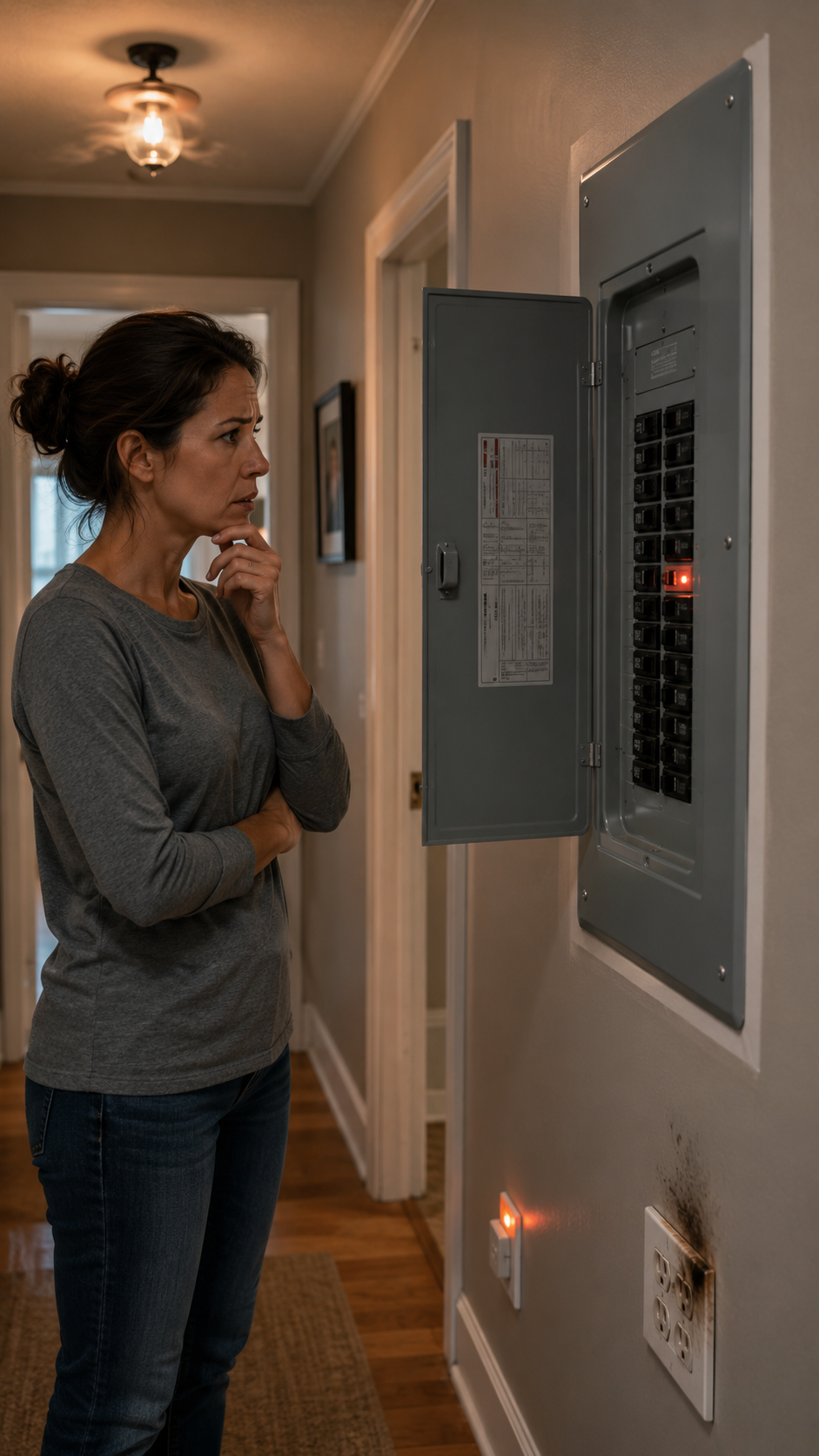
Why a Circuit Breaker That Keeps Tripping Should Never Be Ignored
Minjin Park
·
Learn why a frequently tripping circuit breaker may signal an overload, faulty appliance, wiring problem, or ground fault—and what homeowners can safely check.
A circuit breaker that trips once in a while may seem like a minor inconvenience. You reset it, the lights come back on, and life continues.
But when the same breaker keeps shutting off, it is usually trying to tell you something.
Circuit breakers are designed to interrupt electrical power when a circuit is carrying more current than it can safely handle or when another electrical problem is detected. In other words, a breaker that trips is often doing exactly what it was built to do: reducing the chance of overheated wiring, damaged equipment, electric shock, or fire.
That does not mean every trip is an emergency. Sometimes the cause is as simple as running a space heater and a hair dryer on the same circuit. Still, repeatedly resetting a breaker without finding the reason can allow a preventable problem to continue.
Understanding the common causes, warning signs, and safe next steps can help you respond calmly and responsibly.
Your home’s electrical panel distributes power through separate circuits. One circuit may serve bedroom outlets, another may power kitchen receptacles, and others may be dedicated to appliances such as an electric range, dryer, or air conditioner.
Each circuit has a breaker designed to shut off power when unsafe electrical conditions occur.
A breaker may trip because of:
An overloaded circuit
A short circuit
A ground fault
A malfunctioning appliance
Damaged wiring or connections
A worn or defective breaker
Some homes also have ground-fault circuit interrupter, or GFCI, protection. GFCI devices are commonly found in kitchens, bathrooms, garages, basements, laundry areas, and outdoor locations. They are designed to cut power quickly when electricity appears to be traveling along an unintended path.
Arc-fault circuit interrupter, or AFCI, protection may also be used to detect electrical arcing that can occur in damaged wiring or loose connections.
Although these protective devices work in different ways, frequent tripping should not simply be treated as an annoyance.
Why Repeated Tripping Matters
A breaker does not normally trip for no reason. It reacts to electrical conditions within the circuit.
Resetting it restores power, but it does not remove the underlying problem. If the cause is still present, the breaker may trip again immediately or after the circuit has been operating for a while.
Repeated trips can indicate that electrical wires are becoming overloaded, an appliance has an internal fault, moisture is reaching an electrical component, or a connection somewhere is loose or damaged.
Ignoring those conditions may allow heat or equipment damage to build over time.
The breaker itself may also wear out after years of use or repeated tripping. However, it is important not to assume the breaker is defective without checking the rest of the circuit. In many cases, the breaker is responding correctly to a problem elsewhere.
Common Reasons a Breaker Keeps Tripping
Several problems can cause frequent interruptions. Some are easy for a homeowner to recognize, while others require a licensed electrician to diagnose.
The Circuit Is Overloaded
An overload happens when too many electrical devices draw power from the same circuit at the same time.
This is especially common with appliances that produce heat, such as:
Imagine plugging a space heater into a bedroom outlet while a vacuum cleaner, computer, television, and several chargers are already operating on that circuit. The combined electrical demand may exceed the circuit’s safe capacity.
The breaker then trips to prevent the wiring from overheating.
An overload often has a recognizable pattern. The breaker may stay on when only one device is operating but trip when a second high-powered device is switched on.
A Faulty Appliance Is Connected
Sometimes the problem is not the amount of electricity being used but a defect inside one appliance.
A damaged power cord, failing motor, loose internal wire, or heating element problem can cause a breaker or GFCI device to trip. The appliance may work briefly before shutting the circuit down, or the breaker may trip as soon as the appliance is plugged in or turned on.
Common examples include an aging washing machine that trips during the spin cycle, a toaster that shuts off the kitchen circuit, or an outdoor power tool that trips a GFCI outlet.
If the breaker operates normally after a particular device is unplugged, that appliance may need inspection or replacement.
Do not continue using equipment with a cracked plug, frayed cord, scorch mark, burning odor, or unusual electrical behavior.
There Is a Short Circuit
A short circuit occurs when electrical current takes an unintended, low-resistance path. This can produce a sudden and very high flow of current.
The breaker may trip immediately when a switch is turned on, an appliance is plugged in, or the breaker is reset.
A short circuit can result from damaged wire insulation, loose connections, faulty switches, damaged outlets, or internal appliance problems.
Because short circuits can generate significant heat, they should be taken seriously. Repeatedly resetting the breaker is not a safe way to test whether the problem has disappeared.
A Ground Fault Is Occurring
A ground fault happens when electrical current escapes its intended path and travels toward a grounded surface. Moisture often plays a role, which is why GFCI protection is commonly used around sinks, outdoor outlets, garages, and other damp locations.
For example, an outdoor extension cord may become wet, a bathroom appliance may have a damaged cord, or moisture may enter an exterior outlet box.
A GFCI receptacle may trip even when the circuit breaker in the main panel remains on. In other cases, a GFCI breaker located inside the panel may trip.
If a GFCI continues to trip after connected equipment has been unplugged, the outlet, wiring, or circuit should be professionally checked.
Wiring or Connections May Be Damaged
Loose, deteriorated, or improperly installed wiring can cause intermittent breaker trips.
These problems may be hidden behind outlets, switches, light fixtures, walls, or the electrical panel. They can be difficult to diagnose because the breaker may trip only under certain conditions.
For example, a circuit may work normally most of the day but trip when a particular light is switched on. An outlet may feel warm, produce a faint buzzing sound, or work only when a plug is held at a certain angle.
Rodents, remodeling work, age, moisture, and physical damage can all affect household wiring.
Because electrical connections are not visible from the outside, a licensed electrician may need to test the circuit and inspect its components.
The Breaker Itself May Be Worn
Circuit breakers can eventually fail. A worn breaker may trip too easily, feel loose, refuse to reset, or fail to remain in the on position.
However, replacing a breaker is not a do-it-yourself troubleshooting step for most homeowners. The panel contains energized components that may remain dangerous even when the main breaker is turned off.
An electrician should determine whether the breaker is defective or whether it is correctly responding to another fault.
Warning Signs That Deserve Prompt Attention
A breaker that trips repeatedly is already a warning sign, but certain symptoms make professional inspection more important.
Watch for:
A burning or hot-plastic smell
Smoke, sparks, or visible scorching
Buzzing, crackling, or sizzling sounds
A warm or discolored outlet or switch
Flickering lights before the breaker trips
A breaker that trips immediately after resetting
A breaker or panel that feels unusually hot
Tingling or mild shocks from an appliance
Power loss affecting only part of a circuit
Evidence of water near an outlet or electrical panel
Do not touch outlets, switches, appliances, or panel components that appear burned, wet, melted, or damaged.
If there is smoke, active sparking, or a strong burning smell, move away from the area and contact appropriate emergency or electrical services from a safe location.
Safe Steps You Can Take
Homeowners can perform a few basic checks without opening electrical boxes or removing the panel cover.
Turn Off and Unplug Connected Devices
When a breaker trips, turn off and unplug appliances or electronics connected to the affected circuit.
Pay special attention to high-powered equipment such as heaters, hair dryers, cooking appliances, air conditioners, and power tools.
Reducing the electrical load can help determine whether the circuit was simply overloaded.
Reset the Breaker Once
A tripped breaker may rest in a middle position rather than appearing fully off.
With dry hands and while standing on a dry surface, move the breaker completely to the off position and then back to the on position.
Do not repeatedly force it to stay on.
If the breaker trips again immediately, leave it off and arrange for inspection. The circuit may have a short, ground fault, wiring problem, or defective device.
Reconnect Devices One at a Time
If the breaker remains on, reconnect devices gradually.
Wait between each device so you can observe what happens. If the breaker trips when one appliance is connected or started, stop using that appliance until it has been checked.
This method may help identify a faulty device, but it should not be used when there are signs of heat, smoke, damaged wiring, moisture, or burning.
Notice When the Trip Happens
The timing of the trip can provide useful information.
Ask yourself:
Did it trip when a specific appliance turned on?
Did several high-powered devices operate at once?
Did it happen during rain or after water exposure?
Does it occur only when a light switch is used?
Does it happen at the same time each day?
Did the problem begin after new equipment was installed?
Write down what was running and where it was connected. This information can help an electrician diagnose the problem more efficiently.
Check GFCI Outlets
One GFCI outlet may protect several other outlets downstream. If power has disappeared from bathroom, garage, kitchen, basement, or exterior receptacles, look for a nearby GFCI outlet with “TEST” and “RESET” buttons.
Unplug connected equipment before pressing reset.
If the GFCI will not reset or trips again, do not keep pressing the button. Leave the connected equipment unplugged and have the issue checked.
Common Mistakes to Avoid
People sometimes try to solve repeated trips in ways that create additional risks.
Resetting the Breaker Again and Again
A breaker that trips repeatedly is not being stubborn. It may be interrupting a hazardous electrical condition.
Constantly resetting it can re-energize damaged wiring or faulty equipment again and again. Reset it once after reducing the load. If it trips again, stop and investigate the cause.
Replacing the Breaker With a Larger One
Installing a higher-amperage breaker is not a safe way to stop nuisance trips.
Electrical wires are designed to carry a limited amount of current. A larger breaker may allow more electricity to flow than the wiring can safely handle, increasing the chance of overheating.
Circuit size must match the wire size, installation, and intended load. Changes should be made only after proper evaluation by a qualified professional.
Relying Too Heavily on Extension Cords
Extension cords do not add electrical capacity to a circuit. They simply allow devices to reach the same circuit from farther away.
Space heaters, portable air conditioners, and other major loads should generally be connected according to the manufacturer’s instructions rather than through an undersized extension cord.
Ignoring Warm Outlets or Strange Smells
A warm outlet, discoloration, buzzing sound, or burning smell is not normal.
Unplugging the device may reduce the immediate load, but the outlet or wiring may still require inspection. Avoid using that location until the source of the heat or odor has been identified.
Opening the Electrical Panel
The outer breaker switches are designed to be operated by users. The components behind the panel cover are not.
Removing the cover can expose live electrical parts. Even when some power has been switched off, dangerous voltage may still be present.
Troubleshooting internal panel wiring, replacing breakers, and tightening electrical connections should be left to a licensed electrician.
How to Reduce Future Breaker Trips
A few practical habits can reduce overloads and help you notice problems early.
Spread Out High-Powered Appliances
Avoid using several heating or motor-driven appliances on the same circuit at the same time.
For example, do not run a toaster oven, microwave, electric kettle, and coffee maker together if they share one kitchen circuit. In a bedroom, avoid operating a space heater alongside a vacuum or portable air conditioner on the same circuit.
Use Appliances as Directed
Follow the manufacturer’s instructions for plugging in and operating appliances.
Replace damaged cords and plugs rather than wrapping them with tape and continuing to use them. Stop using any appliance that smells hot, sparks, shocks, or repeatedly trips a protective device.
Keep Electrical Areas Dry
Use outdoor-rated equipment outside and protect plugs and connections from rain, puddles, sprinklers, and condensation.
Power strips provide additional receptacles, not unlimited electrical capacity.
Use them mainly for lower-powered electronics when appropriate. Do not connect multiple power strips together or use ordinary strips for appliances that draw substantial power unless the product is specifically designed and rated for that use.
Schedule an Inspection When the Pattern Continues
A professional inspection is sensible when:
The same breaker trips repeatedly
The cause is not obvious
The breaker trips with little or no load
The home has older wiring
Outlets are warm, loose, or discolored
Lights flicker or dim unexpectedly
The problem began after remodeling or appliance installation
A GFCI or AFCI device will not reset
An electrician can measure circuit loads, test wiring, check connections, evaluate the breaker, and determine whether the circuit is adequate for the equipment being used.
Do Not Treat the Breaker as the Problem
It is easy to become frustrated when a breaker interrupts dinner, shuts down a computer, or stops an appliance midway through a cycle.
But the breaker is usually not the enemy. It is a protective device responding to something that may need attention.
Start by unplugging devices, reducing the load, and resetting the breaker only once. Notice whether a particular appliance or combination of devices triggers the problem. Avoid opening the panel or trying to defeat the breaker with a larger replacement.
If the circuit continues to trip, smells hot, makes unusual sounds, or shows signs of damage, stop using it and arrange for professional inspection.
A frequently tripping breaker does not always mean a major repair is needed. Sometimes a small change in appliance use solves the problem. The important thing is to find the cause rather than repeatedly restoring power and hoping it goes away.
Hi, I’m the creator and editor behind ZestyHabit. I research everyday safety, first aid, and practical wellness topics using official guidance and reliable public sources, then turn that information into clear, realistic steps for daily life.
My goal is to help readers make safer, better-informed choices at home and beyond.