Why Window Screens Alone Can’t Prevent Cats From Falling
Minjin Park
·
Learn why ordinary window screens are not strong enough to prevent cat falls and how to make open windows safer with secure guards, inspections, and simple household habits.
Opening a window on a mild day can make a home feel instantly better. Fresh air comes in, indoor smells clear out, and a curious cat gets a front-row seat to birds, squirrels, and neighborhood activity.
The problem is that many pet owners assume the window screen is also a safety barrier.
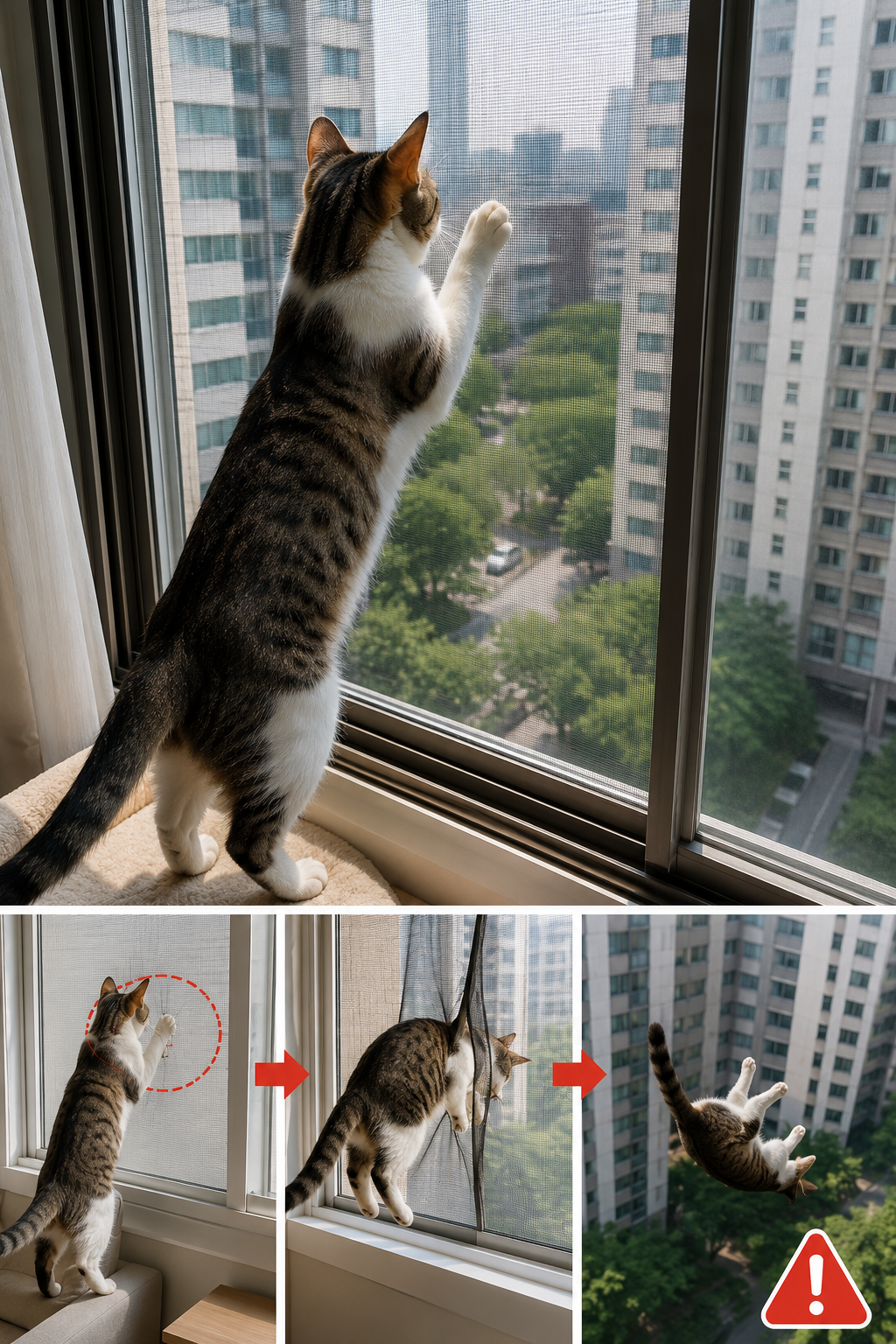
Most ordinary screens are designed to keep insects outside. They are not designed to hold the weight of a cat that jumps, climbs, pushes, or suddenly lunges toward something moving beyond the glass.
A screen may look secure while resting normally inside its frame. But one loose corner, bent tab, torn section, or forceful impact may be enough for it to pop outward.
Cats can fall from apartment windows, upper-floor rooms, balconies, and even relatively low openings. A cat does not have to be reckless or poorly behaved. A bird flying past, a loud noise, a slippery windowsill, or a moment of playful excitement can turn a familiar window into a hazard.
The safest approach is to treat the screen as insect protection—not fall protection—and add a stronger barrier whenever a cat can reach an open window.
Window screens often feel sturdier than they really are.
The mesh may appear tight, and the frame may fit neatly into the window. Under normal conditions, nothing moves. That creates the impression that the screen could stop a cat.
However, most residential screens are built to resist light pressure from wind and insects, not the concentrated force of an animal.
Screens Can Pop Out of Their Frames
Many screens are held in place by small clips, springs, tabs, or simple pressure against the window frame.
These systems may work well when nothing touches the screen. A cat pressing both front paws against it can create much more force than the screen was intended to handle.
The entire frame may bend or shift. A corner may release first, followed by the rest of the screen.
This is especially common with older windows, removable screens, or frames that no longer fit tightly.
Mesh Can Tear or Pull Loose
Screen material becomes weaker over time.
Sun exposure, temperature changes, cleaning, pet claws, and general wear can make mesh brittle. A tiny tear may slowly grow, or the material may separate from the rubber spline that holds it inside the frame.
Cats may also scratch at the screen after noticing insects or birds outside. Even if they do not create a visible hole immediately, repeated clawing can weaken the material.
A Cat’s Weight Is Concentrated in a Small Area
A screen may survive gentle pressure from a hand but fail when a cat jumps against it.
The force is concentrated through the paws rather than spread evenly across the surface. If the cat is running, climbing, or leaping, the impact can be much greater than its body weight alone would suggest.
A larger cat may create more pressure, but small cats and kittens can also dislodge lightweight screens.
Cats are agile and usually aware of their surroundings, but they are not perfect. Their balance, reflexes, and depth perception do not make every open window safe.
Prey Drive Can Override Caution
A cat sitting calmly on a windowsill may suddenly see a bird, moth, leaf, or insect.
The movement can trigger an automatic chase response. Instead of carefully considering the height, the cat may jump or swat toward the screen.
This reaction can happen in a fraction of a second, even in cats that have ignored the same window for years.
Startle Reactions Are Unpredictable
A slammed door, barking dog, dropped object, car horn, thunderclap, or another cat entering the room can cause a sudden movement.
A startled cat may leap sideways or backward without checking where its paws will land.
A narrow windowsill provides little room for error. If the window is open, the screen may become the only thing between the cat and the outside.
Slips Can Happen
Windowsills may be dusty, narrow, angled, or crowded with plants and decorations.
A cat can lose its footing while turning around, grooming, stretching, or trying to climb. Older cats, kittens, and cats with mobility or vision problems may be particularly vulnerable, but any cat can misstep.
Common Situations That Lead to Window Falls
These incidents often happen during normal household routines rather than obvious emergencies.
The Window Is Opened “Just a Few Inches”
A small opening may seem too narrow for a cat.
Cats can fit through surprisingly tight spaces, especially when they can push with their head or shoulders. An opening may also become wider if the window slides or if the cat leans against it.
Do not judge safety only by looking at the width from an adult’s standing height.
The cat, attracted by the unfamiliar opening and outside smells, jumps onto the sill. A few minutes can be enough for an accident.
Keep cats in another room whenever screens are removed or windows are being repaired.
Furniture Gives the Cat Easy Access
A couch, bed, desk, shelf, or cat tree placed below a window creates a convenient launch point.
This is not always a problem when the window is closed and secure. But when it is open, the cat can reach the screen at speed rather than approaching it cautiously.
Furniture placement matters, especially in bedrooms and living rooms where windows are opened frequently.
The Screen Looks Secure but Is Not Latched
Some screens appear to be in place even when one side is not fully seated.
This may happen after cleaning, seasonal removal, painting, or window maintenance. A cat pushing against the loose section can dislodge it immediately.
Always test the frame after reinstalling a screen.
A Child or Guest Opens the Window
Family members may understand the household’s pet rules, but visitors may not.
A guest may open a bedroom window for air. A child may lift a window and assume the screen will protect the cat. Maintenance workers may also leave windows open while completing repairs.
Clear communication is an important part of prevention.
Why Lower Floors Are Not Automatically Safe
High-rise apartments deserve special attention, but falls can also happen from lower windows.
A first- or second-floor fall may still lead to injury, particularly if the cat lands on concrete, railings, stairs, landscaping equipment, or other hard objects.
A cat that escapes through a ground-floor window may also run into traffic, become lost, encounter another animal, or hide nearby.
The goal is not only to prevent long falls. It is to prevent uncontrolled access to the outdoors.
Warning Signs a Screen May Not Be Secure
Do not wait until a screen visibly collapses.
Regularly check for:
Corners that lift when pressed
Loose or missing clips
Bent metal or plastic frames
Torn, stretched, or sagging mesh
Gaps between the screen and window frame
Rubber spline pulling away from the edge
Rust, brittleness, or sun damage
Claw marks
Screens that rattle in the wind
Windows that do not lock in place
A screen that can be pushed outward with light hand pressure
Test gently rather than applying full force. The purpose is to identify looseness, not prove how much pressure the screen can survive.
Replace damaged components promptly. Tape and temporary patches may stop insects, but they do not turn the screen into a reliable pet barrier.
Common Safety Mistakes
Many window hazards come from small assumptions.
Assuming “Pet-Resistant” Mesh Is Fall Protection
Pet-resistant screen material is often thicker and better able to withstand scratching.
That can make it useful in homes with cats, but stronger mesh does not guarantee that the screen frame will stay attached to the window.
The entire system matters: mesh, frame, clips, fasteners, installation, and window structure.
A strong mesh panel inside a weak removable frame can still pop out.
Using Child Window Guards Without Checking the Spacing
Some window guards are designed to reduce falls involving children. Depending on their design, the gaps may still be wide enough for a cat to squeeze through.
Cats can fit through spaces that look surprisingly narrow.
Choose a barrier specifically suitable for pets or add appropriately sized mesh to prevent access through the openings.
Relying on Training Alone
Cats can learn boundaries, and some respond well to being redirected away from windows.
Training is still not a physical safety barrier.
A cat that has followed the rule for months may react differently to a bird, insect, sudden noise, or unfamiliar guest. Environmental protection should remain in place even for a well-trained cat.
Securing Only the Favorite Window
Cats may have one preferred viewing spot, but they explore other windows too.
A bedroom window that is usually closed may become a risk during spring cleaning. A rarely used guest room may be opened when someone stays overnight.
Inspect every accessible window, not only the one beside the cat tree.
Leaving Tilted Windows Unprotected
Tilt-and-turn windows can create a narrow V-shaped opening when tilted inward.
A cat may try to climb through and become trapped between the window and frame. This can lead to panic and injury.
Use appropriate guards or keep these windows closed when the cat has access to the room.
Better Ways to Secure Open Windows
The right solution depends on the window style, whether you rent or own, and how often the window is opened.
Install a Secure Metal Guard
A sturdy metal window guard can provide a stronger physical barrier than insect screening alone.
Choose one with spacing narrow enough that the cat cannot push its head or body through. The guard should be firmly attached according to the product instructions.
In rental housing, ask the landlord or property manager before drilling into frames or walls.
Use a Reinforced Pet-Safety Screen
Some systems are designed specifically to resist pet pressure and include stronger mesh, frames, and attachment hardware.
Look beyond terms such as “pet-resistant.” Confirm that the entire product is intended to prevent pets from pushing through, not merely resist claw damage.
Installation quality is just as important as the product itself.
Add Window Opening Restrictors
A restrictor limits how far the window can open.
This can be useful when you want ventilation without creating a cat-sized gap. The opening should be narrow enough that the cat cannot fit its head through or widen it with pressure.
Make sure the device cannot be easily knocked loose or moved by the cat.
Create a Secure Interior Barrier
In some homes, an interior mesh panel or framed barrier can be installed inside the window area.
Because it is secured independently from the insect screen, it can provide an additional layer of protection.
This option can work well for windows with removable exterior screens or unusual frames.
Consider a Fully Enclosed Window Perch
Cats enjoy fresh air and outdoor sights.
A secure window box, enclosed “catio,” or professionally installed pet enclosure can provide that experience without relying on a standard screen.
Inspect enclosures regularly for loose joints, damaged mesh, and gaps.
A Simple Window Safety Check
You can review most rooms in a few minutes.
Step 1: Identify Every Accessible Window
Walk through the home and note which windows the cat can reach.
Sliding, double-hung, casement, and tilt windows create different hazards.
Open each window only while the cat is safely in another room. Check whether the screen moves, the window stays in position, and the opening can be limited.
Step 3: Inspect the Screen and Frame
Look for damage, gaps, loose hardware, and weak corners.
Do this at the start of warm weather and after storms, repairs, cleaning, or moving furniture.
Step 4: Add a Separate Safety Barrier
Use an appropriate guard, restrictor, reinforced pet screen, or secure enclosure.
Do not rely on loose mesh, adhesive hooks, ordinary tape, or improvised cardboard panels.
Step 5: Review Household Rules
Make sure everyone knows which windows may be opened and how far.
Tell guests, children, pet sitters, cleaners, and maintenance workers that a cat lives in the home.
What to Do If a Cat Falls
If a cat falls from a window, keep the area as calm as possible.
A frightened or injured cat may hide, run, scratch, or appear normal despite being hurt. Approach carefully and contact a veterinarian promptly for guidance.
Do not assume the cat is fine simply because it stands up or walks away. Some injuries may not be immediately obvious.
When it is safe to do so, close and secure the window so another pet cannot follow or the cat cannot fall again.
Fresh Air Without the False Sense of Security
Window screens are useful household features, but their main purpose is to keep insects out.
They are not dependable fall-prevention barriers for cats.
A cat may push through a loose frame, tear weakened mesh, slip from a sill, or suddenly lunge toward a bird. Even a careful indoor cat can react unpredictably when excited or startled.
Inspect every screen, limit window openings, move launch-friendly furniture when necessary, and add a securely installed guard or pet-specific barrier. Pay particular attention to upper floors, tilted windows, older frames, and rooms that visitors may use.
You do not need to keep every window permanently closed.
With the right hardware and a few consistent household rules, your cat can enjoy sunlight, breezes, and outdoor views without depending on a lightweight insect screen to keep them safe.
Hi, I’m the creator and editor behind ZestyHabit. I research everyday safety, first aid, and practical wellness topics using official guidance and reliable public sources, then turn that information into clear, realistic steps for daily life.
My goal is to help readers make safer, better-informed choices at home and beyond.