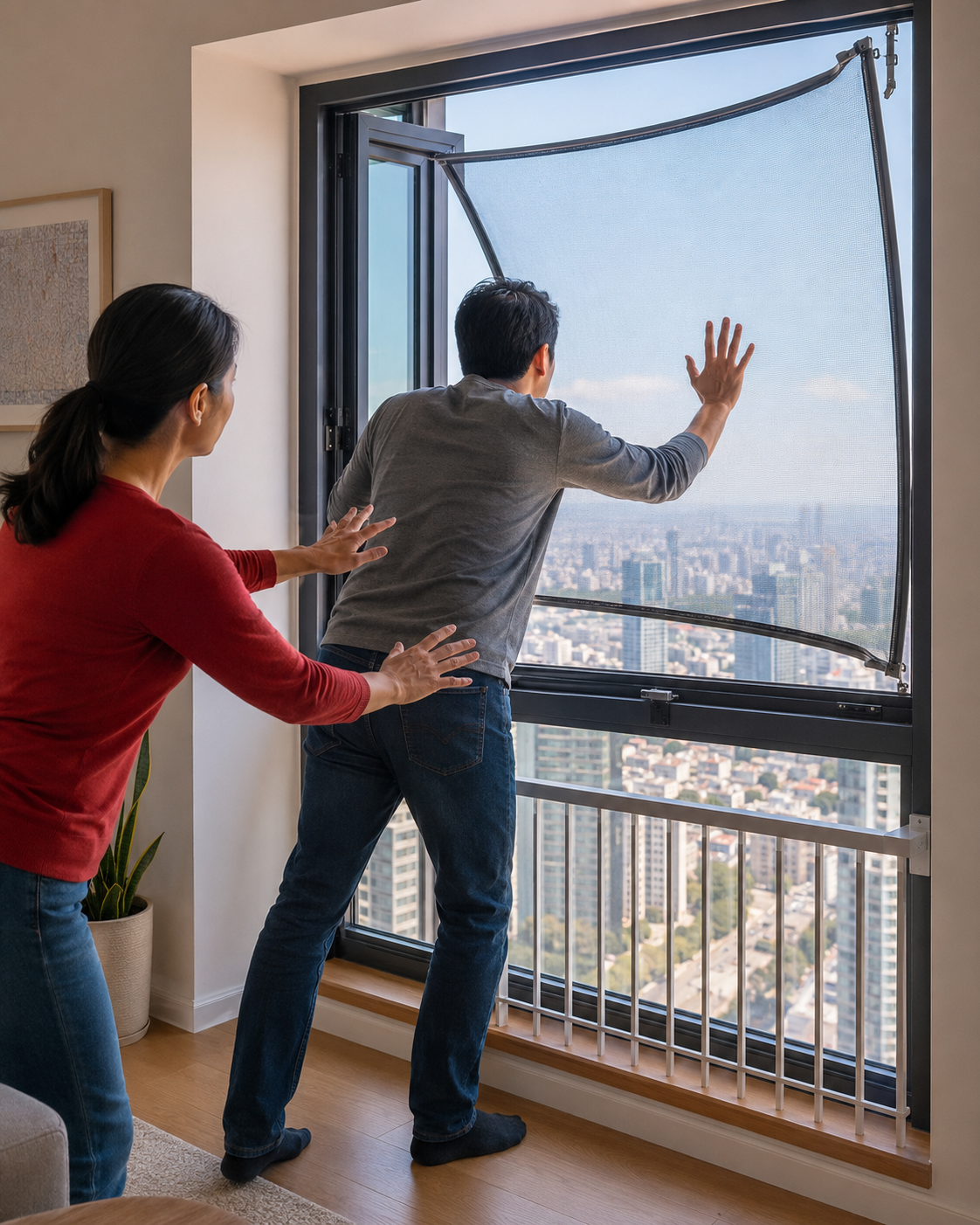
Why Leaning Against a Window Screen Can Cause a Serious Fall
Minjin Park
·
Window screens are designed to keep insects out, not people or pets in. Learn why leaning on a screen can cause a fall and how to make open windows safer.
Opening a window on a warm day feels harmless. Fresh air enters the room, the insect screen keeps mosquitoes outside, and the screen may even look like a protective barrier. That appearance, however, can create a dangerous sense of security.
An ordinary insect screen is not designed to support the weight of a child, adult, or pet. If someone leans against it, the mesh can tear, the frame can bend, or the entire screen can pop out of the window. When this happens above ground level, the person may fall before anyone has time to react.
Young children are at especially high risk because they may press their hands or body against a screen while trying to see outside. Yet window-screen falls are not limited to children. Adults can lose balance while cleaning a window, pets may jump toward something outdoors, and older adults may mistake a screen for a firm surface.
Understanding how these accidents happen is the first step toward preventing them.
Insect screens have one main purpose: allowing air to pass through while keeping insects and debris outside. They are usually made from lightweight fiberglass, aluminum, polyester, or similar mesh held in a narrow frame.
The frame may fit into a track, rest on small tabs, or be secured by clips. These components are suitable for holding the screen in place during normal use, but they are not engineered to withstand the force of a person falling or leaning against them.
Even a screen that feels firm when touched lightly can fail under sustained pressure. The frame may flex until one edge slips from its track. Old plastic tabs can break, corroded metal can bend, and mesh weakened by sunlight may tear suddenly.
New York City’s Administration for Children’s Services explains the distinction clearly: screens are intended to keep bugs out and can break easily under a child’s weight. They are not considered adequate window-fall protection. NYC ACS
A “pet-resistant” or heavy-duty screen may be harder to scratch, but that does not automatically make it a certified fall-prevention device. Unless the product is specifically tested and installed as a safety barrier, it should not be treated as one.
How Leaning-on-Screen Accidents Happen
These accidents often occur during familiar daily activities rather than obviously dangerous behavior.
A child may hear a garbage truck, see a family member arriving, or notice an animal below. To get a better view, the child climbs onto a bed or chair and places both hands on the screen. The screen gives way as the child shifts their weight forward.
A person mistaking a dark screen for a closed window
A damaged screen detaching when someone tries to open it
Furniture being placed close enough to create a climbing platform
Falls can happen from first-floor windows too. A relatively short fall onto concrete, landscaping stones, railings, basement steps, or other hard objects can cause a serious injury.
The danger increases with height, but no open window should be considered safe simply because it is not in a high-rise building.
Their bodies also make window falls more likely. Small children have a relatively high center of gravity, and their heads are heavy in proportion to the rest of their bodies. Once they lean too far forward, they may be unable to pull themselves back.
A child who has been told not to touch the screen may still forget when excited. This is why verbal rules are not enough. Physical safeguards should be used so that one impulsive moment does not become a life-changing accident.
The U.S. Consumer Product Safety Commission advises families never to depend on screens to prevent falls. It recommends appropriate window guards or window stops, moving furniture away from windows, and opening windows from the top when possible. CPSC
Children should still be taught simple rules:
Windows are not play areas.
Do not climb onto windowsills.
Never press or lean against a screen.
Ask an adult before opening a window.
Keep toys away from open windows.
These lessons support safety measures, but they do not replace them.
Pets Can Also Fall Through Screens
Cats are often associated with window-screen falls because they like to sit near open windows. A cat may push steadily against a loose screen, leap toward a bird, or panic after hearing a sudden noise.
Dogs can also force screens outward, particularly if they become excited by another animal or a person outside. Small dogs may fall through low windows, while larger dogs can break frames through sheer force.
Pet owners should not assume that an animal’s balance or instincts will prevent a fall. Screens can detach so quickly that the animal has no surface from which to regain balance.
Choose products specifically designed for pet containment only after reviewing their load limits, installation method, and intended use. Even then, separate window guards, opening restrictors, or secure barriers may be necessary. Never leave a pet unattended beside a widely opened, unprotected window.
Warning Signs That a Screen May Fail
Any ordinary screen should be treated as non-structural, even when it appears undamaged. Visible deterioration makes the risk greater.
Check windows regularly for:
Loose or missing clips
Bent or separated frames
Mesh pulling away from the edges
Tears, holes, or brittle material
Rust or corrosion
Cracked plastic tabs
Screens that rattle in the wind
Gaps between the frame and window track
Signs that a pet has scratched or pushed the mesh
Window locks that do not work correctly
Do not test a screen by pressing hard against it. Remove and repair it according to the manufacturer’s instructions, or ask a qualified professional to inspect it.
Replacing a damaged insect screen can restore insect protection, but it does not turn the window into a fall-resistant opening.
Use Window Guards or Window Stops
Window safety requires a device designed for fall prevention rather than insect control.
A window guard is typically a metal or aluminum barrier installed across the opening. It is designed to help prevent a child from falling through the window. This is different from a security bar intended primarily to deter burglary.
A window stop or opening-control device limits how far the window can open. CPSC guidance recommends limiting accessible window openings to no more than four inches when using this method. The agency also advises families to check safety devices regularly to ensure that they remain secure and properly maintained. CPSC childproofing guide
The correct product depends on the window style, building design, local regulations, and the need for emergency escape. Follow the manufacturer’s installation instructions carefully. A guard attached only to weak trim, installed with incorrect hardware, or loosely fitted may not provide reliable protection.
Renters should contact their landlord or property manager about approved devices. Some cities require window guards in certain homes where young children live. Local rules differ, so tenants and property owners should check the requirements in their jurisdiction rather than relying on a general online recommendation.
Keep Furniture Away From Windows
Window guards and stops work best as part of a layered safety plan.
Move beds, cribs, couches, chairs, toy boxes, desks, and shelves away from windows whenever possible. A piece of furniture that seems too low to matter may give a child exactly enough height to reach the sill.
Avoid placing favorite toys, stuffed animals, or electronic devices on a windowsill. These objects can encourage climbing. Blind and curtain cords should also be inaccessible; cordless window coverings are the safest option in homes with young children.
Be particularly careful in bedrooms. Parents may focus on living-room windows while overlooking a child’s bed positioned directly beneath an opening window. A child who normally follows safety rules may approach the window after waking early or during the night.
If rearranging furniture is difficult because the room is small, prioritize installing an appropriate guard or opening-control device.
Open Windows From the Top When Possible
Double-hung windows may allow the upper panel to open while the lower portion remains closed. This can provide ventilation while making the opening harder for a young child to reach.
Opening from the top does not eliminate every risk. Children may climb, and some window designs allow both sections to move. The window should still be locked or restricted appropriately.
Sliding, casement, awning, and floor-level windows require different solutions. A safety device suitable for one style may not work on another. Check compatibility instead of improvising with rope, tape, removable tension rods, or homemade blocks.
Do not assume an air conditioner creates a safe barrier either. Window units must be installed and secured correctly so they cannot shift or fall, and any remaining opening beside the unit must be protected.
Do Not Block an Emergency Escape Route
Fall prevention and fire safety must be considered together. Some windows serve as emergency exits, especially in bedrooms or apartments connected to fire escapes.
A permanent barrier that prevents a fall but also traps occupants during a fire can create a different hazard. CPSC recommends that guards on certain lower-floor windows be releasable by adults and older children in an emergency. CPSC window-fall guidance
Local building and fire codes may specify which windows must remain usable for emergency escape. Use approved products and consider professional installation. Family members should know which window or door is part of the escape plan and how its release mechanism works.
Young children should not be able to release the guard during ordinary play, but a responsible adult should be able to operate it quickly when necessary.
What to Do If Someone Falls From a Window
A fall from a window should be treated as a potential medical emergency, even if the person is awake and says they feel fine.
Call the local emergency number immediately after a significant fall. Do not move the person unless there is an immediate danger, such as traffic, fire, or a collapsing structure. Movement may worsen an injury to the head, neck, spine, or internal organs.
Check whether the person is responsive and breathing. Follow the emergency dispatcher’s instructions. If the person is not breathing normally, begin CPR if you are trained or let the dispatcher guide you.
Do not give food, water, or medication while waiting for help. Avoid trying to make the person stand or “walk off” the injury. Keep them as still and comfortable as possible and watch for changes in breathing or consciousness.
If a pet falls, seek emergency veterinary care. Cats and dogs may hide pain, and serious internal injuries may not be immediately visible.
A Quick Window-Safety Checklist
Walk through every room and ask:
Can a child or pet reach the window?
Is there furniture close enough to climb?
Can the lower portion open widely?
Is the window lock working?
Is there an approved guard or opening-control device?
Is the screen loose, torn, or damaged?
Are blind cords accessible?
Does the window serve as an emergency exit?
Can an adult operate the emergency release?
Does the safety device comply with local requirements?
Repeat the inspection when moving into a new home, rearranging furniture, replacing windows, or preparing for warmer weather. Grandparents’ homes, hotels, vacation rentals, and childcare spaces should also be checked.
The Screen Is for Insects, Not Fall Protection
A window screen may look like a boundary, but it offers no dependable protection against a fall. The safest approach is to combine working locks, correctly installed guards or stops, thoughtful furniture placement, active supervision, and a clear emergency escape plan.
Have you checked whether the screens and window-safety devices in your home are secure, and which window concerns you most? Share your experience or favorite prevention tip in the comments to help other families make their homes safer.
Hi, I’m the creator and editor behind ZestyHabit. I research everyday safety, first aid, and practical wellness topics using official guidance and reliable public sources, then turn that information into clear, realistic steps for daily life.
My goal is to help readers make safer, better-informed choices at home and beyond.