Mold Under a Floor Mattress: Causes, Health Risks, Cleaning, and Moisture Prevention
Minjin Park
·
Found mold under a mattress placed directly on the floor? Learn why it happens, when to discard the mattress, how to clean safely, and how to prevent it from returning.
Placing a mattress directly on the floor may seem practical. It creates a minimalist look, eliminates the cost of a bed frame, and can make a small bedroom feel less crowded. Unfortunately, it also creates nearly ideal conditions for hidden moisture and mold.
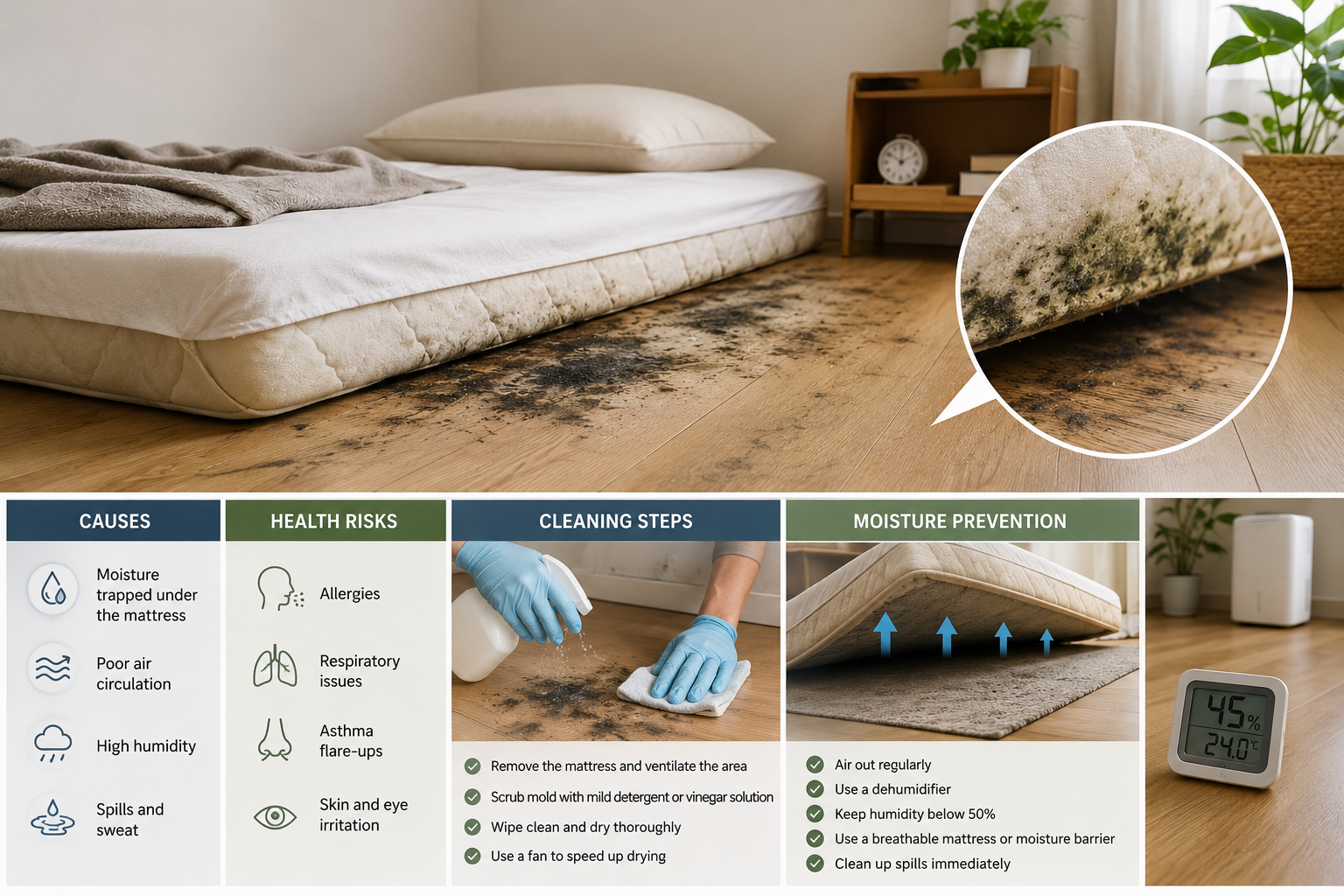
The problem usually begins underneath the mattress, where you rarely look. Body heat and perspiration move through the mattress during sleep, but the solid floor blocks airflow beneath it. If the floor is cold—particularly concrete, tile, or a surface above an unheated space—water vapor may condense between the mattress and floor. Over time, the damp, dark, poorly ventilated area can support mold growth.
A few small surface spots may sometimes be manageable, but extensive mold inside a mattress is difficult to remove reliably. The lasting solution is not simply spraying the stain. You must dry the area, address the source of moisture, clean or discard affected materials, and improve airflow under the bed.
Mold spores are naturally present in indoor and outdoor air. They do not usually create a major problem until they land on a damp surface with something they can use as food.
A mattress contains plenty of organic material, including fabric fibers, skin cells, dust, and other debris. Add moisture, warmth, darkness, and limited airflow, and mold has what it needs to grow.
Several conditions can contribute to the problem.
Moisture From Sleeping
People release moisture through breathing and perspiration throughout the night. Some of that moisture enters the bedding and mattress.
When a mattress sits on a slatted base, air can move underneath and help the material dry. A mattress placed flat against the floor has almost no ventilation on its bottom surface. Moisture can therefore remain trapped long after you get out of bed.
The risk increases if two people share the bed, the sleeper sweats heavily, wet hair contacts the bedding, or several blankets trap warmth and humidity.
Condensation on a Cold Floor
Warm, humid air can condense when it meets a colder surface. This is why mattresses on basement concrete, ground-level floors, tile, or poorly insulated flooring are especially vulnerable.
The top of the mattress may feel completely dry while the underside becomes cool and damp. Because the area is hidden, condensation can continue for weeks before anyone notices an odor or discoloration.
High Indoor Humidity
A humid climate, limited ventilation, frequent indoor laundry drying, long showers, cooking steam, or a malfunctioning ventilation system can keep bedroom humidity elevated.
The CDC recommends keeping indoor humidity no higher than 50% throughout the day when possible. A dehumidifier or air conditioner can help, but humidity should be measured with a hygrometer instead of estimated by how the room feels. (CDC: Mold Prevention)
Leaks and Moisture Entering Through the Floor
Not every damp mattress problem comes from perspiration. Plumbing leaks, rainwater intrusion, a cracked foundation, rising moisture through concrete, or a spill that was never fully dried may be involved.
If the mattress becomes damp again after drying, investigate the building rather than assuming that more cleaning will solve the problem.
Inadequate Air Circulation
A mattress pushed tightly against an exterior wall can trap moisture along its side as well as underneath. Clutter around the bed, heavy bed skirts, and an overcrowded room further reduce air movement.
Even a low platform can develop mold if it has a solid top and no ventilation openings.
What Does Mattress Mold Look and Smell Like?
Mattress mold does not always appear as dramatic black patches. Early signs may include:
Scattered black, green, gray, brown, pink, or white spots
Speckled staining that gradually spreads
Fuzzy or powdery surface growth
A persistent musty, earthy, or damp odor
Discoloration on the floor matching the mattress outline
Dampness or a cool, clammy feeling underneath
New stains on nearby baseboards or walls
Mildew is a casual term often used for flat, powdery fungal growth, while “mold” is the broader term. From a practical standpoint, the name or color matters less than the presence of unwanted fungal growth and moisture.
Do not assume black-colored growth is automatically the so-called “toxic black mold.” Many molds can appear dark, and color alone cannot identify a species. The CDC does not recommend routine home mold testing because there are no health-based indoor standards for acceptable mold levels, and the visible moisture problem needs correction regardless of species. (CDC: Mold Testing and Remediation)
Can Mold Under a Mattress Affect Your Health?
Some people experience no obvious symptoms around mold, while others react quickly. Exposure to damp and moldy environments has been associated with stuffy nose, sore throat, coughing, wheezing, eye irritation, and skin rashes.
People with asthma or mold allergies may experience stronger reactions. Damp indoor spaces have also been associated with worsening existing asthma and, in some research, the development of new asthma. (CDC/NIOSH: Health Problems Associated With Mold)
Possible symptoms include:
Sneezing or nasal congestion
Red, itchy, or watery eyes
Persistent coughing
Wheezing or chest tightness
Shortness of breath
Throat irritation
Headaches associated with a musty room
Itchy skin or a rash
Worsening nighttime asthma symptoms
These symptoms are not specific to mold and may have many other causes. However, symptoms that repeatedly worsen in the bedroom and improve after spending time elsewhere deserve attention.
People with asthma, COPD, severe allergies, chronic lung disease, or weakened immune systems should avoid cleaning mold themselves. The CDC notes that people with immune suppression or underlying lung disease may face a greater risk of severe effects, including fungal lung infections. (CDC: Mold Cleanup Guidelines)
Seek medical care if you develop persistent breathing problems, wheezing, worsening asthma, fever, or unexplained symptoms that may be related to a damp or moldy environment. Severe shortness of breath requires urgent medical attention.
Can a Moldy Mattress Be Saved?
The answer depends on how much growth is present, how deeply moisture has penetrated, and how long the mattress has remained damp.
A tiny amount of recent surface growth may sometimes be addressed if the mattress was exposed briefly, the interior remained dry, and the manufacturer provides an approved cleaning method. Even then, complete removal is not guaranteed.
Mattresses are thick, porous objects. Mold can extend into fabric, foam, padding, seams, and internal layers that cannot be inspected or scrubbed. Surface stains may disappear while growth remains inside.
The EPA warns that mold can fill the spaces and crevices of porous materials, making complete cleaning difficult or impossible. Moldy absorbent materials may therefore need to be discarded. (EPA: Mold Cleanup in Your Home)
Replacement is generally the safer option when:
Mold covers more than a few isolated surface spots.
Growth appears on multiple sides or deep in the seams.
The mattress has a strong musty odor after drying.
It was wet for longer than 24 to 48 hours.
It was exposed to flooding, sewage, or contaminated water.
The foam or padding feels damp internally.
Mold returns after an attempted cleaning.
A high-risk person sleeps on the mattress.
The mattress cannot be dried completely.
The manufacturer advises against cleaning or continued use.
Do not place a cover over an actively moldy mattress and continue sleeping on it. A mattress protector may hide stains and temporarily contain some debris, but it does not remove moisture or growth.
How to Clean the Floor and Surrounding Area Safely
First, move the mattress away from the sleeping area without dragging it through the home if possible. Disturbing mold can release spores and fragments into the air. If the mattress will be discarded, wrap or bag it before transporting it through occupied rooms.
Inspect the entire mattress, floor, baseboards, lower wall, bedding, rugs, and nearby furniture. Look for leaks and condensation rather than focusing only on the visible stain.
For a small amount of mold on a hard, nonporous floor:
Wear protective gloves, sealed goggles, and at least a NIOSH-approved N95 respirator.
Clean the hard surface with detergent and water.
Remove all visible residue.
Dry the surface completely.
Correct the moisture source before returning furniture.
Bleach is not automatically necessary for ordinary mold cleanup. If you use it or another disinfectant, follow the product label carefully and provide adequate ventilation. Never mix bleach with ammonia, vinegar, acids, or any other cleaner because dangerous gases may be produced.
The EPA says that mold covering less than approximately 10 square feet can usually be managed by a homeowner. Larger areas, extensive water damage, contaminated water, hidden wall or flooring damage, and recurring mold generally justify professional assessment. (EPA: Home Mold Cleanup Guidance)
Porous flooring requires extra caution. Carpet, carpet padding, unfinished wood, laminate underlayment, or damaged flooring may retain moisture beneath the visible surface. Materials that cannot be completely cleaned and dried may need replacement.
How to Prevent Mold Under a Floor Mattress
Cleaning is only half the job. If the mattress returns to the same damp conditions, mold will probably return as well. The EPA emphasizes that moisture control is the key to controlling indoor mold. Damp items should ideally be dried within 24 to 48 hours. (EPA: Getting Rid of Mold)
Raise the Mattress Off the Floor
The most effective change is to create airflow underneath. Use a bed frame with supportive slats spaced according to the mattress manufacturer’s requirements.
A ventilated platform, breathable mattress foundation, or purpose-built under-mattress airflow layer may also help. Avoid placing the mattress on solid plywood unless the design includes adequate ventilation.
Improvised supports must be stable, strong, and evenly distributed. Inadequate support can damage the mattress, create a fall hazard, or void its warranty.
Air the Mattress Regularly
If you must keep the mattress on the floor temporarily, stand it on its side regularly so both the mattress and floor can dry. Pull back blankets after waking instead of immediately making the bed, especially after a warm or sweaty night.
This approach can reduce risk but is not as reliable as continuous under-mattress ventilation. Forgetting to lift the mattress for several humid days may be enough for dampness to return.
Measure and Control Bedroom Humidity
Place a digital hygrometer in the bedroom and check it at different times of day. Aim to keep relative humidity at or below 50% when possible.
If humidity remains high:
Run a properly sized dehumidifier.
Use air conditioning during humid weather.
Vent bathroom and kitchen moisture outdoors.
Avoid drying wet laundry in the bedroom.
Repair plumbing, roof, or window leaks.
Keep furniture slightly away from cold exterior walls.
Improve insulation where condensation repeatedly develops.
Empty and clean the dehumidifier according to its instructions. A dirty reservoir can become another source of microbial growth.
Keep the Mattress and Bedding Dry
Use a breathable, washable mattress protector to reduce moisture and contamination from spills. Wash sheets regularly and dry them completely before returning them to the bed.
Do not lie down with wet hair, place damp towels on the mattress, or store bedding before it is fully dry. After a spill, remove bedding immediately and begin drying the mattress instead of waiting to see whether the moisture disappears.
Inspect the Underside Monthly
Lift the mattress and check for dampness, odor, stains, and floor condensation. During humid or cold seasons, inspect more frequently.
Pay special attention to mattresses over concrete slabs, in basements, beside exterior walls, or in rooms that receive little sunlight. Early detection may prevent a small moisture problem from becoming a ruined mattress and damaged floor.
Common Mistakes That Allow Mold to Return
Spraying a scented product over the area is not remediation. Fragrance may disguise the odor without removing mold or moisture.
Vacuuming visible mold with an ordinary household vacuum can also spread particles. If specialized vacuuming is needed, it should involve suitable HEPA equipment and careful containment.
Other frequent mistakes include:
Returning the mattress before the floor is fully dry
Cleaning only the visible side
Ignoring damp carpet padding or underlayment
Placing a new mattress directly on the same floor
Using a waterproof sheet under the mattress that traps condensation
Depending on an air purifier instead of controlling moisture
Painting over moldy walls or baseboards
Paying for mold identification while leaving the leak unfixed
A HEPA air purifier may reduce some airborne particles, but it cannot dry the mattress, repair a leak, or remove growth embedded in porous material. Treat it as a supplemental air-quality measure, not the primary solution.
The Bottom Line
Mold under a mattress placed directly on the floor usually develops because moisture becomes trapped where air cannot circulate. Condensation, perspiration, high humidity, and hidden leaks can all contribute. Small amounts on a hard floor may be cleaned safely, but a visibly moldy or deeply damp mattress often needs to be discarded because its porous interior cannot be reliably inspected or cleaned. Raise the replacement mattress, keep bedroom humidity under control, repair moisture sources, and inspect the underside regularly.
Have you ever discovered mold beneath a mattress or low bed frame? Tell us what type of flooring you had, what caused the moisture, and which solution prevented it from returning. Share your experience in the comments—your practical tip could help another reader catch the problem before it ruins a mattress.
Hi, I’m the creator and editor behind ZestyHabit. I research everyday safety, first aid, and practical wellness topics using official guidance and reliable public sources, then turn that information into clear, realistic steps for daily life.
My goal is to help readers make safer, better-informed choices at home and beyond.
[…] evaporates slowly. LG notes that keeping the washer door and detergent dispenser closed can prevent moisture from drying and allow mold to form inside the gasket. (LG […]
Loading…
Discover more from
Subscribe now to keep reading and get access to the full archive.



[…] evaporates slowly. LG notes that keeping the washer door and detergent dispenser closed can prevent moisture from drying and allow mold to form inside the gasket. (LG […]