
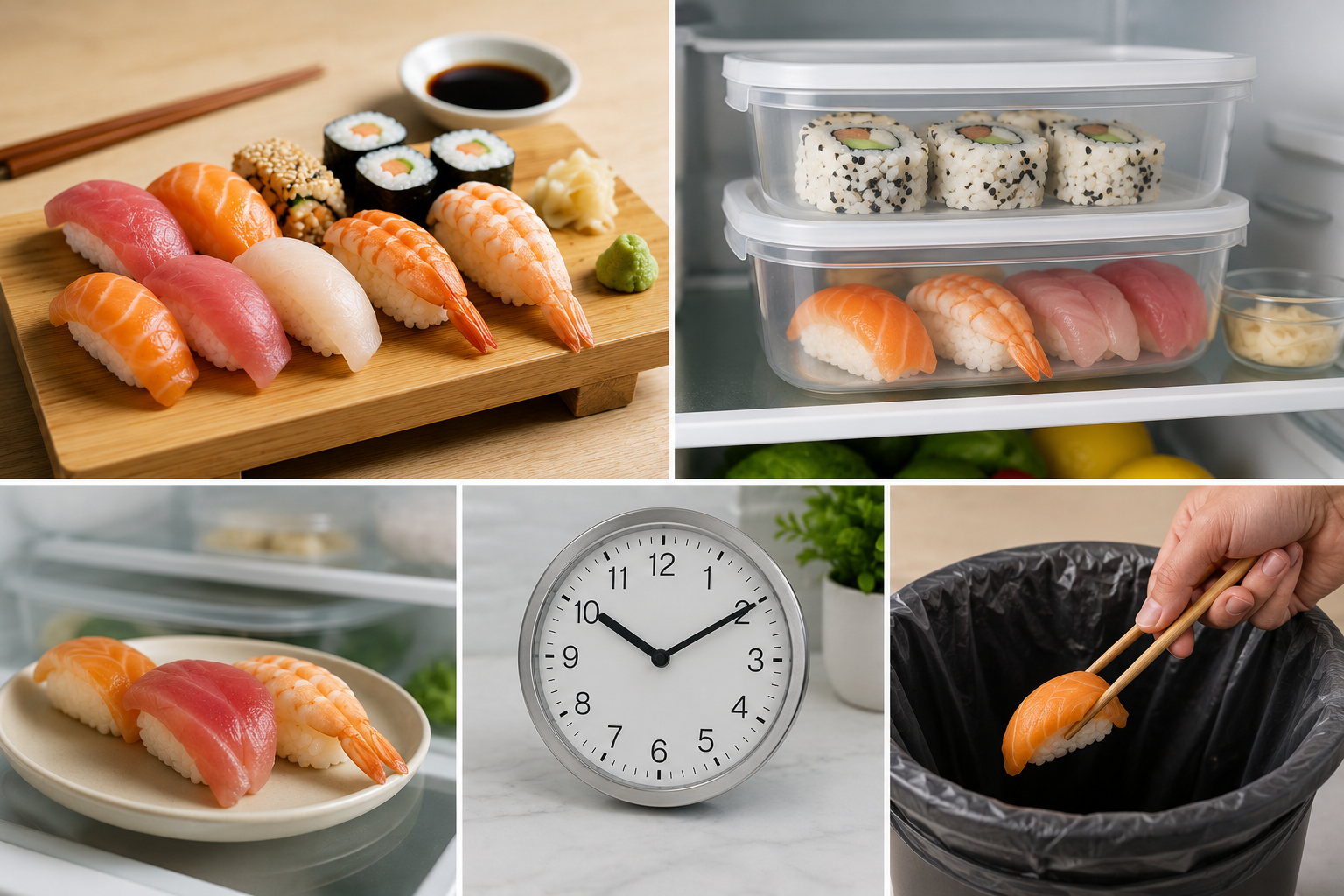

How long does leftover sushi last in the refrigerator? Learn safe storage times for raw and cooked sushi, how to reheat it, and when it must be discarded.
Sushi is at its best immediately after it is prepared. The fish is cool and delicate, the rice is soft and lightly seasoned, and the nori still has a pleasant texture. Unfortunately, sushi does not age particularly well—and depending on its ingredients and how long it has been sitting out, leftovers may also present a food-safety risk.
So, how long can you safely keep leftover sushi?
As a practical rule, sushi containing raw fish should ideally be eaten within 24 hours when it has been refrigerated promptly at 40°F (4°C) or below. Some raw seafood may remain safe for up to one or two days under proper refrigeration, but quality deteriorates quickly, and the restaurant’s original preparation time may be unknown. Sushi made entirely with cooked ingredients can generally be refrigerated for up to three or four days, following standard guidance for cooked leftovers.
Those time limits apply only when the sushi was refrigerated within two hours of preparation or purchase—or within one hour if it was exposed to temperatures above 90°F (32°C). Sushi left at room temperature longer than that should be discarded, even if it still smells normal.
Here is how to store, assess, reheat, and safely dispose of leftover sushi.
Why Leftover Sushi Requires Special Care
Sushi combines several perishable ingredients in one compact meal. Depending on the variety, a roll or piece of nigiri may contain:
- Raw fish or shellfish
- Cooked seafood
- Imitation crab
- Cooked egg
- Cream cheese
- Mayonnaise-based sauces
- Avocado or cucumber
- Cooked and seasoned rice
- Nori seaweed
Each ingredient has its own storage limitations. Raw seafood is highly perishable, while cooked rice can support bacterial growth if it remains at unsafe temperatures. Creamy sauces, cooked eggs, and seafood add further reasons to keep sushi cold.
The rice deserves particular attention. Cooked rice may contain spores of Bacillus cereus, a bacterium associated with foodborne illness. Some spores can survive cooking and may grow when rice is held too long at room temperature. Improperly acidified sushi rice can therefore create a food-safety hazard, according to the FDA’s evaluation of time- and temperature-controlled foods.
Commercial sushi chefs usually season rice with vinegar, sugar, and salt. However, you cannot assume that every batch has been acidified enough to remain safe without refrigeration. Once sushi becomes a leftover, treat the entire product as perishable.
How Long Does Sushi Last in the Refrigerator?
The safe storage period depends primarily on whether the sushi contains raw or cooked ingredients.
| Type of sushi | Recommended refrigerated storage |
|---|---|
| Sushi containing raw fish | Ideally within 24 hours; do not exceed 1–2 days |
| Sashimi without rice | 1–2 days |
| Cooked seafood rolls | Up to 3–4 days |
| Tempura rolls | Up to 3–4 days, though quality declines quickly |
| Imitation-crab rolls | Up to 3–4 days |
| Tamago or cooked-egg sushi | Up to 3–4 days |
| Vegetable-only sushi | Up to 3–4 days |
| Sushi containing avocado | Usually best within 24 hours for quality |
| Sushi of unknown age or storage history | Discard |
These limits assume that the refrigerator remains at or below 40°F (4°C) and that the sushi was chilled promptly.
The USDA advises keeping raw fish and shellfish in the refrigerator for only one or two days before cooking or freezing. Cooked fish and other cooked leftovers may generally be refrigerated for three or four days. USDA seafood storage guidance
For restaurant or grocery-store sushi containing raw fish, using the shorter 24-hour limit is a sensible precaution. You may not know when the fish was cut, when the sushi was assembled, or how long it spent in a display case before you bought it.
The storage clock begins when the sushi was prepared or purchased—not the following morning and not when you eventually remember to put it in the refrigerator.
Follow the Two-Hour Rule
Refrigerated storage cannot correct unsafe handling that occurred earlier.
Perishable foods should not remain at room temperature for more than two hours. When the surrounding temperature is above 90°F (32°C), such as inside a hot car, at a picnic, or during outdoor delivery, the limit drops to one hour. This is known as the two-hour rule. FDA food-storage guidance
Discard leftover sushi if it has been:
- On the dining table for more than two hours
- In a warm car for more than one hour
- Sitting in a delivery bag for an unknown length of time
- Left on the kitchen counter overnight
- Stored above 40°F for an extended period
- Kept in a refrigerator that lost power for too long
Do not refrigerate temperature-abused sushi and plan to eat it later. Harmful bacteria may already have multiplied, and some microorganisms can produce toxins that reheating may not reliably eliminate.
How to Refrigerate Leftover Sushi Properly
Refrigerate sushi as soon as you know you will not finish it. There is no benefit to leaving it on the table until the end of the evening.
Place the sushi in a shallow, airtight food-storage container. If possible, arrange the pieces in a single layer rather than stacking them. This helps the food cool more evenly and prevents sauces and toppings from being crushed.
You can also wrap the pieces tightly before placing them in a container, but avoid leaving sushi only in a loosely closed takeout box. Cardboard and thin plastic trays provide limited protection against drying, odors, and cross-contamination.
Follow these storage steps:
- Transfer the sushi to a clean, shallow container.
- Close the lid tightly.
- Label it with the purchase or preparation date.
- Refrigerate it at 40°F (4°C) or below.
- Store it away from raw meat, poultry, and their juices.
- Keep soy sauce, ginger, wasabi, and extra sauces separate.
- Plan to eat raw-fish sushi within 24 hours.
Store sushi toward the back of the refrigerator, where temperatures tend to be more stable. Avoid keeping it in the refrigerator door because the temperature rises each time the door is opened.
Can You Wrap Sushi in a Damp Paper Towel?
Cold refrigerator air causes sushi rice to become firm and dry. Some people place a lightly dampened paper towel over the sushi before sealing the container.
This may help retain moisture, but the towel should not be wet enough to soak the rice or fish. Use a clean paper towel, keep the sushi refrigerated, and never use added moisture as a reason to extend its storage time.
Moisture can improve texture slightly; it cannot reset the food-safety clock.
Can You Reheat Leftover Sushi?
Whether sushi should be reheated depends on what it contains.
Sushi Containing Raw Fish
Traditional raw-fish sushi is meant to be eaten chilled or near room temperature, not reheated. Microwaving an assembled raw-fish roll can warm it unevenly, partially cook the fish, and create an unpleasant texture without guaranteeing that every part reaches a safe temperature.
If raw-fish sushi has been refrigerated promptly and remains within its safe storage period, eat it cold. Letting it sit out briefly—just long enough to take off the refrigerator chill—is acceptable, but do not leave it at room temperature for an extended period.
If you no longer feel comfortable eating the fish raw, the most cautious option is to discard it. Another possibility is to disassemble the sushi and cook the fish thoroughly, but this does not rescue sushi that was left out too long or already shows signs of spoilage.
Home reheating should never be treated as a way to make old or temperature-abused raw sushi safe.
Sushi Made With Cooked Ingredients
Cooked rolls containing tempura shrimp, cooked eel, cooked salmon, chicken, or imitation crab can be reheated. USDA guidance recommends reheating leftovers to an internal temperature of 165°F (74°C). USDA leftovers guidance
A microwave is the quickest option:
- Place the pieces on a microwave-safe plate.
- Add a few drops of water near the rice or cover the plate loosely.
- Heat in short intervals.
- Rotate the pieces to reduce cold spots.
- Check that the center reaches 165°F.
Be aware that nori may become chewy, vegetables may soften, and mayonnaise-based sauces can separate.
An oven or air fryer may restore some crispness to tempura rolls, but it can also dry out the rice before the center becomes hot. If using one, heat the sushi until the entire piece reaches 165°F rather than relying only on a crisp exterior.
Vegetable Sushi
Vegetable rolls do not necessarily need reheating. They can be eaten cold if stored safely. Warming cucumber or avocado usually produces an undesirable texture.
If the roll contains only cooked vegetables and rice, you may warm it gently, but make sure it has not exceeded the three-to-four-day limit for refrigerated leftovers.
Reheating Does Not Fix Improper Storage
One of the most important rules for leftover sushi is that reheating cannot undo time-temperature abuse.
Certain bacteria can produce toxins while food is left at unsafe temperatures. Some toxins may remain even after the food is reheated. This is particularly relevant to cooked rice that has been kept warm or at room temperature for too long.
Throw the sushi away instead of reheating it if:
- It sat out for more than two hours
- It remained in a hot environment for more than one hour
- You do not know how long it was unrefrigerated
- It was stored in a refrigerator warmer than 40°F
- It has already been reheated and left out again
- It shows signs of spoilage
“When in doubt, throw it out” is especially appropriate for leftover raw seafood.
Signs That Leftover Sushi Should Be Discarded
Time and temperature are more reliable safety indicators than smell or appearance. Foodborne pathogens do not always change the way food looks, smells, or tastes.
Still, visible signs of deterioration are clear reasons to discard sushi. Watch for:
- A strong sour, ammonia-like, or unusually fishy odor
- Slimy or sticky fish
- Dull, gray, brown, or unusually discolored seafood
- Liquid collecting around the fish
- Hardened, excessively dry, or unusually wet rice
- Mold on the rice, vegetables, or toppings
- Fizzy, fermented, or off-smelling sauces
- A swollen or leaking package
- Significant browning and softening of avocado
- An unknown purchase or preparation date
Fresh fish should have a mild aroma, not an overpowering fishy or ammonia-like smell. However, sushi that smells normal may still be unsafe if it exceeded the time limit.
Do not taste one piece to determine whether the rest is safe.
Can You Freeze Leftover Sushi?
Technically, many sushi ingredients can be frozen, but assembled sushi rarely freezes well.
The rice may become dry, crumbly, or unusually chewy after thawing. Cucumber loses its crispness, avocado becomes mushy, nori softens, and creamy sauces may separate. Raw fish may also suffer noticeable changes in texture.
More importantly, freezing leftover sushi at home does not automatically make raw fish safe for raw consumption. Commercial parasite-destruction procedures require specific temperatures and holding times. A short stay in an ordinary home freezer should not be viewed as a substitute for properly sourced sushi-grade fish or professional controls.
If you choose to freeze cooked sushi, do so while it is still within its safe refrigerated period. Wrap it tightly, place it in a freezer-safe container, and thaw it in the refrigerator—not on the counter. Expect a loss of quality.
Do not freeze sushi that has already been left out too long.
What About Grocery-Store Sushi?
Prepackaged sushi should have a use-by or sell-by date. Follow the package instructions and keep it refrigerated continuously.
Eat grocery-store raw-fish sushi on the day of purchase whenever possible. Once the package has been opened, do not assume that the printed date guarantees several more days of safe storage.
Avoid buying packaged sushi if:
- The package is damaged or leaking
- The fish appears dry or discolored
- The rice looks excessively hard
- The product is not properly chilled
- The refrigerator case feels warm
- The use-by date has passed
- The container has been left in an unrefrigerated display
Carry it home promptly, especially during hot weather. An insulated bag with a cold pack is useful when the trip takes more than a few minutes.
Who Should Avoid Leftover Raw Sushi?
Raw or undercooked seafood carries a greater risk of parasites and harmful bacteria than thoroughly cooked seafood. The FDA advises pregnant people and children to avoid raw fish such as sushi and sashimi. Older adults and people with weakened immune systems should also be especially cautious. FDA advice about raw fish
Higher-risk individuals include people who:
- Are pregnant
- Are very young or elderly
- Have a weakened immune system
- Are receiving chemotherapy or immunosuppressive treatment
- Have certain chronic illnesses
- Have undergone an organ transplant
For these groups, freshly prepared sushi made with fully cooked ingredients is the safer choice. Reheating previously raw sushi does not necessarily address contamination from earlier handling.
A Quick Leftover Sushi Decision Guide
Ask these questions before eating leftover sushi:
- Was it refrigerated within two hours—or one hour in hot conditions?
- Has it remained at or below 40°F?
- Does it contain raw fish?
- How long ago was it prepared or purchased?
- Has it already been reheated?
- Does it show any unusual odor, slime, discoloration, or mold?
- Is anyone eating it at increased risk from foodborne illness?
If the sushi contains raw fish, was promptly refrigerated, and is less than 24 hours old, it may still be suitable for a healthy adult. If it contains only cooked ingredients, it may be kept for up to three or four days under proper refrigeration.
If the storage history is uncertain, discard it.
Frequently Asked Questions
Is raw sushi safe after two days in the refrigerator?
Raw fish is generally limited to one or two days in the refrigerator, but assembled restaurant sushi is best consumed within 24 hours because its previous storage history may be uncertain. At the two-day mark, discarding it is the more cautious choice.
Can I eat leftover sushi straight from the refrigerator?
Yes, provided it was refrigerated promptly and remains within the appropriate storage period. Sushi made with raw fish should generally be eaten cold rather than partially reheated.
Is sushi safe if it was left out for three hours?
No. Perishable food left at room temperature for more than two hours should be discarded. The limit is one hour when the temperature is above 90°F.
Can I microwave sushi to kill bacteria?
Microwaving may safely reheat cooked sushi when every part reaches 165°F, but it cannot reliably rescue old sushi or food that has been left out too long. It may also heat raw-fish sushi unevenly.
Does vinegar make sushi rice safe at room temperature?
Professionally acidified sushi rice may be managed under specific food-service controls. At home, do not assume that vinegar makes assembled sushi shelf-stable. Treat leftover sushi as perishable and refrigerate it promptly.
Final Thoughts
Leftover sushi requires stricter judgment than many other takeout foods. Refrigerate it within two hours, keep the refrigerator at 40°F or below, and eat sushi containing raw fish within 24 hours whenever possible. Cooked rolls can generally last up to three or four days, but they should be reheated to 165°F if served hot. Discard sushi with an unknown storage history, sushi left out too long, or anything showing suspicious changes—and remember that reheating cannot reverse unsafe storage.
How do you handle leftover sushi at home? Do you eat it cold the next day, reheat cooked rolls, or avoid saving it altogether? Share your experience and favorite leftover-sushi tips in the comments below.

Hi, I’m the creator and editor behind ZestyHabit. I research everyday safety, first aid, and practical wellness topics using official guidance and reliable public sources, then turn that information into clear, realistic steps for daily life.
My goal is to help readers make safer, better-informed choices at home and beyond.


