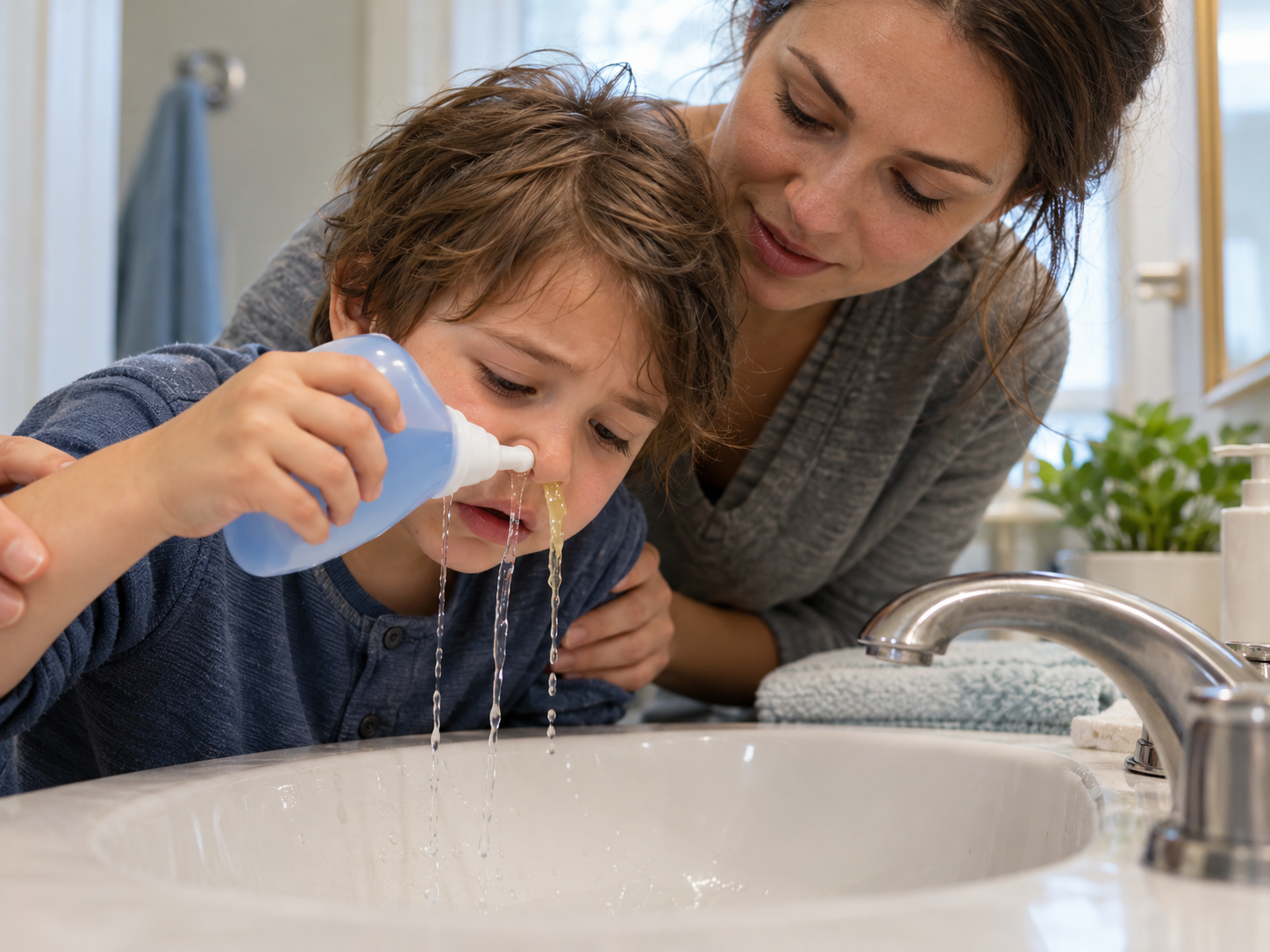
Using Tap Water for Nasal Rinsing: Safe First Aid, Infection Risks, and Emergency Warning Signs
Minjin Park
·
Accidentally used tap water in a neti pot or sinus rinse? Learn what to do next, why tap water is unsafe for nasal irrigation, which symptoms require emergency care, and how to rinse your nose safely.
Nasal rinsing can provide welcome relief when allergies, a cold, dry air, or thick mucus leave your nose feeling blocked. Neti pots, squeeze bottles, bulb syringes, and powered irrigation devices are widely available, and the process often appears simple: mix water with a saline packet and flush the solution through the nasal passages.
However, the type of water you use matters.
Water that is considered safe to drink is not automatically safe to push through the nose. Tap water can contain low levels of bacteria, protozoa, or free-living amoebas that are generally harmless when swallowed because the digestive system provides important defenses. Inside the nasal passages, those organisms may survive and, in extremely rare cases, cause a serious infection.
The CDC recommends using only water labeled distilled or sterile, or tap water that has been properly boiled and cooled, for nasal and sinus rinsing. Although infections are rare, deaths have occurred after people used contaminated tap water for nasal irrigation.
If you have already rinsed your nose with tap water, do not panic. A single accidental use does not mean that you will become ill. Stop using the unsafe water, clean the device correctly, switch to an approved water source, and know which symptoms require immediate medical attention.
Why Drinking Tap Water and Rinsing With It Are Different
Public drinking water is treated to reduce harmful contamination, but it is not manufactured as a sterile medical product. Small numbers of microorganisms can remain in water systems, household pipes, storage tanks, faucets, and water heaters.
When you drink the water, stomach acid and other digestive defenses help protect you. Nasal irrigation bypasses those defenses by placing water directly against the tissues inside the nose.
The concern is not ordinary chlorine exposure or the minerals naturally found in tap water. The concern is that certain microorganisms can remain alive in the nasal passages. Rarely, organisms such as Naegleria fowleri or Acanthamoeba can travel into nearby tissue or cause severe infections. The CDC has documented that unsafe nasal rinsing may increase the risk of infections involving the sinuses, skin, eyes, or brain.
The risk remains very low, but the potential consequences are serious enough that safe-water precautions should be followed every time.
What to Do After Accidentally Using Tap Water
Realizing that you filled a neti pot or squeeze bottle with tap water can be frightening, especially after reading alarming stories online. The most useful response is calm, practical, and focused on preventing another exposure.
Stop the Nasal Rinse
Do not continue using the remaining solution. Empty it from the device and do not save it for later.
There is no benefit to trying to “wash out” the tap water by immediately flushing more liquid through your nose. Another rinse may simply create additional irritation or exposure. Resume nasal irrigation only when you have prepared a fresh saline solution using safe water.
Do Not Panic or Assume Infection
Infections associated with nasal rinsing are rare. Using tap water once does not mean that the water contained a dangerous organism, and exposure does not guarantee illness.
At the same time, the possibility should not be dismissed completely. Make a mental or written note of when the rinse occurred and remain aware of unusual symptoms during the following days.
Clean and Dry the Device
Follow the manufacturer’s cleaning instructions. Wash your hands first, clean the irrigation device thoroughly, rinse it with distilled, sterile, or previously boiled and cooled water, and allow it to air-dry completely.
The FDA recommends checking that a nasal-rinsing device is clean and completely dry before each use. Moisture left inside a bottle or neti pot can encourage microorganisms to remain or grow between uses.
Replace the device if it is cracked, visibly dirty, difficult to clean, or has been stored wet for a long period. Do not share it with another person.
Monitor for Warning Symptoms
The CDC advises seeking medical attention immediately if headache, fever, confusion, or vomiting develops after nasal or sinus rinsing. These symptoms are far more likely to have an ordinary cause, but the recent nasal-water exposure is important information that a clinician needs to hear.
Do not wait for every possible symptom to appear before getting help.
Emergency Warning Signs After Nasal Rinsing
Go to an emergency department or contact emergency services if you develop a concerning combination of symptoms after using tap water for nasal irrigation, particularly:
A new or rapidly worsening severe headache
Fever
Repeated nausea or vomiting
Stiff or painful neck
Confusion or unusual behavior
Difficulty paying attention or responding normally
Loss of balance or difficulty walking
Seizures
Hallucinations
Extreme sleepiness or difficulty waking
New weakness, fainting, or loss of consciousness
Early symptoms of primary amebic meningoencephalitis, the brain infection caused by Naegleria fowleri, may include headache, fever, nausea, and vomiting. Symptoms usually begin around five days after exposure but have appeared anywhere from one to 12 days afterward. The illness can then progress rapidly to neck stiffness, confusion, seizures, hallucinations, coma, and death.
These symptoms can resemble bacterial meningitis and several other medical emergencies. You cannot distinguish the cause safely at home.
Tell the medical team specifically:
“I recently rinsed my nose or sinuses with tap water.”
Include when it happened, where the water came from, whether it came from a household faucet, private well, water tank, hotel, recreational vehicle, or another source, and which type of irrigation device you used.
When to Contact a Clinician Even Without Emergency Symptoms
Not every post-rinse problem requires an ambulance, but certain symptoms still deserve prompt medical advice.
Contact a healthcare professional if nasal rinsing causes:
Persistent or worsening sinus pain
Fever
Repeated nosebleeds
A headache that continues or becomes stronger
Increasing facial swelling
Foul-smelling or unusual nasal discharge
Symptoms that worsen instead of improving
Significant ear pain or pressure
Ongoing burning that does not settle after stopping the rinse
The FDA recommends returning to a healthcare professional when symptoms fail to improve or become worse after nasal irrigation, especially when fever, headache, or nosebleeds occur.
People with weakened immune systems should be particularly cautious. Acanthamoeba can cause rare but serious infections of the sinuses, skin, eyes, brain, and other organs, with invasive disease occurring especially in people whose immune defenses are impaired.
A person receiving chemotherapy, taking strong immune-suppressing medication, living with an organ transplant, or managing another significant immune condition should speak with their clinician before routinely using a nasal-irrigation system.
Which Water Is Safe for a Neti Pot or Sinus Rinse?
The safest and simplest choices are store-bought distilled water, sterile water, or properly boiled and cooled tap water.
Distilled Water
Choose a sealed container clearly labeled distilled water. Do not assume that every bottled water product is distilled.
“Purified,” “spring,” “mineral,” and ordinary “drinking water” are not necessarily the same as distilled or sterile water. Read the label rather than judging by the appearance of the bottle.
Sterile Water
Water labeled sterile is also suitable. Make sure the container has been stored properly and has not become contaminated after opening.
Do not touch the inside of the cap or bottle opening with your fingers or the irrigation device.
Boiled and Cooled Tap Water
According to current CDC instructions, bring tap water to a rolling boil for at least one minute. At elevations above 6,500 feet, boil it for three minutes. Allow the water to cool before using it; it should be comfortably lukewarm, never hot.
Store unused boiled water in a clean, sanitized container with a tight cover. Preparing small quantities helps reduce storage and contamination problems.
Never pour recently boiled water into your nose. Hot water can burn the delicate nasal lining.
Appropriately Filtered Water
Some filters can remove organisms of concern, but ordinary refrigerator filters, pitcher filters, faucet attachments, and basic carbon filters should not automatically be assumed safe for nasal irrigation.
The CDC notes that filters intended for this purpose should have an absolute pore size of one micron or smaller. Certain products may also carry relevant NSF 53 or NSF 58 labeling.
The word “absolute” is important. A filter described only by an average or nominal pore size may allow larger organisms through. When the label is unclear, use distilled, sterile, or boiled water instead.
Why Saline Is Still Necessary
Safe water should normally be mixed with the correct amount of saline rather than used plain.
Plain water can irritate the nasal lining and cause burning because it does not match the salt concentration of body fluids. Commercial saline packets are convenient because they provide a measured amount of salt and buffering ingredients for a specified water volume.
Follow the device instructions exactly. Using too little or too much water changes the concentration. Do not assume that adding a saline packet sterilizes unsafe water; salt packets are not designed to kill every dangerous microorganism.
Prepare a fresh solution with clean hands and do not dip used tools or fingers into the water container.
Actions to Avoid After Using Tap Water
Anxious people sometimes try unproven methods after realizing they used the wrong water. Some of these actions may cause more harm than the original mistake.
Do Not Put Bleach or Disinfectant Into Your Nose
Never pour household bleach, alcohol, hydrogen peroxide, surface disinfectant, essential oils, or cleaning products into your nasal passages.
The CDC publishes a specific emergency water-disinfection protocol for preparing nasal-rinse water when safer options are unavailable, but the measurements depend on bleach concentration, water volume, clarity, and contact time. The disinfectant is added to water before use according to exact instructions—it is not applied directly to the nose.
For routine home use, distilled, sterile, or boiled and cooled water is much easier and less likely to be prepared incorrectly.
Do Not Take Leftover Antibiotics
Antibiotics do not prevent every possible infection and do not treat amoebic infections. Taking leftover medication can cause side effects, delay the correct diagnosis, and contribute to antibiotic resistance.
Preventive treatment should not be improvised without medical guidance.
Do Not Forcefully Blow or Repeatedly Flush the Nose
Aggressive nose-blowing can increase pressure and cause ear discomfort or bleeding. Repeated rinsing may worsen irritation.
Gently clear the nose according to the device instructions, then stop if pain, bleeding, severe pressure, or ear symptoms occur.
Do Not Use Water Just Because It Looks Clean
Dangerous microorganisms cannot reliably be detected by looking, smelling, or tasting the water. Clear water from a clean-looking faucet, bottle, tank, or well is not proof that it is sterile.
Do Not Use Hot Water Directly From the Faucet
Hot tap water is not the same as boiled water. Household water heaters may contain biofilm or support the growth of waterborne organisms. The water must reach the recommended rolling boil and then be cooled safely.
Common Nasal-Rinsing Mistakes
Many unsafe practices come from reasonable but incorrect assumptions.
One common mistake is believing that a saline packet disinfects tap water. It does not. Another is using filtered refrigerator water without checking the filter specifications.
People may also clean a neti pot with tap water, leave it damp, and then fill it with distilled water the next day. The water used in the solution may be safe, but a wet, contaminated device can undermine that precaution.
Other avoidable mistakes include sharing devices, touching the bottle tip to the nostril, storing prepared solution for too long, using a cracked squeeze bottle, rinsing with plain water, or continuing despite repeated pain and nosebleeds.
Good nasal-rinse safety requires attention to the water, the saline mixture, the device, and the way the rinse is performed.
A Safer Nasal-Irrigation Routine
Before each rinse, wash and dry your hands. Confirm that the device is clean and completely dry. Use distilled, sterile, properly boiled and cooled, or appropriately filtered water.
Prepare the saline solution according to the manufacturer’s directions. Lean over a sink, keep your mouth open, and allow the solution to flow gently rather than forcing it under extreme pressure.
Stop if you experience severe pain, heavy bleeding, choking, significant ear pressure, or breathing difficulty.
Afterward, clean the device as directed, rinse it with safe water, and leave it open to air-dry completely. Store it in a clean place rather than sealing it while damp.
Nasal irrigation is generally considered safe when the correct water, solution, technique, and cleaning routine are used. The goal is not to avoid the practice entirely, but to remove a preventable route of infection.
The Bottom Line
Tap water may be safe to drink while still being unsuitable for nasal irrigation. Rarely, organisms present in water systems can survive inside the nose and cause serious infections, including infections involving the sinuses or brain.
After accidentally using tap water, stop the rinse, discard the remaining solution, clean and completely dry the device, and use only distilled, sterile, properly boiled and cooled, or appropriately filtered water in the future. Do not try to disinfect your nose with chemicals, take leftover medication, or perform repeated forceful rinses.
Seek immediate medical care if headache, fever, vomiting, confusion, neck stiffness, balance problems, seizures, hallucinations, or unusual difficulty waking develops after nasal rinsing. Tell the medical team clearly that tap water entered your nose.
Hi, I’m the creator and editor behind ZestyHabit. I research everyday safety, first aid, and practical wellness topics using official guidance and reliable public sources, then turn that information into clear, realistic steps for daily life.
My goal is to help readers make safer, better-informed choices at home and beyond.