
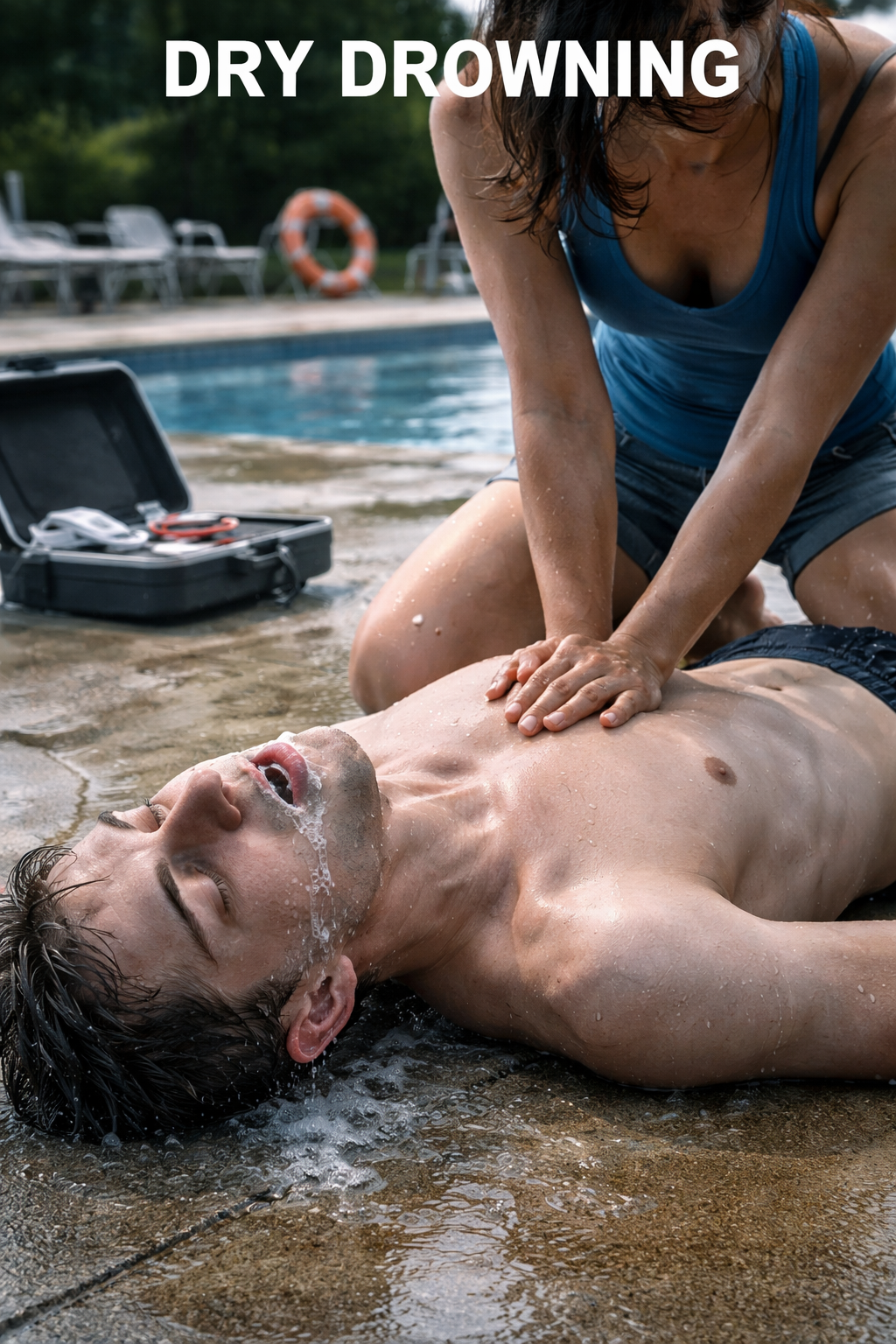

Every summer, the phrase “dry drowning” makes the rounds online again.
A child coughs after the pool. A parent notices unusual sleepiness that night. Someone shares a frightening post claiming a person can seem perfectly fine after going underwater, only to die hours later from “dry drowning.” It is the kind of story that spreads fast because it hits a very specific fear: the idea that danger can hide quietly, even after the scary moment seems to be over.
But here is the part that often gets lost in the panic: “dry drowning” is not a real medical diagnosis used by doctors today. Major medical and safety organizations say the terms “dry drowning,” “secondary drowning,” and “delayed drowning” are outdated or misleading. What doctors actually talk about is drowning or nonfatal drowning, sometimes with lung injury after water is inhaled.
That does not mean water-related accidents are harmless. They absolutely can be dangerous. It means the viral version of “dry drowning” is usually explained badly. The real issue is not that someone suddenly and mysteriously dies out of nowhere hours later after being completely normal. The real issue is that a person who had a genuine submersion incident may continue to show breathing problems soon afterward because the lungs or airway were injured during the event.
So let’s unpack it clearly: what people mean by “dry drowning,” what the body is actually doing, why the fear feels so convincing, and what warning signs matter.
Why the Term “Dry Drowning” Sounds So Scary
The phrase itself is dramatic. It suggests a hidden, silent process. It sounds like water somehow lingers in the body like a trap waiting to spring later.
That is not really how it works.
Historically, people used “dry drowning” to describe cases where little or no water entered the lungs, sometimes because the airway closed reflexively during a submersion event. In modern explanations, that airway closure is often described as laryngospasm—a reflex spasm of the vocal cords that temporarily blocks the airway. Cleveland Clinic notes that the old term was used in cases where very little water was aspirated and the airway may have closed during the incident.
This matters because the danger, when it exists, begins during or soon after the water incident, not out of nowhere long after the person has been totally symptom-free. The American Red Cross specifically says the idea that someone can be fine and then spontaneously die days later from “dry” or “secondary” drowning has been debunked, even though the myth continues to circulate widely.
In other words, the internet version of the story is scarier than the medical reality.
What Actually Happens in the Body After a Water Incident
When someone struggles in water, several things can happen.
Sometimes, water enters the mouth and nose and gets coughed out without causing serious injury. Other times, water is inhaled into the lungs. In more severe cases, lack of oxygen becomes the main emergency.
The key point is this: the lungs are delicate. If water is inhaled, it can irritate lung tissue, interfere with normal gas exchange, and in some cases contribute to swelling or inflammation. Even when only a small amount is inhaled, the body may respond with persistent coughing, fast breathing, or visible respiratory distress. Cleveland Clinic explains that surviving a submersion event can still leave someone with lung injury, and symptoms tend to show up relatively quickly rather than emerging out of nowhere after a completely normal period.
That is the real mechanism behind the fear.
It is not that a healthy person suddenly “fills up” later. It is that the water incident itself may have already triggered airway irritation, laryngospasm, or lung injury, and symptoms can continue or worsen over the next several hours if the original event was significant.
So when people say, “He drowned hours later,” what is often more accurate is: the drowning process started earlier, and the injury became more obvious with time. The Red Cross makes essentially this distinction when it says the submersion event may start a process that needs medical evaluation, but the idea of a mysterious delayed death after being completely fine is not accurate.
That difference in wording matters. A lot.
The “Few Hours Later” Part: Is It Real or a Myth?
This is where nuance matters.
If by “a few hours later” someone means symptoms can continue or become more noticeable after the person gets out of the water, yes, that can happen. A person who had a real submersion event and inhaled water may later develop worsening cough, breathing difficulty, fatigue, or behavior changes that signal oxygen problems. That is why water incidents should not be brushed off casually when symptoms are present.
But if by “a few hours later” someone means a person was entirely normal, playing, eating, talking, breathing normally, with no symptoms at all, and then suddenly died from some hidden pool water, that is the misleading myth version. The Red Cross says the existence of “dry” or “delayed” drowning as commonly portrayed has been debunked.
The practical takeaway is simple:
- Symptoms matter more than the label.
- The seriousness of the original water incident matters more than a viral phrase.
- Breathing problems after submersion are the real concern.
That is much less dramatic than the myth, but much more useful.
What Symptoms Should Actually Raise Concern?
This is the part every parent, caregiver, or swimmer should remember.
After a significant water incident, the warning signs are not mysterious. They are usually signs that the brain or lungs are not getting enough oxygen, or that the airway is irritated.
Cleveland Clinic highlights symptoms such as persistent coughing, shortness of breath, trouble breathing, chest discomfort, extreme fatigue, and behavior changes as reasons to seek evaluation after a submersion event.
In everyday language, the red flags are:
- Persistent coughing that does not settle
- Rapid, labored, or noisy breathing
- Complaints of chest pain or chest tightness
- Unusual sleepiness, confusion, or acting “not like themselves”
- Vomiting after a water incident
- Blue lips, pale skin, or obvious distress
- Any trouble speaking full sentences because of breathing difficulty
Those are not “wait and see for a day or two” symptoms. Those are get medical help now symptoms. The American Academy of Pediatrics also emphasizes that anyone removed from the water who is not breathing normally or is not conscious should be presumed to be in cardiac arrest and treated as an emergency.
Why Parents Often Misread the Situation
Part of the confusion comes from the ordinary things kids do after swimming.
They cough. They sputter. They swallow water. They get tired. They fall asleep in the car. Most of the time, none of that is a sign of serious lung injury.
The problem is that viral warnings often blur the line between minor water exposure and a true submersion incident.
A child who splashes around, accidentally gulps some pool water, coughs for a moment, and then returns to normal is not the same as a child who was underwater, panicked, struggling, choking, unable to breathe, or needing rescue. Those are very different scenarios, and treating them as if they carry the same risk only creates panic.
The Red Cross has been especially direct about this: public discussion of “dry drowning” has terrified parents into thinking a child could die after almost any water exposure, when that framing is not supported by evidence.
That does not mean parents should dismiss instincts. It means they should focus on observable symptoms and the severity of the event, not on internet horror vocabulary.
So What Is the “Principle” Behind So-Called Dry Drowning?
If we strip away the myth and keep only the physiology, the principle is this:
A water incident can injure the airway or lungs, and the consequences of that injury may become clearer over the next several hours.
That is all.
More specifically, people often point to two possible mechanisms:
First, laryngospasm. This is when the vocal cords clamp down in response to water irritation, temporarily narrowing or blocking airflow. Historically, this is one reason some people used the term “dry drowning,” because not much water actually reached the lungs. Cleveland Clinic identifies laryngospasm as part of the older explanation of the term.
Second, aspiration-related lung irritation. If water gets into the lungs, it can interfere with how oxygen moves across lung tissue and may trigger inflammation. That can lead to coughing, shortness of breath, or signs of respiratory distress after the event.
Neither mechanism is magical. Neither is “silent” forever. Both show themselves through symptoms.
That is the most important correction to the viral narrative.
What You Should Do After a Serious Water Incident
If someone had a genuine struggle in the water, do not obsess over terminology. Ask practical questions instead.
Were they ever unable to breathe normally?
Did they choke repeatedly or inhale water?
Were they submerged unexpectedly?
Did they need rescue?
Are they still coughing, breathing fast, complaining, or acting strange?
If the answer to those questions raises concern, seek medical attention. If the person is unconscious, not breathing normally, turning blue, or clearly in distress, call emergency services immediately. The AAP’s updated drowning CPR guidance underscores how urgently abnormal breathing after water rescue should be treated.
On the other hand, if someone had a small splashy cough, quickly recovered, and remains entirely well, the viral “dry drowning” stories are more likely to cause anxiety than to help.
Prevention Matters More Than the Myth
One reason the myth keeps spreading is that it offers a dramatic after-the-fact warning. But the real lifesaving message is much less viral and much more boring: prevention.
The American Academy of Pediatrics emphasizes layered protection around water, including constant close supervision, barriers like fencing, and swim lessons as part of an overall safety approach. Drowning remains a major cause of unintentional injury death in children, especially young children, which is exactly why prevention matters so much more than sensational terms.
The most effective habits are not mysterious:
Watch children closely and continuously near water.
Stay within arm’s reach for weak swimmers or toddlers.
Use properly fitted life jackets when appropriate.
Learn CPR.
Do not rely on inflatable toys as safety devices.
Do not let “good swimmer” status create false confidence.
Treat any true submersion incident seriously.
That is where lives are actually saved.
Final Thoughts
“Dry drowning” is one of those phrases that survives because it is emotionally powerful, not because it is medically precise.
Yes, a person can have real breathing trouble after a serious water incident. Yes, symptoms can continue or worsen over several hours. Yes, the lungs and airway can be injured during submersion. But the popular idea that someone can appear completely fine and then mysteriously die later from “dry drowning” is not the right way to understand it.
The better way to think about it is this:
A dangerous water event is dangerous at the time it happens.
Any lingering cough, breathing difficulty, fatigue, or mental-status change afterward deserves attention.
And the word you need to remember is not “dry drowning.” It is simply drowning, with all the seriousness that word already carries.

Hi, I’m the creator and editor behind ZestyHabit. I research everyday safety, first aid, and practical wellness topics using official guidance and reliable public sources, then turn that information into clear, realistic steps for daily life.
My goal is to help readers make safer, better-informed choices at home and beyond.


