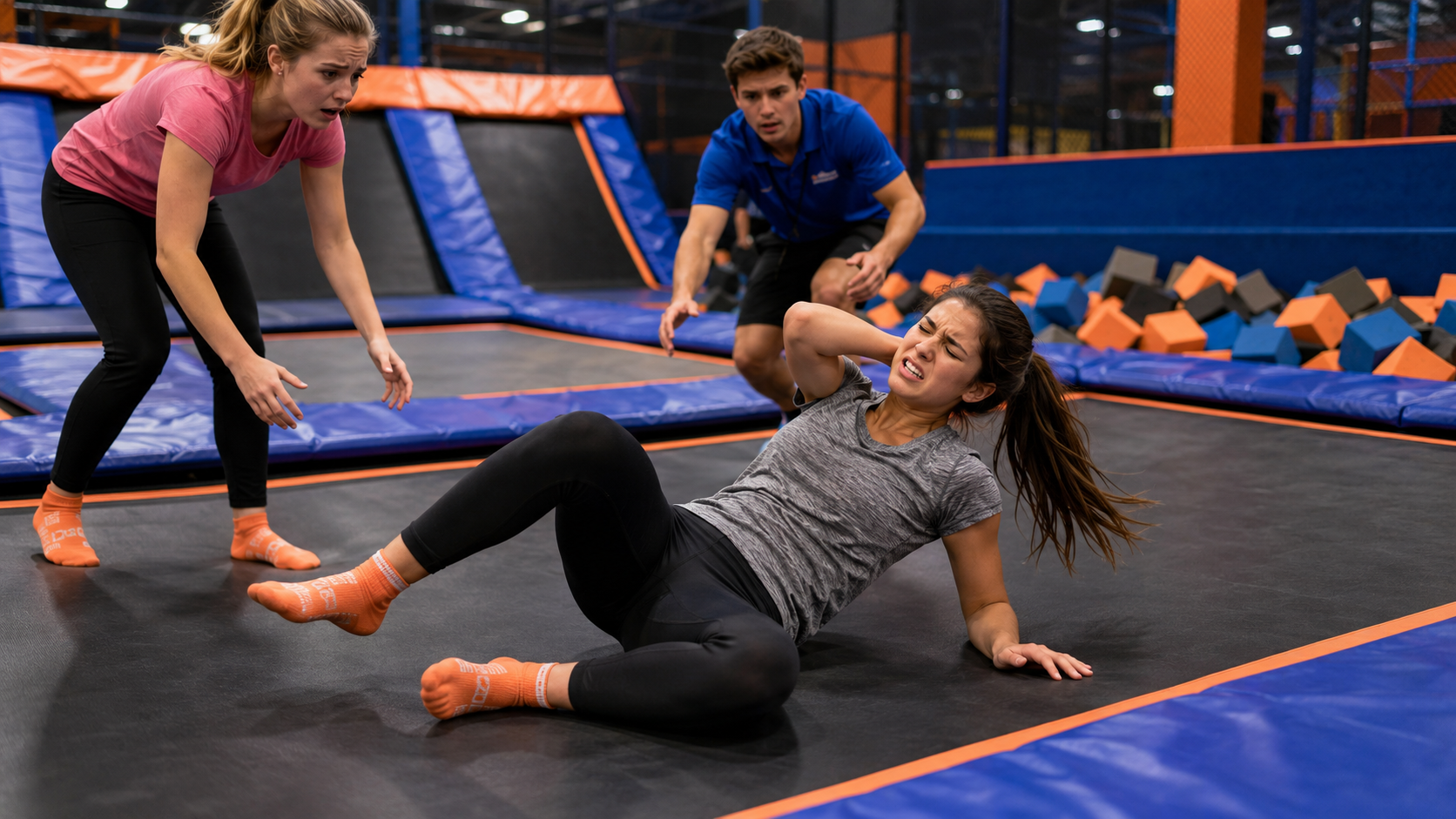
Why Neck and Back Injuries Are a Real Concern at Indoor Trampoline Parks
Minjin Park
·
Indoor trampoline parks are fun, active places for kids and adults, but awkward landings, flips, and collisions can strain the neck and back. Learn why these injuries happen and how families can reduce the risk.
Indoor trampoline parks can be a great way to burn energy, celebrate a birthday, stay active during cold or rainy weather, and give kids a break from screens. They are colorful, exciting, and designed to feel playful from the moment you walk in.
But even in a padded indoor space, trampolines can create real injury risks.
One of the areas families should pay special attention to is the neck and back. These injuries are not always the first thing people think about. Many parents worry about ankle sprains, bumped heads, or scraped knees. Those can happen too, of course. But the neck and spine are especially important because they help support movement, balance, posture, and everyday comfort.
This does not mean every trip to a trampoline park is dangerous. Many people enjoy them without a problem. The point is to understand why neck and back injuries can happen, which behaviors raise the risk, and what simple choices can make the experience safer.
A few calm safety habits can help kids and adults enjoy the fun without treating the trampoline like a stunt stage.
Why Trampolines Put Stress on the Neck and Back
Jumping looks simple from the outside. You bend your knees, push off, fly up, and land. But on a trampoline, the surface is springy, unstable, and constantly changing.
Your body has to adjust quickly every time you land.
The Body Absorbs Force With Every Landing
When you land on a trampoline, your legs, hips, core, back, and neck all help absorb force. If you land evenly with control, your body handles the movement much better.
But if you land twisted, off-balance, sideways, or unexpectedly, the force may travel through the body in awkward ways. The lower back may tighten suddenly. The neck may snap forward or backward. The spine may compress, bend, or rotate in a way it was not ready for.
That is why a jump that looks harmless can still feel painful if the landing is wrong.
The Surface Changes Under You
Unlike the ground, a trampoline moves with you. It dips, rebounds, stretches, and reacts to nearby movement.
At indoor parks, multiple trampolines may be connected. If another person lands nearby, their bounce can affect your landing. This can throw off timing and balance, especially for younger children or beginners.
A person may expect to land softly, but the mat may rebound at a different moment than expected. That surprise can lead to stiff landings, falls, or awkward twisting.
Why Neck Injuries Can Happen
The neck is flexible, but it is also sensitive to sudden movement. It supports the head, helps with balance, and responds quickly when the body changes direction.
At a trampoline park, neck strain can happen when someone falls backward, lands on the upper back, attempts a flip, collides with another jumper, or whips the head suddenly during a bounce.
Whiplash-Like Movement
A quick backward or forward snap of the head can strain muscles and soft tissues in the neck. This may happen when a jumper lands unexpectedly, bounces off balance, or falls onto the mat.
Even if there is no dramatic crash, the neck can feel sore afterward.
Landing on the Head or Upper Shoulders
This is more serious. Flips, somersaults, and rough play can lead to landings where the head, neck, or shoulders hit first.
A trampoline mat may be softer than a floor, but it is still not safe to land on the head or neck. The force of the body can compress the neck in a risky way.
This is one reason many trampoline parks have rules against flips unless done in designated areas with supervision. Those rules are not just about being strict. They exist because the consequences of a bad landing can be significant.
Why Lower Back Injuries Are Common Too
The lower back often works hard during jumping. It helps stabilize the body, control posture, and recover from off-balance landings.
When someone jumps repeatedly, twists in the air, lands seated, or bends backward unexpectedly, the lower back can take a lot of stress.
Overarching the Back
Some jumpers, especially beginners, arch their back when they lose balance. This can happen during high jumps, dodgeball games, or attempts to do tricks.
Twisting is another common issue. A child may turn to look at a friend, dodge a ball, rotate midair, or try to land facing a different direction. If the feet land while the upper body is still rotating, the back may absorb that twist.
The same thing can happen to adults who try to keep up with kids but have less flexibility or conditioning than they expect.
Repeated Jumping Without Breaks
Fatigue matters. When muscles get tired, control gets worse. A jumper may start landing harder, bending less at the knees, or losing core stability.
That is when back strain becomes more likely.
Many injuries happen not during the first five minutes, but after someone is tired and still trying to jump just as high.
Flips and Tricks Raise the Risk
Flips are one of the biggest reasons neck and back injuries happen at trampoline parks.
They look fun. They get attention. Kids see other kids doing them and want to try. Adults may think they can still do what they did years ago.
But flips require body control, timing, strength, and enough space. A mistimed flip can lead to landing on the head, neck, shoulders, or back.
Why “Almost Landing It” Still Matters
A flip does not have to fail completely to cause a problem. Landing slightly short, over-rotating, under-rotating, or landing with the body twisted can still strain the neck or back.
A person may walk away embarrassed and say, “I’m fine,” but soreness may appear later.
Copying Others Can Be Risky
At trampoline parks, kids often copy what they see. One child does a backflip, and another tries it without the same skill or body awareness.
This is especially risky when children of different ages and abilities are jumping near each other.
A good rule for families is simple: no flips unless the park specifically allows them in that area and the person is trained, supervised, and confident.
Collisions Can Affect the Spine
Indoor trampoline parks are busy places. Kids run, jump, fall, bounce, dodge, and change directions quickly.
Collisions are common when people do not watch their space.
A collision can knock someone backward, sideways, or into a landing they cannot control. Even a bump from a smaller child can surprise a larger jumper if it happens mid-bounce.
Different Body Sizes Make Collisions More Dangerous
When small children and bigger kids jump close together, the smaller child may be thrown off balance by the larger jumper’s bounce. They may also be harder for older jumpers to see.
This is why separate areas by age, size, or activity level matter.
A toddler bouncing near teens is not just “cute chaos.” It can create unpredictable movement that raises injury risk for everyone.
Common Mistakes Families Make at Trampoline Parks
Most trampoline park injuries do not happen because someone planned to be careless. They happen because the environment feels fun and padded, so people underestimate the risk.
Thinking Padding Makes Everything Safe
Padding helps reduce some injuries, but it does not remove the forces involved in jumping, falling, twisting, or landing on the neck.
A padded wall, mat, or border can still hurt if someone hits it hard or awkwardly.
Letting Kids Jump Too Long Without Breaks
Kids may not want to stop, especially at birthday parties. But fatigue affects coordination.
A short rest for water, snacks, and breathing can prevent sloppy landings.
Ignoring Posted Rules
Rules about one jumper per trampoline, no double bouncing, no flips, no running, and no sitting in active areas may seem repetitive. But they are there for a reason.
Ignoring them usually increases the chance of falls, collisions, and awkward landings.
Letting Younger Kids Follow Older Kids
A younger child may try tricks, games, or high jumps that are better suited for older kids. They may not have the strength or coordination to land safely.
It helps when adults set limits before the excitement takes over.
Adults Jumping Too Aggressively
Adults can get injured too. In fact, adults may be more likely to underestimate how demanding trampolines are.
Even if you are active, trampoline jumping uses balance and stabilizing muscles in a unique way. Going from zero to intense jumping can strain the back, neck, knees, or ankles.
Warning Signs to Take Seriously
Some soreness after active play can happen, especially if someone is not used to jumping. But certain signs should not be brushed off.
Pay attention if someone has strong neck or back pain, pain that gets worse, numbness, tingling, weakness, trouble walking, dizziness, headache after a fall, pain after landing on the head or neck, or pain that does not improve with rest.
For kids, warning signs may be less clear. A child might say, “My back feels weird,” refuse to keep playing, cry when moving, hold their neck stiffly, or seem unusually quiet.
If a child or adult has a concerning fall, hits the head or neck, or has symptoms that feel serious, it is better to stop the activity and seek appropriate medical guidance.
How to Reduce Neck and Back Injury Risk
A safer trampoline park visit starts before anyone jumps.
Read the Rules Before Starting
Every park has its own setup. Some areas are for open jump. Others may be for dodgeball, basketball dunking, foam pits, small children, or advanced tricks.
Take a minute to read the rules and explain them to children in simple language.
Instead of saying, “Be careful,” be specific:
“One person per trampoline.”
“No flips.”
“Watch your space.”
“Land on your feet.”
“Stop when you feel tired.”
Kids do better with clear rules they can picture.
Warm Up Slowly
Do not start with the highest jumps or hardest tricks.
Begin with small controlled bounces. Let the body adjust. For adults, this matters even more. The back and neck need time to warm up.
A few minutes of gentle movement can make the whole session safer.
Keep Jumps Low and Controlled
High jumps are fun, but they also make landings harder to control.
Encourage kids to focus on balance instead of height. A controlled low jump is safer than a wild high jump.
This is especially important in crowded areas.
Avoid Landing on the Neck, Head, or Stomach
Teach children not to land headfirst or neck-first. Avoid diving onto mats or into foam pits unless the park allows it and the person knows how to do it safely.
Landing on the stomach may look funny, but it can whip the neck or strain the back if done carelessly.
Take Breaks Before Fatigue Sets In
Plan water breaks before kids are completely exhausted. A break every so often can reset coordination and reduce rough behavior.
For birthday parties, adults can use food, photos, or group games as natural pauses.
Stay in the Right Area
Use areas designed for the jumper’s age and size. Keep toddlers and younger children away from older, faster jumpers.
If a park has a designated little-kid area, use it. It may feel less exciting, but it is often safer for smaller bodies.
Safer Habits for Parents and Caregivers
Parents do not need to hover over every bounce, but active supervision helps.
Watch the Type of Play, Not Just the Child
It is easy to watch whether your child is smiling and forget to watch what is happening around them.
Look for crowded spaces, rough play, older kids jumping nearby, children sitting on trampolines, people running across mats, or kids attempting flips.
These are moments when it may be time to redirect.
Set Trick Limits Before Entering
Once a child sees other kids doing flips, it is harder to say no.
Set the rule before you arrive: “Today we are jumping, playing dodgeball, and doing basketball shots, but no flips.”
This makes the boundary feel like part of the plan, not a sudden punishment.
Do Not Pressure Nervous Kids
Some children are excited from the parking lot. Others feel nervous once they step onto the trampoline.
Do not push a nervous child to jump higher, try tricks, or join rough games. Fear can make the body stiff, and stiff landings can increase injury risk.
Let them start slowly or choose a different activity.
What to Wear for a Safer Visit
Clothing can affect movement and control.
Choose comfortable athletic clothes that allow bending and jumping. Avoid loose scarves, dangling accessories, long necklaces, or anything that could catch.
Use the grip socks required by the park. They help reduce slipping and are usually part of the facility’s safety rules.
Tie long hair back if it blocks vision. Remove items from pockets, including phones, keys, and sharp objects.
A phone in the pocket during a fall can bruise the body or distract the jumper.
Why Foam Pits Still Require Caution
Foam pits look soft and safe, but they can create a false sense of security.
People may jump in headfirst, dive awkwardly, or assume they can land any way they want. But foam pits vary in depth and firmness, and landing badly can still strain the neck or back.
A safer habit is to enter feet first and follow the posted rules. Do not dive into a foam pit unless the facility specifically allows it and the person is trained to do so.
Also, wait until the landing area is clear before jumping. Landing on another person in a foam pit can cause injuries to both people.
When to Stop Jumping
Knowing when to stop is just as important as knowing how to start.
Stop if someone feels neck pain, back pain, dizziness, unusual weakness, sharp discomfort, or fear after a fall. Stop if the area becomes too crowded or chaotic. Stop if kids are getting tired and ignoring rules.
Stopping early can feel disappointing, but it is better than pushing through and turning a fun outing into a painful one.
Parents can frame it positively: “Let’s take a break and get water,” or “We’ll switch to a calmer area now.”
A Simple Family Safety Plan
Before your next trampoline park visit, try this quick plan:
Choose a park with clear rules and supervised areas.
Dress in comfortable athletic clothes.
Use required grip socks.
Start with gentle jumping.
Keep flips off-limits unless properly allowed and supervised.
Separate younger children from bigger jumpers.
Take regular breaks.
Watch for fatigue, rough play, and crowded areas.
Stop immediately after a concerning fall or pain.
This kind of plan does not take away the fun. It protects it.
Conclusion: Trampoline Parks Are Fun, But Landings Matter
Indoor trampoline parks can be exciting places for kids, teens, and adults. They offer movement, laughter, and a chance to burn energy in a way that feels different from ordinary exercise.
But the same bounce that makes trampolines fun can also create risk when landings are uncontrolled, tricks are attempted too soon, or jumpers collide.
Neck and back injuries are worth taking seriously because they can happen from awkward falls, flips, twisting, fatigue, or landing on the head, shoulders, or lower back.
The best safety habits are simple: follow the rules, avoid risky tricks, keep jumps controlled, separate kids by size and age, take breaks, and stop when something hurts.
A trampoline park visit does not need to feel tense or overly restricted. With a little awareness and a few clear boundaries, families can enjoy the fun while giving the neck and back the protection they deserve.
Hi, I’m the creator and editor behind ZestyHabit. I research everyday safety, first aid, and practical wellness topics using official guidance and reliable public sources, then turn that information into clear, realistic steps for daily life.
My goal is to help readers make safer, better-informed choices at home and beyond.