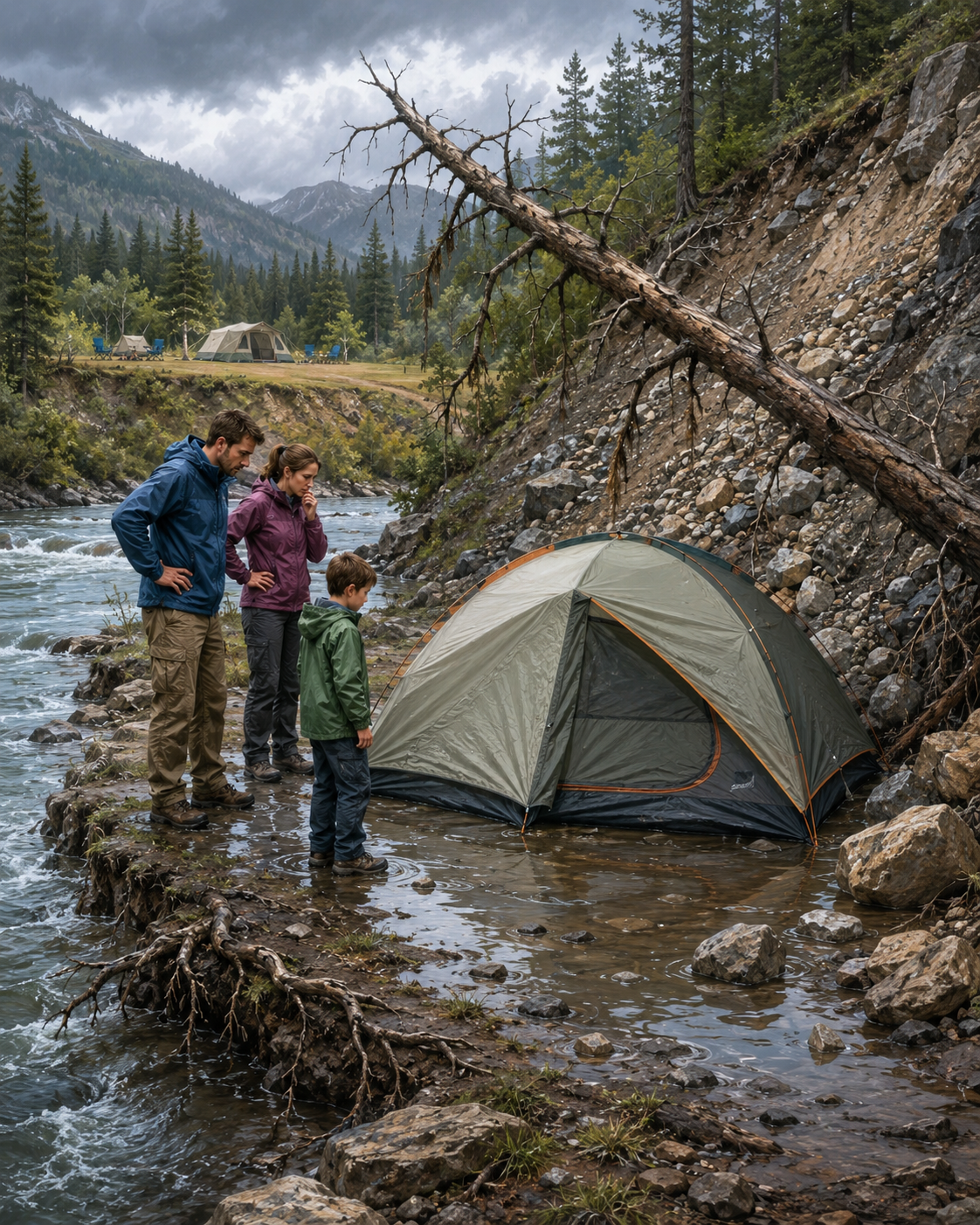
Why Choosing the Wrong Tent Location Can Be Dangerous: A Practical Campsite Safety Guide
Minjin Park
·
Where you pitch your tent matters more than you might think. Learn how to avoid flooding, falling branches, strong winds, traffic, wildlife, and other campsite hazards.
Setting up a tent can feel like one of the simplest parts of camping.
You find a flat patch of ground, unpack the poles, and start building your temporary home. But the first open space you see is not always the safest place to sleep.
A poor tent location can leave you dealing with water flowing under your sleeping bag, branches falling in the night, strong wind hitting the tent from every direction, or vehicles passing too close to your campsite. Even a spot that looks comfortable in the afternoon can become inconvenient or unsafe after dark or during changing weather.
The good news is that choosing a safer tent site does not require expert outdoor skills. It mostly comes down to slowing down, looking around, and thinking about what could change over the next several hours.
Before driving in stakes, take a few minutes to inspect the area. That small pause can make your camping trip much more comfortable and reduce several avoidable risks.
A tent offers basic shelter, but it does not provide the same protection as a house, cabin, or vehicle.
Tent fabric cannot stop a large falling branch. It may not keep water out if the ground beneath it turns into a shallow stream. It can also shift, collapse, or tear when exposed to strong wind.
Your tent location becomes part of your shelter system.
A well-chosen site helps the tent do its job. A poorly chosen one forces the tent to handle conditions it was never designed to manage.
This matters even on short family camping trips. You may only be staying for one night, but weather, darkness, campground traffic, and nearby activity can all change quickly.
Low Ground Can Flood Faster Than You Expect
One of the most common campsite mistakes is pitching a tent in the lowest, flattest-looking part of the area.
At first, this may seem like the perfect spot. It is level, clear, and easy to walk on. The problem is that low areas often collect rainwater.
Water Follows the Natural Shape of the Ground
When rain falls, it moves downhill and settles in dips, depressions, and shallow channels.
Even if rain is not currently in the forecast, weather can change. Water may also arrive from higher ground several yards away, making it difficult to tell where the problem started.
A tent placed in a low spot may stay dry during a light drizzle but become surrounded by water during a heavier storm.
Once the ground is saturated, water may seep through the tent floor, enter around the edges, or soak gear placed near the walls.
Look for Signs of Previous Water Flow
Before setting up, inspect the ground for clues such as:
Flattened grass or leaves
Muddy patches
Small channels in the soil
Piles of leaves, sticks, or debris gathered in one line
Water stains on rocks
Soft ground that feels different from the surrounding area
These signs may indicate that water regularly passes through the site.
Choose a slightly elevated area instead, but avoid steep slopes where you may slide during the night.
Camping Beneath Dead or Damaged Trees Can Be Risky
Shade is valuable at a campsite, especially in warm weather. However, not every tree is a safe tree to sleep beneath.
Dead branches, cracked limbs, and weakened trunks can fall without much warning.
Falling Branches Are Not Always Easy to Hear
A large branch may break because of wind, rain, decay, disease, or previous storm damage.
Some damaged limbs remain caught in the tree canopy for days or weeks before falling. Campers sometimes call these hanging branches “widowmakers” because of the serious danger they can create.
You do not need to identify every tree species or understand forest health in detail. A basic visual check can reveal many obvious problems.
Warning Signs Above Your Tent Site
Look up before looking down.
Check for:
Large dead branches
Broken limbs hanging in nearby trees
Cracks in trunks or major branches
Trees leaning heavily toward the campsite
Exposed or damaged roots
Hollow-looking trunks
Trees with very little healthy growth compared with those nearby
Recently fallen branches on the ground
A site may have beautiful shade, but if the canopy above looks unstable, choose another location.
A Steep Slope Can Create More Than an Uncomfortable Night
Most campers know that sleeping on a slope can be annoying. You may slide toward one side of the tent or wake up pressed against the wall.
On loose or uneven ground, tent stakes may pull out more easily. Rain can soften the soil, and wind can place additional pressure on the tent.
A slope may also direct water toward one side of the tent.
Gear Can Shift During the Night
Sleeping bags, pads, backpacks, flashlights, and children’s belongings may all slide toward the lower end.
If the slope is severe, getting in and out of the tent can become awkward, especially after dark.
Look for ground that is mostly level, with only a slight natural rise for drainage. If you can feel yourself leaning noticeably while standing, the site may not be ideal.
Avoid Pitching Too Close to Rivers, Creeks, and Lakes
A waterfront campsite may look peaceful and convenient. It can also place you closer to changing water levels, slippery banks, insects, and nighttime hazards.
Water Levels Can Change
A creek that looks shallow in the afternoon may rise after rain falls upstream.
You may not see any rain at your campsite, yet water can still move in from another area. Rivers and drainage channels can change faster than expected after storms.
Observe the shape of the land around the water.
A wide area of bare soil, flattened plants, driftwood, or debris above the current waterline may indicate that the water sometimes reaches much higher.
Banks Can Be Unstable
The edge of a river or creek may be soft, undercut, or slippery.
Children may wander toward the water after dark or early in the morning. Adults can also trip when carrying gear or walking without a flashlight.
Follow campground rules about how far tents should be placed from water. When no clear guidance is posted, choose a spot with a comfortable buffer rather than setting up directly beside the bank.
Strong Wind Can Turn an Exposed Site Into a Difficult One
A wide-open hilltop or field may offer an excellent view, but it can also receive stronger wind than a protected location.
Wind affects more than comfort.
It can loosen stakes, bend poles, blow loose gear away, and cause the tent fabric to flap loudly throughout the night.
Watch the Trees and Grass
Before setting up, notice how the environment is moving.
Are the tops of the trees bending? Is grass lying in one direction? Are leaves and dust blowing steadily across the site?
These signs can help you understand how exposed the location is.
Use Natural Protection Carefully
A cluster of healthy trees, bushes, or a gentle land feature may reduce direct wind.
However, do not place the tent directly beneath damaged trees or against unstable rocks. The goal is to find moderate protection without creating a new hazard.
Position the strongest or lowest part of the tent toward the expected wind direction, following the tent manufacturer’s setup guidance.
Setting Up Too Close to Roads and Parking Areas
Campgrounds often have roads running near tent pads, restrooms, and parking spaces.
A site near the car may feel convenient, especially when unloading coolers, sleeping bags, and cooking equipment. But placing a tent too close to moving vehicles can create unnecessary risk.
Drivers May Have Limited Visibility
Campground roads are often narrow, dark, and crowded with parked vehicles.
Drivers may be watching for signs, searching for a campsite number, or backing into a space. Children and low-profile tents can be difficult to see, especially at night.
Keep tents, chairs, play areas, and sleeping spaces well inside the designated campsite.
Avoid setting up beside a road shoulder, in a parking area, or near a turnaround.
Headlights and Noise Can Disrupt Sleep
Even when vehicles are moving slowly, headlights shining into the tent and doors opening late at night can make the location unpleasant.
A little extra distance from the road usually improves both safety and sleep.
Be Careful Around Fire Rings and Cooking Areas
Tent placement should be separated from campfires, grills, camp stoves, and hot cooking equipment.
A tent placed too close to the fire may be exposed to sparks, heat, smoke, and people walking around with hot food or equipment.
Wind Can Carry Sparks
The fire may seem far enough away when the air is calm. Once the wind changes, sparks and smoke may move directly toward the tent.
Synthetic tent materials can be damaged by heat and small embers.
Use the established fire ring and maintain a generous distance between the tent and any flame or cooking area. Follow all posted campground fire restrictions.
Think About Foot Traffic
Campers often move between the fire, picnic table, cooler, vehicle, and tent.
Do not place guy lines or stakes where people are likely to walk while carrying hot drinks, food, or cookware.
Use reflective cord or small campsite lights where permitted so tent lines are easier to see after dark.
Wildlife Paths Are Not Good Tent Sites
Animals often travel along the same routes repeatedly.
A narrow path through vegetation may look like a convenient cleared area, but it could be a wildlife trail.
Look for Signs of Animal Activity
Common clues include:
Tracks
Droppings
Flattened vegetation
Scratched tree trunks
Digging
Strong animal odors
Food remains or torn trash bags
Repeated trails leading toward water
Avoid placing a tent directly on these paths.
Also keep food, scented products, and trash managed according to campground guidance. A clean campsite is less likely to attract unwanted animal attention.
Check for Insects, Poisonous Plants, and Ground Hazards
A campsite may look clear from standing height but contain problems close to the ground.
Inspect Before Unrolling the Tent
Walk slowly around the area and look for:
Ant hills
Wasp or hornet activity
Sharp rocks
Broken glass
Exposed roots
Thorny plants
Poison ivy or poison oak
Animal holes
Uneven ground
Standing water that may attract mosquitoes
Do not place the tent over a nest, burrow, or active insect area.
Avoid clearing vegetation unnecessarily. Instead, use an established tent pad whenever possible.
Remove Small Hazards Without Damaging the Site
Move loose sticks and small stones that could damage the tent floor or make sleeping uncomfortable.
Do not cut plants, dig drainage trenches, or permanently alter the campsite unless campground staff specifically permit it.
A footprint or groundsheet designed for your tent can provide extra protection from rough or damp ground.
Privacy Can Affect Safety Too
Campers sometimes choose the most hidden corner of a campground to gain privacy.
A little separation can be relaxing, but an extremely isolated site may have disadvantages.
You may be farther from campground staff, restrooms, marked trails, or other campers if you need assistance.
At the other extreme, setting up directly beside a restroom, playground, trail entrance, or group gathering area can bring constant foot traffic.
Choose a site that feels comfortably connected to the campground without being placed in the middle of a busy route.
Common Tent Placement Mistakes
Many location problems happen because campers are tired, hungry, or eager to finish setting up.
Here are several mistakes that are easy to make.
Choosing the First Flat Spot
Flat ground matters, but it is only one part of a safe site.
Always check what is above, around, and uphill from the tent location.
Setting Up After Dark Without Inspecting the Area
Darkness can hide branches, drainage channels, animal activity, roots, and broken glass.
When possible, arrive with enough daylight to inspect and organize the campsite. If you must arrive late, use strong flashlights and check the area again in the morning.
Ignoring Weather Because the Sky Looks Clear
Current conditions do not always show what the night will bring.
Check the local forecast before leaving home and again when you have service near the campground.
Pay attention to rain, wind, thunderstorms, temperature changes, and campground alerts.
Placing the Tent Where It Blocks Movement
A tent should not block the path between the vehicle, picnic table, restroom, or fire ring.
Repeatedly stepping over stakes and guy lines increases the chance of trips and falls.
Letting Children Choose the Site Alone
Children may naturally select a spot close to water, under a large tree, behind rocks, or near the playground.
Let them help with setup, but have an adult inspect the location first.
A Simple Tent Site Safety Check
Before unpacking everything, stand in the middle of the proposed tent area and ask a few questions.
Look Down
Is the ground level, dry, stable, and free from holes, roots, sharp objects, and insect activity?
Look Up
Are there dead branches, damaged trees, loose rocks, or anything else that could fall?
Look Around
Is the site too close to water, fire, roads, cliffs, cooking areas, wildlife paths, or heavy foot traffic?
Think About Weather
Where will rainwater travel? Which direction is the wind coming from? Is the site exposed or reasonably protected?
Think About Nighttime
Can people reach the restroom without tripping over lines? Will vehicles pass nearby? Can children safely move around the campsite?
If the site raises several concerns, it is usually easier to move before the tent is fully assembled.
What to Do If Conditions Change
Even a carefully chosen site may become less suitable when weather changes.
If water begins collecting near the tent, branches start falling, wind becomes difficult to manage, or campground staff issue warnings, reassess the location.
Do not stay in a dangerous position simply because moving the tent is inconvenient.
Follow instructions from campground staff, park officials, or posted alerts. In severe conditions, a vehicle or designated shelter may be more appropriate than remaining in a tent.
The goal is not to panic. It is to stay flexible and respond early rather than waiting for a small problem to become harder to manage.
Final Thoughts
Choosing where to pitch a tent is one of the most important decisions you make at a campsite.
A spot can look peaceful and convenient while still being vulnerable to flooding, falling branches, strong wind, traffic, wildlife, fire, or unstable ground.
Before setting up, take a few minutes to look down, look up, and look around.
Choose slightly elevated, stable ground. Stay away from damaged trees, steep slopes, water edges, roads, fire rings, and animal trails. Consider how the site may change after dark or during bad weather.
Camping should feel relaxing, not stressful. A thoughtful tent location helps you sleep more comfortably, protect your gear, and enjoy the outdoors with fewer preventable problems.
Hi, I’m the creator and editor behind ZestyHabit. I research everyday safety, first aid, and practical wellness topics using official guidance and reliable public sources, then turn that information into clear, realistic steps for daily life.
My goal is to help readers make safer, better-informed choices at home and beyond.