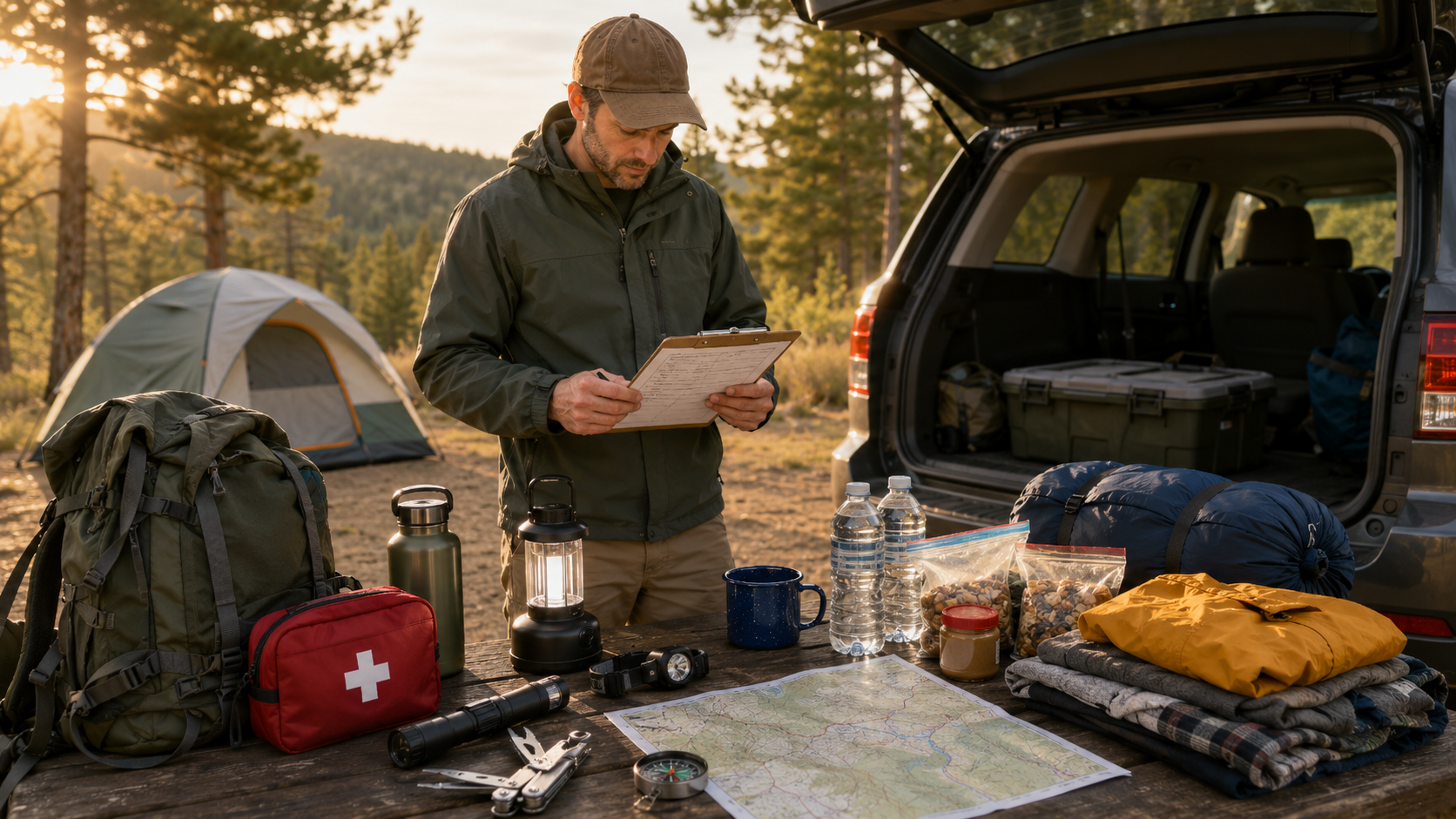
The Essential Safety Checklist Before a Long Camping Trip
Minjin Park
·
Planning a long camping trip? Use this practical safety checklist to prepare your vehicle, gear, food, weather plans, first aid basics, campsite habits, and communication before you leave.
Why Safety Planning Matters Before a Long Camping Trip
A weekend camping trip is one thing. A long camping trip is different.
When you are only away for one night, forgetting something small may be annoying but manageable. You can drive back home, stop by a nearby store, or simply adjust your plans. But when you are camping for several days or longer, especially across remote areas, national parks, forests, lakes, desert roads, or mountain regions, small oversights can become much more stressful.
That does not mean camping has to feel complicated or scary. Long camping trips can be peaceful, fun, and deeply refreshing. There is something special about waking up outdoors, cooking simple meals, watching the stars, and being away from everyday noise for a while.
The goal is not to pack your whole house or worry about every possible problem. The goal is to prepare well enough that you can actually relax.
A good safety checklist helps you avoid common mistakes, stay comfortable, and make better decisions when plans change. Before you load the car and head out, take time to review the basics: your route, vehicle, weather, campsite, food, water, lighting, first aid kit, and communication plan.
Check Your Route Before You Leave
One of the easiest mistakes to make before a long camping trip is assuming your phone will guide you the entire way.
In many popular camping areas, cell service can become weak or disappear completely. GPS may still work, but maps, search results, campground details, and road updates may not load if you lose data.
Download Offline Maps
Before leaving home, download offline maps for the entire area you plan to visit. This includes your route, campground, nearby towns, gas stations, trailheads, and backup roads.
It is also smart to save the addresses or GPS coordinates for your campsite, ranger station, nearest grocery store, and nearest urgent-care-type facility. You may never need all of that information, but having it saved can reduce stress.
Print or Screenshot Important Details
For a longer trip, keep a printed copy or screenshots of your campground reservation, gate codes, check-in instructions, parking permits, and route details.
A screenshot is not old-fashioned when your signal drops. It is practical.
Look for Road Conditions
Mountain passes, forest roads, dirt roads, and remote highways can be affected by weather, construction, fires, flooding, or seasonal closures. Check official park, forest, or campground updates before leaving.
A common mistake is trusting an old blog post or map app without checking current conditions. Roads that look open online may be rough, closed, or unsuitable for certain vehicles.
Inspect Your Vehicle Carefully
For many long camping trips, your vehicle is the most important piece of safety gear you own. It carries your shelter, food, water, gear, and people.
Even if your car feels fine during daily errands, a long drive with extra weight is a different situation.
Check Tires, Including the Spare
Check tire pressure before you leave, ideally when the tires are cool. Look for cracks, uneven wear, bulges, or anything stuck in the tread.
Do not forget the spare tire. Many people check the four main tires but never look at the spare until they need it. Make sure you also know where the jack and tire tools are stored.
Check Fluids and Lights
Before a long trip, check oil, coolant, windshield washer fluid, brake fluid, and other basic fluids according to your vehicle’s manual. Make sure headlights, brake lights, turn signals, and hazard lights are working.
If you are towing a camper or trailer, check the trailer lights too.
Pack Basic Vehicle Supplies
You do not need to become a mechanic, but a few basics can help:
Jumper cables or a portable jump starter
Tire pressure gauge
Flashlight or headlamp
Basic tool kit
Work gloves
Emergency blanket
Extra windshield washer fluid
Phone charger for the car
For remote routes, it is also wise to carry extra water and a little extra food in the vehicle, separate from your regular camping meals.
Review the Weather for Every Stop
Weather is one of the biggest factors on a long camping trip. A short storm may be easy to handle at home, but outdoors it can affect your tent, cooking setup, road conditions, clothing, and comfort.
Check Daytime and Nighttime Temperatures
Many campers check the daytime forecast and forget the overnight low. This is especially common in mountains, deserts, and high-elevation parks, where nights can get surprisingly cold even after a warm day.
Pack sleeping bags and layers based on the lowest expected temperatures, not just the average daytime temperature.
Watch for Wind and Rain
Rain gets most of the attention, but wind can be just as disruptive. Strong wind can loosen tent stakes, blow away lightweight gear, make cooking difficult, and create uncomfortable sleeping conditions.
If wind is in the forecast, bring stronger stakes, extra guylines, and a plan to keep loose items secured.
Have a Bad-Weather Plan
Before you leave, decide what you will do if the weather becomes uncomfortable. Will you stay in the tent? Sit in the car? Drive into town? Move to a hotel for one night? Cancel a hike?
Making this decision ahead of time helps prevent stubborn choices in the moment.
Check Your Tent and Sleeping Setup
Your shelter is not something you want to test for the first time at 9 p.m. in the dark.
Set up your tent at home before a long trip, especially if it is new or has been stored for a while.
Inspect the Tent
Check the poles, stakes, zippers, rainfly, seams, and floor. Look for small tears or missing parts. Make sure the rainfly still fits properly and that you understand how to attach it.
A common mistake is packing the tent bag without checking whether the stakes are actually inside.
Practice Setting It Up
Even if you have used the tent before, a quick practice setup helps. You may notice missing parts, confusing clips, or a broken pole before the trip instead of during the trip.
If you are camping with family or friends, let more than one person learn how to set it up. That way the whole job does not depend on one tired person after a long drive.
Match Your Sleep Gear to the Conditions
Check the temperature rating of your sleeping bag and bring an insulated sleeping pad if nights may be cool. The ground can pull heat away from your body faster than people expect.
For comfort, pack dry sleep clothes separately from daytime clothes. A clean, dry layer at night can make a big difference.
Plan Food and Water Carefully
Food planning is not just about meals. It is also about storage, cleanliness, wildlife, and having enough water.
On a long camping trip, it is easy to underestimate how much you will drink, especially if you are hiking, paddling, traveling in summer, or camping at elevation.
Bring More Water Than You Think You Need
If your campsite has drinking water, confirm that it is available during your dates. Some campgrounds turn off water seasonally or may have temporary issues.
For remote camping, bring enough water for drinking, cooking, handwashing, dishes, and pets if they are coming along.
Do not rely on lakes, rivers, or streams unless you have a proper way to treat water and understand the local conditions.
Store Food Properly
Food storage matters for both people and wildlife. In many camping areas, animals are attracted to coolers, trash, crumbs, toiletries, and scented items.
Use bear-resistant containers where required. In other places, keep food sealed and stored in your vehicle or designated storage box according to local rules.
Never leave snacks in a tent. Even small food smells can attract unwanted visitors.
Keep a Simple Meal Plan
Long camping trips are not the best time to depend on complicated meals every night. Plan easy meals, shelf-stable backups, and snacks that do not require much preparation.
A few simple backup meals can save the day if it rains, the stove gives you trouble, or everyone is too tired to cook.
Check Your Stove, Fuel, and Fire Plan
Cooking outdoors is one of the best parts of camping, but it needs a little planning.
Test Your Camp Stove
Before the trip, test your stove at home in a safe outdoor area. Make sure it lights, the fuel connects correctly, and you know how to use it.
Also check how much fuel you have. Half-used canisters can be hard to estimate, so bring enough for the full trip plus a reasonable backup.
Know the Fire Rules
Campfire rules change depending on weather, fire danger, season, and location. Some places allow fires only in designated rings. Others may ban them completely during dry conditions.
Check the current rules before you go, not just the general campground description.
Pack a Safe Cooking Setup
Cook on a stable surface away from tents, dry grass, and loose gear. Keep water nearby for general cleanup and fire safety awareness. Let stoves and cookware cool before packing them away.
Build a Practical First Aid and Comfort Kit
A first aid kit is one of those things people often pack without opening. Before a long trip, actually look inside.
Restock Used or Expired Items
Check bandages, blister pads, antiseptic wipes, tweezers, gauze, tape, and any personal items your group normally needs. Replace anything used, damaged, or expired.
Bring personal medications and basic health items in a place that is easy to reach, not buried at the bottom of a storage bin.
Think About Common Camping Problems
Most camping discomforts are ordinary: blisters, bug bites, sunburn, small cuts, headaches, upset stomach, or sore muscles.
Pack for those realistic situations. Good socks, sunscreen, insect repellent, lip balm, hand sanitizer, and blister care can prevent a lot of frustration.
Know Your Limits
A first aid kit is not a substitute for professional care. It is simply a tool for minor situations and basic preparedness. For serious symptoms, injuries, or emergencies, follow local guidance and seek appropriate help.
Prepare for Bugs, Sun, and Outdoor Exposure
Long camping trips mean more time exposed to the elements. Even mild sun or light bug activity can become irritating after several days.
Pack Sun Protection
Bring sunscreen, sunglasses, hats, and lightweight long sleeves. Reapply sunscreen as directed, especially after sweating or swimming.
Cloudy days still count. People often get sunburned when they assume the sun is not strong because the weather feels cool.
Bring Insect Protection
Mosquitoes, ticks, flies, and other bugs vary by region and season. Bring insect repellent and check local recommendations.
After walking through tall grass or wooded areas, do a quick tick check. Keep tent doors zipped and avoid leaving lights on inside the tent while the door is open.
Protect Your Feet
Foot problems can make a long camping trip miserable. Bring broken-in shoes, extra socks, water shoes if needed, and blister care.
Do not rely on brand-new hiking boots for a long trip unless you have already worn them enough to know they are comfortable.
Make a Communication Plan
Even if you want to unplug, someone should know where you are going.
Share Your Itinerary
Give a trusted person your route, campground names, planned stops, and expected return date. If your plans change, update them when you have service.
This is especially important for solo campers, long road trips, remote campsites, or backcountry plans.
Bring Backup Power
Pack power banks, charging cables, and car chargers. Keep at least one phone charged for navigation and communication.
Do not assume you can text from camp. If you are heading somewhere remote, check whether the area has known service gaps. Some campers use satellite messengers for remote travel, especially when traveling far from reliable roads or towns.
Pack Lighting Before You Need It
Camp gets dark quickly, especially in wooded areas. Good lighting makes everything easier: setting up the tent, cooking, finding the bathroom, walking safely, and checking on kids or pets.
Bring More Than One Light
Pack a headlamp for each person if possible, plus a lantern for shared areas. Bring extra batteries or recharge options.
Phone flashlights are useful, but they should not be your main lighting plan. Phones are too important for communication and navigation to drain casually.
Set Lights in Easy-to-Find Places
Once you arrive, place lights where you can reach them before dark. Many people pack flashlights carefully, then cannot find them when they need them.
Check Campsite Safety When You Arrive
A safe campsite starts with choosing the right spot.
Look Up Before You Set Up
Avoid placing your tent under dead branches or unstable-looking trees. Campers sometimes call these “widowmakers,” but you do not need dramatic language to understand the point: branches can fall.
Choose a clear, level spot when possible.
Avoid Low Spots
Low areas can collect water during rain. If the forecast includes storms, do not place your tent in a dip, drainage path, or dry creek bed.
Keep Walkways Clear
At night, shoes, chairs, coolers, and cords become tripping hazards. Keep a clear path between your tent, vehicle, cooking area, and bathroom route.
This matters even more with kids, older adults, pets, or anyone getting up at night.
Avoid the Most Common Long-Trip Packing Mistakes
Long camping trips do not always require fancy gear, but organization matters.
Packing Too Much Without a System
Overpacking can be almost as frustrating as underpacking. If everything is tossed into the car randomly, you may not find what you need when you need it.
Use labeled bins for categories like kitchen, sleeping, clothing, first aid, tools, and food.
Forgetting Trash Plans
Bring sturdy trash bags and know where you can dispose of garbage. Pack out what you pack in when required.
Trash left around camp can attract animals and create problems for the next visitors.
Not Testing New Gear
New tent, new stove, new sleeping pad, new water filter—test it before the trip. The first night of a long camping trip is not the best time to learn that something leaks, squeaks, does not inflate, or requires a missing part.
A Simple Long Camping Trip Safety Checklist
Before you leave, review this quick list:
Route and Information
Download offline maps, save campground details, check road conditions, and share your itinerary.
Final Thoughts: Prepare Well So You Can Enjoy the Trip
A long camping trip should feel relaxing, not stressful. The best way to make that happen is to handle the important safety checks before you leave home.
You do not need to plan for every unlikely situation. Start with the basics: a reliable vehicle, a realistic route, suitable shelter, enough water, safe food storage, working lights, weather awareness, and a simple communication plan.
Good preparation gives you more freedom once you arrive. You can enjoy the campfire, the quiet mornings, the trail walks, the lake views, and the slow pace of outdoor life without constantly wondering what you forgot.
Before your next long camping trip, take an hour to walk through the checklist. It is a small step that can make the whole trip smoother, safer, and much more enjoyable.
Hi, I’m the creator and editor behind ZestyHabit. I research everyday safety, first aid, and practical wellness topics using official guidance and reliable public sources, then turn that information into clear, realistic steps for daily life.
My goal is to help readers make safer, better-informed choices at home and beyond.