The Easiest Way to Start Reducing blue light before sleep
Trying to sleep better without turning your evening into a strict routine? Here’s a practical, low-pressure way to reduce blue light before bed and make it easier to actually stick with it.
Most people do not need a dramatic nighttime reset. They do not need to ban all screens, buy a basket of sleep gadgets, or pretend they are suddenly the kind of person who reads a hardcover book by candlelight at 9:15 p.m.
What they usually need is something smaller. Something they can do tonight without rearranging their whole life.
If you have ever told yourself, “I should really stop scrolling before bed,” and then found yourself watching videos with your face three inches from your phone at 12:07 a.m., you are very normal. Evening screen time is not just a bad habit in the abstract. It is tied to how people actually wind down now. Phones are where we text, zone out, watch something easy, check the weather, answer one last message, and avoid thinking too hard.
So when people try to “quit screens at night,” it often fails because the change is too abrupt. The easiest way to start reducing blue light before bed is not to make screens disappear. It is to change the type of screen use during the last hour of the night.
That shift is a lot more realistic, and it still helps.
Why blue light at night becomes a problem
Blue light is part of normal daylight, and during the day, that is not a bad thing. It helps signal alertness. The issue is timing.
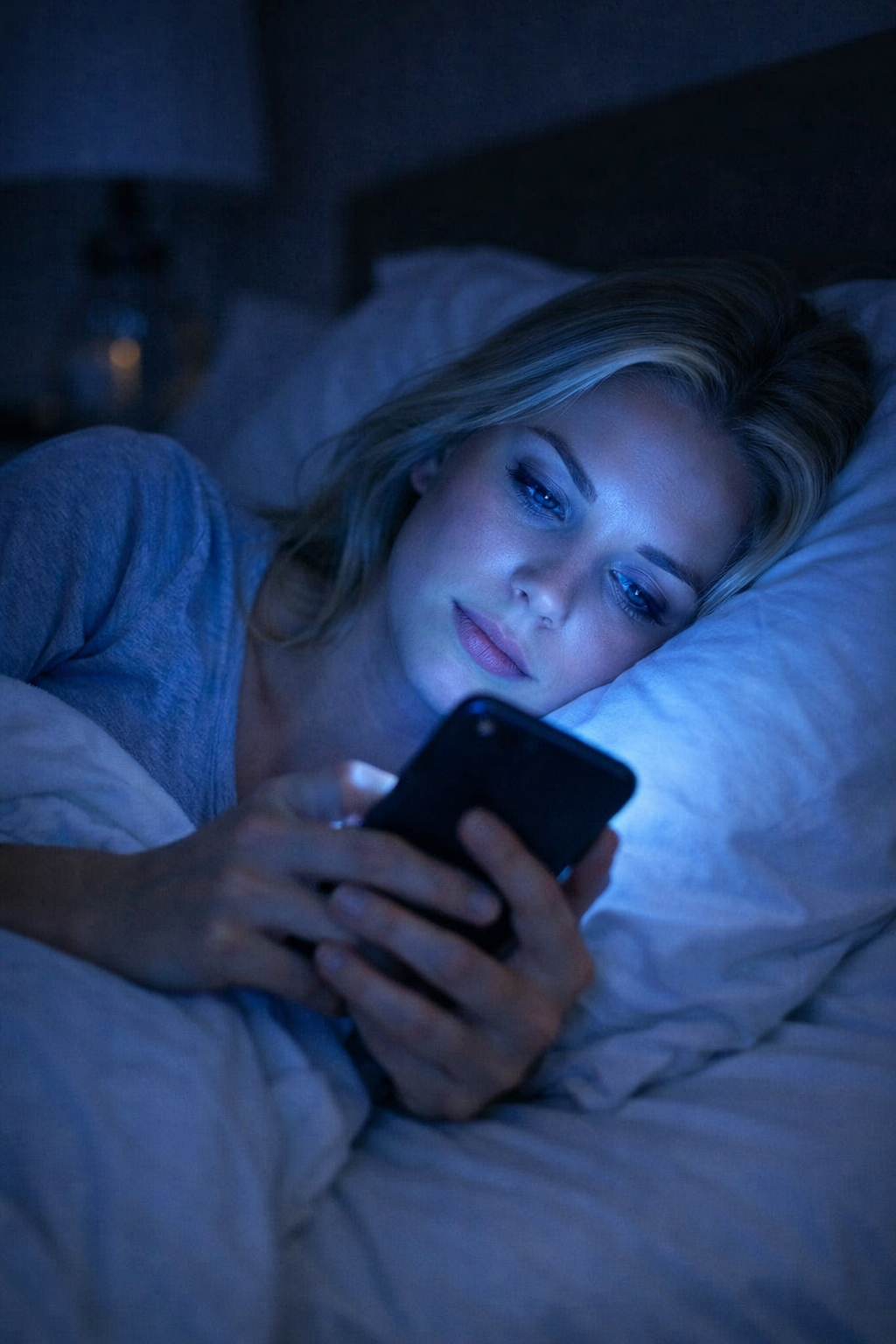
At night, bright cool-toned light can keep your brain feeling like the day is still going. And most people are not just casually exposed to it. They are getting it from a phone held close to the face in a dark room, often while doing something mentally stimulating too.
That combination matters.
It is not always just the light itself. It is the whole bedtime setup: brightness, closeness, endless novelty, emotional content, the temptation to keep tapping. A sleepy brain does not stand much of a chance against “just one more video” when the next thing loads instantly.
This is why a lot of people say they feel tired but somehow not ready to sleep. Their body is worn out, but their brain is still being nudged to stay awake.
The easiest place to begin: dim and shift, do not quit
If you want the most doable starting point, try this:
Make your phone warmer and dimmer one hour before bed
That is it. Start there.
Not “no screens after 8.” Not “leave your phone in another room.” Not “replace your whole evening with herbal tea and journaling.”
Just make the screen less intense.
Turn on your phone’s night mode or blue light filter. Lower the brightness more than you think you need to. If your room lights are already dim, your screen should not look like a tiny refrigerator door in the dark.
This works as a starting habit because it does not demand a full personality change. You can still use your device. You are just taking the edge off.
For a lot of people, this single step is the first thing that feels manageable enough to keep doing.
Why this small change works better than an all-or-nothing rule
Big bedtime rules sound good in theory. In real life, people break them fast.
The problem is not laziness. It is friction.
If your routine normally includes texting a friend, checking your calendar for tomorrow, watching part of a show, or setting an alarm, then a rule like “no screens at night” bumps into your actual life right away. Once you break it once, the whole rule often collapses.
A softer rule holds up better: After a certain time, I only use warm, dim screens.
That is much easier to maintain. It also tends to lead to other good choices naturally. When a screen is darker and less vivid, it becomes a little less fun to keep using forever. You may still scroll, but often not as long. The content feels less sharp, less pull-you-in. That matters more than people think.
It is similar to putting snacks in a less convenient cabinet. You still have access, but you are no longer making it effortless to keep going.
The best first habit is tied to a trigger, not a vague intention
A lot of bedtime habits fail because they are based on a fuzzy idea like “I’ll try to remember tonight.”
That sounds reasonable until it is 11:42 p.m. and you are tired and distracted.
What works better is attaching the habit to something that already happens every evening.
Pick one automatic trigger
For example:
when you plug in your phone for the night
when you brush your teeth
when you change into pajamas
when you turn off the kitchen light
when your evening show starts
At that moment, switch on night mode and dim the screen.
This kind of cue matters because it removes the need to negotiate with yourself. The habit is not based on mood. It is based on sequence.
You brush your teeth, your screen changes. You plug in your phone, your screen changes. That is much easier for the brain to learn.
A very practical version of this routine
Here is what this can look like in an ordinary life.
You finish cleaning up after dinner. You sit on the couch. Maybe you still want to check messages and watch a few clips because your brain is fried and reading a book sounds deeply unrealistic.
Fine.
At 9:30 p.m. or whenever your wind-down starts, your phone goes into night mode. Brightness drops. Overhead lights in the room are off, and you are using a lamp instead. You still use your phone, but now the whole setup feels quieter.
Later, when you go to bed, maybe you still check one last thing. But the screen is not blasting your face. That alone often makes it easier to feel sleepy instead of accidentally alert.
This is not a perfect evening routine. That is kind of the point. It is a routine that survives real life.
What to change first if you use your phone in bed
A lot of people do not just use screens before bed. They use screens in bed, under the blanket, with the room dark and the phone close enough to count as a second moon.
If that is you, the most useful change is not guilt. It is setup.
Make the screen physically less intense
Try these:
reduce brightness to the lowest comfortable level
turn on warm display settings
increase text size so you do not bring the screen so close to your face
use dark mode where it actually helps readability
hold the device a little farther away when possible
This sounds almost too basic, but sometimes the easiest improvements are embarrassingly simple. A bright phone two inches from your eyes at midnight is just a rough deal. Moving it farther away and dimming it can make a noticeable difference without requiring you to quit cold turkey.
The hidden issue is usually not just blue light. It is stimulation.
This is where people get stuck.
They switch on night mode, but then spend 90 minutes arguing in comment sections, reading stressful news, or bouncing between short videos designed to keep attention locked in place. The screen is warmer, yes, but the brain is still fully clocked in.
So if you want this habit to actually help, it helps to change not just the light, but the kind of content you save for late evening.
Create a “low-friction, low-stimulation” screen list
These are things you can still do on a screen without revving yourself up too much:
listening to a familiar podcast
watching a calm show you have already seen before
reading a simple article instead of endless short-form video
doing light planning for tomorrow
listening to music with the screen face down after you press play
You do not need your nighttime screen use to be morally pure. You just want it to be less activating.
There is a big difference between checking tomorrow’s weather and falling into a 47-minute spiral about celebrity drama, home renovation reels, and a stranger’s breakup.
If you want to go one step further, change the room lighting too
Phone settings help, but they work better when the rest of the room supports them.
If your overhead lights are bright and cool-toned at 10 p.m., your body is still getting the message that the day is active. You do not need to sit in darkness, but softer lighting makes a difference.
The easiest room change
About an hour before bed, turn off the brightest overhead light and switch to one lamp or warmer lighting if you have it.
That is often enough.
This is especially helpful because it makes the phone feel less necessary as a light source. A lot of people keep using a bright screen partly because the whole room is set up poorly for winding down. A softer room naturally encourages slower behavior.
It is the same reason coffee shops with dim lighting feel different at night. The environment changes what you want to do in it.
What if you work late or genuinely need screens at night?
Some people do not have the luxury of a calm, screen-free evening. They are answering emails, finishing schoolwork, doing shift work, or managing family logistics late into the night.
In that case, the goal is not perfection. It is damage control.
Use the warmest display setting you can tolerate. Lower brightness. Increase ambient lighting a little so the contrast is less harsh. Take short breaks if you are doing focused work. And once the task is done, try not to slide straight from “intense laptop work” into “doomscrolling in bed.”
That transition matters.
Even five or ten minutes of quieter, dimmer activity between work and sleep can help your brain stop sprinting.
Why people ignore this habit even when they know it helps
Because nighttime is when discipline gets weird.
You can be sensible all day and then suddenly decide at 11:50 p.m. that now is the perfect moment to research expensive luggage, reorganize your photo library, and watch six videos about sink decluttering.
Part of the reason is that evening screen time often feels like a reward. It is private, easy, and low-effort. That makes it emotionally sticky.
So the goal is not to strip away every enjoyable part of your evening. It is to make the reward a little gentler. You are not punishing yourself. You are adjusting the environment so your body gets a fairer shot at sleep.
That mindset helps. People stick with habits better when the habit feels kind instead of corrective.
A few common mistakes that make this harder than it needs to be
Waiting until you are already in bed
If you only think about blue light once you are under the blanket, the habit is already late. It is much easier to change your screen settings earlier in the evening.
Making the new routine too strict
A hard rule can backfire fast. Start with reducing intensity, not banning screens outright.
Using “night mode” but keeping brightness high
This one happens all the time. A warmer screen can still be glaring if it is too bright.
Replacing one stimulating habit with another
Switching from social media to fast-paced streaming is not always much of a wind-down. Calm content helps more than people expect.
Assuming you failed because you still used your phone
No. If your screen was dimmer, warmer, and used for less stimulating stuff than usual, that still counts as progress.
That is how habits actually build.
A realistic 7-day way to try this
You do not need a full challenge, but it can help to test the habit for a week without overthinking it.
Days 1–2: only change the screen settings
Turn on night mode every evening and dim brightness earlier than usual.
Days 3–4: add a trigger
Tie the habit to brushing teeth, charging your phone, or changing clothes.
Days 5–6: change one part of the room
Use a lamp instead of overhead light for the last hour before bed.
Day 7: make the content slightly calmer
Keep the screen dim and warm, but swap one stimulating activity for a lower-key one.
That is enough for a useful experiment. After a week, most people can tell whether their evenings feel a little less jangly.
How to know if it is helping
The effects are not always dramatic. Sometimes people expect to feel instantly transformed, then give up because they still had trouble sleeping on Tuesday.
What you are more likely to notice first is something subtler.
Maybe your eyes feel less strained. Maybe you get sleepy a little earlier. Maybe you stop falling into such long scrolling sessions. Maybe bedtime feels less chaotic.
Those are real improvements.
Good sleep habits often start with a reduction in friction, not a miraculous overnight change.
If you only remember one thing, make it this
The easiest way to start reducing blue light before bed is to stop treating bedtime screen use like a moral failure and start treating it like an environment problem.
You do not need to become a different person tonight. You do not need a perfect routine. You just need to make your evening screen use a little less bright, a little less stimulating, and a little easier for a sleepy brain to walk away from.
That usually starts with one simple move: warm the screen, dim it early, and let that become the new normal.
For something so small, it can change the feel of a night more than you would expect.
And honestly, habits that feel almost too easy are often the ones that last.
Hi, I’m the creator and editor behind ZestyHabit. I research everyday safety, first aid, and practical wellness topics using official guidance and reliable public sources, then turn that information into clear, realistic steps for daily life.
My goal is to help readers make safer, better-informed choices at home and beyond.



[…] Reduce evening screen exposure. […]