Using Mold Remover in a Small Bathroom: What to Watch Out For
Minjin Park
·
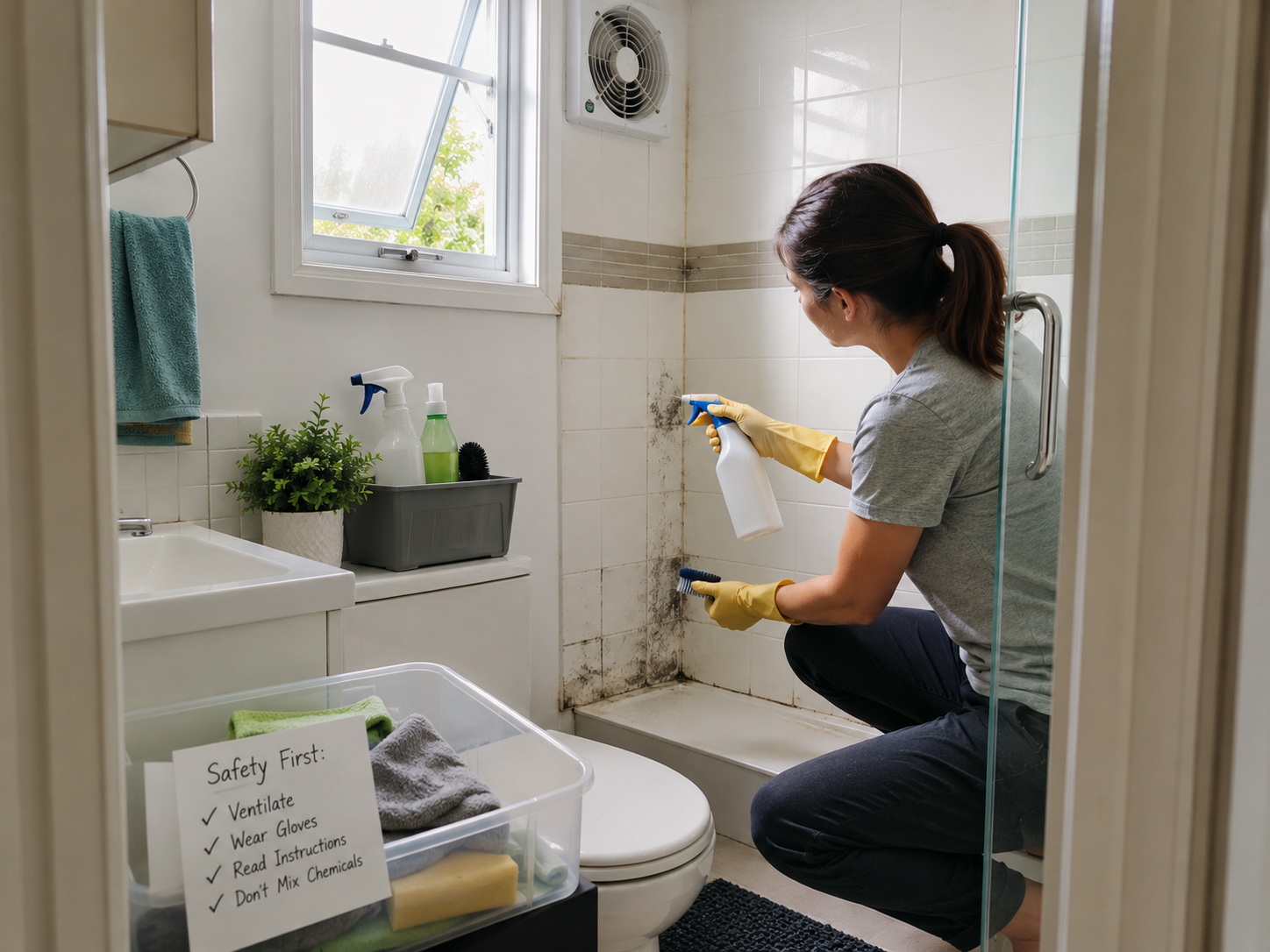
Mold remover can help clean bathroom stains, but using it in a small bathroom requires extra care. Learn how to ventilate, avoid mixing products, protect your skin, and clean mold-prone areas more safely.
Mold in the bathroom is frustrating because it never seems to appear politely. It shows up in the grout lines, around the tub, near the shower door track, on the ceiling above the shower, or along the silicone seal where water sits too long.
So it makes sense that many people reach for mold remover. You spray, wait, rinse, and hope the bathroom finally looks cleaner.
In a larger room, fumes spread out more easily. In a narrow bathroom with little airflow, strong cleaning smells can build up quickly. Steam, moisture, poor ventilation, and enclosed corners can make the air feel heavy even before you start cleaning. Add a strong mold remover, and the space can become uncomfortable faster than expected.
This does not mean you should never use mold remover. It simply means you should treat it like a real cleaning chemical, not just another spray bottle. A few basic habits can make the job calmer, cleaner, and safer.
What Mold Removers Usually Do
Most bathroom mold removers are designed to break down or bleach stains caused by mold and mildew. Many products are made for tile, grout, tubs, shower walls, and other hard bathroom surfaces.
Some are bleach-based. Some are peroxide-based. Others use different cleaning ingredients. The label matters because not all products work the same way, and not all surfaces can handle the same chemicals.
A product that is fine for white tile may not be right for natural stone, painted walls, wood trim, colored grout, metal fixtures, or fabric shower curtains. That is why it is worth reading the label before spraying.
It may feel like a small delay, but it helps you avoid damaged surfaces, strong fumes, and unnecessary mess.
The Biggest Issue in a Small Bathroom: Ventilation
When using mold remover in a small bathroom, ventilation is the first thing to think about.
A narrow bathroom can trap fumes. If there is no window, or if the fan is weak, the smell can become intense. You may feel eye irritation, throat scratchiness, coughing, dizziness, or a strong urge to leave the room.
That is your sign to stop and get fresh air.
Turn on the Exhaust Fan First
Before spraying anything, turn on the bathroom exhaust fan. Let it run during cleaning and for a while afterward.
If your fan is noisy, weak, or old, it may not move air as well as you think. You can still use it, but do not rely on it completely. Keep the bathroom door open when possible and improve airflow from outside the bathroom.
Open a Window If You Have One
If your bathroom has a window, open it before using mold remover. Even a small opening can help.
If weather or privacy makes opening the window difficult, do what you reasonably can. A cracked window, open door, and running fan are usually better than a closed room.
Keep the Door Open When Possible
Many people close the bathroom door while cleaning because they want to contain the smell. That can make the air inside the bathroom worse.
If children or pets are not nearby and privacy is not an issue, leaving the door open can help airflow. If you need to keep others away, use a simple barrier or tell family members not to enter until the bathroom has aired out.
Never Mix Mold Remover With Other Cleaners
This is one of the most important bathroom cleaning rules.
Do not mix mold remover with other cleaning products. Do not layer it with vinegar, ammonia, toilet bowl cleaner, drain cleaner, glass cleaner, all-purpose cleaner, disinfecting spray, or another mold product.
Mixing cleaners can create irritating fumes or unpredictable reactions. The risk is higher in a small bathroom because there is less air to dilute the fumes.
Bleach-Based Products Need Special Care
Many mold removers contain bleach or bleach-like ingredients. Bleach should not be mixed with vinegar, ammonia, or many other cleaners.
The tricky part is that people often do not realize what is already on the surface. Maybe you sprayed an all-purpose cleaner earlier. Maybe someone used toilet cleaner nearby. Maybe vinegar was used on the shower door.
To avoid accidental mixing, rinse surfaces well and avoid using multiple products back-to-back.
One Product at a Time Is the Safer Rule
Use one cleaner only. Follow the directions. Rinse if the label says to rinse. Let the area air out.
If the stain remains, do not immediately grab a second chemical. Give the first product time to clear, rinse thoroughly, and read both labels before doing anything else.
For everyday home cleaning, “one product at a time” is a simple rule that prevents a lot of problems.
Check the Label Before You Spray
Most people do not love reading cleaning labels. They are small, crowded, and easy to ignore. But mold remover labels include useful information, especially for small bathrooms.
Look for:
Where the product can be used
Where it should not be used
How long to leave it on the surface
Whether the surface should be rinsed afterward
Whether gloves are recommended
Ventilation instructions
Warnings about mixing with other products
Storage instructions
If a product says to use only in a well-ventilated area, take that seriously. A tiny bathroom with no fan and no window may not be the right place to use a strong spray heavily.
Protect Your Skin and Eyes
Mold remover is meant to affect mold stains and bathroom grime. You do not want it sitting on your skin or splashing near your eyes.
Wear Gloves
Use cleaning gloves before handling mold remover. Thin disposable gloves are better than bare hands, but reusable cleaning gloves often provide more coverage around the wrists.
If the product touches your skin, rinse it off according to the label directions. Do not keep cleaning with irritated skin and pretend it is fine.
Be Careful With Sprays Above Shoulder Level
Spraying a shower ceiling, upper wall, or high tile line can cause mist to drift back toward your face. This is especially common in a small bathroom where you are standing close to the surface.
Instead of spraying overhead freely, consider applying the product to a sponge, cloth, or brush first if the label allows it. Then apply it to the surface more carefully.
Avoid looking directly up while spraying. Gravity is not your friend here.
Avoid Cleaning in Contact Lenses If Strong Fumes Bother You
Some people find that fumes or mist feel more irritating when wearing contact lenses. This does not mean everyone must remove them, but if your eyes are sensitive, consider wearing glasses instead while cleaning.
The more practical rule is this: if your eyes sting or water, step away and improve ventilation.
Use Less Product Than You Think You Need
When mold stains look stubborn, it is tempting to spray more and more. But more product does not always mean better cleaning.
In a small bathroom, overspraying can make fumes stronger, leave residue on surfaces, and increase the chance of splatter. It can also drip onto areas you did not mean to treat.
Start with the amount recommended on the label. Give it the proper contact time. Scrub gently if needed. Rinse as directed.
If the stain does not disappear completely, it may be deeper than surface mold, or the material may be stained. Spraying repeatedly may not solve that.
Common Bathroom Areas That Need Care
Different parts of the bathroom behave differently. Mold remover may be helpful in one area and too harsh for another.
Tile and Grout
Tile and grout are common places for mildew stains. Mold remover may work well here, but colored grout can sometimes lighten or discolor depending on the product.
Test a small hidden area first if you are unsure.
Grout is porous, so stains may not always vanish immediately. A soft brush can help, but avoid using tools so harsh that they damage the grout.
Silicone Caulk
Mold stains along silicone caulk can be stubborn. Sometimes the stain is not just on the surface; it may be embedded in the caulk.
Mold remover may lighten it, but if caulk is cracked, peeling, soft, or deeply stained, cleaning may only be temporary. Replacing old caulk may eventually be needed.
Shower Curtains and Liners
Not every mold remover is safe for fabric or plastic shower curtains. Some may bleach fabric or weaken plastic.
Check the care label and product instructions. In many cases, washing or replacing a liner may be easier than spraying it heavily in a small bathroom.
Painted Walls and Ceilings
Bathroom ceilings can develop mold spots when ventilation is poor. Be careful with strong cleaners on paint, especially flat paint or older paint.
A mold remover may discolor or damage the finish. If mold keeps returning on the ceiling, ventilation and moisture control may matter more than repeated spraying.
Natural Stone
Marble, travertine, limestone, and other natural stone surfaces can be sensitive to certain cleaners. Some mold removers may etch, dull, or discolor stone.
If you have natural stone, use a product specifically labeled as safe for that material.
Warning Signs You Should Stop Cleaning
While using mold remover, pay attention to how the room feels and how your body reacts.
Stop and step away if you notice:
Strong chemical smell that feels overwhelming
Burning eyes
Scratchy throat
Coughing
Dizziness or headache
Trouble breathing comfortably
Product splashing back toward your face
Foam, bubbling, or a strange reaction from mixed residue
Skin irritation
Do not try to “push through” a strong chemical smell in a small bathroom. Open the area, get fresh air, and let the space ventilate.
For serious symptoms or suspected chemical exposure, contact local emergency services or Poison Control. For regular household prevention, the best approach is to avoid overuse, avoid mixing products, and ventilate well.
Simple Steps Before Using Mold Remover
A little preparation makes the whole job easier.
Clear the Area
Remove towels, bath mats, toothbrushes, razors, shampoo bottles, kids’ bath toys, and anything else close to the cleaning zone.
This prevents overspray and makes it easier to rinse surfaces afterward.
Turn On Ventilation
Start the fan. Open the window if available. Open the bathroom door if practical.
Do this before spraying, not after the smell gets strong.
Put On Gloves
Have gloves ready before opening the bottle. If you need eye protection for overhead spraying or heavy cleaning, use it.
Read the Contact Time
Some products need to sit for a few minutes. Others should not be left too long. More time is not always better, especially on sensitive surfaces.
Prepare a Rinse Plan
If the label says to rinse, make sure you can rinse the area easily. Keep a clean sponge, bucket, or shower hose ready.
Do not spray first and then realize you have no easy way to remove the residue.
How to Use Mold Remover More Safely in a Small Bathroom
Here is a practical routine for everyday bathroom cleaning.
Step 1: Ventilate First
Turn on the fan, open a window, and keep the door open if possible.
Let air start moving before you use the product.
Step 2: Apply Carefully
Spray close to the surface instead of misting across the room. Avoid spraying into the air.
For tight corners, consider applying the product to a brush or sponge if the label allows. This gives you more control and reduces airborne mist.
Step 3: Leave the Room While It Works
If the product needs to sit, you do not need to stand there breathing it in. Step out of the bathroom while it works, especially if the room is small.
Keep others out during that time.
Step 4: Rinse as Directed
Rinse the surface according to the label. Use water and a clean cloth, sponge, or shower spray.
Do not add another cleaner during rinsing.
Step 5: Let the Bathroom Air Out
After cleaning, keep the fan running and the door open for a while. Let surfaces dry completely.
Mold loves moisture, so drying the room matters almost as much as cleaning it.
What Not to Do in a Small Bathroom
Some habits make mold remover more irritating or less effective.
Do Not Spray the Whole Room at Once
Treat one area at a time. Spraying every wall, corner, and grout line at once can make fumes build quickly.
Work in small sections.
Do Not Use Hot Steam at the Same Time
Running a hot shower while using mold remover may seem like it helps loosen grime, but it can also make the bathroom more humid and uncomfortable. Heat and steam can intensify smells and make the room feel harder to breathe in.
Clean in a cool, ventilated bathroom when possible.
Do Not Mix With Vinegar “To Make It Stronger”
Vinegar is often used in cleaning, but it should not be mixed with mold remover. The combination can create irritating fumes depending on the product ingredients.
Use vinegar separately only when appropriate, on a different occasion, and after surfaces are rinsed.
Do Not Ignore the Source of Moisture
If mold keeps coming back, spraying alone will not fix it. You need to reduce moisture.
That may mean running the fan longer, wiping down shower walls, fixing leaks, washing bath mats, opening the door after showers, or improving airflow.
Preventing Mold So You Need Less Product
The best way to use less mold remover is to make the bathroom less friendly to mold.
Run the Fan After Showers
Let the exhaust fan run after bathing to move humid air out. A few extra minutes can help surfaces dry faster.
Squeegee or Wipe Wet Surfaces
A quick squeegee on shower walls and doors can reduce water sitting on surfaces. This is especially helpful in small bathrooms with poor airflow.
Keep Bottles and Bath Items From Trapping Water
Shampoo bottles, soap dishes, and bath toys can trap moisture underneath. Lift them occasionally and clean the area below.
Wash Towels and Bath Mats Regularly
Damp fabric can contribute to a musty bathroom smell. Hang towels so they dry fully, and wash bath mats as needed.
Fix Leaks Promptly
A slow drip can keep one area damp all day. If mold is concentrated around a leak, cleaning will only be temporary until the moisture source is fixed.
When Mold May Be More Than a Surface Cleaning Job
Small spots on tile or grout are common in bathrooms. But some situations may need more than a bottle of cleaner.
If mold covers a large area, keeps returning quickly, appears behind walls, follows a leak, or has a strong musty odor that does not go away, there may be a deeper moisture problem.
In those cases, it may be worth getting help from a qualified professional, especially if building materials are affected. Surface sprays cannot fix hidden water damage.
For an everyday homeowner or renter, the key is knowing when a stain is just bathroom mildew and when the pattern suggests a moisture issue that needs attention.
Final Thoughts: Clean Mold Carefully, Especially in Tight Spaces
Mold remover can be useful, but a small bathroom makes it easier for fumes and mist to build up. That is why the safest approach is slow and simple.
Ventilate first. Use one product only. Wear gloves. Avoid spraying overhead carelessly. Work in small sections. Rinse as directed. Let the bathroom dry afterward.
Most bathroom mold problems are easier to manage when you also control moisture: run the fan, wipe wet surfaces, dry towels properly, and fix leaks when they appear.
You do not need to turn bathroom cleaning into a stressful project. Just give strong cleaners the respect they deserve, especially in a tight room. A cleaner bathroom should also feel like a safer, more comfortable space to breathe in.
Hi, I’m the creator and editor behind ZestyHabit. I research everyday safety, first aid, and practical wellness topics using official guidance and reliable public sources, then turn that information into clear, realistic steps for daily life.
My goal is to help readers make safer, better-informed choices at home and beyond.