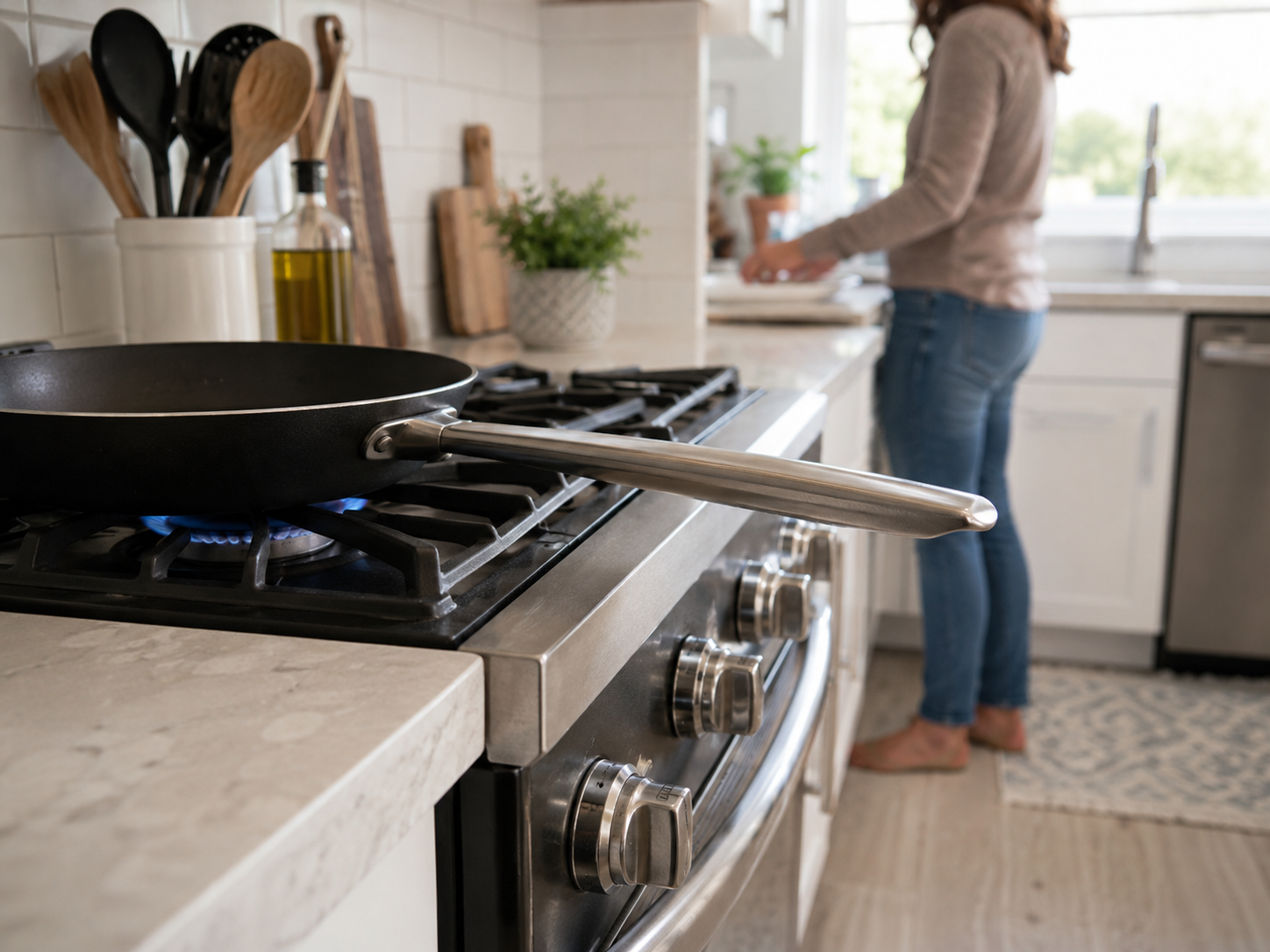
Why Turning Pan Handles Outward Can Be a Bigger Kitchen Risk Than It Looks
Minjin Park
·
A pan handle sticking out from the stove may seem harmless, but it can lead to spills, burns, and preventable kitchen accidents. Learn simple habits for safer stovetop cooking.
The Small Stove Habit Many People Do Without Thinking
Most kitchen accidents do not start with someone doing something wildly careless. They often begin with one small habit that feels normal.
One of those habits is leaving a frying pan handle turned outward.
It may not look like a big deal. You place the pan on the burner, start cooking eggs, bacon, pancakes, grilled cheese, or stir-fried vegetables, and the handle naturally points toward you. It feels convenient. It makes the pan easy to grab. It also seems harmless because the pan is just sitting there.
But a pan handle sticking out over the edge of the stove or counter can turn into a problem quickly.
Someone can bump it with a hip. A sleeve can catch it. A child can reach for it. A pet can jump or brush against it. You can move too quickly while carrying something and knock it without even noticing.
When that happens, the pan may slide, tip, spin, or fall. If it contains hot oil, boiling liquid, melted butter, sauce, or freshly cooked food, the result can be painful and messy.
The good news is that this is one of the easiest kitchen risks to reduce. You do not need special equipment or a complicated routine. You simply need to build the habit of turning pan handles inward and keeping the stovetop area clear.
Why Pan Handle Direction Matters
A frying pan handle is basically a lever. When it sticks out, it gives people something easy to bump or grab.
That is useful when you are intentionally picking up the pan. It is not useful when the handle extends into a walking path, a child’s reach, or the edge of a busy countertop.
The danger is not just that the pan might fall. It is what may be inside the pan.
A dry pan can still be hot enough to burn skin or damage flooring. A pan with oil can splash. A pan with soup, sauce, or water can spill. A pan with heavy food can land hard. Even if no one gets hurt, a falling pan can break dishes, crack tile, damage a stovetop, or create a fire risk if food or oil spills onto an active burner.
This is why handle position matters during ordinary cooking, not just during “dangerous” recipes.
The Most Common Way It Happens: A Quick Bump
Picture a normal weeknight kitchen.
You are cooking dinner on one burner, maybe heating tortillas or sautéing vegetables. The pan handle points outward because that is how you placed it. While reaching for a plate, you turn sideways and your hip catches the handle. The pan shifts. Maybe it only moves an inch. Maybe it tilts.
Most of the time, people catch it quickly.
But if the pan contains hot oil or liquid, even a small tilt can splash. And if the pan is lightweight, empty, or sitting on a slick stovetop, it may move more than expected.
This is especially common in small kitchens, apartments, shared homes, and busy family spaces where the stove is close to a walkway.
The handle does not have to be far out. If it extends beyond the edge of the stove, it is easier to hit.
Children See Handles Differently
Adults may see a pan handle and think, “That is hot. Do not touch it.”
A young child may see something at their height that looks like it can be grabbed.
Children are naturally curious. They may reach up while you are cooking, pull on a handle, or try to see what is in the pan. They may also move quickly through the kitchen without understanding the risk.
Even if a child has been told not to touch the stove, one distracted moment can happen. Kids do not always connect the handle with the hot pan above them.
This is why turning handles inward is such a practical habit in homes with children. It removes the easy target from the edge of the stove.
It is not about blaming the child or assuming something terrible will happen. It is about making the kitchen less inviting to little hands.
Pets Can Add Another Layer of Unpredictability
Pets are another reason outward-facing handles can be risky.
A large dog may bump into your leg or the stove area while you are cooking. A cat may jump onto a counter. A playful pet may chase something across the kitchen at exactly the wrong time.
Pets are not thinking about hot pans. They are thinking about smells, attention, food, or whatever is happening in the room.
If a handle sticks out, it becomes one more thing that can be brushed, nudged, or caught in the chaos of a real home.
Even if your pet is usually calm, kitchens are full of smells and movement. Keeping handles turned safely inward reduces the chance that normal pet behavior turns into a cooking accident.
Hot Oil Makes the Risk Worse
A pan with hot oil deserves extra care.
Oil can splash farther than water, and it tends to cling to skin and surfaces. When you are frying bacon, chicken, eggs, potatoes, or anything breaded, the pan may already be spattering slightly. If the handle gets bumped, the movement can send hot oil over the side.
This is one reason outward handles are especially risky during frying.
The pan may not need to fall completely. A quick jerk can be enough to splash oil onto hands, arms, feet, or the floor. A slippery oil spill can then create a second hazard because someone may step in it and slip.
When cooking with oil, keep the handle controlled, stay close to the stove, and avoid letting the handle extend into a walkway.
A saucepan handle sticking out can be pulled or bumped just as easily.
Hot water, soup, pasta sauce, gravy, oatmeal, and melted sugar can all cause burns if spilled. Thick foods can be especially troublesome because they stick to skin and surfaces.
A small pot of ramen or oatmeal may not seem like a big risk, but if it falls from the stove, it can spill fast and spread across the floor.
That is why the habit should apply to all cookware, not just frying pans.
The “Convenient Handle” Problem
There is a reason many people leave handles facing outward: it feels convenient.
You can grab the pan quickly. You can shake the pan while cooking. You can move it off the burner without reaching awkwardly. If you are used to cooking that way, turning the handle inward may feel strange at first.
But safe handle placement does not mean making the pan impossible to use. It means choosing a position that keeps the handle accessible to you without sticking out into traffic.
Usually, that means angling the handle to the side or toward the back of the stove. The exact position depends on your stove layout, burner location, and what else is cooking.
The main rule is simple: do not let the handle hang over the front edge where it can be bumped or grabbed.
Do Not Turn Handles Over Another Active Burner
There is one important detail: “turn the handle inward” does not mean placing it over another hot burner.
Some pan handles are metal. Others are plastic, silicone, wood, or coated material. Even heat-resistant handles can become damaged or too hot if they sit over a flame or active burner.
If you turn a handle inward, make sure it is not directly above another burner that is on or still hot. Also check that it is not resting too close to a flame.
A better position is often angled toward the side, away from the front edge and away from active heat.
Think of it as “turned safely inward,” not just “turned inward at all costs.”
Common Mistakes That Make Handle Accidents More Likely
Cooking on the Front Burner by Default
Many people automatically use the front burners because they are easier to reach. That makes sense, especially for heavy pans or frequent stirring.
But front burners are also closer to children, pets, loose clothing, and passing traffic.
When possible, use a back burner for pots with hot liquid, long cooking times, or anything that does not need constant hands-on attention. If you need the front burner, be extra careful with handle direction.
Letting the Handle Cross the Edge of the Stove
A handle that sticks straight toward you may feel normal, but it creates the biggest bump risk.
If the handle crosses beyond the stove edge, it is in the danger zone.
Try turning it diagonally to the side instead. You should still be able to reach it, but it should not be hanging out into the room.
Crowding the Stovetop
A crowded stovetop makes everything harder.
If several pans are cooking at once, handles may overlap, point in awkward directions, or sit near active burners. You may also have less room to move safely.
Before cooking, take a moment to plan which burner each pan should use. Put the heaviest or hottest items in the safest positions. Keep handles from crossing each other when possible.
Walking Away While the Handle Is Exposed
Leaving a pan unattended is already risky. Leaving it unattended with the handle pointing outward adds another problem.
Someone else may walk through the kitchen and not realize the pan is hot. A child may enter the room. A pet may move around. Even you may come back quickly and bump it without thinking.
If you need to step away, turn off the burner first and make sure the pan is positioned safely.
Using Lightweight Cookware That Slides Easily
Some lightweight pans move with very little force, especially on smooth cooktops or grates that are slightly uneven.
If your pan slides easily, handle position becomes even more important. A small bump may move the entire pan.
Using cookware that sits securely on the burner can help, but it does not replace safe handle placement.
Warning Signs in Your Kitchen Setup
Some kitchens make outward handles more risky than others.
People gather around the stove while food is cooking.
None of these things means your kitchen is unsafe by default. They simply mean handle direction matters more.
A Simple Handle Safety Routine
You can make this habit automatic with a quick routine.
Before turning on the burner:
Place the pan fully on the burner.
Turn the handle away from the front edge.
Make sure the handle is not over another active burner.
Check that the pan sits flat and stable.
Move towels, paper, and utensils away from the flame or heat.
While cooking:
Keep the handle angled safely.
Use a dry oven mitt or potholder if the handle gets hot.
Keep children and pets away from the stove area.
Avoid rushing around the stove.
Stay nearby when using oil or high heat.
Before serving:
Turn off the burner.
Move the pan carefully.
Keep the handle controlled as you lift.
Set hot cookware away from table edges and counter edges.
Small steps like these become second nature once you repeat them.
Teaching Kids About Stove Handles
If children live in or visit your home, it helps to teach a simple rule: handles stay turned in.
You do not need to explain every possible accident in scary detail. Keep it calm and clear.
You might say, “Pans can be very hot, so we keep handles away from the edge where hands can reach them.”
For younger children, create a “no-touch zone” around the stove while cooking. You can mark it with words, a kitchen mat boundary, or a simple family rule.
For older children who are learning to cook, handle direction should be one of the first lessons. Before they crack an egg or flip a pancake, teach them to check the handle.
This builds safe cooking habits early.
What About Serving Food at the Table?
The same idea applies away from the stove.
If you place a hot skillet, pot, or pan on the counter or dining table, keep the handle from sticking out over the edge. Someone can walk by and bump it. A child can pull it. A sleeve can catch it.
Always use a trivet or heat-safe surface, and make sure the cookware is stable.
Hot cookware should not sit near the edge of a counter, island, or table, especially in a busy kitchen.
Better Habits for Busy Cooking
Many handle accidents happen when people are rushing.
You are trying to cook several things at once. Someone asks a question. The timer goes off. A pan starts sizzling. You reach for a plate. Suddenly, the handle is in the way.
The answer is not to cook perfectly. Real kitchens are messy. The answer is to reduce the number of things that can go wrong.
Before starting, clear your workspace. Choose the right burner. Turn handles safely. Keep the floor clear. Put your phone somewhere that will not distract you. If children or pets are nearby, create space before the pan gets hot.
These habits make cooking feel less chaotic.
A Quick Checklist Before You Cook
Ask yourself:
Is the pan handle sticking out over the edge?
Can a child reach it?
Could someone bump it while walking by?
Is it over another active burner?
Is the pan stable on the burner?
Is there hot oil or liquid inside?
Are pets or children close to the stove?
Do I have enough space to move safely?
This checklist takes only a few seconds. It is not about making cooking complicated. It is about catching the obvious risks before the pan gets hot.
Final Thoughts: Turn the Handle Before the Pan Gets Hot
A frying pan handle pointing outward may not seem dangerous at first. It is easy to overlook because it feels normal and convenient.
But once the pan is hot, that handle becomes more important. It can be bumped, grabbed, pulled, or caught. If the pan holds hot oil, water, sauce, or food, a small movement can become a painful spill.
The safer habit is simple: keep pan handles turned away from the edge, angled inward or to the side, and never over another active burner. Use back burners when possible, keep the stovetop clear, and be extra careful when children, pets, or guests are nearby.
You do not need to be nervous in the kitchen. Just build a few steady habits that protect you before anything goes wrong.
Before you start cooking, look at the handle. Turn it safely. Then enjoy the meal with one less thing to worry about.
Hi, I’m the creator and editor behind ZestyHabit. I research everyday safety, first aid, and practical wellness topics using official guidance and reliable public sources, then turn that information into clear, realistic steps for daily life.
My goal is to help readers make safer, better-informed choices at home and beyond.