Mold Around Air Conditioner Vents: Causes, Health Concerns, and Moisture-Control Solutions
Minjin Park
·
Discover why mold grows around air conditioner vents, how it may affect your health, when you can clean it yourself, and how to prevent it from returning.
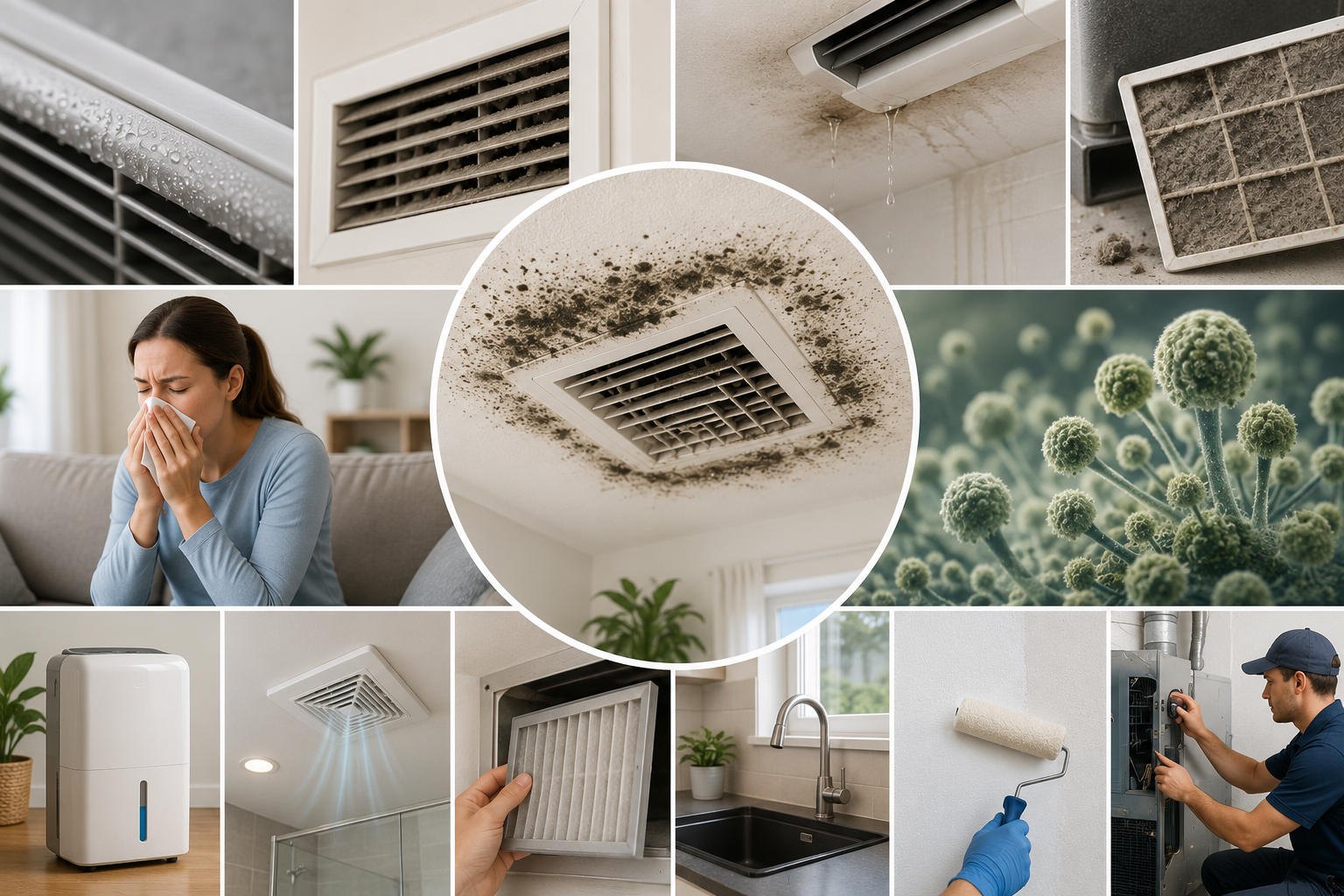
Dark specks around an air conditioner vent are easy to ignore. They may look like ordinary dust at first, especially when they collect along the edges of a white register. Over time, however, the discoloration may spread onto the ceiling or wall, develop a musty smell, or return soon after being wiped away.
Mold around air conditioner vents usually indicates that moisture is collecting where it should not. The visible growth may be limited to a damp vent cover, but it can also point to condensation, an air leak, wet insulation, a drainage problem, or contamination somewhere inside the HVAC system.
The good news is that a small patch on a washable vent cover is often manageable. The important part is identifying and correcting the moisture source. Cleaning the stain without addressing condensation or high indoor humidity will usually provide only temporary results.
This guide explains why mold forms around AC vents, the health concerns associated with indoor mold, how to investigate the problem, and when professional HVAC or mold-remediation assistance is the safer choice.
Not every dark mark around an air-conditioning vent is mold. Supply vents naturally collect household dust, cooking particles, candle soot, fibers, pet dander, and other airborne debris. When air escapes through gaps around a ceiling register, it can leave gray or black “filtration stains” on the surrounding surface.
Possible mold is more likely when the material:
Appears in irregular spots or colonies
Has a fuzzy, powdery, or slimy texture
Is accompanied by a musty odor
Grows where condensation is visible
Spreads onto drywall, insulation, or ceiling tiles
Returns quickly after ordinary dusting
Appears near water stains or peeling paint
Color alone cannot identify mold or determine how hazardous it may be. Mold can appear black, green, gray, brown, orange, or white. The EPA notes that substances resembling mold cannot always be positively identified by appearance alone, particularly inside duct systems. If confirmation would affect an expensive repair or remediation decision, consider an inspection by a qualified professional.
In most household situations, identifying the precise species is less important than removing visible growth and eliminating the moisture that allowed it to develop.
Why Mold Grows Around Air Conditioner Vents
Mold spores are naturally present indoors and outdoors. They generally become a building problem only when they land on a damp surface with enough material to support growth. Dust around an air vent can provide that material, while condensation supplies the moisture.
When humid indoor air touches a cold metal register, water vapor can condense into droplets. This is similar to the moisture that forms on the outside of a cold drink.
Condensation occurs when the vent’s surface temperature falls below the dew point of the surrounding air. It is especially common during hot, humid weather or in rooms where indoor moisture is already elevated. Persistent dampness can eventually affect the vent, nearby paint, drywall, and insulation.
The EPA identifies condensation near cooling coils and high relative humidity as important indicators of possible moisture contamination in duct systems. Its air-duct guidance also emphasizes that mold will return if the underlying moisture condition is not corrected.
2. Gaps Around the Register or Duct Boot
A poorly sealed connection between the duct boot and the ceiling or wall can pull warm, humid air from an attic, crawl space, or wall cavity toward the cold vent. The resulting temperature difference creates a concentrated condensation problem around the register.
Dark staining may follow the edge of the vent or appear where air leaks through small gaps. Sealing these gaps and improving insulation may be necessary to stop the cycle.
3. Inadequate or Damaged Insulation
Supply ducts carrying cooled air generally need appropriate insulation when they pass through warm, humid spaces. Missing, compressed, displaced, or wet insulation allows the outer duct surface to become cold enough for condensation.
If the duct insulation itself is moldy, wiping the visible surface may not solve the problem. EPA guidance says wet or moldy fiberglass duct material generally cannot be cleaned effectively and should be removed and replaced.
4. High Indoor Humidity
Cooking, showering, drying clothes indoors, humid outdoor air, plumbing leaks, and poor ventilation can all raise indoor relative humidity. A cooling system may lower the temperature without removing enough moisture, particularly if it is oversized and frequently switches off after short cycles.
The EPA recommends keeping indoor relative humidity below 60 percent and, when possible, between 30 and 50 percent. A basic digital hygrometer can help you determine whether the room is consistently too humid. See the EPA’s guide to mold and moisture in the home for additional moisture-control recommendations.
5. Condensate Drainage Problems
Air conditioners remove moisture from indoor air. That water normally collects in a drain pan and exits through a condensate line. A clogged line, damaged pan, incorrectly sloped drain, or malfunctioning pump can leave standing water inside or around the air handler.
A drainage problem may produce musty odors, water stains, dripping, or repeated mold near more than one vent. Because the source may be hidden, this situation often requires an HVAC technician.
6. Dirty Filters, Coils, or Registers
Dust does not create mold by itself, but it can trap moisture and provide organic material on which mold can grow. A neglected filter may also reduce airflow, contribute to cooling-system problems, and allow more debris to accumulate within the equipment.
Filters should be cleaned or replaced according to the system and filter manufacturer’s instructions. If a filter becomes unusually dirty or damp soon after replacement, the cause should be investigated instead of simply changing it more often.
Can Mold Around AC Vents Affect Your Health?
People respond to dampness and mold differently. Some experience no noticeable symptoms, while others develop irritation or respiratory problems.
The CDC lists possible effects including:
Stuffy or runny nose
Sore throat
Coughing
Wheezing
Burning, red, or itchy eyes
Skin irritation or rash
People with asthma or mold allergies may experience stronger reactions or worsening symptoms. Individuals with chronic lung disease or weakened immune systems can face a greater risk of fungal lung infections and should obtain medical guidance before remaining in or cleaning a significantly moldy environment. The CDC provides more detail in its overview of mold and possible health effects.
A musty vent does not prove that mold is causing a particular illness. Headaches, coughing, congestion, and fatigue have many possible causes. However, symptoms that repeatedly worsen in one room or building and improve after leaving are worth discussing with a healthcare professional.
Seek urgent medical care for severe breathing difficulty, chest tightness that does not improve with prescribed medication, bluish lips, confusion, fainting, or another serious reaction.
When a Small Surface Area May Be Cleaned at Home
A small amount of suspected mold limited to the exterior of a removable, nonporous vent cover may be suitable for household cleaning. The EPA says that mold areas smaller than approximately 10 square feet can often be handled without professional remediation, provided there has not been major water damage or HVAC contamination.
Before cleaning, consider who will perform the work. A person with asthma, significant mold allergies, chronic lung disease, or a weakened immune system should avoid mold cleanup and ask someone else or a professional to handle it.
For a small washable register:
Turn off the heating or cooling system so air does not blow across the area while it is being disturbed.
Wear protective gloves, eye protection, and an appropriately fitted particulate respirator.
Place a protective covering beneath the vent to catch debris.
Remove the register only if it can be done safely without damaging wiring, ductwork, or surrounding material.
Clean the hard surface with water and a mild detergent.
Rinse if required by the detergent instructions.
Dry the register completely before reinstalling it.
Gently clean and thoroughly dry the surrounding hard surface if it is also affected.
Replace or clean the HVAC filter according to the manufacturer’s directions.
Avoid aggressively brushing dry mold while the system is operating. Do not spray large amounts of liquid into the vent, duct, electrical components, or air handler.
The EPA recommends scrubbing mold from hard surfaces with detergent and water and drying them completely. Porous materials such as moldy ceiling tiles, insulation, or drywall may be difficult or impossible to clean fully and may require removal. Additional instructions are available in the EPA’s home mold-cleanup guide.
Should You Use Bleach on an AC Vent?
Bleach is not automatically necessary for routine mold cleanup. The EPA generally does not recommend biocides such as chlorine bleach as a standard response because killing visible mold does not remove the material or correct the moisture source. Dead mold particles may still cause allergic reactions.
Bleach can also corrode some metals, damage finishes, irritate the eyes and respiratory tract, and create dangerous fumes when mixed with ammonia, acids, or certain other cleaners.
If a product manufacturer or qualified professional recommends a disinfectant for a specific nonporous component, follow the product label exactly and ventilate the area. Never mix cleaning chemicals. Do not apply a disinfectant inside ductwork unless it is specifically approved for that material and use.
When to Call an HVAC or Mold Professional
Stop using the system and seek qualified help if you know or strongly suspect that mold has contaminated internal HVAC components. Running a contaminated system could distribute spores and fragments into other rooms. The EPA recommends that HVAC mold remediation be performed by professionals experienced with these systems.
Professional evaluation is especially appropriate when:
Mold is visible inside multiple vents or ducts
A strong musty odor appears whenever the AC starts
Insulated ducts or internal fiberglass lining are wet or moldy
Water is dripping from vents or the air handler
The condensate pan repeatedly overflows
Mold covers more than approximately 10 square feet
The building has experienced flooding or major water damage
Growth returns soon after careful surface cleaning
Ceiling drywall is soft, swollen, stained, or crumbling
Occupants include medically vulnerable individuals
You cannot identify or safely access the moisture source
Ask the contractor to show you the affected components rather than accepting a claim of duct contamination without evidence. A reputable professional should investigate the moisture source, explain which materials can be cleaned, identify what must be replaced, and describe how the system will be protected from future contamination.
Routine whole-house duct cleaning is not automatically required just because one vent cover is dirty. The location and extent of actual contamination should guide the decision.
How to Stop Mold From Returning
Cleaning works only when it is paired with moisture control. Focus on the conditions around the vent and the performance of the entire cooling system.
Monitor Indoor Humidity
Place a hygrometer in the affected room and check it at different times of day. Aim for approximately 30 to 50 percent relative humidity when practical and keep it below 60 percent.
Use bathroom and kitchen exhaust fans that vent outdoors. Repair plumbing leaks, avoid drying large amounts of laundry indoors, and use a properly sized dehumidifier when outdoor air is too humid for window ventilation.
Fix Condensation and Air Leaks
An HVAC professional can check whether the duct boot is sealed, the duct is insulated correctly, and warm air is entering from an attic or wall cavity. Do not cover an actively wet area with caulk or paint before determining where the moisture originates.
Maintain the Cooling System
Follow the manufacturer’s schedule for filters and professional servicing. During maintenance, ask the technician to inspect the cooling coil, drain pan, condensate line, pump, insulation, duct connections, and airflow.
An oversized or poorly operating system may cool the room too quickly to dehumidify it effectively. System sizing, refrigerant problems, fan settings, and airflow restrictions should be evaluated by a trained technician rather than adjusted through guesswork.
Dry Wet Materials Quickly
Condensation, leaks, and spills should be addressed promptly. The EPA generally recommends cleaning and drying damp materials within 24 to 48 hours to reduce the chance of mold growth. Repeatedly wet porous material may need replacement even if the visible surface appears clean.
Keep Registers Clear
Do not block supply or return vents with furniture, curtains, or stored items. Restricted airflow can interfere with comfort and system performance. Vacuum accumulated surface dust gently during routine cleaning, but do not insert tools deep into ductwork.
Frequently Asked Questions
Can I simply paint over mold around an air vent?
No. Paint may temporarily conceal staining, but mold and moisture beneath it can continue to damage the surface. Clean or replace the affected material and fix the moisture source before repainting.
Will replacing the AC filter remove the mold?
A clean filter is an important part of HVAC maintenance, but it cannot remove mold growing on a vent, wet insulation, a coil, or an internal duct surface. Filter replacement should accompany—not replace—source correction and cleanup.
Does a musty smell prove that the ducts contain mold?
Not necessarily. The odor could come from a drain pan, coil, nearby drywall, carpet, insulation, or another damp area. An inspection is needed to locate the source.
Should I test the air for mold?
Routine air sampling is often unnecessary when mold is already visible, because the immediate priorities are removal and moisture control. Testing may be useful in complicated cases when recommended by an experienced indoor-environmental professional, but a single air sample does not necessarily explain exposure or health risk.
Can an air purifier solve the problem?
A purifier with an appropriate particle filter may reduce some airborne particles, but it cannot repair a leak, dry wet insulation, clean a contaminated HVAC system, or prevent condensation. Source control remains the essential step.
Mold around an air conditioner vent should be treated as a moisture warning, not merely a cosmetic stain. A small patch on a hard register may require little more than careful cleaning and better humidity control, while repeated growth, wet insulation, or contamination inside the HVAC system calls for professional attention. Have you dealt with condensation or recurring mold around an AC vent? Share what caused it and which solution worked in the comments—your experience may help another homeowner find the source faster.
Hi, I’m the creator and editor behind ZestyHabit. I research everyday safety, first aid, and practical wellness topics using official guidance and reliable public sources, then turn that information into clear, realistic steps for daily life.
My goal is to help readers make safer, better-informed choices at home and beyond.