What to Check Right Away When a Car Warning Light Comes On
Minjin Park
·
A dashboard warning light can be confusing, but knowing what to check first can help you stay calm, protect your car, and make safer decisions on the road.
Why Dashboard Warning Lights Should Not Be Ignored
Most drivers have had that uneasy moment. You are on your way to work, picking up groceries, or driving home after a long day when a light suddenly appears on the dashboard.
Maybe it is the check engine light. Maybe it is the oil symbol. Maybe it is a tire pressure warning that pops up right before a highway drive.
At first, it is easy to hope it will go away. Many people think, “The car still feels fine, so it is probably nothing.” Sometimes that is true. A loose gas cap, a slightly low tire, or a routine maintenance reminder may not mean immediate danger.
But dashboard warning lights are there for a reason. They are your car’s way of telling you something needs attention. Some lights are mild reminders. Others point to issues that can affect braking, steering, engine temperature, or the ability to keep driving safely.
The key is not to panic. The key is to know what to check first.
When you understand the basics, you can respond calmly instead of guessing.
Start With the Color of the Warning Light
Before trying to identify the exact symbol, look at the color.
Most vehicles use color to show urgency. The exact design can vary by make and model, but the general idea is similar.
Red Lights Usually Need Immediate Attention
A red warning light usually means the issue may be serious. It may involve braking, oil pressure, engine temperature, battery charging, or another system that should not be ignored.
If a red light appears while driving, avoid sudden reactions. Check traffic, slow down carefully, and look for a safe place to pull over. Once parked, turn off the engine if the situation calls for it and check your owner’s manual.
Red does not always mean the car is about to fail instantly, but it does mean “do not brush this off.”
Yellow or Orange Lights Mean Check Soon
A yellow or orange light usually means caution. The car may still be drivable, but something needs to be checked.
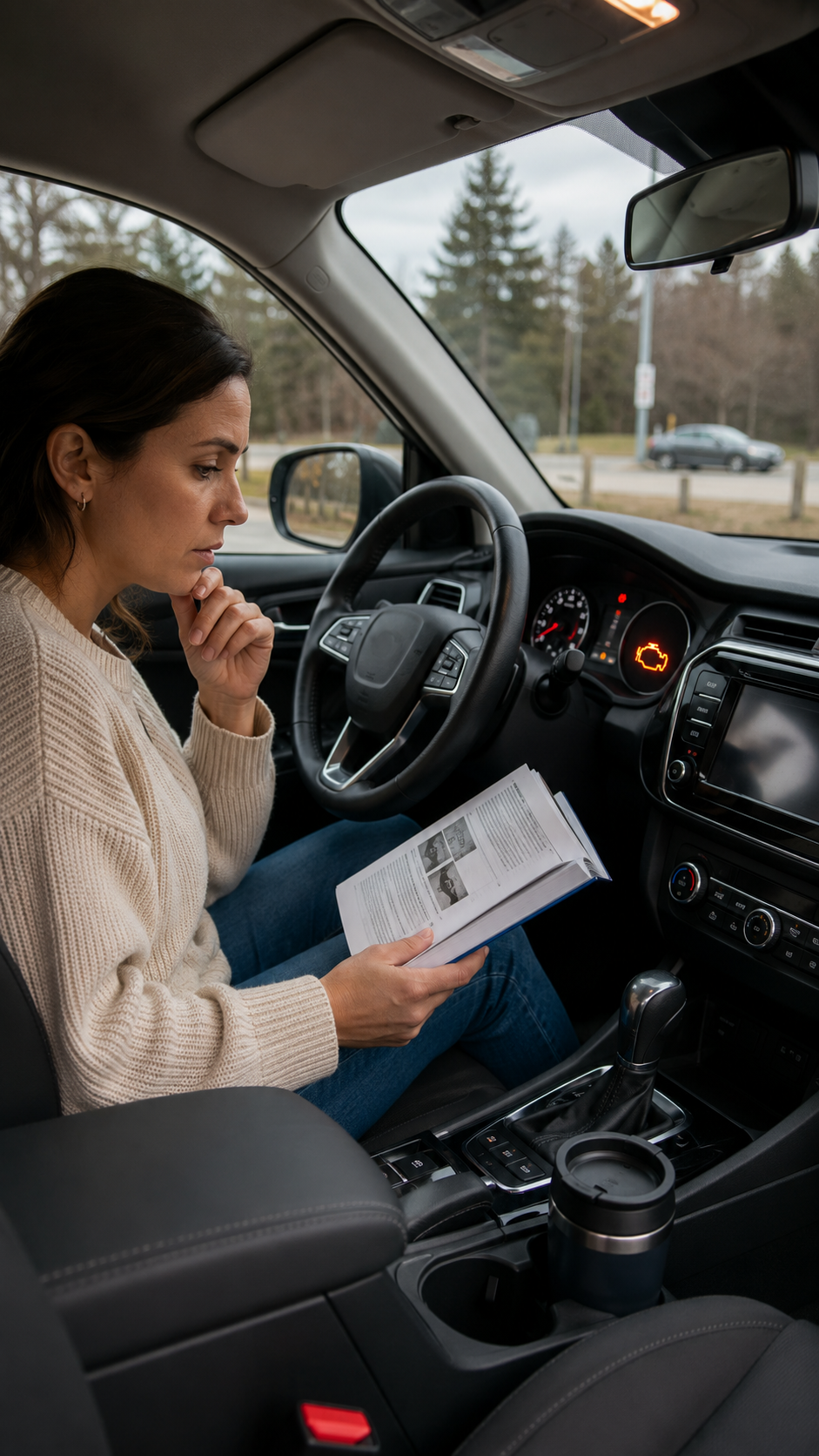
Common examples include the check engine light, tire pressure warning, traction control warning, or maintenance reminder.
A yellow light is not a reason to ignore the problem for weeks. It is a reason to slow down, pay attention to how the car feels, and schedule inspection or repair as needed.
Green, Blue, or White Lights Are Often Informational
Some dashboard lights simply tell you that a feature is active. High beams, cruise control, lane assist, fog lights, and eco mode may appear in green, blue, or white.
These lights are still worth understanding, especially if you are driving a new or borrowed car. But they are usually not warning you about a problem.
First Question: Is the Car Driving Normally?
When a warning light appears, the first practical check is how the car feels.
Ask yourself:
Is the engine running smoothly?
Is the car accelerating normally?
Does the steering feel normal?
Are the brakes responding normally?
Do you hear any unusual noises?
Do you smell burning, fuel, or something sweet?
Is steam or smoke coming from the hood?
If the car feels wrong, treat the warning more seriously. A light plus a strange sound, smell, vibration, or loss of power is more concerning than a light by itself.
For example, a check engine light that appears while the car drives normally may be less urgent than a check engine light that flashes while the car shakes. A tire pressure light with normal handling is different from one that comes with pulling, thumping, or a visibly flat tire.
Your dashboard is one clue. The way the car behaves is another.
Check the Most Urgent Warning Lights First
Some warning lights deserve faster attention because they relate to systems that can affect safety or cause costly damage.
Oil Pressure Warning Light
The oil pressure light often looks like an old-fashioned oil can.
This is one of the lights you should take seriously right away. It does not simply mean the car is due for an oil change. It may mean the engine is not getting proper lubrication.
If this light stays on while driving, safely pull over and turn off the engine. Driving with low oil pressure can damage the engine quickly.
Once parked and the engine has cooled enough to check safely, look at the oil level if you know how to use the dipstick. If the oil is very low, adding the correct oil may help, but the light still needs attention if it returns.
Do not assume it is harmless just because the car still starts.
Engine Temperature Warning Light
The temperature warning light may look like a thermometer in water. Some vehicles also have a temperature gauge that climbs into the red zone.
This light can mean the engine is overheating.
If you see it, turn off the air conditioning, reduce strain on the engine, and look for a safe place to stop. Once parked, do not open a hot radiator cap. Hot coolant can be under pressure.
Overheating can happen for several reasons, including low coolant, a leak, a fan problem, or a thermostat issue. The safest next step is to let the car cool and get help if you are unsure.
Brake Warning Light
The brake warning light may say “BRAKE” or show a circle with an exclamation point. Sometimes it appears simply because the parking brake is still engaged.
That is the first thing to check. Is the parking brake fully released?
If the parking brake is not the issue, the light may point to low brake fluid or a brake system problem. Pay attention to how the brake pedal feels. If it feels soft, sinks too far, makes noise, or the car does not stop normally, do not keep driving.
Even if the car seems okay, a brake warning light should be inspected promptly.
Battery or Charging System Light
The battery light usually looks like a small battery symbol.
Many drivers assume it means the battery itself is bad. Sometimes it does. But it can also mean the charging system is not working properly. The alternator, belt, wiring, or battery connection could be involved.
If this light comes on while driving, your car may be running on battery power alone. It may continue for a while, but eventually electrical systems can weaken.
Turn off unnecessary electrical loads if you can do so safely, such as heated seats or extra accessories. Avoid shutting the car off in an unsafe place, because it may not restart. Plan to stop somewhere safe and have the system checked.
What to Do About the Check Engine Light
The check engine light is one of the most confusing dashboard warnings because it can mean many different things.
It may be something simple, such as a loose gas cap. It may also point to an engine, emissions, fuel, or ignition problem.
If the Check Engine Light Is Steady
A steady check engine light usually means the car needs diagnosis, but it may not require stopping immediately if the car is driving normally.
Start with the simple things.
Check whether the gas cap is loose, damaged, or missing. Tighten it until it clicks, if your vehicle uses that style. In some cars, the light may take a while to turn off after the issue is corrected.
Then pay attention to how the car behaves. If it drives normally, schedule a diagnostic check soon. Many auto parts stores and repair shops can scan the trouble code, but the code is only a starting point. It does not always tell the full story.
If the Check Engine Light Is Flashing
A flashing check engine light is more urgent.
It can indicate a problem that may damage the catalytic converter or engine if you keep driving. You may also notice shaking, rough acceleration, or reduced power.
If the light is flashing, slow down, avoid hard acceleration, and find a safe place to stop. It is better to get the car checked than to keep driving and hope it clears up.
Tire Pressure Warning Light
The tire pressure monitoring system light usually looks like a horseshoe-shaped symbol with an exclamation point.
This light often comes on when one or more tires are underinflated. It is especially common during cold weather because tire pressure drops when temperatures fall.
What to Check First
Find a safe place to stop and visually inspect the tires. Look for a flat tire, a tire that sits lower than the others, visible damage, or a nail.
If the tires look okay, check the pressure with a tire gauge when possible. Inflate them to the pressure listed on the driver’s door sticker, not the number printed on the tire sidewall.
If the warning light comes back after inflation, there may be a slow leak or sensor issue.
Why It Matters
Low tire pressure can affect handling, braking, fuel economy, and tire wear. It can also make the tire heat up more during driving.
The fix may be simple, but it is still worth checking quickly.
ABS, Airbag, and Traction Control Lights
Some lights do not mean the car will stop driving, but they may mean a safety system is not working as intended.
ABS Warning Light
ABS stands for anti-lock braking system. If the ABS light comes on, your regular brakes may still work, but the anti-lock feature may not function properly.
This matters during hard braking or slippery conditions. Get it checked, especially before bad weather or long trips.
Airbag Warning Light
An airbag warning light may mean part of the airbag system or seatbelt pretensioner system has a fault.
The car may still drive normally, but the safety system may not perform as expected in a crash. This is not something to ignore for months.
Traction Control or Stability Control Light
A traction control light may flash briefly when the system is actively helping on slippery roads. That can be normal.
But if it stays on, there may be a system problem, or the feature may be turned off. Check your manual and pay attention to road conditions.
Common Mistakes Drivers Make
Ignoring the Light Because the Car Feels Fine
This is probably the most common mistake.
Some problems start small. A tire may be slowly losing air. A sensor may be warning you before symptoms become obvious. A minor engine issue may become more expensive if ignored.
A warning light is not always an emergency, but it is information. Treat it as a prompt to check, not as background decoration.
Covering the Light or Waiting Too Long
Some people keep driving for weeks with the same light on. Eventually, they stop noticing it.
The problem is that a new warning may appear later, and it may be harder to tell what changed. A long-ignored warning light can also hide a problem that would have been easier to fix early.
Guessing Based Only on Internet Searches
Searching the symbol online can help, but it is not a substitute for your owner’s manual or a proper diagnostic check.
The same symbol can vary slightly by vehicle. Some lights also have different meanings depending on whether they are flashing, steady, red, yellow, or paired with a message on the dashboard display.
Use online information as a guide, not the final answer.
Continuing to Drive With Strange Sounds or Smells
A warning light plus a burning smell, grinding noise, steam, smoke, shaking, or loss of power should not be treated casually.
Simple Steps to Follow When a Warning Light Comes On
Step 1: Stay Calm and Keep Control
Do not slam the brakes just because a light appears. Check traffic, keep both hands on the wheel, and continue driving smoothly while you assess the situation.
Step 2: Look at the Color and Symbol
Red usually means stop and check as soon as safely possible. Yellow or orange usually means caution and inspection soon. Green, blue, or white often means a feature is active.
Step 3: Check for Other Symptoms
Listen, smell, and feel. Is the car overheating? Are the brakes normal? Is the steering heavy? Is the engine shaking?
Step 4: Find a Safe Place to Stop if Needed
If the light is red, flashing, or paired with unusual symptoms, pull over safely. Parking lots, rest areas, wide shoulders, and well-lit public places are better than stopping suddenly in traffic.
Step 5: Check the Owner’s Manual
Your vehicle’s manual explains the exact symbol and recommended response. Many newer cars also have digital manuals in the infotainment system or manufacturer app.
Step 6: Get Help When You Are Unsure
If you are not comfortable checking fluids, tires, or mechanical parts, that is okay. Call roadside assistance, a trusted mechanic, or someone who can help.
The goal is not to become a mechanic on the side of the road. The goal is to make a safer decision.
Prevention Tips Before Warning Lights Appear
Do a Monthly Tire Pressure Check
Tire pressure lights are common and often preventable. Keep a tire gauge in the glove box and check pressure monthly, especially when seasons change.
Keep Up With Oil and Fluid Checks
Regular oil changes and basic fluid checks can prevent many dashboard warnings. If your car has a maintenance schedule, follow it as closely as you can.
Listen to Small Changes
A new squeak, vibration, rough idle, or slow start can be an early clue. Mention these details when you visit a mechanic. They can help with diagnosis.
Keep Your Gas Cap Tight
A loose gas cap can trigger a warning light in some vehicles. After fueling, tighten it properly and make sure it is not cracked or missing.
Do Not Ignore Recalls
Vehicle recalls can involve safety systems, electrical parts, airbags, brakes, or other important components. Check for recalls periodically, especially if you bought a used car.
What to Keep in Your Car
A few basic items can make warning-light situations less stressful.
Keep a tire pressure gauge, phone charger, flashlight, owner’s manual, emergency contact numbers, and roadside assistance information in the car.
A small notebook or phone note can also help you track when the light appeared, what the car was doing, and whether there were sounds, smells, or weather conditions involved.
These details can help a mechanic find the issue faster.
Conclusion: Warning Lights Are There to Help You
A dashboard warning light can feel annoying, especially when you are busy. But it is better to see a warning early than to discover a problem too late.
When a light comes on, start with the basics. Notice the color. Identify the symbol. Pay attention to how the car feels. Check for urgent signs like oil pressure, overheating, brake issues, flashing lights, strange smells, or unusual noises.
Some lights mean stop soon. Others mean schedule service. A few simply mean a feature is active. The owner’s manual is your best guide for your specific vehicle.
You do not need to panic or know every symbol by memory. Just build the habit of checking warning lights calmly and promptly.
A few minutes of attention can protect your car, reduce repair stress, and help keep everyday driving a little safer.
Hi, I’m the creator and editor behind ZestyHabit. I research everyday safety, first aid, and practical wellness topics using official guidance and reliable public sources, then turn that information into clear, realistic steps for daily life.
My goal is to help readers make safer, better-informed choices at home and beyond.