Why Sealed Containers Can Burst in the Microwave: A Simple Kitchen Safety Guide
Minjin Park
·
Sealed containers can burst in the microwave when steam builds up with nowhere to escape. Learn why it happens, what containers to avoid, and simple ways to heat food more safely.
The microwave is one of the most convenient appliances in the kitchen. It reheats leftovers, warms soup, softens butter, cooks frozen meals, and saves time on busy days. Because it feels so simple, it is easy to treat it casually.
One common habit is placing a food container in the microwave with the lid tightly sealed.
At first, this may seem practical. A sealed lid prevents splatter, keeps moisture inside, and makes reheating feel cleaner. But a tightly sealed container can create a different problem: pressure buildup.
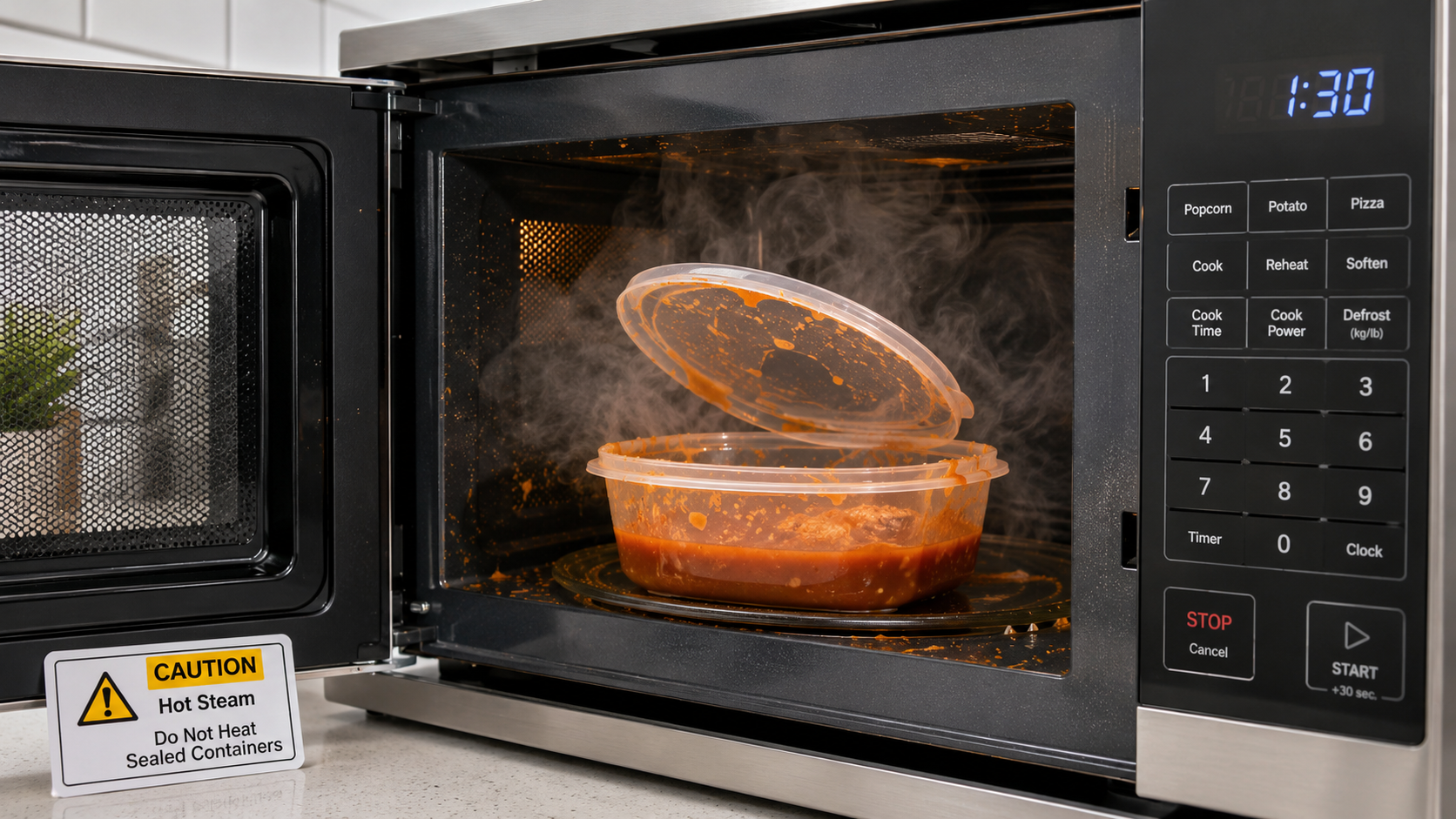
When food heats in the microwave, moisture inside the container turns into steam. If that steam has nowhere to escape, pressure can build quickly. Eventually, the lid may pop off, the container may crack, or hot food may burst out suddenly.
This does not happen every time, which is part of why the habit can feel harmless. Maybe you have reheated leftovers with a tight lid many times and nothing dramatic happened. But when the conditions are right, a sealed container can make a normal reheating job messy, startling, and potentially dangerous.
The good news is that this is easy to prevent. You do not need to stop using the microwave. You just need to give steam a safe way out.
What Happens Inside a Sealed Container?
Most foods contain water. Soup, rice, pasta, vegetables, sauces, casseroles, stews, and leftovers all hold moisture. When the microwave heats the food, that moisture warms up and begins turning into steam.
Steam takes up more space than liquid water. In an open bowl, that steam simply rises and escapes into the microwave. In a loosely covered container, it can vent around the edges or through a small opening.
But in a tightly sealed container, steam gets trapped.
As more steam forms, pressure builds inside. The container becomes like a small pressure chamber. If the seal is strong enough, the pressure keeps increasing until something gives.
That “something” might be the lid popping off. It might be sauce exploding out from one side. It might be a plastic container warping. In some cases, a rigid container can crack or break.
Why Microwaves Heat Unevenly
Microwaves do not always heat food evenly. One section of a meal may become very hot while another section is still cool. Thick sauces, dense leftovers, and foods with different textures can heat unevenly.
This uneven heating matters because steam may build up in pockets.
For example, a sealed container of chili may look calm from the outside, but a hot pocket near the center may be producing steam. If the lid is locked down, the pressure has nowhere to go.
Then, when you open the container, stir the food, or move it, the trapped pressure may release suddenly.
That is why microwave problems sometimes happen after heating, not only during heating. The container may seem fine until you lift the lid and hot steam rushes out.
The Main Problem: Steam Needs a Way to Escape
The simple rule is this: never microwave food in a fully sealed container.
A lid can be useful, but it should not be airtight. It should be vented, tilted, or loosely placed so steam can escape.
This is especially important for foods with a lot of moisture, such as:
Soups
Stews
Pasta sauce
Gravy
Rice dishes
Oatmeal
Beans
Curries
Casseroles
Frozen meals
Saucy leftovers
These foods may look harmless, but they can produce a lot of steam as they heat.
A Common Real-Life Example
Imagine you have leftover spaghetti in a plastic storage container. You take it from the refrigerator, keep the snap-on lid tightly closed, and put it in the microwave for two minutes.
As the sauce heats, steam builds inside. The lid starts to bulge slightly, but you may not notice. Suddenly, the lid pops loose and sauce splatters across the microwave.
Even if the container does not break, now you have a mess. If you open it too quickly, hot steam could also hit your hand or face.
The safer option would have been simple: transfer the food to a microwave-safe dish and cover it loosely, or leave one corner of the lid vented if the lid is microwave-safe and designed for that use.
Not All Containers Are Microwave-Safe
Another issue is the container itself.
Some containers are designed for microwave use. Others are only meant for storage. A container may hold food safely in the refrigerator but still not be suitable for microwave heating.
Microwave-safe containers are made to tolerate microwave heat without melting, warping, or releasing unwanted odors. Even then, the lid may have specific instructions. Some lids are microwave-safe only when vented. Some should not be microwaved at all.
Always check the label or manufacturer’s instructions.
Containers to Be Careful With
Avoid microwaving food in:
Airtight plastic storage containers with locked lids
Takeout containers that are not labeled microwave-safe
Metal containers or foil-lined packaging
Glass jars with tight lids
Vacuum-sealed packages
Plastic containers that are cracked, stained, or warped
Containers with metal handles, trim, or clips
Single-use containers not meant for reheating
If you are unsure whether a container is microwave-safe, use a microwave-safe glass or ceramic dish instead.
Why Glass Jars Can Be Risky Too
Some people assume glass is always safe in the microwave. But the problem is not only the material. It is also the seal and the shape.
A glass jar with a tight lid can trap steam just like a plastic container. Even if the lid is removed, narrow jars can heat unevenly, and thick contents may bubble up suddenly.
For example, reheating soup, sauce, or baby food in a glass jar can create hot spots. If the jar was sealed or partially sealed, pressure may build. If the glass has small cracks, sudden temperature changes may also make it more vulnerable.
A wide microwave-safe bowl is usually a better choice for reheating than a closed jar.
Why “Just Loosening the Lid” Helps
You do not always need to leave food completely uncovered. In fact, covering food loosely can be helpful because it reduces splatter and helps food heat more evenly.
The key word is loosely.
A loose cover lets steam escape while still protecting the microwave from sauce and food droplets. You can use:
A microwave-safe splatter cover
A microwave-safe plate placed loosely on top
A microwave-safe lid with a vent open
Parchment paper
A paper towel for some foods
Do not press the lid down tightly. Do not lock the side clips. Do not seal all corners.
Stop the microwave and check carefully if you notice:
The lid bulging upward
The container swelling
A popping or hissing sound
Food bubbling aggressively
Steam forcing its way out from one side
Plastic warping or softening
A burning plastic smell
Sauce leaking from the lid
The container rocking or shifting
If something looks wrong, turn off the microwave and let the container sit for a moment before touching it. Use oven mitts or a towel, and open the lid away from your face.
The Risk of Opening a Hot Sealed Container
Sometimes the container does not burst inside the microwave. Instead, the pressure releases when you open it.
This can be just as startling.
If steam has been trapped inside, opening the lid can send a rush of hot vapor toward your fingers, wrist, or face. Hot sauce or soup can also bubble up suddenly.
To avoid this, let heated food rest briefly before opening. Then lift the lid slowly, starting from the side farthest away from you. This allows steam to escape away from your body.
Think of it like opening a pot lid on the stove. You would not put your face directly over the steam. Treat microwave containers the same way.
Common Mistakes That Make Bursting More Likely
Most microwave container problems come from everyday habits.
Mistake 1: Locking the Lid Before Heating
Snap-on lids are great for storage, but they should not be locked down during microwaving unless the product specifically says it is safe to do so with a vent open.
A locked lid can trap steam and pressure.
Mistake 2: Reheating Food in Takeout Containers
Some takeout containers are microwave-safe, but many are not. Foam containers, thin plastic boxes, foil-lined cartons, and containers with metal pieces should not go in the microwave.
When in doubt, transfer the food.
Mistake 3: Heating Saucy Foods Too Long
Sauces, soups, and stews can bubble up quickly. Long microwave times increase steam buildup and splatter.
Use shorter intervals and stir between rounds.
Mistake 4: Forgetting to Vent Microwave Meals
Some frozen meals have film covers that must be pierced or vented. Those instructions are there for a reason.
If the package says to cut a slit, peel back a corner, or puncture the film, do it before heating.
Mistake 5: Microwaving Vacuum-Sealed Food
Vacuum-sealed packages are designed for storage, not pressure release. Heating them while sealed can cause swelling or bursting.
Open or vent the package according to the instructions before heating.
Foods That Are More Likely to Build Pressure
Some foods are more likely to create steam pressure or burst because they contain moisture under a skin, shell, or thick surface.
Be extra careful with:
Whole eggs
Grapes
Cherry tomatoes
Hot dogs with tight skins
Potatoes without holes
Sealed pouches
Thick soups
Oatmeal
Pasta sauce
Rice with sauce
Stuffed foods
Frozen meals with plastic film
These foods are not all dangerous by themselves. They simply need the right preparation, such as piercing, stirring, venting, or using shorter heating times.
Why Stirring Helps
Stirring is one of the simplest ways to reduce microwave problems.
Because microwaves can heat unevenly, stirring helps spread heat through the food. It also releases trapped steam pockets before they build too much pressure.
For foods like soup, chili, pasta, rice bowls, and oatmeal, heat in shorter intervals. Stir, then continue heating if needed.
This may feel slower than pressing “two minutes” and walking away, but it often prevents splatter and improves the final texture.
Simple Steps for Microwaving Containers More Safely
A safer microwave routine is easy to build.
Step 1: Check the Container
Look for a microwave-safe label. If you do not see one, transfer the food to a microwave-safe glass or ceramic dish.
Step 2: Remove or Vent the Lid
Do not microwave with an airtight seal. Use a vented lid, loose cover, or slightly tilted microwave-safe plate.
Step 3: Use Short Heating Intervals
Heat in 30- to 60-second intervals, especially for thick or saucy foods.
Step 4: Stir When Possible
Stirring helps release steam and reduce hot spots.
Step 5: Let It Rest
After heating, let the container sit briefly so bubbling can calm down.
Step 6: Open Away From Your Face
Lift the cover slowly and direct steam away from your hands and face.
Step 7: Check Food Temperature Before Eating
Microwaved food can have hot and cold spots. Stir and check before serving, especially for children.
What About Microwave-Safe Lids With Vents?
Microwave-safe vented lids can be useful. They help reduce splatter while allowing steam to escape.
But they only work when used correctly.
Make sure the vent is open before heating. Do not lock down clips unless the instructions say to. Clean the vent regularly so food residue does not block it.
If the lid starts warping, cracking, or smelling unusual, replace it.
A vented lid is helpful, but it is not a reason to ignore the food while it heats.
How to Prevent Microwave Messes Without Sealing the Container
Many people seal containers because they hate cleaning the microwave. That is understandable. Tomato sauce, soup, butter, and oatmeal can make a real mess.
But you can prevent splatter without trapping pressure.
Try these options:
Use a microwave splatter cover
Place a microwave-safe plate loosely over the bowl
Use a paper towel for drier foods
Choose a deeper bowl for soups and sauces
Leave extra space at the top of the container
Heat in shorter intervals
Stir halfway through
A deeper bowl is especially helpful. Food needs room to bubble without spilling over.
What to Do If a Container Bursts in the Microwave
If a container bursts or the lid pops off, turn off the microwave and wait a moment before opening the door. Hot steam may still be inside.
Once it has settled, use caution when removing the container. It may be hotter than expected, cracked, or slippery with spilled food.
Let the microwave cool before cleaning. Wipe food spills with a damp cloth and mild dish soap. If food splattered onto the microwave ceiling or vents, clean gently according to the appliance manual.
Do not keep using a cracked or warped container. Once a container is damaged, it may not heat safely or evenly again.
A Practical Example: Leftover Soup
Soup is one of the most common foods that causes microwave surprises.
If you store soup in a container with a tight lid, do not place it directly in the microwave sealed. Instead, remove the lid and pour the soup into a microwave-safe bowl. Cover loosely with a plate or splatter cover.
Heat for one minute, stir, then continue in shorter intervals until hot. Let it sit briefly before eating.
This method reduces pressure, helps prevent hot spots, and makes spills less likely.
A Practical Example: Meal Prep Containers
Meal prep containers are convenient, but not all of them should be microwaved with lids attached.
If your container has a snap-on lid, unlock the clips and open the vent if it has one. If you are not sure whether the lid is microwave-safe, remove it and use a loose microwave-safe cover instead.
For rice bowls, pasta, chicken, vegetables, and sauces, stir halfway through heating. This helps the food warm more evenly and prevents steam pockets from building under dense areas.
Final Thoughts: Venting Is the Small Habit That Matters
A sealed container can burst in the microwave because steam builds pressure inside. As food heats, moisture turns into steam. If the lid is airtight, that steam has nowhere to go.
The solution is simple: do not microwave food in a fully sealed container.
Use microwave-safe dishes. Vent lids. Cover food loosely. Heat in short intervals. Stir when possible. Let food rest before opening. Always open lids away from your face so steam can escape safely.
These are small habits, but they make microwave use calmer and cleaner. You still get the convenience of quick reheating without the surprise of a popped lid, cracked container, or sauce-covered microwave.
A microwave is a helpful everyday tool. Giving steam a way out is one of the easiest ways to use it wisely.
Hi, I’m the creator and editor behind ZestyHabit. I research everyday safety, first aid, and practical wellness topics using official guidance and reliable public sources, then turn that information into clear, realistic steps for daily life.
My goal is to help readers make safer, better-informed choices at home and beyond.