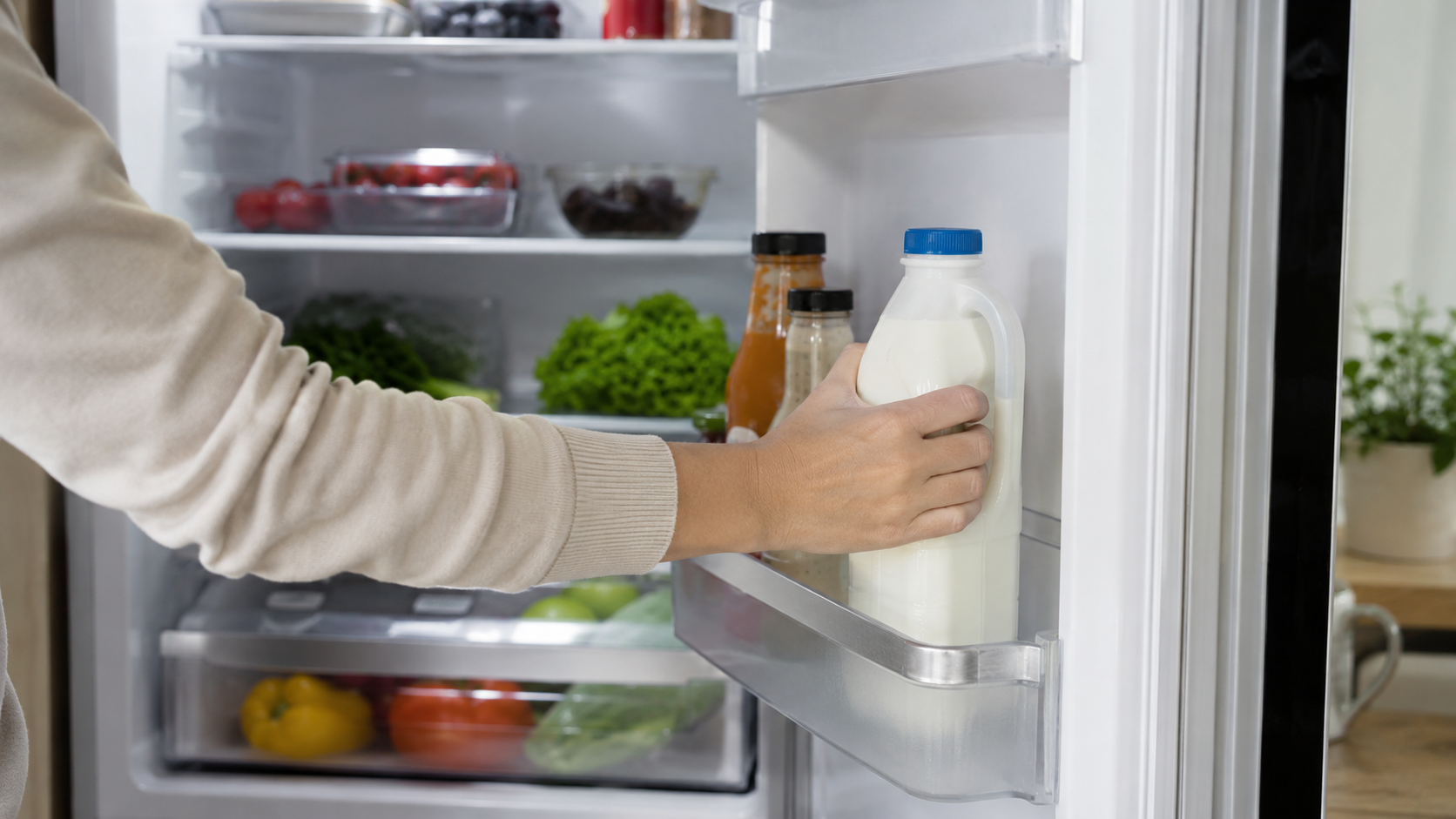
Why You Shouldn’t Store Milk in the Refrigerator Door
Minjin Park
·
Storing milk in the refrigerator door may seem convenient, but it can expose milk to warmer, less stable temperatures. Learn why it matters and where to keep milk fresher for longer.
Why the Refrigerator Door Seems Like the Perfect Place for Milk
If you grew up seeing a gallon of milk tucked neatly into the refrigerator door, you are definitely not alone. For many families, that door shelf feels like the natural home for milk. It is tall, easy to reach, and convenient when you are making coffee, pouring cereal, or grabbing a quick glass before bed.
The problem is that convenient does not always mean best.
The refrigerator door is one of the warmest and least stable areas inside the fridge. Every time the door opens, the items stored there are exposed to warmer kitchen air. That may not seem like a big deal when you are just grabbing one thing, but over the course of a day, those small temperature changes can add up.
Milk is especially sensitive because it needs consistent cold storage to stay fresh as long as possible. When milk is repeatedly exposed to warmer temperatures, it may spoil faster, taste different sooner, or become less pleasant to drink before the date printed on the carton.
This does not mean one day in the door will automatically ruin your milk. But if you regularly store milk there, especially in a busy household, it is worth rethinking the habit.
The Main Reason: The Door Is Too Warm and Unstable
The biggest issue with storing milk in the refrigerator door is temperature fluctuation.
The back of the refrigerator usually stays colder and more consistent. The door, on the other hand, warms up more often because it is opened and closed throughout the day. If you have kids, roommates, family members, or anyone who stands with the door open while deciding what to eat, the temperature changes can be even more noticeable.
Milk does best when it stays cold and steady. The more often it warms slightly and cools again, the more likely it is to lose freshness faster.
Think About How Often Your Fridge Opens
In some homes, the refrigerator door opens a few times a day. In others, it opens constantly.
Morning coffee. Breakfast. Packing lunches. After-school snacks. Dinner prep. Late-night drinks. Someone looking for “nothing” and closing the door again.
If milk is sitting in the door, it gets exposed to each of those little bursts of warm air. A carton on an inside shelf, especially toward the back, is better protected.
Why Milk Spoils Faster in the Door
Milk is a perishable food. Even when it is pasteurized and sealed, it still needs proper refrigeration. Cold temperatures slow down the growth of spoilage bacteria and help preserve flavor, smell, and texture.
When milk spends too much time in a warmer area of the fridge, it may start to change sooner than expected.
You might notice:
A slightly sour smell
A strange aftertaste
Clumping or thickening
A carton that seems to spoil before the date
Milk that tastes “off” even though it looks normal
These signs can be frustrating, especially if you just bought the milk a few days ago. Many people blame the store, the brand, or the expiration date, but sometimes the issue is simply where the milk is being stored at home.
The Printed Date Is Not a Magic Guarantee
A common mistake is assuming milk will stay fresh until the date printed on the carton no matter what. That date is helpful, but it depends on proper handling.
The date assumes the milk has been kept cold through transport, at the store, on the way home, and in your refrigerator. Once milk is exposed to warmer temperatures repeatedly, the printed date becomes less reliable.
This is why two families can buy the same brand of milk with the same date and have very different experiences. One family stores it on a cold interior shelf and finishes it easily. Another keeps it in the fridge door, opens the door often, and notices sour milk sooner.
Milk is not cheap, especially if your household buys organic milk, lactose-free milk, or specialty dairy products. Having to throw away half a carton because it soured early is frustrating and wasteful.
It also affects meal routines. Sour milk can ruin cereal, coffee, pancake batter, mashed potatoes, sauces, or a child’s lunch. Nobody wants to discover bad milk after it has already been poured into something else.
And for families with children, older adults, or anyone with a sensitive stomach, it is especially helpful to be careful with perishable foods. You do not need to be anxious about it. You just need good habits that reduce the chance of using milk that has gone bad.
The Best Place to Store Milk in the Refrigerator
The best place for milk is usually on an interior shelf, toward the back of the refrigerator.
That area tends to stay colder and more stable than the door. It is less exposed to warm air when the fridge opens, and it gives the milk a better chance of staying fresh until you use it.
Good Storage Spots
A good spot for milk is:
On a middle or lower interior shelf
Toward the back of the fridge
Away from the refrigerator door
Away from warm leftovers that have not cooled properly
In its original sealed container
Some refrigerators have specific dairy compartments, but those are often located in the door. They may be fine for butter or some condiments, but they are not always the best choice for milk.
What About the Top Shelf?
The top shelf can work in some refrigerators, but it may be slightly warmer depending on the model and airflow. If your milk spoils quickly on the top shelf, try moving it lower and farther back.
The main idea is simple: keep milk away from the door and in the coldest consistent area available.
What Should You Store in the Refrigerator Door Instead?
The refrigerator door is not useless. It is just better suited for foods that tolerate temperature changes more easily.
These items are usually more acidic, salty, sugary, or shelf-stable than milk, which makes them less sensitive to brief temperature changes.
That does not mean they can be ignored forever, but they are generally better candidates for door storage than dairy milk.
Common Mistakes That Make Milk Spoil Faster
Changing where you store milk helps, but a few other habits matter too.
Leaving Milk Out During Breakfast
It is easy to set the carton on the table during breakfast and forget about it while everyone eats. A few minutes is usually not a big issue, but milk should not sit out for long periods.
A better habit is to pour what you need and put the carton back in the fridge right away. This is especially helpful on warm days or in a busy kitchen.
Letting Kids Carry the Carton Around
Kids may pour cereal, leave the carton out, or set it near a sunny window without thinking. If children are old enough to use milk by themselves, it helps to teach one simple rule: pour it, close it, put it back.
You do not have to make it scary. Just make it routine.
Keeping the Fridge Too Full
A refrigerator that is packed too tightly may not circulate cold air well. If milk is squeezed into a warm pocket near the front, it may not stay as cold as you think.
Try to leave some space around items so air can move. This also makes it easier to see what you have before food gets forgotten.
Putting Warm Food Next to Milk
Hot leftovers should not be placed directly beside milk. Warm containers can raise the temperature around nearby foods, at least temporarily.
Let hot foods cool slightly before refrigerating, then store them in shallow containers so they chill faster. Keep milk away from those warmer items when possible.
Not Closing the Cap Tightly
Milk can absorb odors from the refrigerator, and a loose cap can also make spills more likely. Always close the container tightly before putting it back.
This is especially important if you store strong-smelling foods nearby, like onions, garlic-heavy leftovers, fish, or certain cheeses.
Warning Signs Your Milk May Not Be Stored Well
Sometimes the problem is obvious. Other times, it is more subtle.
Here are signs your milk storage routine may need improvement.
Milk Spoils Before the Date
If your milk often smells sour several days before the printed date, check where you are storing it. The door may be the reason.
Also consider whether your refrigerator is cold enough and whether the carton sits out during meals.
The Carton Feels Less Cold Than Other Items
When you grab milk from the door, compare how cold it feels to items on the back shelf. If it regularly feels less cold, that is a clue.
Milk should feel properly chilled, not just slightly cool.
Your Fridge Door Is Open Often
If your household opens the refrigerator constantly, the door is a poor place for sensitive foods. This is especially true during summer, when the kitchen is warmer.
Milk Tastes Different After a Few Days
Milk may not smell fully spoiled but still taste stale, flat, or slightly sour. That can happen when it has been exposed to temperature swings.
Moving it to a colder shelf may help preserve the taste longer.
A Simple Milk Storage Routine
You do not need a complicated system. A few small habits can make a noticeable difference.
Step 1: Bring Milk Home Promptly
When grocery shopping, pick up milk near the end of your trip if possible. Go home soon after shopping, especially in hot weather.
If you have a long drive or multiple errands, consider using an insulated grocery bag for cold items.
Step 2: Put Milk Away First
When unloading groceries, put refrigerated and frozen foods away before pantry items. Milk should not sit on the counter while you organize everything else.
Step 3: Store It on an Interior Shelf
Place milk on a middle or lower shelf toward the back. Avoid the door, even if the carton fits perfectly there.
Step 4: Return It Quickly After Use
Pour what you need, close the cap, and put it back. This is one of the easiest habits to build.
Step 5: Check Smell and Texture Before Using
Before pouring milk into coffee, cereal, or a recipe, take a quick smell if you are unsure. If it smells sour, looks clumpy, or seems unusual, it is better not to use it.
What About Plant-Based Milks?
Plant-based milks, such as almond, oat, soy, and coconut milk, can vary depending on the product. Some are sold refrigerated, while others are shelf-stable until opened.
The refrigerator door may still be less ideal for opened plant-based milk, especially if the label says to keep refrigerated and use within a certain number of days after opening.
A good rule is to read the label and store opened cartons on an interior shelf when possible.
What About Ultra-Pasteurized or Organic Milk?
Ultra-pasteurized milk and many organic milks may have a longer unopened shelf life, but that does not mean they can handle poor storage after opening.
Once opened, they still need to stay cold. They may last longer than regular milk in some cases, but temperature swings can still affect freshness and taste.
So even if you buy a more expensive or longer-lasting milk, it is still smart to keep it out of the refrigerator door.
How to Organize Your Fridge So Milk Fits
One reason people store milk in the door is simple: there is no room anywhere else.
If that sounds familiar, a small fridge reset can help.
Make a Dedicated Milk Spot
Choose one interior shelf space as the milk spot. Keep it consistent so everyone in the household knows where milk belongs.
If needed, adjust the shelf height to fit a gallon jug or carton.
Move Condiments to the Door
If condiments are taking up interior shelf space, move them to the door. This frees up the colder areas for milk, eggs, leftovers, and other more sensitive foods.
Use Smaller Containers Carefully
Some people transfer milk into smaller pitchers. This can be convenient, but only do it if the container is clean, covered, and food-safe. Labeling the date can also help.
For most households, keeping milk in its original container is simpler and safer.
Avoid Overbuying
If your household often throws away spoiled milk, consider buying smaller containers more often. A half-gallon that gets used while fresh may be better than a gallon that spoils halfway through.
This can be especially useful for people who live alone or only use milk for coffee.
A Quick Refrigerator Check
If your milk spoils quickly no matter where you store it, your refrigerator temperature may be part of the problem.
A refrigerator thermometer is inexpensive and can help you understand what is happening inside your fridge. Sometimes the built-in dial does not tell you the actual temperature.
Also check whether the door seals properly. If the gasket is loose, dirty, or damaged, cold air may escape. That can make the whole fridge work harder and keep food less consistently cold.
You can also notice everyday clues. If foods near the front feel warmer, if condensation appears often, or if the door does not close smoothly, it may be time to clean, adjust, or inspect the fridge.
Everyday Examples
Here are a few common situations where moving milk out of the door can help.
The Busy Family Fridge
In a family with kids, the fridge door may open constantly. Someone wants juice. Someone wants string cheese. Someone is looking for leftovers. Someone changes their mind.
Milk in the door gets exposed to warm air all day long. Moving it to the back shelf gives it more protection.
The Coffee Drinker’s Routine
If you use milk for coffee every morning, the door feels convenient. But if the milk starts tasting odd after a few days, the convenience may not be worth it.
Try keeping milk on an interior shelf and placing coffee creamers or less sensitive items in the door instead.
The Small Apartment Fridge
Small refrigerators can be tricky because space is limited. Still, the same principle applies. Keep milk as far from the door as practical and avoid leaving it in the warmest spot.
Even a small change, like moving it from the door to the back corner of a shelf, can help.
Final Thoughts
Storing milk in the refrigerator door is common, but it is not the best habit if you want milk to stay fresh longer. The door is exposed to warmer air every time the fridge opens, making it one of the least stable places for sensitive foods.
Milk does better on an interior shelf, ideally toward the back where the temperature stays colder and more consistent. This simple change can help reduce waste, protect flavor, and make your kitchen routine a little more reliable.
You do not need to reorganize your entire life around one carton of milk. Just give it a better spot, put it back quickly after use, and keep the fridge door for condiments and sturdier items.
Small kitchen habits like this are easy to overlook, but they often make daily life smoother. A colder, steadier place for milk is a simple step that helps your groceries last the way they should.
Hi, I’m the creator and editor behind ZestyHabit. I research everyday safety, first aid, and practical wellness topics using official guidance and reliable public sources, then turn that information into clear, realistic steps for daily life.
My goal is to help readers make safer, better-informed choices at home and beyond.