High-Frequency Beauty Devices: What to Be Careful About When Using Them at Home
Minjin Park
·
Home beauty devices are tempting.
You see a small device online, read a few glowing reviews, watch someone glide it across their face for thirty seconds, and suddenly it feels like your bathroom could become a mini skincare clinic. No appointment. No waiting room. No awkward small talk. Just you, your mirror, and a device that promises clearer, smoother, tighter, fresher-looking skin.
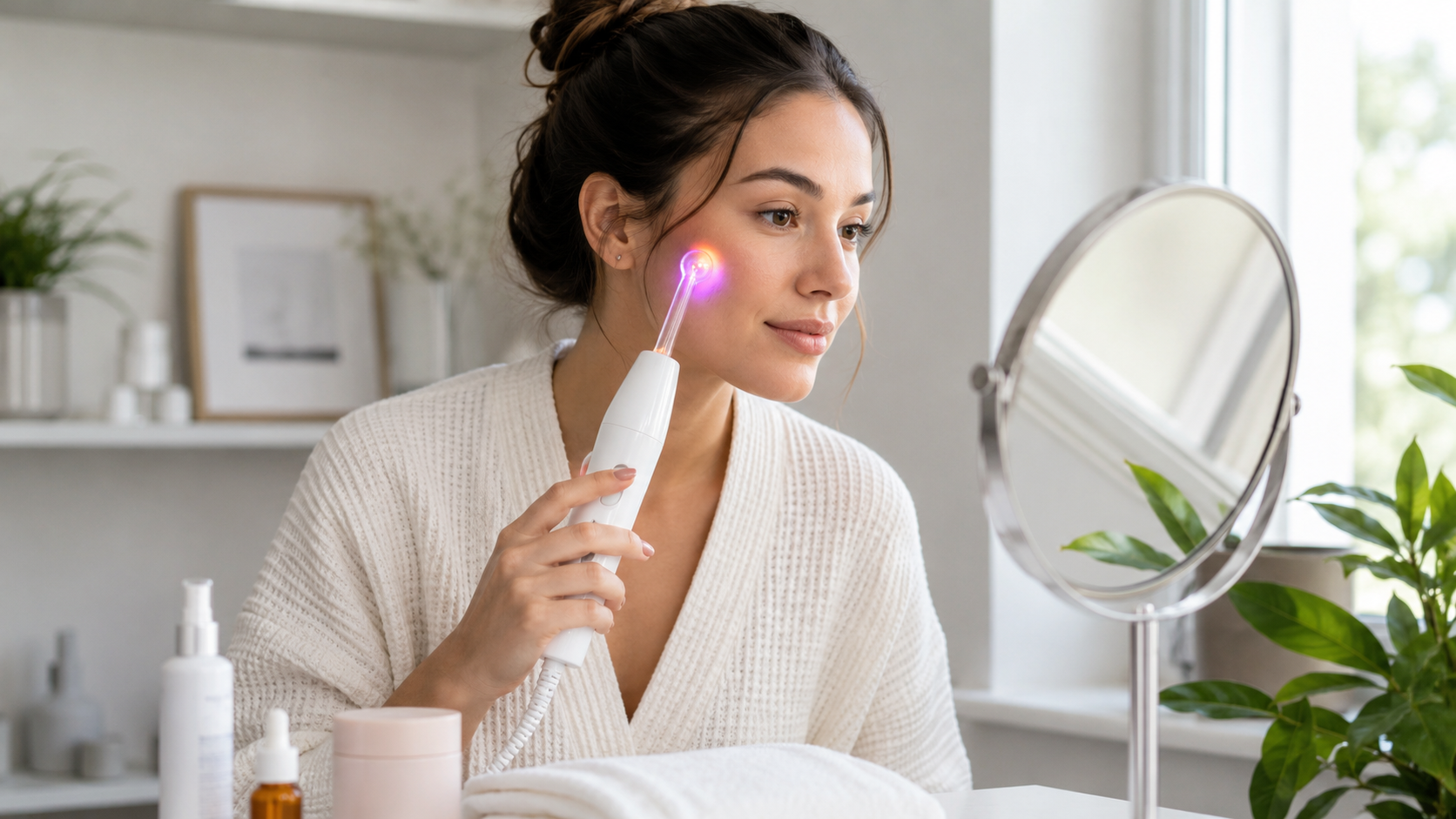
High-frequency beauty devices are especially popular because they feel a little professional. That faint buzzing sound, the glass electrode, the subtle glow, the “spa facial” feeling. It can make a simple skincare routine feel more serious.
But because they seem easy to use, people sometimes forget that these are still electrical skincare tools.
That does not mean you need to be afraid of them. Many people use high-frequency devices at home without issues. But they should be used carefully, cleanly, and realistically. More is not always better. Stronger is not always more effective. And using a device on angry, irritated, or broken skin can create more problems than it solves.
So let’s talk about what to keep in mind before using a high-frequency beauty device at home.
Not in a scary way.
Just in a “please don’t burn your face because TikTok made it look easy” way.
A high-frequency beauty device is a skincare tool that uses a high-frequency electrical current through a glass electrode. In beauty care, these devices are often used during facials and are commonly marketed for acne-prone skin, oily skin, enlarged-looking pores, dullness, and overall skin freshness.
You may see different electrode shapes, such as a mushroom-shaped wand for larger areas, a smaller spot electrode for blemishes, or a comb attachment for the scalp.
When the device touches the skin, you may feel a light tingling or buzzing sensation. Some devices create a faint glow inside the glass tube. There may also be a slight “ozone” smell, kind of sharp and clean.
The whole thing feels more intense than applying a serum, which is probably why people assume it must be doing something powerful.
And maybe it is doing something useful for your routine. But it still needs to be used with common sense.
A beauty device is not automatically safe just because it fits in your hand and comes in cute packaging.
What People Use High-Frequency Devices For
Most people use high-frequency devices for acne care or general skin maintenance.
For acne-prone skin, they are often used as a spot-care tool on pimples. Some people like them because they feel that blemishes look calmer or dry down faster after use.
For oily skin, high-frequency devices are sometimes used as part of a routine to make the skin feel cleaner and less congested.
For dull or tired-looking skin, the gentle stimulation can make the face look a little fresher temporarily.
Some people also use high-frequency comb attachments on the scalp, usually with the idea of supporting scalp freshness or circulation.
But here’s the important part: a home high-frequency device is not a magic acne cure, a pore eraser, or a replacement for medical skin treatment.
It is a tool.
A supporting tool.
If your acne is deep, painful, cystic, scarring, or persistent, a dermatologist will usually be more helpful than repeatedly buzzing the same angry spot and hoping for a miracle.
Read the Instructions Before Using It
This sounds painfully obvious, but a lot of people don’t do it.
They open the device, glance at the attachments, turn it on, and start experimenting on their face. I understand the excitement. New skincare tools make people impatient.
But every device is different.
The strength settings, recommended usage time, electrode attachment method, cleaning instructions, and warnings can vary by brand. Some devices are meant to touch the skin directly. Some are used over gauze. Some recommend using it on dry skin. Some may allow certain products underneath, while others do not.
Before using any high-frequency beauty device, read the manual carefully.
Not the marketing page. Not only the influencer tutorial. The actual manual.
It may tell you who should not use the device, how long to use it, where to avoid using it, and how to clean it safely.
Boring? Yes.
Worth it? Also yes.
Your skin only gets one face per face.
Start With the Lowest Setting
If your device has adjustable intensity, start low.
There is absolutely no need to begin at the strongest setting just because you want fast results. Your skin needs time to adjust, and you need to learn how the device feels.
A high-frequency device should usually feel like a mild tingling or buzzing. It should not feel painful. It should not burn. It should not make you flinch every time it touches your skin.
If the sensation feels too sharp, turn it down.
If your skin becomes very red, hot, irritated, or uncomfortable afterward, stop using it and give your skin time to calm down.
The goal is not to prove how much your face can tolerate.
Skincare is not a bravery contest.
Don’t Use It for Too Long
This is one of the biggest at-home device mistakes.
People think, “If two minutes is good, ten minutes must be better.”
Not necessarily.
With beauty devices, overuse can irritate the skin. High-frequency tools should usually be used for short sessions according to the device instructions. Holding it on one area too long or going over the same spot repeatedly can cause dryness, sensitivity, redness, or a burning feeling.
This matters especially if you are using it on acne.
A pimple is already inflamed. If you keep treating it aggressively, you may irritate the surrounding skin and make the area look worse.
Use the recommended time. Keep sessions short. Give your skin rest days.
Consistency is better than overdoing it once and then spending a week repairing your barrier.
Use It on Clean, Dry Skin Unless the Manual Says Otherwise
In general, electrical beauty devices need to be used carefully around water and products.
Many high-frequency devices are used on clean, dry skin. That means after cleansing, your face should be dry before using the device. Not damp. Not covered in mist. Not layered with ten serums.
Water and electricity are not exactly a cute skincare combination.
Also, some skincare products may not be suitable under high-frequency treatment. Thick oils, alcohol-heavy products, exfoliating acids, retinoids, benzoyl peroxide, or strong actives may increase irritation depending on how they are used.
Unless your manual specifically says a product can be used with the device, keep things simple.
Cleanse. Dry the skin. Use the device as directed. Then apply calming skincare afterward.
Do not turn your face into a science experiment with electricity and random serums.
That sentence sounds dramatic, but truly, please don’t.
Avoid Broken or Irritated Skin
High-frequency devices should not be used on broken skin, open wounds, cuts, fresh scratches, severe irritation, sunburn, rashes, or areas that are peeling badly.
This includes pimples that you have picked open.
I know the temptation. You squeeze a spot, regret it, and then want to “treat” the area so it heals faster. But once the skin is open, it needs gentle wound-like care, not more stimulation.
Using a device over broken skin may sting, irritate the area, or slow healing. It can also make marks more likely if inflammation increases.
If your skin barrier is damaged, pause the device. Use gentle cleanser, moisturizer, and sunscreen. Let the area calm down first.
A device is not always the answer.
Sometimes the answer is leaving the poor spot alone.
Be Careful Around the Eyes
The eye area is delicate.
Do not use a high-frequency device too close to the eyes unless the device is specifically designed and instructed for that area. Even then, be cautious.
Avoid the eyelids, inner corners, and direct under-eye area unless your manual clearly says it is safe. The skin around the eyes is thin and sensitive, and the eyes themselves are obviously not an area to gamble with.
If you’re using the device on the face, stay around the cheeks, forehead, chin, jawline, or areas recommended by the manufacturer.
A little puffiness under the eyes is not worth risking irritation or discomfort.
There are gentler ways to handle tired-looking eyes. Sleep would be nice, if life allowed it. A cold spoon is also less dramatic.
Don’t Use It Over Metal Jewelry
Remove jewelry before using a high-frequency device.
This includes earrings, necklaces, facial piercings, nose rings, lip rings, and any metal accessories near the treatment area.
Electrical devices and metal jewelry are not a combination you want to test casually. The jewelry may conduct current or cause an unpleasant sensation.
Also, tie your hair back and keep the device away from loose metal hair clips or accessories.
This is one of those safety steps that takes ten seconds and prevents a very unnecessary “why did that zap me?” moment.
Clean the Electrode Before and After Use
The glass electrode touches your skin, so it needs to be clean.
This is especially important if you use the device for acne-prone areas. You do not want to press old oil, bacteria, product residue, or dust back onto your face.
Follow your device’s cleaning instructions. Usually, this means wiping the electrode carefully with an appropriate disinfecting method and letting it dry fully before use. Do not soak parts that are not waterproof. Do not rinse electrical parts unless the manual says they can be rinsed.
Let the electrode cool if needed. Store it safely so it does not crack or collect dust.
A dirty beauty tool is not beauty care.
It is just a very fancy way to move grime around.
Don’t Share It Casually
Sharing skincare tools sounds harmless until you remember skin carries oil, bacteria, and sometimes active breakouts.
If you share a high-frequency device, clean the electrode properly between users. Ideally, avoid sharing attachments that touch active acne, irritated skin, or broken skin.
This is not about being rude.
It is about hygiene.
The same way you wouldn’t casually share a used razor or a facial sponge, you should be thoughtful with tools that make direct contact with the skin.
Beauty friendships are nice.
Shared bacteria, less nice.
Avoid Using It With Strong Actives on the Same Night
If your skin is sensitive, be careful about combining high-frequency use with strong skincare ingredients.
Retinoids, exfoliating acids, benzoyl peroxide, strong vitamin C, harsh acne treatments, and drying spot treatments can all irritate the skin when overused. Adding a beauty device on top may increase sensitivity.
This does not mean you can never use actives if you own a high-frequency device. It just means you should plan your routine.
For example, you might use the device on a simple skincare night and use retinol on a different night. Or you might use the device briefly, then follow with only a gentle moisturizer.
If your skin is already peeling from tretinoin or acids, skip the device until your barrier feels normal again.
Your skin should not have to survive every trend at once.
Don’t Use It Every Day Unless Your Device Specifically Allows It
Even if your skin seems fine, daily use may be too much for some people.
At-home devices can be easy to overuse because they feel satisfying. You see a pimple and want to treat it again. You feel puffy and want another session. You get into the routine and start thinking more equals better.
But skin needs recovery time.
Depending on the device and your skin type, a few times a week may be enough. Some people may only use it as needed for occasional breakouts. Follow the brand instructions and watch your skin’s response.
If your skin becomes dry, tight, red, bumpy, or more reactive, reduce the frequency.
The best routine is not the one you can tolerate for three days.
It is the one your skin can tolerate long term.
Who Should Avoid High-Frequency Devices?
Not everyone should use high-frequency devices.
You should avoid them or ask a medical professional first if you are pregnant, have a pacemaker or implanted electronic device, have epilepsy or seizure disorders, have serious heart conditions, have metal implants in the treatment area, have active cancer, or have certain medical skin conditions.
Also avoid use over areas with broken capillaries, severe rosacea flare-ups, active infections, open wounds, or unexplained swelling.
This may sound like a long list, but it matters because beauty devices are not just skincare creams. They use energy. Your health situation can change what is safe.
When in doubt, don’t guess. Ask a doctor or dermatologist.
No beauty device is worth a health risk.
Be Careful if You Have Sensitive or Rosacea-Prone Skin
Sensitive skin can react strongly to devices.
If your skin flushes easily, burns from products, reacts to heat, or has rosacea-like redness, high-frequency devices may not be the best fit. Some people tolerate them well. Others find that they increase redness or irritation.
Start very cautiously if you decide to try one.
Use the lowest setting. Keep the session short. Test a small area first. Do not use it during a flare-up. Avoid using it with strong actives. Follow with a simple moisturizer.
If your skin looks worse afterward, listen to that.
Your skin is allowed to reject a trend.
High-Frequency Devices and Acne: Keep Expectations Realistic
A lot of people buy high-frequency devices because of acne.
That makes sense. Acne is frustrating, and anything that might help feels worth trying.
But it is important to keep expectations realistic.
A device may help some surface-level blemishes look calmer or dry faster. It may be useful as a supporting step. But it will not fix hormonal acne, deep cystic acne, severe inflammation, or clogged pores caused by a whole routine that doesn’t work.
If you keep getting recurring acne, especially deep painful bumps, you may need ingredients like benzoyl peroxide, salicylic acid, adapalene, azelaic acid, or prescription treatment depending on your skin.
Also, don’t use the device as an excuse to pick. If you squeeze a pimple and then zap it, you are still damaging the skin.
Treat acne gently. Protect the barrier. Use sunscreen. See a dermatologist if it’s persistent or scarring.
The device can be a side character.
It should not be the whole plot.
What to Do After Using a High-Frequency Device
After using the device, keep skincare calm.
This is not the best moment for a strong peeling serum or a harsh drying mask. Your skin may be slightly stimulated, so follow with products that support comfort.
A simple routine could be:
Gentle hydrating toner or essence if your skin likes it. Lightweight serum if needed. Moisturizer. Sunscreen in the morning.
At night, moisturizer may be enough.
If you used the device on a pimple, you can apply a simple non-irritating moisturizer around the area. If the spot has come to a head, a hydrocolloid patch may help protect it from picking.
Avoid scrubbing or exfoliating right afterward.
Let the skin calm down.
A beauty device session should end with support, not punishment.
Watch for Signs You’re Overdoing It
Your skin will usually tell you when something is too much.
Signs you may be overusing a high-frequency device include:
redness that lasts too long
burning or stinging
dryness
peeling
tightness
increased sensitivity
more breakouts from irritation
rough texture
tiny bumps
skin feeling hot or tender
If this happens, stop using the device for a while. Focus on barrier repair with gentle skincare. Once your skin feels normal again, you can decide whether to restart at a lower setting or use it less often.
Do not keep going because you think your skin needs to “adjust.”
Some irritation is not purging.
Sometimes irritation is simply irritation.
Storage Matters More Than You Think
High-frequency electrodes are usually glass, which means they can break.
Store the attachments carefully. Do not throw them into a drawer with metal tweezers, lash curlers, scissors, and chaos. Keep them in the case if your device came with one.
Check the electrode before use. If the glass is cracked, chipped, loose, or damaged, do not use it.
Also, keep the device away from water, humid bathroom shelves, and places where it may fall.
A cracked electrode near your face is not a beauty adventure.
It is a no.
Don’t Use It Right Before an Important Event for the First Time
This rule applies to almost every beauty treatment.
Do not test a new device the night before a wedding, interview, date, photoshoot, vacation, birthday dinner, or any moment where you really want your skin to behave.
Even if the device is safe and popular, your skin may react unexpectedly. You might get redness, dryness, irritation, or a weird patch that makeup clings to.
Try it on a normal day first. Start small. See how your skin responds over 24 hours.
New beauty tools should earn your trust before being invited to important events.
Skin has a sense of humor, and it is not always kind.
A Simple At-Home Use Routine
If your device instructions allow it, a simple cautious routine might look like this:
Cleanse your face gently. Dry your skin completely. Remove jewelry. Attach the correct electrode. Start at the lowest setting. Use light contact and short movements. Do not stay too long on one area. Avoid eyes, broken skin, and irritated patches. Turn off the device before changing attachments. Clean the electrode after use. Apply gentle moisturizer afterward.
That’s it.
No need to combine it with seven active ingredients. No need to use it for half an hour. No need to chase a dramatic feeling.
A good home routine should be controlled and boring enough to be safe.
Boring is underrated when electricity is involved.
So, Are High-Frequency Beauty Devices Worth Using at Home?
They can be, for the right person and the right skin concern.
A high-frequency device may be a useful support tool for occasional breakouts, oily skin care, or a fresher-looking complexion. It can make your routine feel more spa-like and intentional. Some people genuinely enjoy using it.
But it needs to be used carefully.
Read the manual. Start low. Keep sessions short. Use it on clean, dry skin. Avoid broken or irritated areas. Don’t use it too close to the eyes. Remove jewelry. Clean the electrode. Don’t combine it recklessly with strong actives. And stop if your skin reacts badly.
Most importantly, don’t expect it to replace good skincare basics.
Cleanser, moisturizer, sunscreen, gentle acne care, enough sleep, and not picking your skin will still matter more than any device.
High-frequency tools can be helpful.
But your skin does not need to be shocked, scrubbed, and treated into submission to look better.
Sometimes the best beauty routine is the one that knows when to stop.
Hi, I’m the creator and editor behind ZestyHabit. I research everyday safety, first aid, and practical wellness topics using official guidance and reliable public sources, then turn that information into clear, realistic steps for daily life.
My goal is to help readers make safer, better-informed choices at home and beyond.