Why Pulling Over on the Shoulder Is More Dangerous Than It Seems
Minjin Park
·
Stopping on the shoulder may feel like a quick solution during car trouble, but it can expose drivers and passengers to serious roadside risks. Learn why the shoulder is risky and how to make safer choices.
When something goes wrong while driving, the shoulder often looks like the obvious place to stop.
Maybe your phone fell under the seat. Maybe a warning light came on. Maybe a child in the back seat needs help. Maybe you heard a strange noise from the car and want to check it right away.
The shoulder is right there. It feels separate from traffic. It seems like a temporary safe zone.
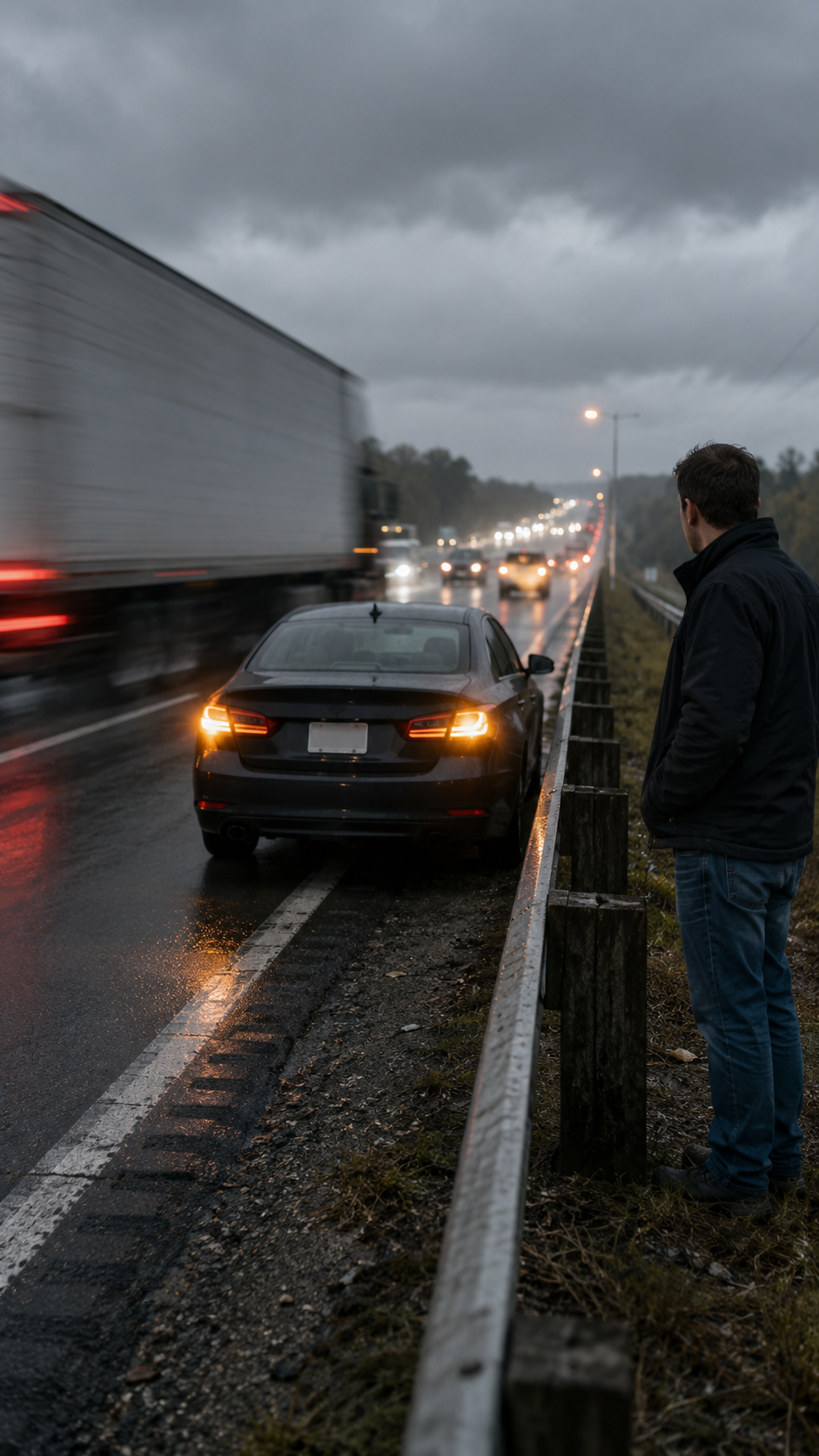
But the shoulder is not the same as a parking lot, rest area, or driveway. It is still part of the roadside environment, often just a few feet away from fast-moving vehicles. Cars, trucks, buses, and delivery vans may pass at highway speeds. Some drivers drift slightly within their lane. Others are distracted, tired, or adjusting to curves, glare, rain, or traffic.
That is what makes shoulder stops more dangerous than many people realize. You may feel like you are “off the road,” but you are often still close enough to traffic that one mistake from another driver can create a serious situation.
This does not mean you should panic if you ever need to pull over. Sometimes stopping on the shoulder is necessary. The goal is to understand that it should be treated as a short-term safety measure, not a casual stopping place.
The Shoulder Is Not Designed for Comfort
A roadside shoulder has a purpose, but that purpose is limited. It may provide space for emergency stopping, disabled vehicles, law enforcement activity, or maintenance crews. It is not meant for relaxing, texting, reorganizing the car, checking social media, or having a long conversation.
The shoulder may look wide enough, but it often comes with hidden problems.
It may be uneven. There may be debris. The edge may drop off into grass or gravel. The pavement may be narrower than it looks from the driver’s seat. A large truck passing nearby may shake the vehicle. At night, other drivers may not see a stopped car until they are already close.
This is why stopping on the shoulder should be a decision made carefully, not automatically.
Passing Traffic Is Closer Than It Feels
One of the biggest risks of a shoulder stop is the distance between your vehicle and moving traffic.
When you are inside your car, the shoulder may feel wide. But once you open the door or step outside, the space can feel much smaller. A vehicle passing at high speed creates wind, noise, and pressure. Large trucks can feel especially close.
Many people underestimate how little room there is between the driver’s side of a stopped car and the travel lane.
Driver-Side Doors Are Especially Risky
If you stop on the right shoulder of a highway, the driver’s door usually opens toward traffic. That means stepping out on the driver’s side can put you very close to moving vehicles.
Even opening the door slightly can be risky if traffic is heavy or fast.
If it is possible and safe to do so, exiting from the passenger side may place more space between you and traffic. However, every situation is different, and the safest choice depends on the road, traffic, visibility, and surroundings.
The main point is simple: do not treat the shoulder like a normal parking space.
Other Drivers May Not Expect You There
Drivers are trained to watch traffic lanes, signals, signs, and brake lights. A stopped vehicle on the shoulder can still catch people off guard, especially if it is around a curve, over a hill, in poor weather, or at night.
Some drivers may drift toward the shoulder without realizing it. Others may move onto the shoulder briefly to avoid something in their lane. A distracted driver may not notice a stopped car until very late.
This is one reason a shoulder stop should be as visible and brief as possible.
Hazard Lights Help, But They Are Not a Shield
Turning on hazard lights is a good basic step when stopped on the shoulder. They help make your vehicle more noticeable.
But hazard lights do not create a protective barrier. They do not guarantee that every driver will see you in time. They do not prevent someone from drifting toward your vehicle.
Think of hazard lights as one layer of awareness, not complete protection.
The Shoulder Can Contain Debris and Road Hazards
Another reason shoulder stops are risky is that shoulders collect debris.
Pieces of tire, broken glass, metal scraps, fallen cargo, gravel, nails, plastic, and other road debris often end up along the edge of the roadway. If you pull over quickly, your tires may pass over something sharp. If you step out, you may step onto uneven ground or loose material.
This can create new problems when you are already dealing with stress.
For example, you may pull over because of a tire pressure warning, only to park on sharp debris. Or you may step out in sandals and find broken glass or gravel near the door.
A shoulder may look clear from inside the car, but it is not always a clean or stable surface.
Roadside Stops Can Become Distracting
A shoulder stop often happens during a stressful moment. The car makes a noise. A child is crying. A map app is confusing. Something spills. A warning light appears.
When stress rises, people tend to rush. They stop quickly, open the door, step out, look under the car, make a phone call, or start moving items around.
That rush can make the situation less safe.
The roadside is not the best place to solve every problem. Sometimes the safest choice is to continue carefully to the next exit, gas station, parking lot, rest area, or wide pull-off if the vehicle is still safe to drive.
The shoulder should not be the first option for minor issues.
Common Reasons People Pull Over Too Quickly
Many shoulder stops happen for reasons that feel urgent in the moment but may not require stopping on the shoulder immediately.
Checking a Phone or GPS
A missed turn, confusing directions, or a phone notification can tempt a driver to pull onto the shoulder and figure it out.
But if the vehicle is still working normally, it is usually safer to find a parking lot, gas station, or side street rather than stopping beside fast traffic.
It is better to miss a turn than to create a risky roadside situation.
Picking Up a Dropped Item
A phone, water bottle, wallet, or snack that falls to the floor can be annoying. But pulling onto the shoulder just to retrieve it may not be worth the risk.
If the item does not affect driving, leave it until you can stop somewhere safer.
If something has rolled near the pedals and may interfere with braking or acceleration, that is more serious. In that case, slow down carefully, signal, and look for the safest place available to stop.
Handling Kids or Pets
Parents and pet owners know how distracting the back seat can become. A child drops a toy. A pet gets restless. Someone needs a tissue or snack.
Still, the shoulder is not a great place for routine caregiving tasks. If possible, plan stops at rest areas, parking lots, or service stations where everyone can get out more safely.
Taking Photos or Enjoying a View
Scenic roads can make drivers want to stop for a quick picture. But road shoulders, especially on highways or curves, are often poor places for sightseeing.
Use designated scenic overlooks, pull-offs, or parking areas whenever possible. A beautiful view is not worth standing close to moving traffic.
When Pulling Onto the Shoulder May Be Necessary
There are times when stopping on the shoulder may be the best available choice. A flat tire, engine trouble, overheating, smoke, sudden visibility problems, or a serious vehicle warning may leave you with limited options.
In those situations, the goal is not to avoid the shoulder at all costs. The goal is to use it carefully.
Move Over Gradually When You Can
If you need to stop, avoid sudden movements unless immediate danger requires it. Signal, reduce speed carefully, and move as far away from traffic as practical.
Try to choose the widest, straightest, most visible area available. Avoid stopping just after a curve, on a bridge, near a merge area, or where the shoulder is very narrow if you can reasonably continue a little farther.
Make the Vehicle Visible
Once stopped, turn on hazard lights. At night or in low visibility, interior lights may help you see, but be mindful of preserving your ability to watch traffic and surroundings.
If you have roadside safety equipment and can use it without putting yourself in danger, it may help increase visibility. The key phrase is “without putting yourself in danger.” Walking along a busy highway to place items behind your car can be risky.
Think Before Getting Out
Many people automatically step out after pulling over. But getting out is not always the safest choice.
In some situations, staying inside with your seat belt on may be safer. In others, moving away from the vehicle and traffic may be safer. Road design, traffic speed, weather, visibility, and location all matter.
Avoid standing between your car and traffic. Avoid standing directly behind or in front of the vehicle. Avoid working on the traffic-side of the car if vehicles are passing close by.
Why Changing a Tire on the Shoulder Can Be Risky
Changing a tire may seem like a normal roadside task, especially for people who learned to drive years ago. But on many modern roads, doing it on the shoulder can be dangerous.
Traffic may be moving fast. The shoulder may be narrow. The flat tire may be on the driver’s side, closest to traffic. The ground may be uneven or soft. Trucks may pass just a few feet away.
Even if you know how to change a tire, the location may not be safe enough to do it.
A safer option may be to call for roadside assistance, law enforcement support, or professional help, especially on highways, bridges, tunnels, busy roads, or in poor weather.
The ability to fix something does not always mean the roadside is the right place to fix it.
Weather Makes Shoulder Stops More Dangerous
Weather can turn a shoulder stop from uncomfortable to risky very quickly.
Rain Reduces Visibility
In rain, drivers may have less visibility and longer stopping distances. Spray from trucks can make it harder to see stopped vehicles. Wet pavement can also make it harder for drivers to react.
If you must stop in rain, visibility becomes even more important.
Snow and Ice Reduce Control
In winter conditions, another driver may slide toward the shoulder even if they are trying to avoid you. The shoulder itself may be covered by snow, hiding debris, uneven pavement, or drop-offs.
A parked vehicle can also be harder to see if snow is blowing or lights are covered.
Fog and Darkness Limit Reaction Time
At night or in fog, a stopped vehicle may appear suddenly to other drivers. Curves, hills, and poorly lit roads make this worse.
If you can reach a brighter, wider, or more protected area, that may be safer than stopping immediately in a low-visibility spot.
Simple Habits That Reduce the Need for Shoulder Stops
Many shoulder stops can be avoided with a little preparation.
Set Up Before Driving
Before leaving, set your GPS, secure your phone, adjust mirrors, buckle children, store bags properly, and place drinks in cup holders.
A two-minute setup can prevent a roadside stop later.
Keep the Driver’s Area Clear
Loose items near the driver’s seat can create problems while driving. A bottle rolling under the pedals, a bag tipping over, or a phone sliding between seats may lead to a rushed stop.
Keeping the floor area clear helps reduce unnecessary emergencies.
Watch Dashboard Warnings Early
Do not ignore low fuel, tire pressure alerts, unusual engine temperature, or repeated warning lights. Small issues are easier to handle in a parking lot than on a highway shoulder.
If a warning appears, think ahead. Look for a safe place to exit or stop before the situation becomes urgent.
Plan Breaks on Long Drives
Fatigue, hunger, full bladders, restless children, and navigation confusion all increase the chance of sudden stops.
On long drives, plan breaks at rest areas or service stations. This keeps routine needs away from the shoulder.
What to Teach New Drivers
New drivers may see the shoulder as a simple backup plan. It is important to teach them that the shoulder is not a casual stopping zone.
They should know:
Pulling over is not the same as parking.
Fast traffic can be dangerously close.
Hazard lights help but do not eliminate risk.
Minor problems should usually wait for a safer stopping place.
If the vehicle is disabled, visibility and distance from traffic matter.
Getting out of the car requires careful judgment.
This kind of practical knowledge is just as important as learning how to merge, park, or change lanes.
Final Thoughts: Treat the Shoulder as a Last Resort, Not a Convenience
Stopping on the shoulder may sometimes be necessary, but it is more dangerous than it appears. Passing traffic is close, visibility may be limited, debris can collect along the roadside, and other drivers may not expect a stopped vehicle.
For everyday driving, the safest habit is to avoid using the shoulder for convenience. Do not stop there just to check your phone, search for an item, take a photo, or handle something that can wait.
When you truly need to stop, slow down carefully, pull as far from traffic as practical, make your vehicle visible, and think carefully before getting out.
The shoulder can be helpful in an emergency, but it is not a safe parking space. A little patience and planning can help you avoid unnecessary roadside risks and make each drive feel calmer and safer.
Hi, I’m the creator and editor behind ZestyHabit. I research everyday safety, first aid, and practical wellness topics using official guidance and reliable public sources, then turn that information into clear, realistic steps for daily life.
My goal is to help readers make safer, better-informed choices at home and beyond.