
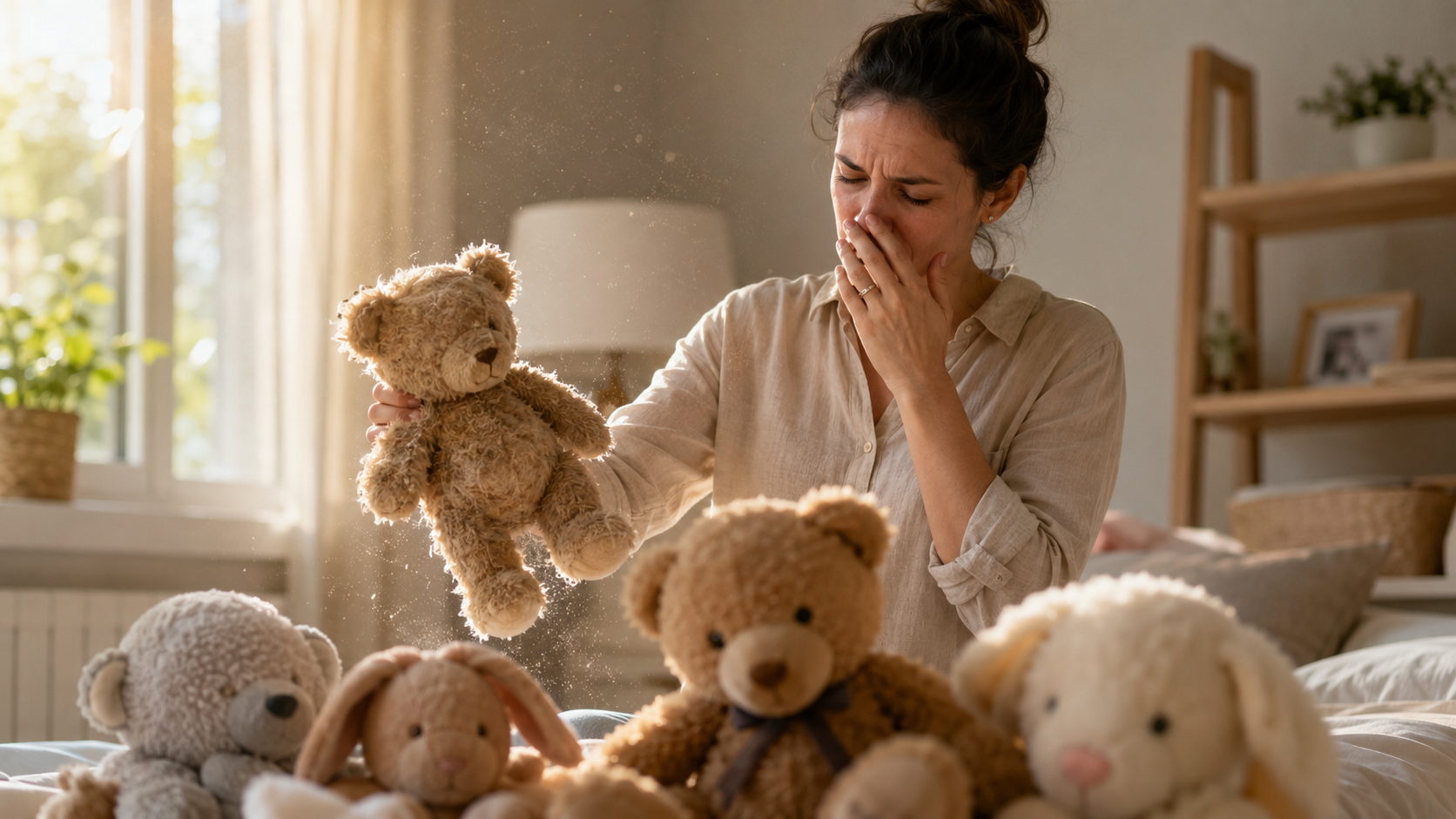

Stuffed animals often become some of the most loved objects in a home. Children carry them from room to room, sleep beside them, take them on trips, and sometimes hold them against their faces for hours. Adults may also keep plush toys as decorations or sentimental keepsakes.
The soft fur itself is not usually dangerous. The more realistic concern is what an older or poorly maintained stuffed animal can collect or release over time: ordinary household dust, dust mite allergens, pet dander, pollen, mold spores, dried saliva, and loose textile fibers.
For most healthy people, an occasional dusty plush toy will cause little more than a sneeze. However, accumulated dust can aggravate allergies, asthma, eczema, or sensitive airways. A damaged toy that sheds clumps of fur, stuffing, buttons, or plastic pieces may also present a choking risk to babies and toddlers.
Understanding the difference between a genuine health hazard and a harmless bit of lint can help families keep favorite toys without unnecessary worry.
What Is Fabric Dust?
Fabric dust is a mixture of tiny particles released as textiles are manufactured, handled, washed, rubbed, and worn down. Around stuffed toys, it may include:
- Short natural or synthetic fibers
- Fragments of worn fabric or stuffing
- Ordinary household dust
- Skin flakes
- Dust mite debris
- Pet dander
- Pollen carried indoors
- Soil and outdoor particles
- Dried saliva or food residue
This means the visible “fuzz” around an old stuffed animal is not always coming entirely from the toy. A plush surface acts somewhat like carpet or upholstered furniture, trapping particles from the surrounding room.
Long-haired plush toys may collect more visible debris than toys made with smooth, tightly woven fabric. Toys kept on beds, floors, open shelves, or near pets may also gather dust faster.
Is Stuffed Animal Fur Toxic?
Most stuffed animals sold by reputable retailers are made from materials intended for normal handling and play. Polyester is commonly used for both the outer fur and the filling. Cotton, acrylic, wool, and blended materials may also be used.
Simply touching intact synthetic plush fur is not generally considered a toxic exposure. A child finding a few fibers on their clothing is also very different from being exposed to heavy concentrations of airborne textile dust in an industrial workplace.
The condition and origin of the toy matter, however. Be more cautious with:
- Toys that lack a manufacturer or safety label
- Counterfeit or extremely low-quality products
- Toys with a strong chemical odor that does not fade
- Damaged toys that shed heavily
- Vintage toys containing unknown materials
- Toys recalled for safety violations
- Stuffed animals exposed to smoke, flooding, sewage, or pesticides
A new toy with a noticeable odor can be aired out in a well-ventilated location and cleaned according to its care label before use. If the odor remains strong or causes coughing, headache, burning eyes, or nausea, stop using the toy and contact the manufacturer or retailer.
Dust Mites Are Often the Main Allergy Concern
Dust mites are microscopic organisms that commonly live in bedding, carpets, upholstered furniture, and soft toys. They feed largely on shed human skin and prefer warm, humid environments.
The mites do not usually bite people. The problem for sensitive individuals is exposure to proteins found in mite waste and body fragments. When a stuffed animal is shaken, squeezed, or moved around the bed, some of those particles may become airborne.
Dust mite allergy can cause:
- Sneezing
- A runny or stuffy nose
- Itchy, red, or watery eyes
- Postnasal drip
- Coughing
- Wheezing
- Chest tightness
- Worsening asthma symptoms
The Centers for Disease Control and Prevention identifies stuffed toys as one place where dust mites can live and recommends choosing washable toys, cleaning them regularly, and drying them completely.
Not everyone reacts to dust mites. A large collection of stuffed animals may cause no noticeable problem for one child but contribute to nighttime congestion or asthma symptoms in another.
How Plush Toys Can Affect Asthma
Stuffed toys do not cause every case of asthma, and removing them will not cure the condition. They can, however, hold allergens that trigger symptoms in someone who already has sensitive airways.
A child may breathe close to a favorite toy for many hours while sleeping. If the toy contains dust mite allergens, pet dander, pollen, or mold particles, this prolonged contact may contribute to coughing, wheezing, or nasal congestion at night.
Possible clues that a bedroom allergen is involved include:
- Symptoms that become worse in bed
- Frequent morning sneezing
- Nighttime coughing without an infection
- Wheezing after cleaning or rearranging toys
- Symptoms that improve when sleeping elsewhere
- A persistent blocked nose despite feeling otherwise well
These patterns do not prove that a stuffed animal is responsible. Bedding, carpet, humidity, pets, and indoor mold may all contribute. A pediatrician or allergy specialist can help identify relevant triggers rather than relying on guesswork.
Can Loose Fibers Be Inhaled?
Small amounts of lint and fibers are part of normal household dust. The nose and airways trap and remove many inhaled particles through mucus, coughing, and normal clearance mechanisms.
A deteriorating toy that produces visible clouds of fibers is a different situation. Loose material may irritate the nose, throat, or eyes, particularly in someone with asthma or another respiratory condition. Continued shedding also suggests that the fabric is no longer durable enough for close play.
Warning signs include:
- Fur coming out easily when gently pulled
- Bare patches developing on the surface
- Dust clouds appearing when the toy is shaken
- Seams opening and exposing filling
- Stuffing repeatedly escaping
- Fibers collecting around the child’s mouth or nose
Stop giving a heavily shedding toy to a young child. Repair it properly if the materials remain in good condition, or replace it if the outer fabric has begun breaking down throughout the toy.
There is ongoing scientific interest in human exposure to synthetic microfibers and other microplastics. However, current evidence does not justify claiming that ordinary contact with an intact polyester stuffed animal will cause cancer, infertility, or another specific chronic disease. Practical maintenance is appropriate; panic is not.
Choking and Mouthing Hazards for Young Children
Babies and toddlers explore objects with their mouths. This makes a damaged stuffed animal more concerning for them than for an older child.
Fine individual fibers are not normally treated in the same way as a solid small part, but clumps of fur, pieces of foam, stuffing, ribbons, bells, plastic eyes, buttons, and other components can become choking or ingestion hazards when they detach.
The U.S. Consumer Product Safety Commission requires toys intended for children under age three not to contain or release prohibited small parts during normal use and testing. Parents should still inspect toys regularly because washing, chewing, pulling, and years of play can weaken materials.
For babies and toddlers:
- Follow the manufacturer’s age recommendation.
- Avoid toys with easily removable eyes, noses, buttons, or decorations.
- Check seams and attachments frequently.
- Remove toys that expose their filling.
- Do not let a child chew on a heavily shedding surface.
- Check for recalls using the CPSC recall database.
- Supervise play with handmade or vintage stuffed animals.
A child who is choking and cannot breathe, cry, or cough effectively needs immediate age-appropriate choking first aid and emergency assistance.
Mold Growth Inside Stuffed Animals
A toy that gets wet and does not dry completely can develop mold or mildew. This may occur after flooding, outdoor play, repeated sucking, improper washing, or storage in a humid basement.
Possible signs include:
- A musty odor
- New dark, green, gray, or white spots
- Damp or clumped filling
- Discoloration returning after cleaning
- Coughing or irritation around the toy
Surface cleaning may not reach mold growing inside thick filling. If a toy has been soaked with floodwater, sewage, or another contaminated liquid, disposal is usually safer than attempting to restore it for close contact with a child.
The CDC advises addressing visible or detectable mold and correcting the moisture source. Mold can affect people differently, but those with asthma, mold allergies, chronic lung conditions, or weakened immune systems may be more susceptible to symptoms.
Do not apply strong disinfectants or concentrated bleach directly to a child’s plush toy unless the product label specifically allows it. Chemical residue can create another source of irritation.
Skin Irritation and Eczema
A dusty toy held against the face may irritate sensitive skin through friction, allergens, saliva, or detergent residue. Children with eczema may be especially uncomfortable when a rough or dirty plush surface repeatedly touches inflamed skin.
Possible reactions include redness, itching, dry patches, or irritation around the cheeks, mouth, and hands. These symptoms do not necessarily mean the child is allergic to polyester. Dust mites, pet allergens, fragranced detergent, fabric treatments, and simple rubbing may all be responsible.
Wash the toy with a mild product appropriate for the care label and rinse it thoroughly. Avoid spraying perfume, air freshener, essential oils, or disinfectant mist onto a comfort toy. If a rash persists, spreads, blisters, becomes painful, or shows signs of infection, contact a healthcare professional.
How Often Should Stuffed Animals Be Washed?
There is no perfect schedule for every household. How often a toy needs cleaning depends on where it is kept, how frequently it is used, and whether anyone in the home has allergies or asthma.
A frequently handled bedtime toy may need washing every one or two weeks. Decorative toys stored away from beds and floors may need cleaning much less often. Wash a toy sooner when it:
- Falls outdoors or onto a dirty public floor
- Is shared during an illness
- Is covered in food, saliva, or vomit
- Has been handled by pets
- Smells musty
- Looks visibly dusty
- Causes noticeable allergy symptoms
If a doctor has recommended allergen-control measures, follow that individualized plan. Cleaning every stuffed animal daily is unnecessary and can wear out the fabric without providing meaningful additional benefit.
How to Clean Stuffed Animals Safely
Always begin with the manufacturer’s care label. Some toys can go into a washing machine, while others contain batteries, music boxes, glued decorations, foam, or delicate material that requires surface cleaning.
For a machine-washable toy:
- Check for open seams and repair them first.
- Remove batteries or electronic components if designed to be removable.
- Place the toy in a mesh laundry bag or pillowcase.
- Use the warmest water permitted by the care label.
- Select a gentle cycle and an appropriate detergent.
- Rinse thoroughly.
- Dry the toy completely before returning it to a child.
The CDC’s general household cleaning guidance recommends laundering fabric items according to the manufacturer’s instructions, using the warmest appropriate water setting, and drying them completely.
Hot washing and heated drying can help reduce dust mite exposure, but high temperatures may damage some toys. Do not ignore the care label or create a burn and fire risk by placing an unsuitable item in a dryer.
For a surface-clean-only toy, use the recommended method and avoid saturating the filling. Vacuuming with an upholstery attachment may remove loose surface dust, but keep strong suction away from fragile seams and decorations.
What About Freezing Stuffed Animals?
Freezing is sometimes suggested as a dust mite control technique. It may kill mites when performed correctly, but it does not necessarily remove the allergenic proteins already present in the toy. Washing or otherwise removing the accumulated material is still important.
Placing a dirty toy in the freezer is therefore not equivalent to cleaning it. It may also spread dirt or moisture if the toy is not sealed properly. When washing is not possible, families dealing with a confirmed dust mite allergy should ask an allergist about the most practical method for that particular toy.
Reducing Dust Without Removing Every Favorite Toy
A child with allergies does not always have to lose every stuffed companion. A manageable approach may work better than suddenly removing a treasured comfort item.
Try these steps:
- Keep one or two washable favorites on the bed.
- Store the rest in closed containers or cabinets.
- Rotate toys instead of displaying the entire collection.
- Vacuum and damp-dust the bedroom regularly.
- Wash bedding consistently.
- Maintain reasonable indoor humidity.
- Keep pets away from the child’s pillow and primary comfort toy.
- Replace toys that cannot be cleaned and are actively deteriorating.
Avoid shaking dusty toys indoors because this can release trapped particles. Take them outside when appropriate, or place them directly into a laundry bag for cleaning.
When Should a Stuffed Animal Be Replaced?
Sentimental value makes some toys difficult to discard, but not every plush animal can remain a close-contact toy forever.
Consider retiring or replacing one when:
- Its fur sheds continuously.
- The fabric tears in multiple places.
- Filling cannot be contained.
- Small components repeatedly come loose.
- Mold or a musty odor returns after cleaning.
- It has been contaminated by sewage or unsafe chemicals.
- The manufacturer has recalled it.
- It cannot be cleaned adequately for a child with serious allergies.
A meaningful old toy can sometimes be cleaned professionally and stored in a display case rather than handled or slept with every night.
The Bottom Line
Stuffed animal fur is not automatically harmful, and a few visible fibers do not usually indicate a medical emergency. The main health concerns come from accumulated allergens, moisture, contamination, heavy shedding, and damaged components—not simply from owning a plush toy.
Regular inspection, suitable washing, thorough drying, sensible storage, and prompt replacement of deteriorating toys can reduce most risks. People with asthma, eczema, or significant allergies may need more frequent cleaning and fewer soft items near the bed, ideally based on advice from their healthcare provider.
Do your family’s stuffed animals get washed regularly, or is there one well-loved toy that is becoming difficult to clean? Share your routine or questions in the comments—your experience may help other families care for their favorite plush companions more safely.

Hi, I’m the creator and editor behind ZestyHabit. I research everyday safety, first aid, and practical wellness topics using official guidance and reliable public sources, then turn that information into clear, realistic steps for daily life.
My goal is to help readers make safer, better-informed choices at home and beyond.


