How to Revive Wilted Vegetables: Simple Ways to Make Them Crisp Again
Minjin Park
·
You open the refrigerator intending to make a fresh salad, only to find limp lettuce, drooping herbs, and celery that bends instead of snapping. Your first instinct may be to throw everything away, but vegetables that look tired are not always spoiled.
In many cases, they have simply lost water.
Leafy greens, herbs, and other vegetables contain a large amount of moisture. When that moisture gradually evaporates during storage, their cells lose pressure and the vegetables become soft, wrinkled, or wilted. If decay has not begun, returning water to the plant tissue can sometimes restore much of its original crispness.
The easiest method is surprisingly simple: trim the vegetable, place it in clean cold water, wait, and dry it thoroughly. The exact technique varies depending on whether you are working with lettuce, herbs, root vegetables, or thicker produce.
This guide explains how to revive wilted vegetables safely, which vegetables respond best, when an ice bath will not help, and how to prevent the same problem from happening again.
Fresh vegetables remain crisp because their cells are filled with water. That water creates internal pressure—known as turgor pressure—which keeps stems firm and leaves upright.
After harvest, vegetables can no longer replace water through their roots. Moisture continues to escape through their surfaces, especially when they are stored uncovered or exposed to dry refrigerator air. As the cells lose water, pressure decreases, and the tissue becomes limp.
Cold water may reverse some of this process. Water moves back into the plant tissue, helping its cells regain volume and firmness. This works particularly well with vegetables that have a high water content and an open or porous structure, including lettuce, celery, carrots, radishes, and many fresh herbs.
However, rehydration can only correct moisture loss. It cannot reverse mold growth, bacterial decay, severe discoloration, or the breakdown of plant tissue.
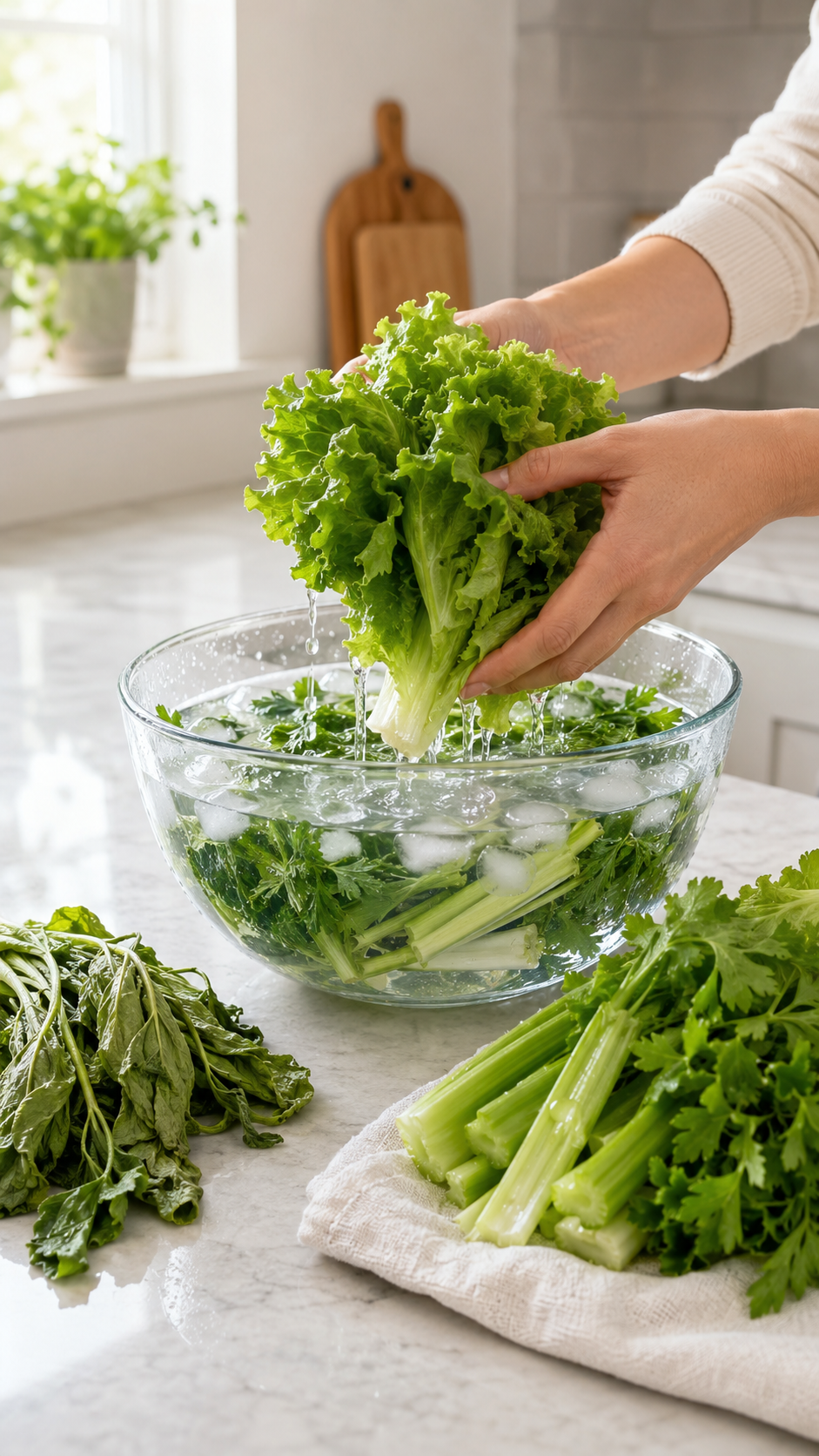
The Basic Ice-Water Method
The following method works for many wilted vegetables:
Inspect the vegetable for signs of spoilage.
Remove any rotten, moldy, slimy, or badly damaged portions.
Rinse the vegetable under cool running water.
Trim dry stem ends or damaged edges.
Fill a clean bowl with very cold water and a handful of ice.
Submerge the vegetable for 10 to 30 minutes.
Check its texture and continue soaking if necessary.
Drain and dry it thoroughly.
Use it promptly or refrigerate it in an appropriate container.
Some firm vegetables may need as long as an hour, while delicate greens can recover in only a few minutes. Check them periodically rather than automatically leaving everything in water for a long time.
Use a clean bowl instead of soaking vegetables directly in the kitchen sink. Sinks can carry microorganisms from raw meat, dirty dishes, and other foods.
How to Revive Wilted Lettuce
Lettuce is one of the easiest vegetables to refresh. This method can be used for romaine, butter lettuce, loose-leaf varieties, and many salad greens.
Separate the leaves and discard any that are slimy, moldy, or deeply discolored. Trim away dried ends, rinse the remaining leaves, and place them in a large bowl of ice water.
Allow the lettuce to soak for approximately 10 to 20 minutes. Very limp romaine may need closer to 30 minutes. Once the leaves feel firmer, lift them from the water and dry them in a salad spinner or with clean paper towels.
Drying is important. Water left on the surface can dilute salad dressing and may cause the leaves to deteriorate more quickly during storage.
If lettuce remains soft after soaking but shows no signs of spoilage, it can still be used in cooked dishes. Try adding it to soup, sautéing it with garlic, or blending it into a green sauce instead of serving it as a crisp salad.
How to Revive Spinach, Kale, and Swiss Chard
Leafy cooking greens can also benefit from a cold-water soak, although their recovery varies.
Remove any yellow, slimy, or decaying leaves. Trim the dry ends of the stems and soak the greens in cold water for about 10 to 20 minutes. Kale and Swiss chard may need slightly longer than tender baby spinach.
After soaking, rinse away any remaining soil and dry the leaves completely. Even if they do not become perfectly crisp, they may still work well in:
Soups and stews
Stir-fries
Omelets and frittatas
Pasta sauces
Smoothies
Pesto or other blended sauces
A vegetable does not need to look perfect to be useful. Texture matters in a salad, but it is much less important after the vegetable has been chopped and cooked.
How to Revive Wilted Celery
Fresh celery should feel firm and snap cleanly. As it loses moisture, the stalks become flexible and develop a slightly rubbery texture.
Cut a thin slice from the bottom of each stalk to expose fresh tissue. Place the stalks in a tall container of cold water or submerge them in an ice bath for 30 minutes to an hour.
Whole stalks can be placed upright in water, while shorter pieces may be completely submerged. Once they become firmer, dry them before returning them to the refrigerator.
Celery that remains slightly flexible can be chopped for soups, stocks, casseroles, stuffing, or stir-fries. The cooking process will soften it anyway, so a lack of crunch is rarely a problem.
How to Refresh Carrots and Radishes
Carrots and radishes can become soft, bendable, or slightly wrinkled when they lose moisture. As long as they are not slimy, moldy, or rotten, cold water may help.
Remove any leafy tops because they can continue pulling moisture from the roots during storage. Trim both ends, rinse the vegetables, and place them in ice water for 30 to 60 minutes.
Small carrots and radishes generally respond faster than thick, mature carrots. If the vegetables are heavily shriveled, they may not return completely to their original condition.
Slightly soft carrots are still useful for roasting, soup, vegetable stock, muffins, sauces, or purées. Radishes that no longer have enough crunch for a salad can be roasted or sautéed, which gives them a milder flavor.
How to Revive Fresh Herbs
Soft herbs can deteriorate quickly, but mild wilting does not necessarily mean they are unusable.
Parsley, Cilantro, and Mint
Trim approximately half an inch from the stems and remove damaged leaves. Place the stems in a glass of cold water as you would arrange flowers in a vase. For faster revival, immerse both the stems and leaves in cold water for 10 to 15 minutes.
Drain the herbs and dry them gently. Wet herbs can decay rapidly, so use a salad spinner on a gentle setting or pat them dry with a clean towel.
Basil
Basil is sensitive to cold temperatures. Ice water and prolonged refrigeration can darken or damage its leaves. Trim the stems and place the bunch in a glass of cool or room-temperature water instead.
Keep basil away from harsh sunlight and use it as soon as possible. If the leaves remain soft, turn them into pesto, pasta sauce, salad dressing, or flavored oil rather than discarding them.
Rosemary, Thyme, and Sage
Woody herbs do not usually regain firmness as dramatically as tender herbs. Briefly rinse them in cool water and pat them dry. If they are too dry for fresh garnishing, they may still be suitable for roasting, soups, marinades, or homemade stock.
How to Revive Broccoli and Asparagus
Broccoli may become rubbery as its moisture declines. Trim the dry end of the stalk and place the broccoli in a bowl of ice water for approximately 20 to 30 minutes. You can also stand the stalk in cold water while keeping the head above the surface.
Do not attempt to save broccoli that has a strong unpleasant odor, extensive yellowing, slime, or mold. Slight yellowing is generally a quality issue, but widespread deterioration may indicate that the vegetable is well past its best.
For asparagus, trim the woody ends and stand the spears upright in a container holding one or two inches of cold water. Leave them for 30 minutes or refrigerate them briefly in the water. Dry the spears before longer storage.
Soft but otherwise sound broccoli and asparagus can be roasted, blended into soup, added to pasta, or used in a frittata.
Can You Revive Cucumbers, Bell Peppers, and Green Onions?
Slightly soft cucumbers and bell peppers may regain some firmness after 20 to 30 minutes in ice water. Cut away dry ends or damaged areas first. Results are less predictable than with lettuce or celery because the skin can limit how quickly water enters the vegetable.
Deeply wrinkled peppers are unlikely to become completely crisp again, but they can still be roasted, sautéed, or blended into sauce.
Green onions often respond well when their roots or white ends are placed in a small glass of cold water. If the green tops are limp, soak the entire onion briefly and dry it afterward. Avoid leaving green onions in water indefinitely, since the water can become cloudy and the outer layers may turn slimy.
Wilted or Spoiled? Know When to Throw It Away
Wilting is primarily a quality problem. Spoilage is a different issue.
A vegetable may be suitable for revival if it is simply limp, slightly wrinkled, dry at the edges, or less crisp than when purchased. It should still smell normal and feel structurally intact.
Discard produce if you notice:
Visible fuzzy mold
Slime or a sticky surface
A rotten, fermented, or unusually sour odor
Dark, wet areas that are spreading
Tissue that collapses when touched
Liquid leaking from decayed areas
Extensive discoloration combined with a bad smell or soft texture
Do not rely on an ice bath to make spoiled food safe. Water may improve the appearance of a deteriorating vegetable without removing harmful microorganisms.
The U.S. Food and Drug Administration advises consumers to cut away damaged or bruised portions and throw away produce that appears rotten. It also recommends washing produce under running water—not with soap, detergent, bleach, or commercial produce wash. Washing can reduce surface bacteria, but it does not eliminate all contamination. See the FDA’s full guidance on selecting and serving produce safely.
Does Hot Water Work Better Than Cold Water?
You may see suggestions that warm or hot water can revive wilted vegetables more quickly. Temperature can affect how plant tissue absorbs water, but hot water can also damage delicate leaves, accelerate softening, and create inconsistent results.
For home use, clean cold water is the simplest and most reliable approach. It refreshes the vegetable while keeping it at a safer storage temperature. Ice is helpful for crisping, but the water does not need to be painfully cold.
Avoid adding soap, bleach, or household cleaners. Salt and vinegar are also unnecessary for basic rehydration and may affect the vegetable’s texture or flavor.
What to Do When a Vegetable Cannot Be Fully Revived
A vegetable does not have to look newly harvested to be worth eating. If it passes the safety check but fails the ice-water test, change the recipe instead of throwing it away.
Try using tired vegetables in:
Vegetable stock
Blended soup
Curry
Stir-fry
Pasta sauce
Roasted vegetable trays
Savory muffins
Omelets
Frittatas
Pesto
Smoothies
Pickles, when using a tested recipe and suitable produce
For example, wilted spinach can disappear into a pasta sauce, flexible carrots can be roasted until caramelized, and limp herbs can become a flavorful pesto. Cooking will not rescue rotten produce, but it can make safe vegetables with disappointing textures enjoyable again.
This small habit matters. According to the United Nations Environment Programme’s Food Waste Index Report, approximately 1.05 billion metric tons of food waste were generated globally in 2022, with households responsible for 60% of the total. Saving one bunch of herbs may seem insignificant, but repeated household decisions add up.
How to Prevent Vegetables From Wilting
Revival is useful, but prevention is easier.
Maintain the Right Refrigerator Temperature
Keep perishable vegetables in a clean refrigerator at 40°F (4°C) or below. A refrigerator thermometer is more reliable than assuming the built-in setting is accurate.
Use the Crisper Drawer
Most leafy vegetables benefit from the higher humidity of a crisper drawer. If your refrigerator has adjustable humidity settings, use the higher-humidity setting for vegetables that tend to wilt.
Control Excess Moisture
Vegetables need protection from dry air, but too much surface moisture encourages decay. Store washed greens only after they have been dried thoroughly. A clean paper towel inside the container can absorb condensation.
Remove Damaged Leaves
One decaying leaf can trap moisture and affect nearby produce. Inspect stored vegetables occasionally and remove deteriorating portions before the damage spreads.
Keep Herbs Properly
Treat sturdy herbs such as parsley and cilantro like flowers: trim their stems, place them in a small amount of water, and refrigerate them loosely covered. Keep basil at room temperature when practical.
Plan Meals Around What Needs to Be Used First
Place older vegetables where you can see them instead of allowing them to disappear behind newer groceries. Create a small “use first” section in the refrigerator and plan soups, stir-fries, or salads around those ingredients.
The USDA-supported FoodKeeper resource provides storage guidance designed to help consumers maintain food quality and reduce unnecessary waste.
Frequently Asked Questions
How long should vegetables soak in ice water?
Delicate greens may need only 10 to 20 minutes. Celery, carrots, radishes, and other firm vegetables may need 30 to 60 minutes. Check periodically and remove them once their texture improves.
Can I leave vegetables soaking overnight?
It is usually unnecessary. Prolonged soaking can affect flavor, texture, and nutrient content. It also creates a food-safety concern if the bowl is left at room temperature. Use a short soak and refrigerate the dried vegetables afterward.
Can wilted vegetables still be nutritious?
Mild wilting does not immediately remove all nutrients. However, quality and some vitamin levels can decline during extended storage. Using a safely stored wilted vegetable is generally better than discarding it solely because it is no longer perfectly crisp.
Should I wash prewashed salad greens again?
Produce labeled “ready-to-eat,” “washed,” or “triple washed” generally does not need to be washed again. Rewashing it in an unclean sink or bowl could introduce contamination.
Final Thoughts
Wilted vegetables are often dehydrated rather than ruined, and a short soak in clean ice water may be all they need. Inspect them carefully, discard anything rotten or moldy, and find a cooked use for vegetables that remain soft but are otherwise safe. Have you ever brought limp lettuce, herbs, or celery back to life with a cold-water soak—and which vegetable-saving trick works best in your kitchen? Share your experience in the comments so other readers can waste less food too.
Hi, I’m the creator and editor behind ZestyHabit. I research everyday safety, first aid, and practical wellness topics using official guidance and reliable public sources, then turn that information into clear, realistic steps for daily life.
My goal is to help readers make safer, better-informed choices at home and beyond.