Water-Filled Chest Waders: Fishing Injury Prevention and Emergency Response
Minjin Park
·
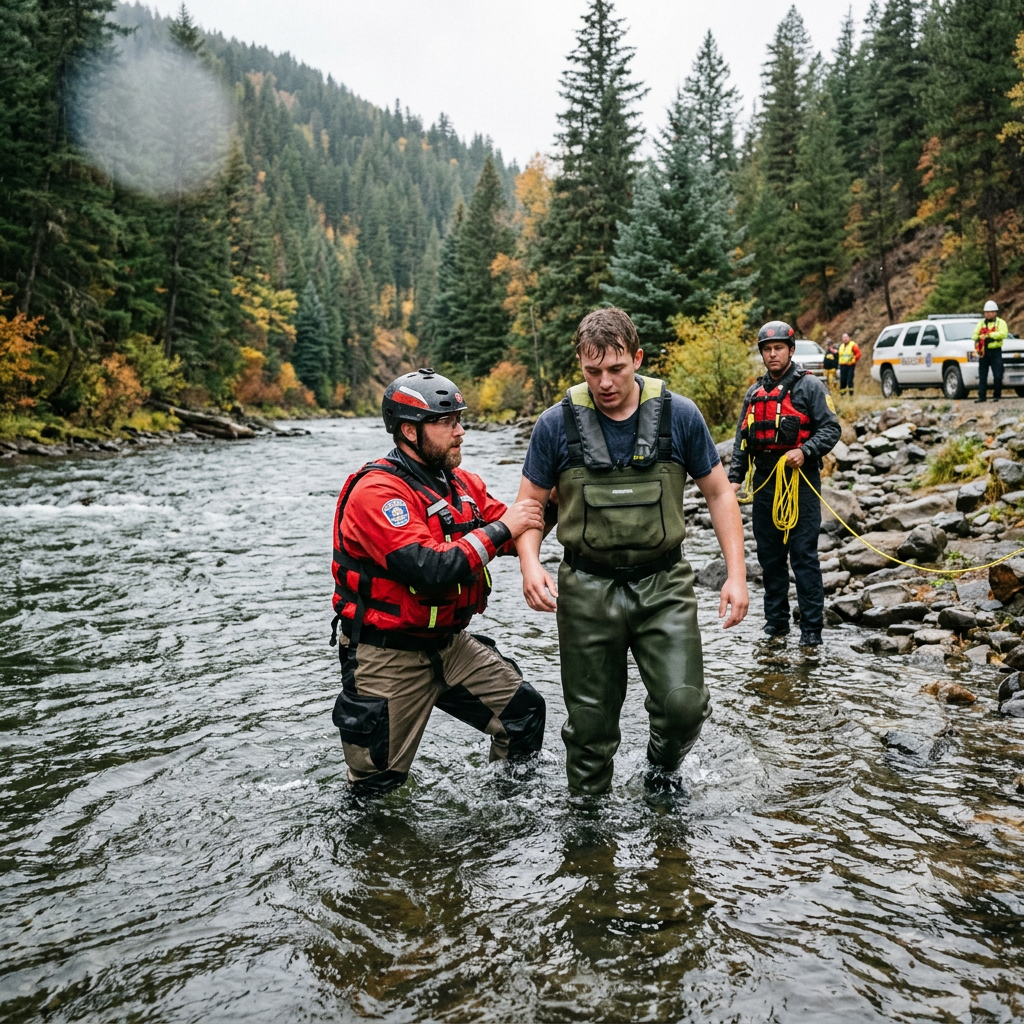
Rescue personnel assist a man through a river during a safety drill
Chest waders allow anglers to reach productive water, cross shallow channels, and remain dry in cold conditions. They can also create a dangerous sense of security.
A river may look calm until a boot slips between two rocks. A flat sandbank may suddenly drop into deeper water. A small wave can knock a surf angler backward, while a rising tide can turn a familiar route into a fast-moving channel. Within seconds, water may pour over the top of the waders, making it difficult to stand, swim, or climb back onto shore.
Many anglers have heard that water-filled chest waders will immediately drag a person to the bottom. The reality is more complicated. Flooded waders do not necessarily pull someone straight down while that person is fully submerged, because the water inside them is already surrounded by water. However, they can severely restrict leg movement, increase exhaustion, expose the body to cold water, and become extremely difficult to lift when the angler reaches a bank, boat, ladder, or shallow area.
The greatest dangers are often the current, cold-water shock, panic, poor flotation, and the inability to reach a safe exit—not the waders alone. Understanding those risks can turn a frightening fall into a survivable emergency.
A determined man struggles to maintain balance while fishing in a fast-moving river.
Chest waders are designed to keep water outside. Once water enters over the top, through an open front, or through a large tear, that protective barrier stops working.
The water may collect around the legs and waist. While the angler remains completely in the water, it does not behave like a heavy bucket tied to the body. The difficulty becomes much more noticeable when the person attempts to kick, stand, climb, or move through shallow water.
Flooded boots can reduce the effectiveness of kicking. Loose fabric may create drag, and cold water surrounding the lower body can quickly reduce muscle control. An RNLI rescue in 2024 involved an angler who lost his footing while fishing chest-deep, was carried into deeper water, and became hypothermic. Rescuers reported that bringing him aboard was difficult because his chest waders were full of water.
A second problem is trapped air. Air inside the legs may initially provide some buoyancy, but it can also shift as the body changes position. Anglers should not depend on this air to keep them safely upright. Waders are clothing, not an approved flotation device. The RNLI specifically warns against assuming that waders or flotation clothing can replace a properly selected lifejacket.
Common Ways Anglers Fall While Wearing Waders
Slipping on an Uneven Riverbed
Rocks covered with algae can be extremely slick. Gravel may shift underfoot, and holes between rocks may trap a boot or cause an ankle injury. Natural waterways can also contain submerged branches, steep drop-offs, and other hazards that cannot be seen from the surface.
Once one foot slips, the current may turn the angler sideways. The larger surface area exposed to the flow can make it much harder to recover balance.
Wading Too Deep
As the water rises toward the waist or chest, the current pushes against more of the body. Each step becomes less stable, and even a relatively small increase in depth or speed can make returning difficult.
Water levels may also change during the fishing session because of rain, snowmelt, dam releases, or tides. A route that was safe on the way out may not be safe several hours later.
Being Knocked Down by Surf
Chest waders are especially hazardous around breaking waves, rocky ledges, and steep beaches. A wave can fill them rapidly and pull an angler toward deeper water.
Some fishing authorities advise against wearing waders during rock or ledge fishing because of the danger created when a person is swept into the sea.
Stepping into an Unexpected Drop-Off
Clear water often looks shallower than it really is. A river channel, lake edge, or tidal flat may drop suddenly. Once both feet lose contact with the bottom, an angler carrying heavy equipment may struggle to regain an upright position.
Becoming Trapped by the Tide
Coastal anglers may walk onto sandbars, mudflats, or exposed banks at low tide. The incoming tide can cut off the return route or create strong currents around previously shallow ground.
The National Park Service recommends checking tide tables, tracking the time, and moving to higher ground if an incoming tide blocks the route to safety.
Sudden immersion may trigger cold-water shock. The person may gasp involuntarily, breathe rapidly, experience a sharp increase in heart rate, and panic. An uncontrolled gasp while the face is underwater can lead to aspiration and drowning before hypothermia has time to develop.
After the initial shock, cold water begins reducing strength and coordination. Hands may become too numb to operate a buckle, inflate a device manually, hold a rope, or use a phone. Swimming ability can deteriorate surprisingly quickly.
Natural water can cause dangerous cooling even when the air feels comfortable. Wet clothing and immersion accelerate heat loss, so getting out of the water is only the first part of the emergency response.
The Most Important Preventive Equipment
Wear a Properly Fitted Lifejacket
A lifejacket or suitable personal flotation device should be worn—not stored on the bank or carried inside a backpack.
The National Park Service advises anglers and people wading in natural water to wear a properly fitting lifejacket and not rely on swimming ability alone. Putting one on after falling into moving or cold water may be extremely difficult.
Choose a device designed for the activity and the water conditions. Make sure it is compatible with your chest waders, fishing vest, rain jacket, and other equipment. Inflatable models require regular inspection, a full gas cylinder, and working status indicators. Some flotation aids support only a conscious person and may not turn an unconscious wearer face-up, so read the label carefully.
Fasten a Wader Belt
A snug wader belt can slow the amount of water entering the lower part of the waders after a fall. It should be secured around the waist according to the manufacturer’s instructions.
A belt does not make waders waterproof after complete immersion, and it does not replace a lifejacket. Its purpose is to reduce rapid flooding and preserve time to regain control. Government fishing guidance recommends wearing a snug belt with chest waders.
Carry a Wading Staff
A wading staff gives the angler a third point of contact and can be used to test depth, detect holes, and assess the bottom before transferring body weight.
Place the staff upstream or slightly ahead as appropriate for the situation, and make each step deliberately. A staff is particularly useful in cloudy water, strong flow, and areas with irregular rocks. It should be attached in a way that does not create an entanglement hazard.
Select Appropriate Footwear
Use soles suited to the riverbed, shoreline, or boat surface. A sole that grips well on gravel may behave differently on algae-covered rock, wet wood, mud, or a fiberglass deck.
Inspect the boots for worn tread, loose soles, damaged laces, and accumulated mud before every trip. Avoid improvised additions that may catch on underwater debris or damage a boat.
Safer Wading Habits
Good equipment cannot compensate for a poor decision to enter unsafe water.
Before stepping in:
Check the weather, water level, current, tide, and local warnings.
Identify where you will exit if you fall.
Look for downstream hazards such as trees, rocks, weirs, rapids, and waterfalls.
Avoid wading alone.
Tell someone where you are fishing and when you expect to return.
Carry a whistle and waterproof communication device on your body.
Keep both hands as free as possible while changing position.
Secure tackle so that it can be abandoned during an emergency.
Strong currents may exist beneath a calm-looking surface. The National Park Service notes that moving water only several inches deep can sometimes be powerful enough to knock a person down, depending on the conditions.
Move slowly and maintain a wide, balanced stance. Test each placement before shifting your full weight. Do not cross immediately above rapids, waterfalls, strainers, or other obstacles that could trap or injure you.
Turning back is not a failed fishing trip. Rising water, increasing wind, worsening visibility, numb feet, or repeated loss of balance are reasons to leave immediately.
What to Do If You Fall into the Water
1. Control the First Breath
The first few seconds are critical. Try not to thrash or take rapid, uncontrolled breaths.
Tilt your head back, focus on keeping your airway above the surface, and allow the lifejacket to support you. The RNLI’s “Float to Live” guidance recommends relaxing, breathing as normally as possible, and moving the hands and legs gently until breathing is under control.
2. Do Not Immediately Fight the Current
Powerful kicking and frantic movement waste energy and may cause trapped air to escape from clothing. Flooded wader boots also make efficient kicking difficult.
Concentrate first on flotation and orientation. Identify the nearest safe bank, shallow section, boat, rope, or object that can provide support.
3. Call and Signal for Help
Use a whistle, waterproof phone, marine radio, or personal locator beacon. Keep emergency communication equipment attached to your upper body where it remains reachable after a fall.
Tell rescuers your location, the direction of the current, and whether you are injured. The RNLI advises anglers to carry more than one means of calling for help because a single device may fail or become inaccessible.
4. Move Toward Safety Without Exhausting Yourself
Once the cold-water shock response has eased, move toward an achievable exit. Avoid trying to swim directly against a strong current.
When possible, use a defensive floating position with the face above water and the feet oriented toward downstream hazards. Do not stand prematurely in fast water, because a foot can become trapped while the current pushes the body down.
5. Do Not Make Removing Waders the Automatic First Step
There is no single rule that fits every immersion.
Removing chest waders in deep, moving, or cold water can consume energy, require both hands, and temporarily reduce control. A properly fitted lifejacket, controlled breathing, and a quick route to safety are generally higher priorities.
Consider releasing or removing equipment only when it is clearly preventing escape, you have flotation support, and conditions allow the action to be performed safely. Abandon rods, bags, nets, and tackle before risking your life to preserve them.
Helping Another Angler
Do not jump into moving water unless you are trained and equipped for water rescue. Rescuers can easily become additional victims.
Call emergency services, tell the person to float, and throw a buoyant object, life ring, throw bag, or secured rope. The National Park Service and RNLI both recommend calling for professional help rather than entering hazardous water without rescue training.
Keep watching the person and note where they were last seen. Point continuously toward them so arriving rescuers can locate them more quickly.
First Aid After the Angler Is Out
A rescue worker applies a bandage to a man’s injured arm near a river.
Move the person away from wind and water. Remove wet clothing carefully and replace it with dry layers, blankets, or towels. Cover the head and warm the center of the body gradually.
Do not assume the person is fine because they are standing or talking. Confusion, uncontrollable shivering, stumbling, unusual behavior, or increasing sleepiness may indicate hypothermia and require urgent medical attention.
Call emergency services immediately if the person:
If the person is unresponsive and not breathing normally, begin drowning-appropriate CPR according to your training and use an AED when available. Red Cross guidance prioritizes rescue breaths along with chest compressions in cardiac arrest caused by drowning.
Frequently Asked Questions
Do water-filled waders automatically pull you under?
Not necessarily. Water inside submerged waders does not suddenly become an additional downward weight in the way many people imagine. The real hazards are restricted movement, exhaustion, current, cold exposure, trapped equipment, and the difficulty of climbing out while carrying water in the clothing.
Is a wader belt enough protection?
No. A belt may slow flooding, but it cannot keep the wearer afloat or guarantee that water will remain outside. It should be used together with an appropriate lifejacket and safe wading practices.
Should chest waders be worn for rock fishing?
Several fishing-safety authorities recommend avoiding waders on exposed rocks and ledges because waves can sweep an angler into deep water. A lifejacket, suitable clothing, and a safer fishing position are better choices in these environments.
The Bottom Line
Water-filled chest waders do not guarantee that an angler will sink, but they can turn a simple slip into a serious drowning and hypothermia emergency. Wear a properly fitted lifejacket, fasten the wader belt, use a staff, check water and weather conditions, avoid fishing alone, and identify an exit before entering. If you fall, control your breathing, float first, call for help, and leave your fishing equipment behind. No catch is worth fighting a current while cold, exhausted, and unable to move freely.
Have you ever slipped, unexpectedly stepped into deep water, or watched someone struggle while wearing chest waders? Share what happened and the safety equipment or habit that made the biggest difference in the comments below. Your experience could help another angler prepare before their next trip.
Hi, I’m the creator and editor behind ZestyHabit. I research everyday safety, first aid, and practical wellness topics using official guidance and reliable public sources, then turn that information into clear, realistic steps for daily life.
My goal is to help readers make safer, better-informed choices at home and beyond.