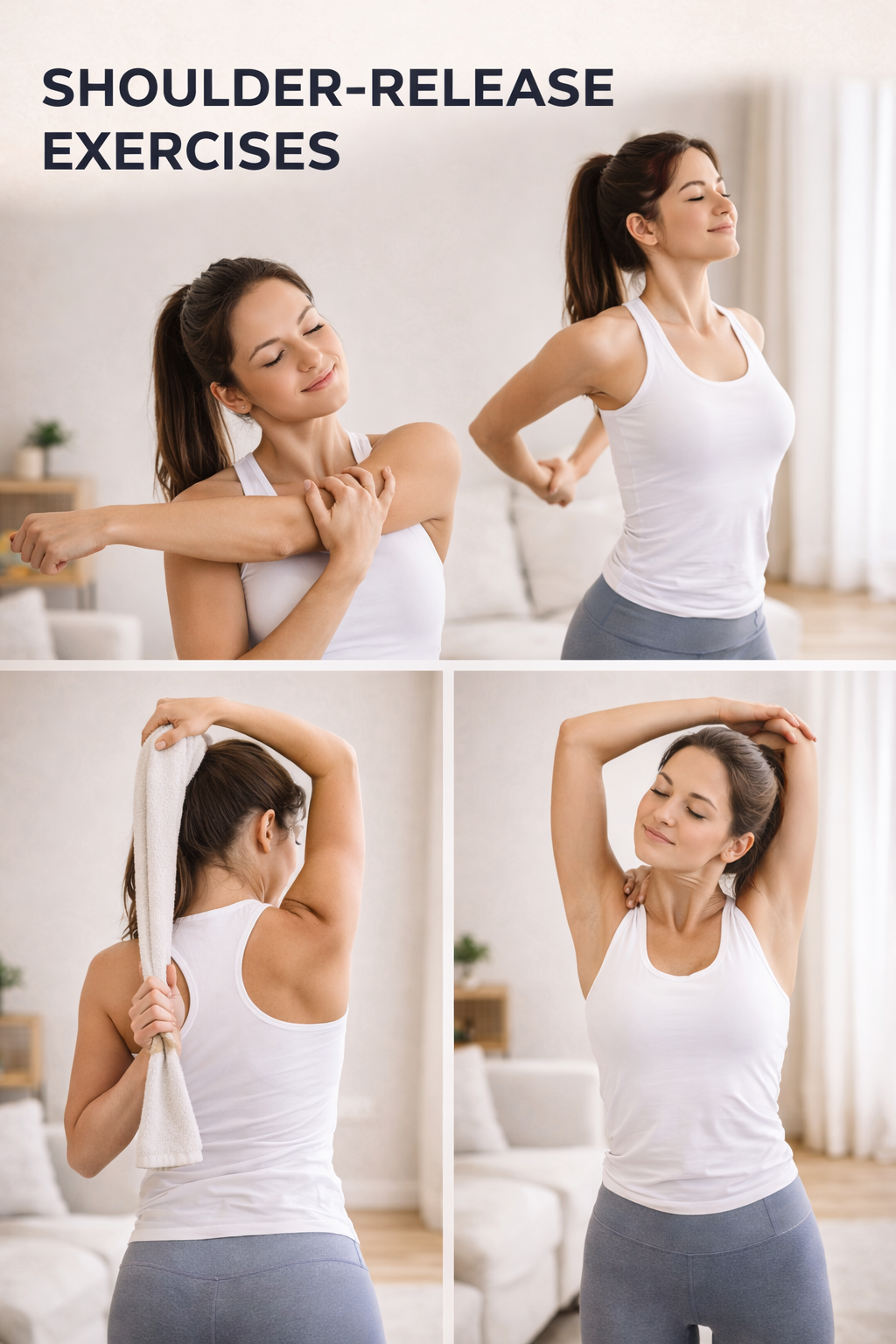
Building A Shoulder-Release Routine: A Routine Checklist
Shoulder tension has a sneaky way of becoming background noise.
At first it is just a little stiffness when you reach for something in the back seat or when you get up from your desk. Then, after a while, you realize you have been holding your shoulders halfway to your ears for most of the week. Your neck feels crowded. Your upper back feels tired. Even sitting still starts to feel like effort.
A lot of people live in that zone without really meaning to. Desk work does it. Driving does it. Stress does it. Even scrolling on the couch somehow does it. You do not have to be doing anything dramatic for your shoulders to feel overworked.
The problem is that most advice about shoulder tension is either too vague or too ambitious. It is either “stretch more,” which is not all that useful, or it is a full mobility sequence that looks like it belongs in a physical therapy studio at 6 a.m. before anyone has had coffee.
What tends to work better in real life is simpler than that.
If you want to loosen tight shoulders, the easiest routine is usually a short one you can repeat without turning it into a whole production. A few moves. A clear trigger. A setup that does not depend on perfect motivation.
That is what this article is about. Not the ideal shoulder routine from a fitness video. A realistic one. The kind you can do in regular clothes, in a regular room, on a regular day when your shoulders feel like they have been carrying more than they should.
Why shoulders get tight so easily
Shoulders take a lot of the hit when daily life gets repetitive.
If you sit at a laptop, work at a desk, drive often, carry bags on one side, lift kids, sleep in awkward positions, or spend too much time leaning toward a screen, your shoulders notice. So does your upper back. So does your neck, which usually gets dragged into the situation whether it likes it or not.
Stress plays a role too. People really do tense their shoulders when they are overwhelmed, rushed, or mentally “on” all day. You may not realize you are doing it until you exhale and feel them drop half an inch.
That is part of why shoulder tension can feel stubborn. It is not always caused by one big event. Sometimes it is built out of tiny habits repeated over and over.
And because of that, the fix is often less about doing one heroic stretch and more about interrupting the pattern often enough that your body stops treating tension like the default setting.
The biggest mistake people make with shoulder routines
Usually, they make the routine too big.
They start with good intentions and build a whole plan: resistance bands, posture drills, wall slides, mobility work, foam rolling, maybe a video they swear they will follow every day. Then life gets busy, and suddenly the routine feels too annoying to begin.
That is how a useful idea turns into a thing you avoid.
For most people, a shoulder-release routine works better when it is short enough to do without debate. Something you can finish in five to eight minutes. Maybe even three, on rough days.
That does not mean longer routines are bad. It just means shorter ones are easier to keep alive.
And when it comes to daily tension, consistency usually matters more than creating the perfect sequence.
What a practical shoulder-release routine should do
A good routine does not need to do everything. It just needs to help you feel a little less stuck.
In practical terms, that usually means:
getting you out of the hunched-forward position many people drift into
helping your shoulders move a bit more freely
easing some of the tightness in the upper back and neck area
giving your body a short reset during or after long periods of sitting
It should also be simple enough that you do not need special equipment unless you want it.
That last part matters more than people admit. The easier a routine is to start, the more likely it becomes part of your actual week instead of staying a nice idea.
Start with a routine you can do anywhere
If you are building a shoulder routine from scratch, begin with moves that do not require much setup.
You do not need a yoga mat. You do not need a resistance band. You do not need to be especially flexible. You mostly need a few minutes and enough room not to hit a lamp.
Here is a basic shoulder-release routine that works well for a lot of people:
1. Shoulder rolls
Roll both shoulders up, back, and down in a slow circle. Then reverse the direction.
Do not rush this part. A lot of people turn shoulder rolls into tiny, fast shrugs that do not really change much. Let the movement be bigger and slower than you think.
Try 5 to 8 rolls in each direction.
This is a good starting move because it helps you notice how tense you actually are. Sometimes the first couple of rolls feel almost crunchy. Not in a dramatic way. Just in that “wow, I have been sitting too long” kind of way.
2. Neck and shoulder drop
Sit or stand tall. Let one arm hang naturally. Gently tilt your head to the opposite side until you feel a light stretch along the side of your neck and upper shoulder.
Hold for 15 to 20 seconds, then switch sides.
This should feel gentle, not aggressive. You are not trying to yank your head sideways and prove something.
Clasp your hands behind your back if that feels okay, or simply place your hands on your low back and gently draw your shoulders back. Lift your chest slightly and look straight ahead.
Hold for 15 to 20 seconds.
If you spend a lot of time leaning forward, this one often feels especially helpful. Nothing dramatic, just a subtle “oh right, my body can go this direction too.”
4. Arm circles
Stretch your arms out to the sides and make small circles forward for 10 to 15 seconds, then backward.
After that, make the circles a little bigger if it feels comfortable.
This move is simple, but it wakes the area up without requiring much thought.
5. Wall reach or doorway stretch
If you are near a wall, place your forearms against it and gently lean forward. If a doorway is easier, place your forearms or hands on the frame and ease your chest through slightly.
Hold for 15 to 20 seconds.
This can be a nice counter-move after typing, driving, or curling over your phone for too long.
6. Shoulder blade squeeze
Sit or stand up straight and gently squeeze your shoulder blades toward each other, then release.
Do 8 to 10 slow reps.
Think “gently pull back,” not “force your chest into a military pose.” The goal is to wake up the muscles that often get ignored when you spend a lot of time slumping forward.
That is already enough for a basic routine.
It is not flashy. That is part of why it works.
A simple routine checklist you can actually follow
Some people do better with a checklist than a loose idea of stretching “when they remember.” That makes sense. A checklist gives the routine edges.
Here is a realistic version:
Shoulder-Release Routine Checklist
Before you begin
Loosen your jaw
Unclench your hands
Drop your shoulders once on purpose
Take one slower breath than usual
This tiny reset helps more than it sounds like it would. A lot of shoulder tension comes with full-body bracing. If you go straight into stretches while still holding everything tight, the whole routine feels less effective.
Core routine
5 to 8 shoulder rolls forward and backward
15 to 20 seconds neck stretch on each side
15 to 20 seconds chest opener
10 to 15 seconds arm circles each direction
15 to 20 seconds wall or doorway stretch
8 to 10 shoulder blade squeezes
After the routine
Notice whether your shoulders feel lower
Stand up and walk for a minute if you have been sitting
Take a sip of water if that helps mark the reset
You do not have to turn the “after” part into a ritual. It is just a good way to avoid doing the routine and then immediately folding yourself back over a laptop like a shrimp.
When to do it so it actually happens
This matters almost more than the stretches themselves.
A routine needs a place to live. Otherwise, it floats around as something you intend to do and somehow never quite get to.
The easiest approach is to attach it to a part of the day that already exists.
For example:
After long desk sessions
If you work at a computer, do the routine after 2 to 3 hours of sitting or between meetings.
This is one of the most natural times to do it because the tension is already there and easy to notice.
After work
A lot of people carry shoulder tightness home with them. Doing a short routine after you change clothes or before dinner can help separate work mode from evening mode.
Before bed
A gentle version can work nicely at night, especially if your shoulders feel stiff from the day. You probably do not need the more active moves quite as much. Just the slower stretches and shoulder rolls may be enough.
After workouts
If upper-body workouts, lifting, or even a long walk with tense posture leaves your shoulders feeling loaded, a short release routine afterward can feel good.
The best time is usually not the “ideal” time. It is the one you are most likely to repeat.
Keep it short on purpose
People often assume a routine needs to feel substantial to be worth doing.
Not really.
A three-minute shoulder routine still counts. So does doing half the checklist on a busy day. The goal is not to win a flexibility award. The goal is to interrupt tension often enough that your body stops sinking deeper into it.
This is why shorter routines tend to survive better in real life.
The routine matters, but so do the habits feeding the tension in the first place.
Sometimes the fastest way to help tight shoulders is not adding more stretches. It is noticing what you keep doing right before the tightness shows up.
A few common culprits:
Laptop posture
Working on a laptop for hours without raising the screen often pulls your shoulders and neck forward. Even a slight adjustment to screen height can make a difference.
Phone posture
The classic head-down, shoulders-rounded position adds up fast. People do this on the couch, in bed, at stoplights, in grocery lines. It is a very committed posture.
Stress bracing
Some people tighten their shoulders when they are concentrating. Others do it when they are anxious. Once you notice this, you start catching it everywhere.
Carrying bags on one side
A heavy tote or purse on the same shoulder every day can contribute more than people think.
This is not about becoming posture-obsessed. It is just useful to notice the patterns that keep pulling you back into the same discomfort.
It helps to have a “during the day” reset too
A full routine is great, but small resets during the day can keep tension from building as much in the first place.
These are not separate workouts. Just tiny interruptions.
Quick resets that help
drop your shoulders away from your ears
uncross your legs and sit back in the chair
roll your shoulders once or twice while waiting for something
stand up during calls
stretch your arms overhead after a long typing session
lean against a doorway for 10 seconds on the way to the kitchen
These little moments matter because shoulder tension is usually not created in one dramatic chunk. It builds in layers.
So it makes sense that relief can also come in layers.
What if the routine feels good for one day and then you forget it exists?
That is very normal.
This is where a cue helps.
Try linking your shoulder routine to something concrete:
after brushing your teeth at night
after shutting your laptop
before your shower
during your afternoon break
after heating up lunch
right after changing out of work clothes
The cue should be ordinary. The more ordinary, the better.
If you rely on motivation alone, you will do the routine when your shoulders feel terrible and forget it on all the medium-bad days. But those medium-bad days are exactly when a short routine can keep things from piling up.
A realistic week of shoulder care might look like this
It does not have to be daily perfection.
It might look more like this:
Monday
You do the full 5-minute routine after a long desk day.
Tuesday
You forget until bedtime and do two shoulder rolls, a neck stretch, and call it good.
Wednesday
No formal routine, but you take a couple of stretch breaks between tasks.
Thursday
You do the checklist after work because your shoulders feel especially stiff.
Friday
You skip it entirely.
Weekend
You do a slower version in the morning or after cleaning the house.
That still counts as a real routine taking shape.
People often think routines only “count” when they happen neatly and daily. But in practice, a somewhat messy routine that keeps coming back is much more useful than a perfect one that disappears after four days.
A few gentle cautions
Most everyday shoulder tension responds well to light movement and stretching. But there are times when a simple routine is not enough or not the right tool.
Be careful if you have:
sharp pain rather than general tightness
pain that shoots down the arm
numbness or tingling
significant weakness
pain after an injury
discomfort that gets worse with gentle movement instead of better
That is a different situation from ordinary desk-life stiffness, and it is worth getting checked properly.
Also, stretching should feel relieving or mildly uncomfortable at most. It should not feel like you are forcing your body into cooperation.
The routine does not need to be impressive
This is probably the most useful thing to remember.
A shoulder-release routine can be very plain and still be effective. It can happen in work clothes. It can take five minutes. It can be done beside your desk, by your bed, or in a hallway while dinner is in the oven.
It does not need a fitness identity. It does not need a perfect playlist. It does not need to look serious.
It just needs to be easy enough that you keep returning to it.
That is usually what helps shoulders feel better over time. Not one dramatic stretch session, but small regular reminders that your body is allowed to move differently than it has all day.
And honestly, that is a pretty good place to start.
Hi, I’m the creator and editor behind ZestyHabit. I research everyday safety, first aid, and practical wellness topics using official guidance and reliable public sources, then turn that information into clear, realistic steps for daily life.
My goal is to help readers make safer, better-informed choices at home and beyond.