The Quiet Problem with Rewearing Bras, Hats, and Masks for Too Long
Minjin Park
·
Bras, hats, and masks are easy to forget in the laundry routine, but they collect sweat, oil, skin cells, and bacteria faster than we think. Here’s how often to wash them and how to make the habit easier.
Underwear goes in the hamper. Socks disappear into some mysterious second dimension. T-shirts get tossed in after one or two wears. Workout clothes, hopefully, do not get a second chance after a sweaty session.
But then there are the “in-between” items.
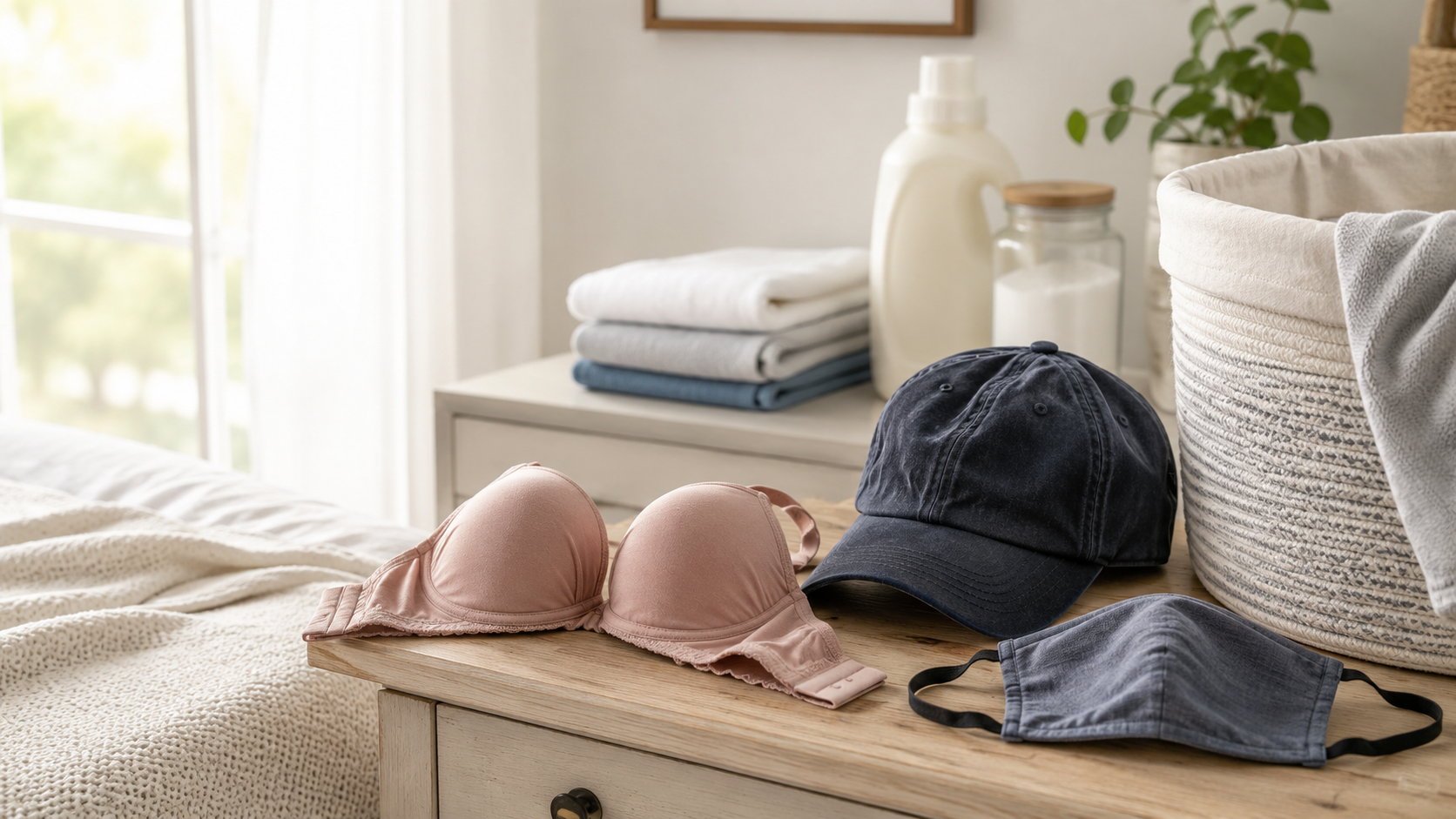
Bras. Baseball caps. Beanies. Reusable face masks.
They touch our skin. They soak up sweat. They sit against areas that get oily, warm, and sometimes irritated. Yet somehow, they often escape the laundry pile for far too long.
A bra gets worn “just one more time” because it still looks fine. A favorite cap stays by the door and gets grabbed every sunny afternoon. A mask sits in a bag, car cup holder, or jacket pocket, ready for reuse. None of these habits feel dramatic. They feel normal, even practical.
The problem is that these items do not need to look dirty to be dirty.
They collect body oils, dead skin cells, sweat, makeup, sunscreen, hair products, dust, and bacteria. Not in a scary, panic-inducing way. We live with bacteria all the time. Skin is not supposed to be sterile. But when the same fabric sits against the same warm skin again and again, things can get uncomfortable.
Sometimes the result is body odor. Sometimes it is acne around the jawline, chest, back, or hairline. Sometimes it is itchiness, clogged pores, or a rash that seems to appear out of nowhere.
And sometimes the biggest issue is simpler: the item just starts to smell a little stale, and we pretend not to notice because washing it sounds annoying.
Fair. But there are easier ways to handle it.
Why These Items Get Gross Faster Than They Look
A white shirt shows stains. Socks announce their condition loudly. A bra or hat can hide a lot.
That is part of the problem.
Many bras are made from synthetic blends, elastic, padding, lace, or foam. These materials can hold onto sweat and odor, especially around the band and underwire area. Hats absorb sweat around the forehead, but the sweatband is tucked inside where we rarely look closely. Masks sit directly over the nose and mouth, picking up moisture from breathing, skin oil, and sometimes foundation or lip balm.
They may not look dirty from across the room. Up close, the story is different.
Skin Leaves More Behind Than We Think
Even on a calm day, your skin is constantly shedding tiny cells and producing oil. Add heat, movement, stress, or humidity, and sweat joins the mix.
That blend gets rubbed into fabric. If the fabric is tight or repeatedly worn, it creates a nice little home for buildup. Not because you are unhygienic. Because you are a living person with skin.
Bras are especially prone to this because they sit close to the body for many hours. The band under the bust can trap heat, and if you sweat at all during the day, that area often feels it first.
Hats do something similar at the hairline. If you wear sunscreen, hair gel, dry shampoo, leave-in conditioner, or makeup near your forehead, some of it ends up on the hat’s inner band.
Masks, meanwhile, deal with moisture from breath. Even if you only wear one for errands or a commute, that trapped humidity can make the fabric damp enough to feel uncomfortable. A reusable mask that gets worn repeatedly without washing can start irritating the skin around the cheeks, nose, and chin.
Bras: The One We Stretch Too Far
Bras are expensive. Good ones are annoyingly expensive. So it makes sense that people try to preserve them.
The problem is that “I don’t want to overwash it” can quietly become “I have no idea when I last washed this.”
Most bras do not need to be washed after every single wear unless you sweat heavily, wore it during exercise, or live somewhere hot and humid. But wearing the same bra many days in a row is not great either.
A bra sits against areas where sweat can easily collect: under the breasts, along the band, near the back, and under the arms. Over time, that buildup can lead to odor, skin irritation, clogged pores, or little bumps that look like acne.
For people with sensitive skin, eczema-prone skin, or body acne, an unwashed bra can make things worse. The pressure and friction already create irritation. Add sweat and old detergent residue or body oils, and your skin may complain.
How Often Should You Wash a Bra?
A practical rule: wash everyday bras after about two to three wears.
That number changes depending on the day. If you barely left the house and did not sweat, you can probably stretch it. If you walked around in summer heat, wore it through a long commute, or felt damp at any point, wash it sooner.
Sports bras are different. Those should be washed after every workout. No debate needed. Once a bra has absorbed sweat from exercise, it belongs in the laundry.
Let Bras Rest Between Wears
One surprisingly helpful habit is rotating bras.
Wearing the same bra two days in a row does not give the elastic much time to recover. It also keeps moisture and body oils sitting in the fabric. Having two or three everyday bras in rotation can make each one last longer and stay fresher.
You do not need a huge drawer full of perfectly organized lingerie. Even a simple rotation helps: one worn today, one resting, one clean.
The Easier Way to Wash Them
Hand washing is gentle, but let’s be honest. Most people are not lovingly hand-washing bras every few days in a quiet sink like they live in a detergent commercial.
A mesh laundry bag is the lazy person’s friend here. Hook the bra closed, put it in the bag, wash on a gentle cycle with mild detergent, and skip the dryer. Heat can damage elastic and padding. Let it air dry.
If the bra has molded cups, lay it flat or hang it in a way that does not crush the shape.
It is not glamorous. It works.
Hats: The Sweatband Tells the Truth
Hats are funny because they feel more like accessories than clothing. You put on a cap to block sun, hide messy hair, walk the dog, run errands, or survive a bad hair day.
Then weeks pass.
Maybe months.
The outside still looks okay, so it stays in use. But the inside band is quietly collecting sweat, oil, sunscreen, hair products, and dirt.
This is especially true for baseball caps, gym hats, sun hats, bucket hats, and beanies worn during cold weather. Beanies may not seem sweaty, but your scalp still produces oil, and winter hats can trap heat. If you wear them with styling products or after using dry shampoo, buildup happens faster.
Can Dirty Hats Cause Breakouts?
They can contribute to them.
A hat sits right on the forehead and hairline, two places where pores can clog easily. If the inner band is carrying old sweat and oil, it can rub that buildup back onto your skin every time you wear it.
This does not mean every pimple on your forehead is caused by a hat. Skin is complicated. Hormones, products, stress, sleep, and diet can all play roles. But if you keep breaking out around the hairline and you wear the same hat often, it is worth looking at the hat.
Especially the inside.
That little sweatband can be suspicious.
How Often Should You Wash Hats?
It depends on how you wear them.
A hat worn occasionally for errands can be washed every few weeks or when it smells, looks stained, or feels grimy. A hat worn for workouts, outdoor work, summer walks, or sweaty activities should be washed much more often.
If the hat smells when you take it off, it is past time.
If there are visible sweat stains, also past time.
If you would feel embarrassed letting someone inspect the inside band, that is your answer.
How to Wash Hats Without Ruining Them
Check the care label first, especially for structured caps, wool hats, or anything with leather details.
For many baseball caps, hand washing is safest. Fill a basin or sink with cool water and a small amount of mild detergent. Gently scrub the sweatband with a soft brush or cloth. Rinse carefully and reshape the hat while it air dries.
Avoid hot water if you are worried about shrinking or color fading.
For beanies, many can go in the wash on gentle, but wool ones need more care. Air drying is usually the safest option.
And no, tossing a structured cap into the dryer is not a personality trait. It is a risk.
Reusable Masks: Small Fabric, Big Buildup
Reusable masks are not as universal as they were a few years ago, but plenty of people still wear them in crowded places, during travel, in healthcare settings, during cold and flu season, or when air quality is bad.
Because masks are small, they are easy to treat casually. One gets tucked into a purse. One sits in the car. Another lives in a coat pocket. Then it gets reused because it is “probably fine.”
But masks sit on one of the most sensitive and active parts of the body: the face.
They collect moisture from breathing, oil from skin, makeup, sunscreen, lip balm, and tiny particles from the environment. If the mask gets damp, it can become uncomfortable and less pleasant to wear. It may also irritate the skin, especially around the chin, cheeks, and nose.
Maskne Is Not Just a Buzzword
The word “maskne” got tossed around a lot, but the irritation behind it is real.
When fabric rubs against the skin and traps moisture, it can create a perfect setup for clogged pores or inflamed skin. A dirty or repeatedly worn mask can add more oil and residue into that situation.
People who wear makeup under masks may notice this even more. Foundation, powder, sunscreen, and sweat can mix together and settle into the fabric. Rewearing that same mask is a little like pressing yesterday’s face products back onto your skin.
Not ideal.
How Often Should You Wash Reusable Masks?
A reusable cloth mask should generally be washed after each day of use, and sooner if it gets damp, sweaty, dirty, or makeup-stained.
If you wear masks regularly, it helps to own several. That way you are not stuck choosing between wearing a dirty one and doing laundry at an inconvenient time.
Keep clean masks in one pouch and used masks in another. It sounds a bit fussy until you realize it prevents the classic “Is this the clean one?” moment.
We have all played that game. Nobody wins.
A Simple Mask Routine
At the end of the day, put used masks directly into a small laundry bag or hamper. Wash them with regular laundry if the fabric allows it, using detergent. Dry them fully before wearing them again.
A mask that is still damp from washing is not ready. Damp fabric against the face is uncomfortable and can irritate skin quickly.
For disposable masks, the issue is different. They are not meant to be washed and reused indefinitely. If a disposable mask is dirty, damp, damaged, or stretched out, it should be replaced.
The Smell Test Is Not Enough
A lot of people rely on smell to decide whether something is clean.
This works badly for bras, hats, and masks.
By the time fabric smells obviously sour or stale, buildup has already been sitting there for a while. Also, people get used to the smell of their own belongings. A hat might smell fine to you but not to someone standing nearby. Annoying, but true.
Appearance is not always useful either. A black sports bra can hide sweat marks. A navy cap can hide discoloration. A patterned mask can look fine while still carrying oil and makeup residue.
Instead of waiting for visible proof, it is better to build a loose routine.
Not a perfect routine. A realistic one.
The Skin Signs People Ignore
Sometimes your body gives hints that an item needs washing more often.
Look for patterns.
Do you get breakouts along the bra line, under the bust, on the chest, or between the shoulder blades? Your bra or sports bra may be part of the problem.
Do you keep getting small bumps around the forehead or temples? Check your hats, headbands, pillowcase, and hair products.
Do you notice irritation around your chin, cheeks, or nose after wearing a mask? The fabric, fit, detergent, or wash frequency could be involved.
Of course, laundry is not a cure-all. Persistent rashes, painful acne, swelling, or signs of infection should be checked by a healthcare professional. But for everyday irritation, washing skin-contact items more often is a simple place to start.
It is boring advice. Boring advice is sometimes annoyingly effective.
Why We Put Off Washing These Things
There are real reasons people delay washing bras, hats, and masks.
Bras can lose shape if washed carelessly. Hats can shrink or bend. Masks are small enough to misplace. Some people do laundry once a week and forget to separate delicate items. Others just do not own enough backups.
And honestly, some items live in a mental blind spot. We do not think of a hat the same way we think of underwear. We do not think of a bra as “dirty” after one wear if it still smells fine. We do not think of a mask as laundry because it is tiny and usually shoved in a pocket.
That is why the solution should be easy, not perfect.
A Realistic Washing Schedule
Here is a simple rhythm that works for normal life.
Wash everyday bras after two to three wears, sooner if sweaty. Wash sports bras after every workout. Rotate bras so each one has time to air out.
Wash hats every few weeks if worn casually, and more often if they get sweaty. Spot-clean the inner band when it starts looking or smelling questionable.
Wash reusable masks after each day of use. Replace disposable masks when they are damp, dirty, damaged, or no longer fit well.
This does not require a complicated chart on the laundry room wall. You can just create a few tiny systems.
A mesh bag for bras.
A small basket for masks.
A reminder to clean hats on the same day you wash towels.
Done.
How to Keep Them Fresher Between Washes
Washing matters, but what you do between washes helps too.
Let bras air out before putting them back in a drawer. Do not trap a sweaty bra in a gym bag. That is where odors go to become stronger and more committed.
Hang hats somewhere with airflow after wearing them, especially if you were outside in heat. If a cap is damp, do not toss it onto a pile of clothes or stuff it into a backpack.
Store clean masks in a clean pouch or drawer. Keep used ones separate. A mask floating loose in a handbag with receipts, keys, snacks, and mystery crumbs is not exactly living its best life.
For people who sweat easily, keeping a backup can make a big difference. An extra sports bra. A second cap. A few clean masks in the car or bag. These little backups prevent the “I guess I’ll just wear it again” habit.
Detergent, Fragrance, and Sensitive Skin
More detergent does not mean cleaner.
Using too much detergent can leave residue in fabric, and that residue may irritate skin. This matters with bras and masks because they sit so close to sensitive areas. Strong fragrance can also bother some people, especially around the face.
If you often feel itchy after wearing freshly washed items, try using less detergent or switching to a fragrance-free option. Make sure items are rinsed well and fully dry before storing.
Fabric softener is not always helpful for these items either. It can leave a coating on fabric and may affect moisture-wicking materials. For sports bras and performance fabrics, skip it.
Clean should feel clean, not perfumed enough to announce itself from across the room.
When It Is Time to Replace Instead of Wash
Sometimes washing is not enough.
Bras wear out. Elastic stretches. Bands stop supporting. Cups lose shape. If a bra stays smelly even after washing, feels stretched out, digs oddly, or no longer fits, it may be time to let it go.
Hats can also reach a point of no return. Deep sweat stains, permanent odor, warped shape, or a grimy inner band that never really cleans up are signs that replacement might be kinder than continued scrubbing.
Reusable masks should be replaced if the fabric thins, straps stretch, the fit becomes loose, or the mask stays stained or musty after washing.
Keeping an item forever is not always the frugal choice if it is irritating your skin or no longer doing its job.
Make the Habit Easier, Not Perfect
The goal is not to become a laundry perfectionist.
Nobody needs to panic because they wore the same bra twice or forgot to wash a hat after a short walk. Life is busy. Laundry is endless. There is always one item hiding at the bottom of a bag.
The better goal is awareness.
Bras, hats, and masks touch parts of the body where sweat, oil, and friction build up quickly. They deserve a place in the laundry routine, even if they do not look dirty right away.
Start with one small change. Put bras in a mesh bag instead of tossing them loosely into the hamper. Wash masks with towels at the end of the day. Check the inside band of your favorite hat before you put it on again.
It does not have to be a dramatic reset.
Just give those forgotten items a little more attention. Your skin, your nose, and possibly the people sitting near you will appreciate it.
Hi, I’m the creator and editor behind ZestyHabit. I research everyday safety, first aid, and practical wellness topics using official guidance and reliable public sources, then turn that information into clear, realistic steps for daily life.
My goal is to help readers make safer, better-informed choices at home and beyond.