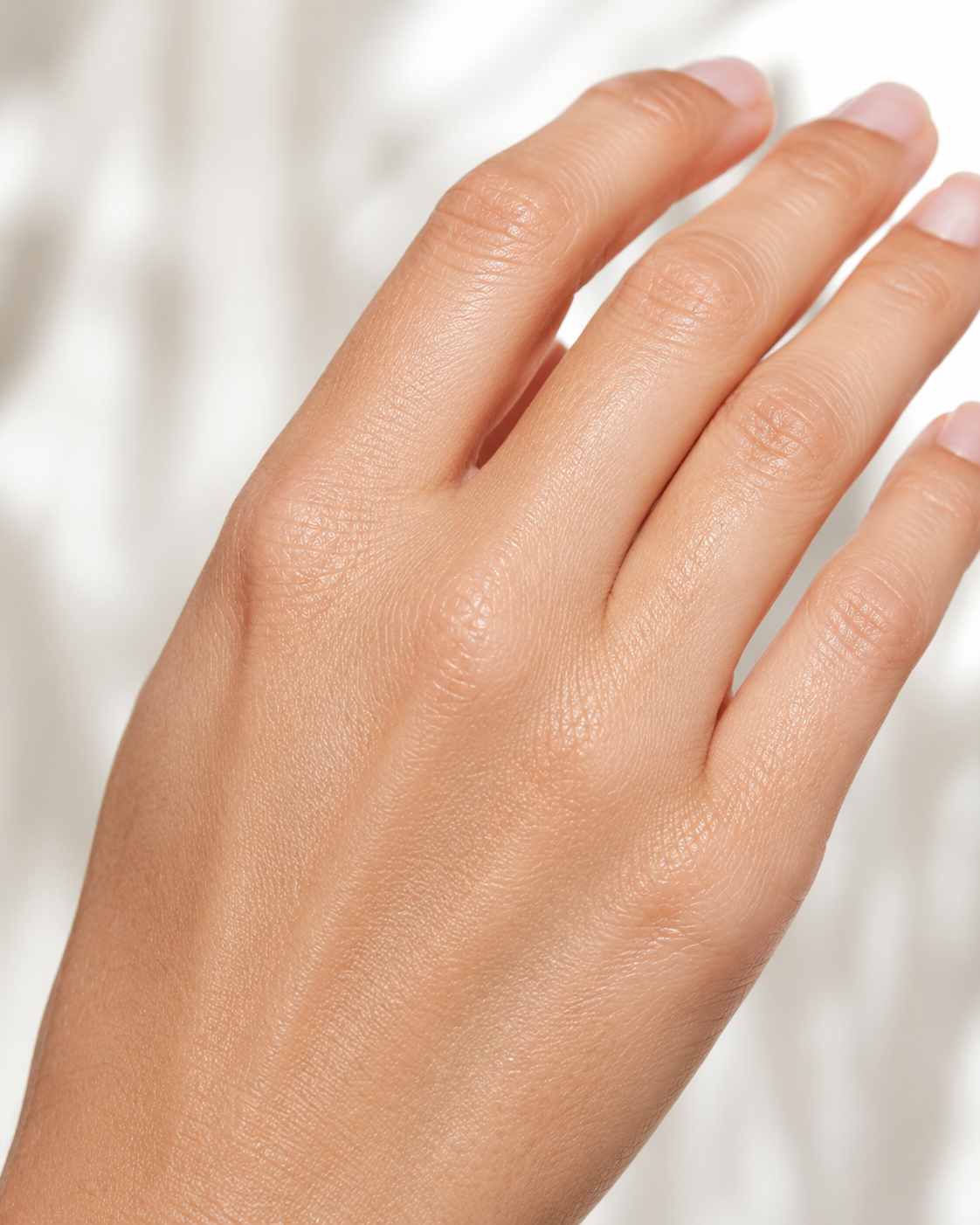
Tight skin on your hands can be a sign of dryness, irritation, or a weakened skin barrier. Here’s why hand care matters and how to keep your hands comfortable, soft, and healthy.
Hands are easy to neglect.
We notice our face immediately. A dry patch on the cheek? We care. A pimple on the chin? We investigate. Under-eye dryness? Suddenly we are reading ingredient lists like we work in a lab.
But hands? We usually ignore them until they start feeling uncomfortable.
A little tightness after washing. Dry knuckles. Rough fingertips. Skin that feels stretched when you bend your fingers. Maybe a tiny crack near the nail. Maybe the back of your hands looks dull, papery, or older than the rest of you.
And then, usually, we think, “Oh, I should use hand cream.”
Which is true. But hand skin tightness is not just a cosmetic issue. It is often a sign that your skin barrier is struggling. Your hands are exposed to water, soap, sanitizer, weather, cleaning products, friction, and constant movement all day. They work hard, and honestly, they do not get enough credit.
So if your hands often feel tight, dry, or rough, it is worth paying attention.
When your hands feel tight, it usually means the skin is lacking moisture, oil, or barrier support.
Healthy skin has a protective outer layer that helps hold water inside and keep irritants out. When that barrier is strong, your hands feel flexible and comfortable. When it is weakened, water escapes more easily. The skin becomes dry, less elastic, and more sensitive.
That tight feeling after washing your hands is a common clue.
Your skin may feel clean, but also slightly stretched. If you bend your fingers, the skin may pull. If you apply lotion, it may disappear almost immediately. In worse cases, the skin may flake, crack, sting, or itch.
Tightness is basically your skin saying, “I need help before this gets worse.”
And with hands, it can get worse quickly because we keep using them. You cannot exactly put your hands on vacation.
Why hands dry out so easily
Hands are exposed to almost everything.
They touch soap, water, dishes, laundry, phones, keyboards, door handles, food, hair products, paper, bags, steering wheels, gym equipment, and cleaning sprays. They get washed multiple times a day. They are exposed to cold air in winter and sunlight in summer. They are also one of the first places to show dryness because the skin there is constantly moving and stretching.
The backs of the hands have thinner skin and fewer oil glands compared to some other areas. That makes them more prone to looking dry or crepey. The palms are thicker, but they can still become rough, cracked, or irritated from repeated washing and friction.
This is why body care should not stop at arms and legs.
Your hands are part of your body care routine too. A very visible, very hardworking part.
Hand washing can make tightness worse
Hand washing is important. No argument there.
But frequent washing can strip away natural oils from the skin, especially if you use harsh soap or hot water. The more often you wash, the more your skin barrier has to recover. If you do not moisturize afterward, tightness can build up throughout the day.
This is especially noticeable for people who wash their hands often for work, cooking, childcare, cleaning, healthcare, or just personal habit.
You wash once, your hands feel fine. Wash again, still fine. By the tenth wash, your skin starts feeling like paper.
The solution is not to stop washing your hands. It is to make washing less harsh and moisturize more consistently.
Use lukewarm water instead of hot water. Choose a gentle soap when possible. Pat your hands dry instead of rubbing aggressively. Then apply hand cream while the skin is still slightly damp.
That tiny timing change helps more than people think.
Sanitizer can be drying too
Hand sanitizer is convenient, but many formulas contain alcohol, which can be drying with repeated use.
Again, sanitizer is useful. Sometimes it is necessary. But if you use it constantly and never moisturize, your hands may start feeling tight, rough, or irritated.
Some sanitizers include moisturizing ingredients, which can make them less drying. But even then, they are not a replacement for hand cream.
If your hands feel tight after sanitizer, keep a small hand cream nearby. Desk, bag, car, bedside table. Put it somewhere you will actually use it. The best hand cream is not the fancy one sitting untouched in a drawer. It is the one you apply.
Weather changes can make hand skin feel tight
Cold weather is brutal on hands.
The air outside is dry, indoor heating makes the air even drier, and hands are often exposed when we walk outside, drive, or carry things. Wind can make the skin feel even more raw. Then we come inside, wash our hands with warm water, and the cycle continues.
Winter hands can feel tight, itchy, cracked, and rough around the knuckles. Some people also get tiny splits near the fingertips, which are small but surprisingly painful. There is nothing like discovering a fingertip crack while squeezing lemon or using sanitizer. Betrayal.
Summer can also dry out hands in different ways. Sun exposure, chlorine, salt water, gardening, and air conditioning can all contribute to dryness.
Your hand care routine may need to change with the season, just like facial skincare.
Cleaning products are a major trigger
Household cleaning products can be harsh on the hands.
Dish soap, laundry detergent, bathroom cleaners, bleach, disinfectant sprays, and degreasers can strip the skin and cause irritation. Even “natural” cleaning products can be irritating if they contain strong fragrance or essential oils.
If your hands feel tight or dry after cleaning, this is a very strong clue.
Gloves are not glamorous, but they work. Wearing rubber or nitrile gloves while washing dishes or cleaning can protect your skin from repeated water exposure and harsh ingredients.
If your hands sweat inside gloves, you can wear thin cotton gloves underneath for longer cleaning tasks. That may sound a little extra, but cracked hands are also extra. Painfully extra.
Protecting your hands before damage happens is much easier than repairing them afterward.
Tight hands can lead to cracks
Dry, tight skin is more likely to crack.
When skin loses flexibility, it cannot bend and stretch comfortably. Hands move constantly, especially around the knuckles, fingertips, and sides of the fingers. If the skin is dry enough, those repeated movements can create small cracks.
Cracks are not just annoying. They can sting, bleed, and make everyday tasks uncomfortable. Washing your hands hurts. Cooking hurts. Opening packages hurts. Even typing can feel irritating if cracks form near the nails or fingertips.
Once the skin is cracked, it needs more protection. A regular lightweight lotion may not be enough. You may need a thicker hand cream or ointment to seal the area and help it recover.
This is why tightness matters early. It is the warning stage before cracking begins.
Hand skin can show aging quickly
Hands often show signs of aging because they get a lot of sun exposure and less consistent care.
The face gets sunscreen, serums, moisturizer, maybe even retinol. Hands get soap, sanitizer, and occasional lotion when they start complaining. Not exactly equal treatment.
Over time, dryness can make the hands look older. Dehydrated skin may appear more creased. The backs of the hands can look dull or thin. Sun exposure can contribute to dark spots and uneven tone.
This does not mean hands need an intense anti-aging routine. But they do benefit from basic protection: moisturizer and sunscreen.
If you apply sunscreen to your face in the morning, rub the leftover onto the backs of your hands. If you drive often, this matters even more because hands can get a lot of sun through car windows.
Aging is normal. But letting your hands dry out and take all the UV exposure with no support? That part is optional.
Why hand care is part of body care
Body care is not only about smooth legs, soft elbows, or scented body lotion after a shower.
It includes the areas that work hardest.
Hands are constantly exposed, constantly used, and constantly washed. They are also one of the body areas people see most often. You use them to greet people, cook, write, work, apply skincare, hold your phone, and do basically everything.
When your hands feel uncomfortable, it affects your whole day in small ways.
You notice the tightness when you move your fingers. You avoid sanitizer because it stings. You pick at dry skin around your nails. You feel annoyed when your hands look rough even though the rest of your skin is fine.
Taking care of your hands is not vanity. It is comfort. It is barrier care. It is basic maintenance.
What ingredients help tight hand skin?
For tight, dry hands, look for ingredients that hydrate, soften, and protect.
Glycerin is one of the best everyday ingredients because it helps draw water into the skin. Shea butter and plant oils can soften roughness. Ceramides support the skin barrier. Panthenol can feel soothing. Dimethicone helps create a protective layer. Petrolatum is excellent for sealing moisture into very dry or cracked areas.
A good hand cream does not need to smell fancy. In fact, if your hands are irritated, fragrance-free is often better.
Fragrance can be lovely when your skin is healthy, but when your hands are cracked or sensitive, perfumed creams may sting or make irritation worse.
This is one of those times when boring products often win.
Lotion, cream, or ointment?
Lotions are usually lighter and absorb quickly. They are nice for daytime use, especially if you hate greasy hands.
Creams are thicker and more nourishing. They are usually better for tight or dry hands.
Ointments are the heaviest and most protective. They can feel greasy, but they are very helpful for cracked skin, rough knuckles, and overnight repair.
You do not have to choose only one. Many people do best with a lighter hand cream during the day and a thicker ointment at night.
Daytime hand care needs to be realistic. If a product makes your hands so greasy that you cannot touch your keyboard, steering wheel, or phone, you probably will not use it. Save the heavy stuff for bedtime.
The best time to apply hand cream
The best time is after washing your hands.
That is also the time most people forget.
After washing, your skin has water on it, but if you let that water evaporate without moisturizing, your hands may feel even drier. Applying hand cream while your hands are slightly damp helps lock in that moisture.
You do not need a huge amount. A small amount used often works better than a large amount once every three days.
Good times to apply hand cream:
After hand washing After using sanitizer After showering Before going outside in cold weather After doing dishes or cleaning Before bed
The bedtime application is especially useful because your hands get several hours to recover without constant washing.
The overnight hand care trick
If your hands are very tight or cracked, nighttime is your best opportunity.
Before bed, apply a generous layer of hand cream. Then seal dry areas with a small amount of ointment, especially around knuckles, fingertips, and cuticles.
If you want a stronger treatment, wear cotton gloves over the cream while you sleep. It looks a little old-fashioned, yes. But it works. It helps keep the product on your hands instead of wiping it all over your sheets.
You do not need to do this every night forever. Try it for a few nights when your hands are in bad shape.
Sometimes hands improve dramatically when you simply give them a protected, moisturized stretch of time.
Do not forget cuticles
Tight hand skin often comes with dry cuticles.
The skin around the nails can crack, peel, or form hangnails when it is dry. Hangnails are tiny but somehow capable of ruining your mood every time they catch on fabric.
Hand cream helps, but cuticles may need extra attention. Massage a little cream or cuticle oil around the nails. If you do not have cuticle oil, a small amount of plain ointment works fine.
Avoid cutting or picking at cuticles too aggressively. Damaged cuticles can become sore or irritated, and they help protect the nail area.
They are exposed while driving, walking, carrying bags, sitting outdoors, and even through windows. Over time, UV exposure can contribute to dark spots, uneven tone, rough texture, and premature aging.
If you already use sunscreen on your face, extend the habit to your hands. Apply sunscreen to the backs of your hands in the morning, especially if you will be outdoors or driving.
The tricky part is that hand washing removes sunscreen. So if you spend a lot of time outside, you may need to reapply.
This is annoying, but it matters. Hands are one of the places where sun damage can sneak up quietly.
What to avoid when your hands feel tight
When your hands are already tight or dry, avoid anything that makes them feel worse.
That includes very hot water, harsh soap, strong fragrance, alcohol-heavy products without moisturizing afterward, cleaning without gloves, and rubbing your hands dry with rough towels.
Also avoid peeling or picking at dry skin. I know it is tempting. A little flap of skin near the nail feels like it is begging to be removed. But picking often creates a bigger tear.
Trim hangnails carefully with clean nail scissors or clippers instead of pulling them.
Your hands heal better when you stop turning every dry spot into a small injury.
Hand masks: useful or unnecessary?
Hand masks can be nice, but they are not required.
Those glove-style hand masks can temporarily make hands feel very soft because they hold moisturizing ingredients against the skin. They can be useful before an event or when your hands feel extra dry.
But regular hand cream used consistently will usually do more for long-term comfort.
Think of hand masks as a bonus, not the foundation. The foundation is still gentle washing, frequent moisturizing, protection from cleaning products, and sunscreen.
Skincare is annoyingly consistent that way. The daily basics matter more than occasional dramatic treatments.
A simple daily hand care routine
You do not need a complicated routine for your hands.
In the morning, apply hand cream after washing. If you are going outside or driving, apply sunscreen to the backs of your hands.
During the day, reapply hand cream after washing or sanitizer when you can. Use gloves for dishes and cleaning.
At night, apply a richer cream. Add ointment to cracked areas, cuticles, and knuckles if needed.
That is enough.
The routine does not need to be pretty. It just needs to happen often enough that your skin stops feeling tight all the time.
When tight hand skin might need more help
Sometimes dry hands are not just dry hands.
If your skin is severely cracked, bleeding, itchy, swollen, painful, or has a rash that keeps coming back, it may be eczema, contact dermatitis, an allergy, or another skin condition.
This is especially common for people who wash their hands often, work with chemicals, wear gloves for long periods, or have sensitive skin.
If basic hand care does not improve things, it is worth seeing a dermatologist. You may need a specific treatment, not just thicker cream.
Also, if one product always makes your hands burn or itch, stop using it. Hand cream should not feel like punishment.
So, why is hand skin tightness important in body care?
Because tightness is often the first sign that your hands need support.
It means the skin may be dry, losing moisture, or dealing with a weakened barrier. If you ignore it, the tightness can turn into roughness, peeling, cracking, stinging, and irritation.
Hand care matters because your hands are exposed to more daily stress than almost any other part of your skin. Water, soap, sanitizer, weather, cleaning products, sun, friction, and constant movement all add up.
The good news is that hand care does not have to be complicated.
Use gentle soap when possible. Moisturize after washing. Wear gloves for cleaning. Use a richer cream at night. Protect your hands from sun. Pay attention before small tightness becomes painful cracking.
Your hands do a lot for you every day.
Giving them a little care back is not extra. It is just fair.
Hi, I’m the creator and editor behind ZestyHabit. I research everyday safety, first aid, and practical wellness topics using official guidance and reliable public sources, then turn that information into clear, realistic steps for daily life.
My goal is to help readers make safer, better-informed choices at home and beyond.