
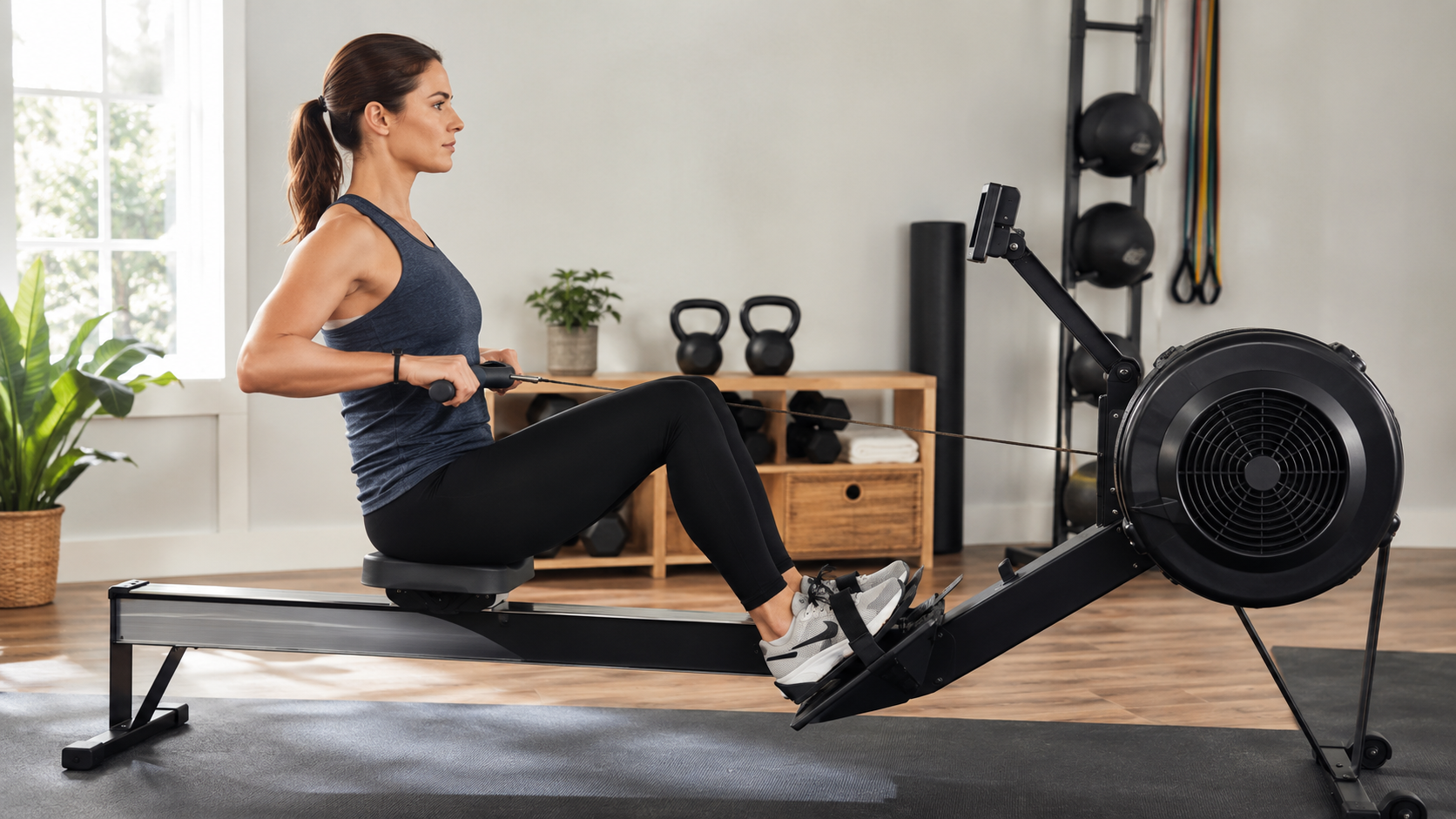

Rowing is one of those exercises that looks smooth and almost peaceful from the outside. The motion is rhythmic, the body works as one unit, and when the technique is good, every stroke seems controlled and efficient.
But rowing is also physically demanding.
Whether you row on the water or use an indoor rowing machine, your back and shoulders do a lot of work. The legs create most of the power, but the spine, core, shoulder blades, and arms all help transfer that power through the stroke. If your technique is off, your posture collapses, or you push too hard too soon, the back and shoulders can start to take more strain than they should.
This is especially common for beginners who think rowing is mostly an arm workout. They pull hard with the shoulders, round the lower back, rush the movement, and increase resistance before their body is ready. The result can be stiffness, soreness, shoulder irritation, or lower back discomfort.
The good news is that rowing can be a safe, effective, full-body workout when done with good habits. You do not need perfect athlete-level technique to benefit from it, but you do need to understand the basics.
Here are practical rowing precautions to help protect your back and shoulders while improving comfort, control, and performance.
Why Rowing Can Strain the Back and Shoulders
Rowing is repetitive. A single session can involve hundreds or even thousands of strokes. Small technique errors may not feel serious at first, but repeated over time, they can add up.
The lower back often becomes irritated when the spine rounds excessively during the catch, which is the front part of the stroke. If you reach too far forward, tuck the pelvis under, and collapse through the chest, the lower back may absorb stress with every stroke.
The shoulders can become strained when you pull too early, shrug upward, grip too tightly, or rely on the arms instead of using the legs and hips. When the shoulders are doing work that should come from the legs and core, they fatigue quickly.
Rowing should feel like a coordinated push-pull movement, not a desperate arm yank.
Good rowing protects the back by keeping the torso supported and the hips involved. It protects the shoulders by allowing the shoulder blades to move naturally while the legs provide power.
Warm Up Before Rowing Hard
A proper warm-up is one of the easiest ways to reduce unnecessary strain.
Rowing uses the legs, hips, core, back, shoulders, and arms. If you start at high intensity while your body is cold and stiff, your technique may feel awkward from the beginning. Tight hips, stiff shoulders, or an unprepared core can make it harder to hold good posture.
Begin with light movement. On a rowing machine, row easily for five minutes at a low intensity. Keep the stroke smooth and relaxed. Focus on rhythm rather than power.
You can also do a few simple mobility exercises before rowing: hip hinges, bodyweight squats, arm circles, thoracic rotations, cat-cow movements, and gentle shoulder blade squeezes. These help prepare the joints involved in the stroke.
Your first few minutes should feel almost too easy. That is fine. The goal is to let your body settle into the movement before asking it to produce force.
Understand the Basic Rowing Sequence
Good rowing technique has a clear order.
The drive phase starts with the legs. Then the body swings back slightly from the hips. Then the arms pull the handle in. The recovery phase reverses that order: arms extend first, body leans forward from the hips, then the knees bend as you slide forward.
A simple way to remember it is:
Legs, body, arms.
Arms, body, legs.
This sequence matters because it prevents the shoulders and back from doing too much too early.
Many beginners bend the arms right away at the start of the drive. This turns rowing into an upper-body pull and reduces leg power. Others bend the knees too soon during recovery, forcing the handle to move awkwardly over the knees and causing posture problems.
When the order is right, the movement feels smoother. The legs create power, the torso transfers it, and the arms finish the stroke. The shoulders stay connected but not overworked.
Protect Your Lower Back With Better Posture
Back posture is one of the most important rowing safety details.
At the catch, your torso should lean slightly forward from the hips, not collapse from the lower back. Your spine should feel long and supported. Your chest can be open, your shoulders relaxed, and your core gently engaged.
Avoid reaching as far forward as possible just to make the stroke longer. Overreaching can round the back and place extra stress on the spine. A longer stroke is not automatically a better stroke if it comes from poor position.
Think of hinging from the hips rather than curling from the waist. Your pelvis should move with your torso. If your hips are tight, you may compensate by rounding your back, so hip mobility matters.
During the drive, avoid leaning back too far at the finish. Some beginners exaggerate the backward lean, thinking it creates more power. In reality, it can strain the lower back and interrupt rhythm. A slight lean back is enough.
Your back should not feel like it is yanking the handle. It should feel like it is staying strong while the legs do the main work.
Keep Your Shoulders Relaxed and Down
Shoulder tension is very common in rowing.
When people try hard, they often shrug. The shoulders creep up toward the ears, the neck tightens, and the upper traps take over. Over time, this can create discomfort in the neck, shoulders, and upper back.
Your shoulders should stay relaxed and low. At the catch, reach forward through the arms without letting the shoulder blades jam upward. At the finish, pull the handle toward the lower ribs while keeping the elbows close and the shoulders away from the ears.
Do not yank the handle high toward the chest or collarbone. This can place extra stress on the shoulders. The handle path should be relatively horizontal and controlled.
Grip matters too. A death grip on the handle can increase tension through the forearms, elbows, and shoulders. Hold the handle securely but lightly. Your fingers can hook around it without squeezing as hard as possible.
A useful cue is: relaxed neck, heavy shoulders, long arms.
Let the Legs Do the Work
Rowing is often misunderstood as an arm exercise, but the legs should do a large share of the work.
At the start of the drive, push through the footplates with your legs. Keep the arms straight at first. Your body should feel connected, as if the force from your legs travels through your torso to the handle.
If you pull with the arms too early, the shoulders fatigue quickly and the stroke loses power. You may also start rounding the back or jerking the handle to compensate.
A good drill is to practice legs-only rowing. Keep your arms straight and torso stable, then push with the legs and slide back. This teaches you to feel leg drive without turning the movement into an arm pull.
Then add the body swing. Finally, add the arms.
Breaking the stroke into pieces can make the full movement easier to understand.
Avoid Rushing the Recovery
The recovery phase is where many technique problems begin.
After the finish, beginners often rush forward quickly, bending the knees too soon and sliding toward the catch without control. This makes the next stroke feel hurried and unstable. It can also encourage rounding the back at the front.
The recovery should be controlled and smooth. Extend the arms first. Then hinge forward from the hips. Once the handle has cleared the knees, bend the knees and slide forward.
This order helps keep the handle path clean and gives your body time to prepare for the next drive.
Rowing should have rhythm. The drive is powerful, and the recovery is calmer. If every part of the stroke feels rushed, your back and shoulders may stay tense the whole time.
A simple rhythm cue is: drive with power, recover with patience.
Set the Resistance Wisely
On an indoor rowing machine, many beginners set the damper or resistance too high because they assume higher means better.
It does not.
A very high resistance can make each stroke feel heavy and slow, encouraging you to pull harder with the back and shoulders. This may increase strain, especially if your technique is not solid yet.
For most beginners, a moderate setting is usually better. You should be able to row smoothly without feeling like you are dragging a heavy weight every stroke.
The goal is not to make the machine as hard as possible. The goal is to create a stroke that is controlled, repeatable, and sustainable.
If your lower back starts working too hard or your shoulders tense up immediately, lower the resistance and focus on technique.
Build Core Strength for Better Support
Your core helps stabilize the spine during rowing.
A strong core does not mean clenching your abs as hard as possible for the entire workout. It means having enough trunk control to keep your spine supported while your legs and arms move.
When the core is weak or poorly coordinated, the lower back may take over. You might feel yourself collapsing at the catch or leaning back too aggressively at the finish.
Helpful core exercises include planks, side planks, dead bugs, bird dogs, Pallof presses, and farmer carries. These exercises teach the trunk to resist unwanted movement.
For rowing, anti-flexion and anti-rotation strength are especially useful. You want your body to stay organized while force passes through it.
Even a few short core sessions per week can help you feel more stable on the rower.
Strengthen the Upper Back and Shoulder Blades
Healthy shoulders depend on good support from the upper back and shoulder blades.
The shoulder blades should move smoothly around the rib cage as you reach and pull. If the upper back is weak or stiff, the shoulder joint may take more stress.
Rows, band pull-aparts, face pulls, reverse flys, wall slides, and controlled scapular push-ups can help strengthen the muscles that support shoulder movement.
This does not mean you need heavy lifting right away. Slow, controlled movements are often more useful than loading up weight with poor form.
Pay attention to balance as well. Many people already spend much of the day rounded forward at a desk. If your chest is tight and your upper back is weak, rowing posture may suffer. Shoulder mobility and upper-back strength can help you maintain a better position.
Do Not Ignore Hip Mobility
Hip mobility affects back comfort more than many beginners realize.
At the catch, your body needs to fold forward from the hips while keeping the spine supported. If your hips are stiff, you may compensate by rounding the lower back.
Tight hamstrings, hip flexors, or glutes can also affect your position on the machine or in the boat.
Simple mobility work can help: hip flexor stretches, hamstring mobility, figure-four stretches, deep squat holds, and gentle hip hinges. You do not need extreme flexibility, but you do need enough mobility to reach the catch without collapsing.
If you cannot get into a good catch position, shorten your stroke slightly. It is better to row with a controlled, slightly shorter stroke than to force a long stroke with a rounded back.
Watch Your Pacing
Pacing is a major part of rowing safely.
Rowing too hard too soon can make your technique fall apart. You may start strong, but after a few minutes, your shoulders rise, your back rounds, and your stroke becomes messy.
Start at an intensity you can control. For beginners, steady moderate rowing is often more useful than all-out intervals. Once your technique improves, you can gradually add intensity.
Pay attention to stroke rate. A higher stroke rate does not always mean a better workout. Many beginners rush the slide and take short, tense strokes. A slightly slower stroke rate with strong technique can be more effective and easier on the body.
If your form gets worse as you get tired, slow down or stop. Practicing poor technique under fatigue can reinforce habits that lead to discomfort.
Use Good Setup on the Rowing Machine
Small setup details can affect comfort.
Adjust the foot straps so they sit across the widest part of your foot or slightly below. Your feet should feel secure but not painfully tight. If the foot position is awkward, your leg drive and posture may feel off.
Sit tall on the seat with your weight balanced. Avoid slumping before you even begin. Hold the handle evenly with both hands and keep your wrists flat. Bent or curled wrists can create unnecessary tension up the arms.
Make sure the area around the machine is clear. The seat and handle should move smoothly. If something feels broken, unstable, or strange, do not force the workout.
Good setup makes good technique easier.
Take Shoulder and Back Warning Signs Seriously
Some muscle fatigue after rowing is normal. Sharp pain is not.
Back warning signs may include sharp lower back pain, pain that travels down the leg, numbness, tingling, or discomfort that worsens as you row. Shoulder warning signs may include pinching, sharp pain during the pull, weakness, painful clicking, or pain that lingers after the session.
If you notice these symptoms, stop and reassess. Lower the intensity, check your technique, and avoid pushing through pain. If symptoms persist or feel serious, consult a qualified medical professional or physical therapist.
It is much easier to adjust early than to keep training through pain until rowing becomes impossible.
Recover Between Sessions
Because rowing is repetitive, recovery matters.
If you row intensely every day without enough rest, your back and shoulders may not have time to adapt. Soreness can accumulate, and technique may worsen as fatigue builds.
Give your body time to recover, especially when you are new. Balance rowing with mobility, strength training, walking, and rest days. Sleep and nutrition also support recovery.
After rowing, gentle stretching for the hip flexors, hamstrings, chest, lats, and upper back may help reduce stiffness. Light movement can also help you feel better the next day.
Recovery is not laziness. It is part of training well.
Practical Takeaways for Safer Rowing
Rowing can be an excellent workout for endurance, strength, posture awareness, and full-body coordination. But your back and shoulders need smart protection.
Warm up before rowing hard. Learn the correct stroke sequence: legs, body, arms, then arms, body, legs. Keep your spine long and hinge from the hips. Relax your shoulders and avoid shrugging. Let the legs create most of the power. Use moderate resistance. Strengthen your core, upper back, hips, and shoulder stabilizers. Pace yourself and stop when technique breaks down.
You do not need to row perfectly to row safely, but you do need to row with awareness. Smooth strokes, controlled posture, and patient progression can make the difference between a workout that builds you up and one that leaves your back or shoulders irritated.
The best rowing feels strong but not forced. It feels rhythmic, connected, and steady. When your technique supports your body, rowing becomes not only safer, but much more satisfying.

Hi, I’m the creator and editor behind ZestyHabit. I research everyday safety, first aid, and practical wellness topics using official guidance and reliable public sources, then turn that information into clear, realistic steps for daily life.
My goal is to help readers make safer, better-informed choices at home and beyond.


