Why You Should Always Check the License Plate Before Getting Into a Taxi or Rideshare
Minjin Park
·
Before getting into a taxi or rideshare vehicle, checking the license plate is a simple safety habit that can prevent confusion, wrong-car situations, and avoidable risk.
Getting into a taxi or rideshare vehicle is such a normal part of modern life that it can feel almost automatic. You request a ride, watch the car approach on the app, grab your bag, and open the door. If you are tired, late, distracted, or standing in bad weather, it is tempting to hop in quickly and get moving.
But there is one small habit that deserves a few extra seconds: checking the license plate.
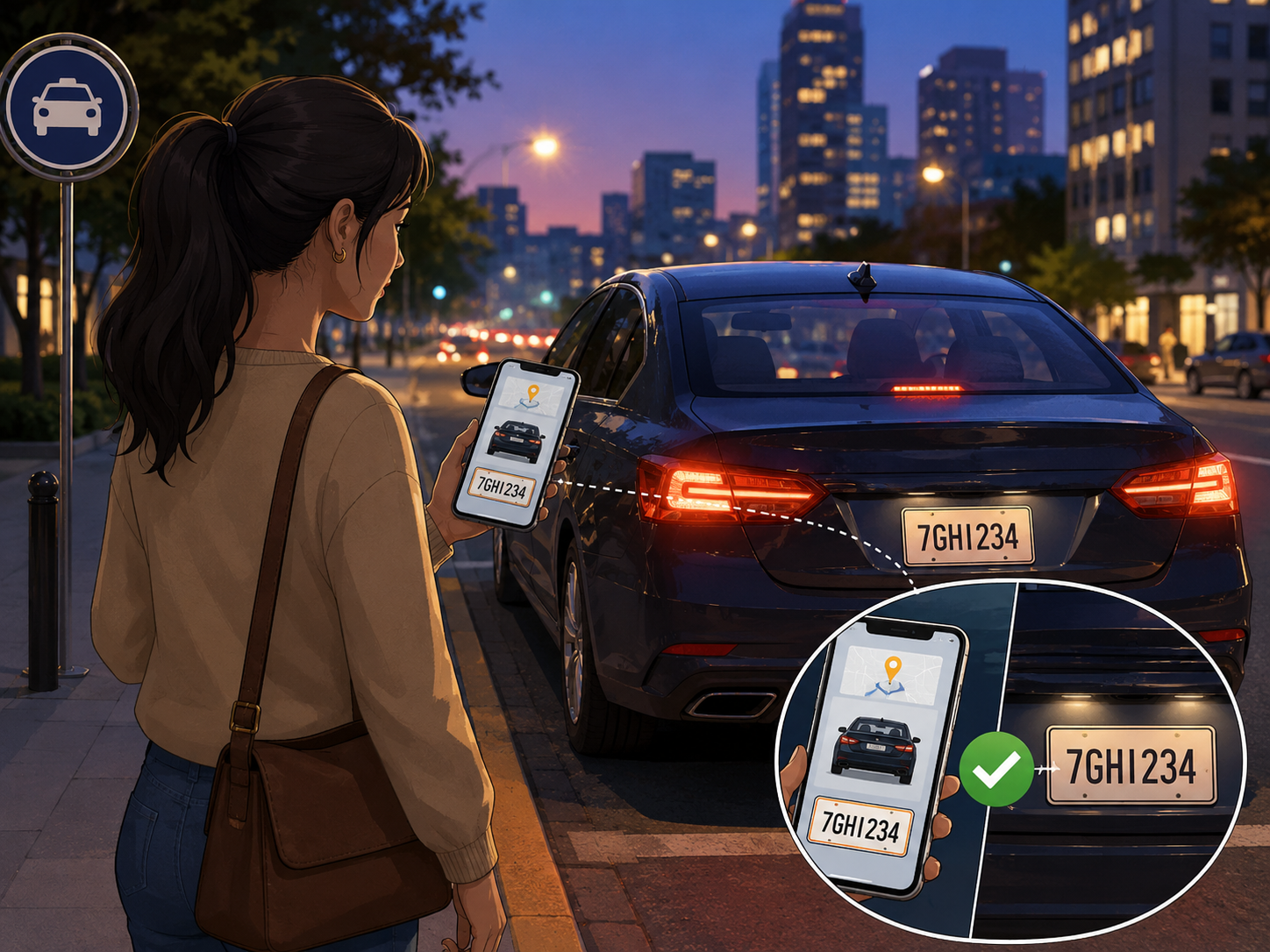
Whether you are using a rideshare app, catching a taxi at the airport, leaving a restaurant, or heading home after a long day, the license plate helps confirm that the vehicle in front of you is the one you are supposed to enter. It is one of the simplest ways to avoid getting into the wrong car.
This does not mean every ride is dangerous. Most taxi and rideshare trips are routine. But transportation safety often comes down to small checks done at the right moment. A quick look at the plate, vehicle description, and driver details can make the whole process calmer and more secure.
In this guide, we will look at why license plate checks matter, when mistakes are most likely to happen, warning signs to notice, and practical steps you can use every time you take a taxi or rideshare.
Why the License Plate Matters
It confirms the specific vehicle
Many cars look alike, especially in busy pickup areas. A black sedan, white SUV, or silver compact car may be one of several similar vehicles waiting outside a restaurant, airport, hotel, school, bar, office building, or apartment complex.
The license plate is a unique identifier. The make, model, and color are helpful, but they are not always enough. There may be more than one dark Toyota, gray Honda, or white Tesla in the same pickup zone.
Checking the plate helps you confirm, “This is my ride,” not just “This looks like it could be my ride.”
It helps prevent wrong-car situations
Wrong-car situations can happen quickly. A passenger may open the door of another rideshare car by mistake. A driver may pull up near someone who is waiting and assume they are the passenger. A person leaving a crowded event may get into the first car that looks close enough.
In many cases, these mistakes are not intentional. They are just the result of crowds, stress, and assumptions.
Still, getting into the wrong vehicle can create confusion and discomfort. At minimum, it delays your trip. In a more concerning situation, it can put you somewhere you did not intend to be.
A license plate check reduces that risk before the door even opens.
It gives you confidence before entering
There is a difference between hoping a car is correct and knowing it matches your ride information.
When the license plate matches, the vehicle description matches, and the driver name or taxi information makes sense, you can enter with more confidence. That small confirmation can be especially helpful when you are traveling alone, riding at night, visiting an unfamiliar city, or managing kids, luggage, or groceries.
Why This Matters in Everyday Life
Rides are often requested during moments when people are already distracted.
You may be leaving work with your hands full. You may be rushing to the airport. You may be tired after a late dinner. You may be managing children after a school event. You may be in a busy downtown area with cars stopping and starting around you.
These are normal situations, but they are also the moments when people skip safety checks.
A license plate check does not take long. It is not dramatic or complicated. It simply creates a pause before entering a vehicle. That pause gives you time to notice whether something feels off.
Running late can make anyone careless. If your ride arrives while you are still zipping your bag, finishing a message, or rushing out the door, you may focus more on speed than confirmation.
But hurrying into the wrong car will cost more time than checking the plate.
A good habit is to stop moving for just a moment before opening the door. Look at the plate. Look at the vehicle. Then enter.
When the weather is bad
Rain, snow, wind, heat, or cold can make people want to get into the car as quickly as possible. You may not want to stand outside reading a plate in a downpour.
Still, weather is exactly when mistakes can happen. Visibility is lower, people move faster, and drivers may stop in awkward places.
If possible, wait under shelter until the car is close, then check the plate before stepping in.
At airports, hotels, and event venues
Large pickup areas can be confusing. Dozens of drivers may be waiting. Cars may line up, circle around, or stop briefly. Passengers may be looking at phones and waving.
In these places, never rely only on the driver saying your name or asking if you requested a ride. Match the plate and vehicle details first.
After dark
At night, car colors can be harder to judge. A dark blue car may look black. A gray car may look silver. Glare from headlights can make it harder to see clearly.
The license plate may still be the most reliable detail. Use your phone screen, nearby lighting, or a safe position on the sidewalk to confirm the numbers and letters before entering.
When traveling with friends
Groups can create a false sense of security. One person says, “This is it,” and everyone follows. But that person may have checked only the car color or guessed based on location.
Choose one person to verify the ride details clearly before the group gets in.
What to Check Before Getting In
Check the license plate
Start with the plate shown in your rideshare app or booking confirmation. Read it carefully and compare it with the vehicle in front of you.
Do not just glance at the first or last character. A similar plate is not the same plate. Take the extra second to confirm the full plate.
Match the vehicle make, model, and color
The plate is the most important detail, but it should match the rest of the ride information too.
If the app says you are looking for a white Honda Civic, and a black SUV arrives with the correct plate shown on someone else’s phone or a different driver profile, do not assume it is fine. Everything should make sense together.
Confirm the driver through the app
For rideshare services, check the driver’s name and photo if available. You can ask, “Who are you here to pick up?” instead of saying your name first.
This helps avoid a situation where someone simply agrees with the name you provide.
Confirm taxi markings when using a taxi
For taxis, look for normal taxi markings, roof lights, company information, meter setup where applicable, and local licensing details. These vary by city, but a legitimate taxi should look properly marked and identifiable.
At airports or major stations, use official taxi stands when available rather than accepting rides from people approaching you inside or outside the terminal.
Check the route after the ride starts
Once you are inside, it is reasonable to follow along on your map, especially in an unfamiliar area. You do not need to stare at the screen the whole time, but knowing the general route can help you feel more aware.
Warning Signs to Take Seriously
The plate does not match
If the plate does not match, do not get in. Even if the driver says they recently changed cars, the app is wrong, or it is “basically the same,” pause and verify through the service before entering.
A mismatch is one of the clearest signs that something is not right.
The driver pressures you to hurry
A driver may be dealing with traffic or pickup rules, but you should still have a few seconds to verify your ride. If someone rushes you aggressively, dismisses your concern, or acts annoyed that you are checking, that is a reason to slow down, not speed up.
A safe pickup should allow basic confirmation.
The car stops in an unsafe or strange location
Sometimes drivers stop slightly away from the exact pickup point because of traffic, construction, or curb rules. That can be normal. But if the vehicle asks you to walk into a dark alley, isolated area, or unsafe traffic spot, use caution.
Choose a well-lit, public pickup location whenever possible.
The driver asks for personal details too soon
A legitimate driver may confirm your name or destination, but you should not need to provide unnecessary personal information before getting in.
For rideshare pickups, it is better to ask the driver who they are picking up rather than announcing your full name first.
The vehicle looks different from the app
If the app says one type of vehicle and a completely different one arrives, treat that as a mismatch. Canceling or requesting another ride may feel inconvenient, but it is better than entering a vehicle you cannot verify.
Common Mistakes Passengers Make
Only checking the car color
Car color is helpful, but it is not enough. Many cars share the same color, especially common rideshare colors like black, white, gray, and silver.
Always pair color with plate number.
Saying, “Are you here for me?”
This question is too easy for someone to answer with “yes.” Instead, ask, “Who are you here to pick up?” or “What’s the name on the ride?”
This keeps control of your information and confirms the driver has the correct trip.
Getting in before checking the app
Some people open the door first and check details after sitting down. It is better to check before entering. Once you are inside, it can feel more awkward to leave, even if something feels wrong.
Assuming a car near the pickup spot must be yours
Pickup areas can be crowded. A car stopping near you does not automatically mean it is your ride. It may be picking up someone else, waiting for a passenger, or simply pulled over.
Ignoring your own discomfort
If something feels off, pause. You do not have to be rude or dramatic. You can simply say, “I’m going to double-check the ride details,” and step back.
That is a normal and reasonable thing to do.
Simple Safety Habits for Rideshare Trips
Wait in a visible place
Choose a pickup spot that is well-lit, public, and easy for the driver to find. Avoid waiting alone in hidden areas when you have a better option nearby.
If you are leaving a restaurant, store, office, or event, wait inside or near the entrance until the car is close.
Stand on the sidewalk while checking
Do not step into traffic to read the license plate. Stay on the sidewalk or another safe area. Let the car pull up where you can see it clearly.
If the plate is hard to read, move only if it is safe.
Share your trip when useful
Many rideshare apps allow you to share trip status with a trusted contact. This can be helpful when traveling alone, riding late at night, or going somewhere unfamiliar.
You can also text someone your estimated arrival time.
Sit where you feel comfortable
Many passengers prefer sitting in the back seat, especially when riding alone. It gives both passenger and driver personal space and makes the ride feel more professional.
Keep your phone accessible
Before entering the vehicle, make sure your phone has enough battery and is easy to reach. Avoid putting it deep inside a bag right away.
You may need it to check the route, contact someone, or update your pickup details.
Simple Safety Habits for Taxi Trips
Use official taxi lines when available
At airports, train stations, hotels, and entertainment districts, official taxi stands can reduce confusion. They are usually easier to monitor and more predictable than accepting a random offer.
Look for visible identification
A properly operating taxi should have clear markings and identification based on local requirements. Look for company names, taxi lights, posted numbers, and visible driver information when available.
Know the general direction of your destination
You do not need to know every turn, but it helps to have a basic sense of where you are going. Check a map briefly before entering if you are in an unfamiliar city.
Keep payment expectations clear
If you are unsure whether the taxi accepts cards, uses a meter, or has a flat-rate fare from an airport, ask before the trip begins. This is more about avoiding confusion than danger.
Clear expectations make the ride smoother.
Tips for Parents, Teens, and College Students
Teach teens to check before opening the door
Teenagers may use rideshare services for school events, part-time jobs, travel, or social plans. Make license plate checks a non-negotiable habit.
A simple family rule can help: no match, no ride.
Help younger children understand the rule
If kids ride with you, let them see you checking the plate. Say out loud, “We are making sure this is the right car.”
This teaches them that safety checks are normal, not scary.
Use group accountability
For college students or friends going out together, one person can be responsible for matching the plate, vehicle, and driver details before anyone gets in.
This is especially helpful after concerts, parties, sports events, or late-night outings.
Real-Life Examples
Imagine leaving a busy airport pickup area. Three black SUVs pull up within the same minute. Each driver is looking at their phone. If you rely only on the car color, it would be easy to walk toward the wrong vehicle. The license plate gives you the clearest answer.
Or picture leaving a restaurant after dark. A car stops near the curb and the driver waves. You are tired and ready to go home. Instead of getting in immediately, you check the plate and realize your actual driver is still two minutes away. That small pause prevents a wrong-car mistake.
Another common example happens at apartment complexes. A rideshare driver may stop at the wrong building entrance. If you check the plate and driver information, you can confirm whether the vehicle is yours before walking across the lot or getting in.
These situations are ordinary. That is why the habit matters.
What to Do If the Details Do Not Match
If the plate, vehicle, or driver information does not match, stay outside the car. Step back to a safe, public place and check the app or booking details again.
You can message or call the driver through the app if available. Keep the conversation simple: “I’m seeing a different license plate than the one shown in the app. Can you confirm the vehicle?”
If the mismatch remains, do not take the ride. Use the app’s support or safety tools, cancel if appropriate, and request another vehicle.
For taxis, if the vehicle does not look properly marked or something feels wrong, choose another taxi from an official stand or a more visible location.
A Quick Pre-Ride Checklist
Before getting in, ask yourself:
Does the license plate match? Does the vehicle make, model, and color match? Does the driver information match? Is the pickup location safe and visible? Did the driver confirm the right passenger? Do I feel comfortable entering?
This entire check can take less than ten seconds once it becomes a habit.
Conclusion
Checking the license plate before getting into a taxi or rideshare vehicle is one of the simplest safety habits you can build. It helps prevent wrong-car situations, reduces confusion in busy pickup areas, and gives you more confidence before the trip begins.
The goal is not to feel suspicious of every driver. The goal is to confirm the basics before placing yourself in a vehicle.
Match the plate. Check the car description. Confirm the driver through the app when using rideshare. Use official taxi areas when available. Wait in visible places, keep your phone accessible, and trust yourself if something feels off.
Most rides are uneventful, and that is exactly how we want them to stay. A few calm seconds before opening the door can make everyday travel feel safer, clearer, and more in your control.
Hi, I’m the creator and editor behind ZestyHabit. I research everyday safety, first aid, and practical wellness topics using official guidance and reliable public sources, then turn that information into clear, realistic steps for daily life.
My goal is to help readers make safer, better-informed choices at home and beyond.