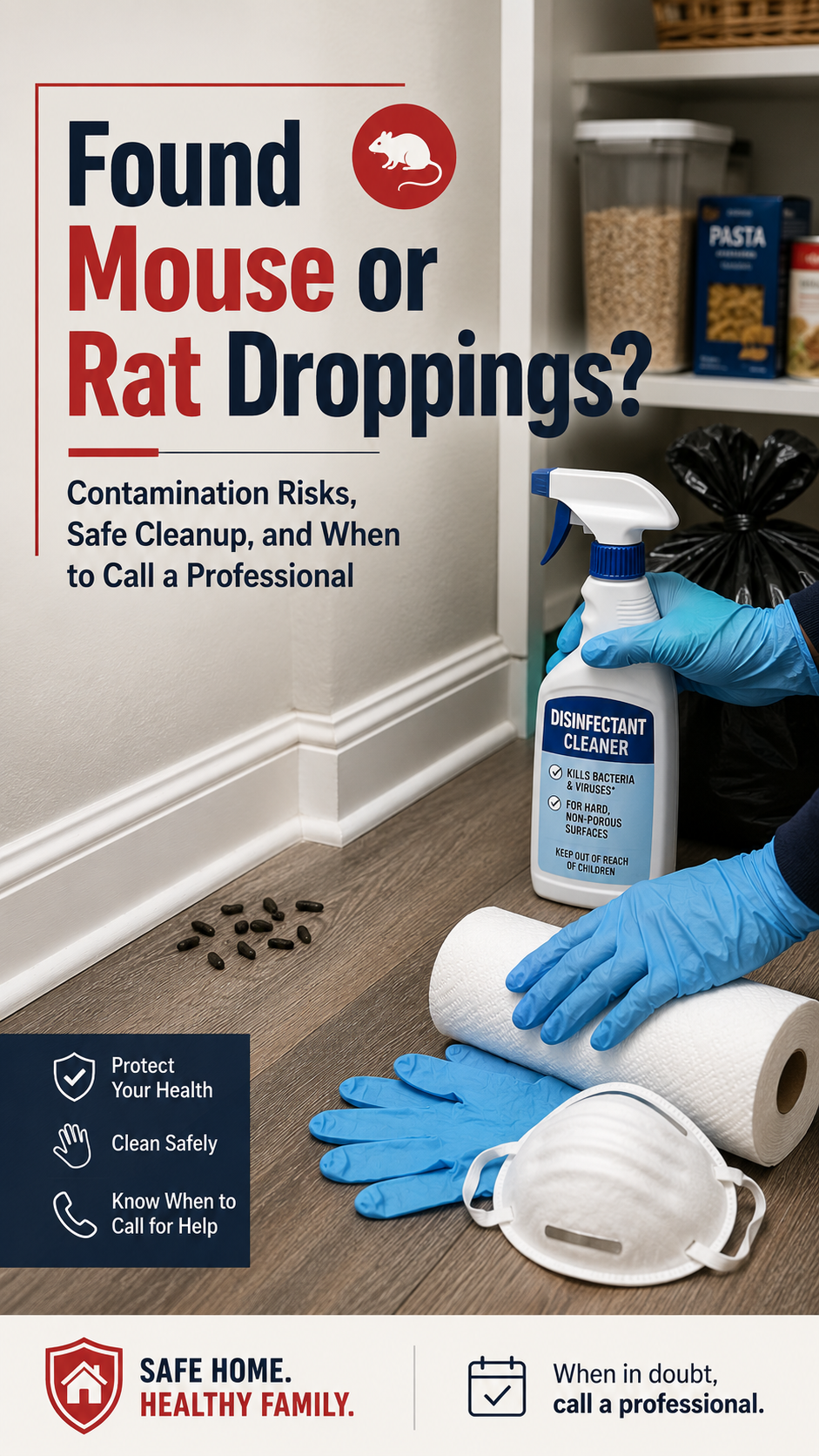
Found Mouse or Rat Droppings? Contamination Risks, Safe Cleanup, and When to Call a Professional
Minjin Park
·
Learn how to clean up mouse and rat droppings safely, avoid airborne contamination, disinfect affected surfaces, and recognize when professional help is needed.
Discovering small, dark droppings in a pantry, drawer, garage, attic, or basement is unsettling—and it should not be treated like an ordinary housekeeping problem. Mouse and rat waste can contaminate food, utensils, storage materials, and nearby surfaces. More importantly, disturbing dry droppings may release contaminated particles into the air.
That means the first instinct many people have—grabbing a broom or vacuum cleaner—is exactly what they should avoid.
A few droppings in an accessible area can often be cleaned safely with the correct wet-disinfection method. A widespread infestation, contaminated ventilation system, inaccessible nest, or heavily soiled vacant building is different. Those situations may require specialized protective equipment and professional cleanup.
Here is what to do when you find rodent droppings, which mistakes can increase your exposure, and how to prevent the problem from returning.
Wild mice and rats can carry organisms capable of causing disease in people. These organisms may be present in a rodent’s urine, droppings, saliva, blood, nesting materials, or parasites such as fleas and mites.
Potential rodent-associated illnesses vary by geographic area and rodent species. They include hantavirus infections, leptospirosis, salmonellosis, rat-bite fever, lymphocytic choriomeningitis, and several diseases transmitted indirectly by fleas, ticks, or mites.
Not every rodent is infected, and finding droppings does not mean someone will become ill. However, you cannot determine whether a rodent carries a pathogen by looking at it or its waste. The CDC therefore recommends treating rodent urine, droppings, nests, and dead rodents as potentially contaminated.
Exposure may occur when a person:
Breathes contaminated particles during sweeping or vacuuming
Touches waste and then touches the eyes, nose, or mouth
Eats food contaminated by rodents
Handles a dead rodent or nesting material with bare hands
Is bitten or scratched by a rodent
Is bitten by a flea or another parasite that fed on an infected rodent
The CDC explains that rodent diseases can spread through direct contact, contaminated food, and inhalation of contaminated air. Its wild rodent control guidance emphasizes prevention, safe cleanup, and removal of food, water, and shelter.
Are Old, Dry Droppings Still Dangerous?
Fresh mouse droppings are often dark and shiny, while older droppings may appear dull, gray, or crumbly. Appearance can sometimes help indicate recent activity, but it cannot prove that waste is safe to handle.
Old droppings should still be disinfected before removal. Do not pick them up with bare hands, crush them, or test their age by touching them.
A more useful way to determine whether rodents are still active is to clean the area safely and inspect it over the following days. If new droppings appear, an active rodent is probably still entering the space.
The Most Important Rule: Do Not Sweep or Vacuum
Do not dry-sweep, dry-mop, vacuum, dust, blow, or use compressed air on rodent droppings, urine stains, or nesting materials before they have been thoroughly disinfected.
These methods can break contaminated material into smaller particles and send it into the air, where it may be inhaled. A standard household vacuum can also spread fine particles through its exhaust and contaminate the machine itself.
The CDC specifically warns against vacuuming or sweeping rodent waste because doing so can create airborne droplets or particles containing viruses. The correct approach is to soak the material with disinfectant, allow sufficient contact time, and remove it while wet.
If you already vacuumed or swept the area, stop the activity, leave the room, and ventilate it if this can be done safely. Do not shake out the vacuum bag or empty a dust cup indoors. Review the CDC’s complete rodent cleanup instructions and contact your local health department if the contamination was extensive or you are uncertain how to decontaminate the equipment.
What You Need for a Small Cleanup
Before beginning, gather everything so you do not have to walk through the home with contaminated gloves.
For a small number of droppings on an accessible surface, you may need:
Use a general-purpose household disinfectant only if the word “disinfectant” appears on the label. Follow its directions, including the required surface contact time, ventilation instructions, and warnings about compatible materials.
The CDC’s alternative bleach solution is 1½ cups of household bleach in 1 gallon of water, which is equivalent to one part bleach and nine parts water. Prepare it shortly before use.
Never mix bleach with ammonia, vinegar, acids, toilet cleaners, alcohol, or another disinfectant. Mixing cleaning chemicals can release dangerous gases. Open windows or provide ventilation as directed by the product label, and protect materials that bleach may discolor or corrode.
How to Clean Mouse or Rat Droppings Safely
1. Keep Others Away
Remove children and pets from the area. Close interior doors if needed to prevent people from walking through the contamination and spreading it to other rooms.
Do not handle food, touch your face, or use your phone while wearing contaminated gloves.
2. Ventilate Enclosed Spaces
For cabins, sheds, barns, garages, and other buildings that have been closed for a long time, the CDC recommends opening doors and windows for 30 minutes before cleaning. Leave the space while it airs out.
Avoid positioning a portable fan so that it blows directly across droppings or nesting material. The purpose is to exchange stale indoor air, not to scatter dust.
3. Put On Gloves
Wear intact rubber or plastic gloves. Check them for holes before beginning.
Ordinary gloves are the minimum protection for a small cleanup. Heavy infestations require additional protective clothing, eye protection, footwear, and appropriate respiratory protection. A basic dust mask should not be treated as sufficient protection for a heavily contaminated building.
4. Saturate the Waste
Spray the droppings and any visible urine with disinfectant until they are thoroughly wet. Also wet the immediately surrounding surface.
Allow the material to remain wet for at least five minutes or for the contact time stated on the disinfectant label. Do not shorten this step merely because the droppings look soaked.
5. Wipe Up the Droppings
Use paper towels to pick up the wet droppings and cleaning solution. Avoid crushing or scraping them unnecessarily.
Place the used towels directly into a garbage bag or a covered garbage container that is emptied regularly. Do not carry loose waste through the home.
6. Disinfect the Surrounding Area
After removing the visible waste, mop or wipe the entire affected surface with disinfectant. Include nearby floors, shelves, countertops, cabinet interiors, drawers, handles, and other hard surfaces the rodents may have crossed.
Allow cleaned surfaces to dry. Food-preparation surfaces may require a potable-water rinse after disinfection; follow the disinfectant label.
7. Remove Gloves Carefully
While still wearing them, wash the gloves with soap and water or apply disinfectant. Remove them without touching the contaminated exterior with bare skin.
Dispose of single-use gloves. Wash reusable gloves again and allow them to dry in a clean location. Finally, wash your bare hands thoroughly with soap and warm water.
Cleaning Different Types of Contaminated Materials
Rodent contamination in a pantry or storage room rarely stays on the floor. Check packages, shelves, utensils, textiles, and boxes before declaring the area clean.
Food and Food Packaging
Discard food that has been opened, chewed, visibly contaminated, or stored in paper, cardboard, or thin plastic packaging exposed to rodent waste. Do not taste questionable food or attempt to save it by removing the damaged portion.
Undamaged metal cans and sealed glass jars may be cleanable if the containers remain intact. Disinfect their exterior before opening and follow food-safety guidance from your local health authority. Throw away packages with broken seals, punctures, rust, swelling, leakage, or contamination around the lid.
Clean and disinfect shelves, drawers, countertops, and reusable hard containers. Wash utensils and cookware using a method appropriate for the material.
Clothing, Bedding, and Washable Fabrics
Handle potentially contaminated fabric carefully without shaking it. Wash clothing, bedding, and washable stuffed items with hot water and detergent. Machine-dry them on a high setting when the material allows, or air-dry them in sunlight.
Carpets and Upholstery
First disinfect and remove any solid droppings using the wet method. Afterward, shampoo rugs and upholstered furniture with an appropriate commercial disinfecting product or use a commercial-grade steam cleaner or shampooing machine.
Do not run a household vacuum over untreated waste.
Cardboard Boxes
Cardboard contaminated with urine or droppings is difficult to disinfect because it is porous. In most situations, it should be discarded after recoverable contents are removed safely.
Plastic, glass, and metal containers can generally be cleaned and disinfected.
Books and Papers
Liquid disinfectants may damage documents. CDC guidance suggests placing non-washable books and papers outdoors in sunlight for several hours or leaving them in a rodent-free indoor area for at least three weeks, with six weeks strongly suggested. Handle them with gloves and avoid shaking off dust.
Valuable or irreplaceable documents may require advice from a conservation or contamination-remediation professional.
How to Dispose of a Dead Rodent or Nest
Do not touch a dead mouse, rat, nest, or used trap with bare hands.
While wearing rubber or plastic gloves:
Spray the dead rodent, trap, nest, and surrounding area with disinfectant.
Allow the disinfectant to remain for five minutes or the label-specified time.
Place the rodent and nesting material in a plastic bag.
Seal the bag securely.
Place it inside a second bag and seal that bag.
Put the double-bagged waste in a covered garbage container that is regularly emptied, subject to local disposal rules.
Disinfect the surrounding area.
Clean your gloved hands before removing the gloves, then wash your bare hands.
Rodent nests may contain fleas. Avoid bringing a nest against your clothing, and consider locally appropriate protection from flea bites when handling dead rodents or nesting material.
When Professional Rodent Cleanup Is Needed
A few disinfected droppings under a sink are very different from hundreds of droppings scattered through an attic. Professional pest control or remediation should be considered when:
Droppings cover a large area or appear in several rooms
Strong urine odors or widespread staining are present
Numerous nests or dead rodents are found
Contaminated insulation must be removed
Rodents entered air ducts or HVAC equipment
Waste is inside walls, ceilings, crawl spaces, or other inaccessible areas
The building was vacant and contains extensive rodent activity
Contamination affects a school, daycare, restaurant, workplace, or healthcare setting
A household member cannot safely perform the cleanup
Droppings reappear after cleaning and trapping
There is evidence of structural damage, damaged wiring, or a sewage problem
The CDC recommends special precautions for heavy infestations, including coveralls, protective boots or shoe covers, gloves, goggles, and a properly selected respirator with HEPA filtration. Respirator use may require medical evaluation, fit testing, and training. This is one reason extensive contamination is usually better handled by trained professionals.
Evidence of rodents in heating or cooling ducts also warrants professional help. Disturbing nesting material in a ventilation system could distribute contaminated debris throughout the building.
When to Contact a Healthcare Provider
Most encounters with droppings do not result in illness. Nevertheless, contact a healthcare provider if you develop an unexplained illness after rodent exposure, especially fever, marked fatigue, muscle aches, headache, nausea, vomiting, abdominal symptoms, cough, or shortness of breath.
Mention the rodent exposure clearly, including what you found, where you found it, when cleanup occurred, and whether waste was swept or vacuumed. Early hantavirus symptoms can resemble other viral illnesses, so exposure history may be important to medical evaluation. Hantavirus pulmonary syndrome can progress to serious breathing difficulty, according to the CDC’s clinical overview.
Seek emergency medical care for severe shortness of breath, chest pain, confusion, fainting, bluish lips, or rapidly worsening symptoms.
Preventing Another Infestation
Cleanup removes contamination, but it does not remove the reason rodents entered.
Inspect the building for gaps around pipes, vents, foundations, doors, windows, rooflines, utility cables, and cabinets. Seal accessible openings with rodent-resistant materials suitable for the location. Remove food crumbs, repair leaks, and store human and pet food in sturdy containers with tight-fitting lids.
Other useful measures include:
Emptying indoor garbage regularly
Cleaning under appliances
Avoiding overnight pet-food bowls
Fixing dripping pipes and faucets
Reducing clutter and nesting material
Moving woodpiles away from exterior walls
Trimming vegetation near the building
Monitoring for new droppings and gnaw marks
Using traps where children and pets cannot reach them
If rodenticides are necessary, use only registered products and follow the label exactly. Bait must be secured so that children, pets, and non-target wildlife cannot access it. A pest-management professional can help identify entry points and choose a control method appropriate for the building.
Finding rodent droppings is unpleasant, but rushing through cleanup can create a bigger exposure than the original mess. Wet the material, allow the disinfectant to work, wipe it up without generating dust, and address the infestation itself. Have you ever discovered mouse or rat droppings in an unexpected place such as a pantry, vehicle, attic, or storage box? Share where you found them and what helped you solve the problem in the comments.
Hi, I’m the creator and editor behind ZestyHabit. I research everyday safety, first aid, and practical wellness topics using official guidance and reliable public sources, then turn that information into clear, realistic steps for daily life.
My goal is to help readers make safer, better-informed choices at home and beyond.