Bird Droppings on a Balcony: Health Risks, Safe Cleanup, and When to Call a Professional
Minjin Park
·
Discover the health risks of bird droppings on balconies, how to clean them without spreading contaminated dust, and when professional removal is necessary.
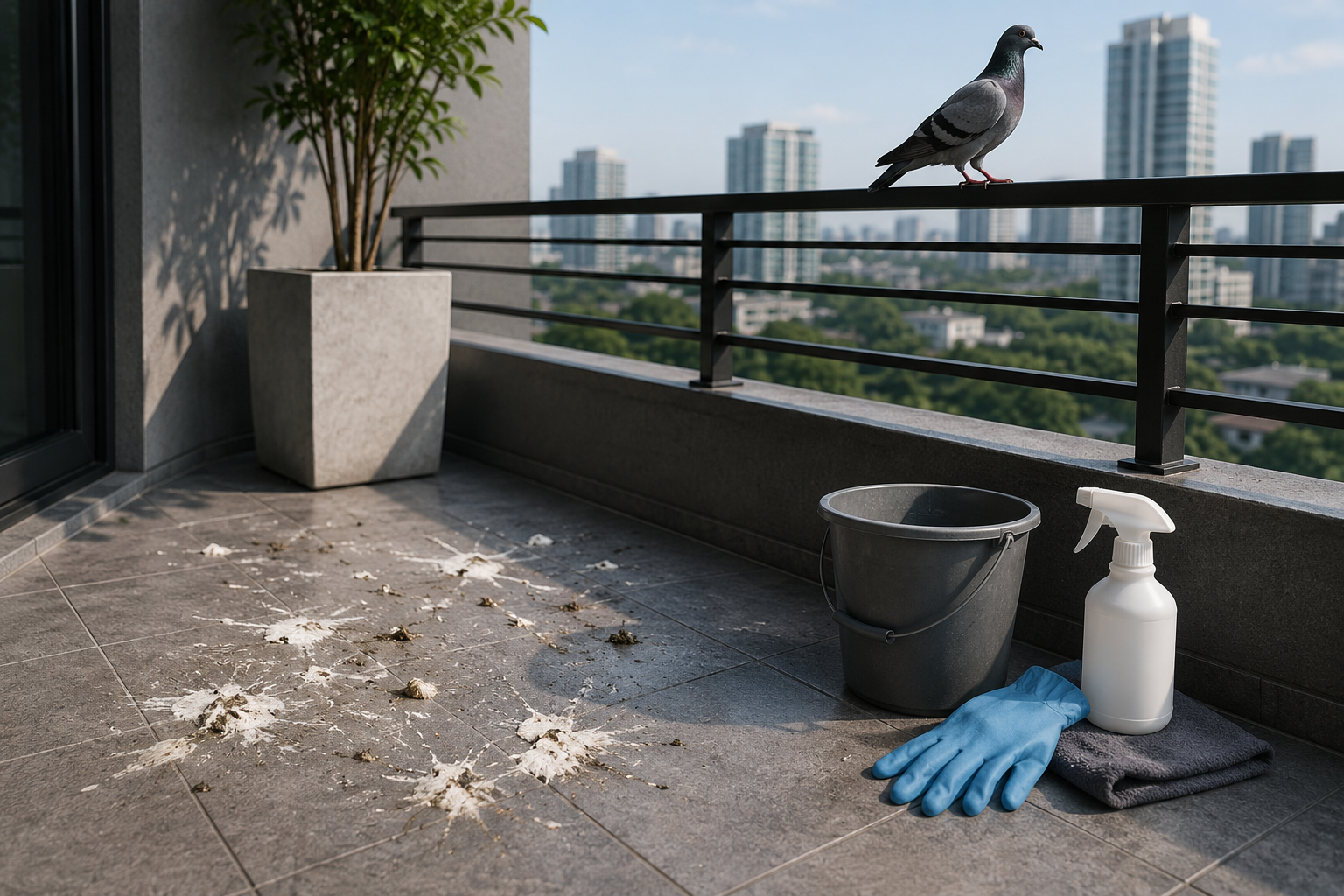
Finding bird droppings on a balcony is unpleasant, but one or two fresh deposits are usually more of a sanitation problem than a medical emergency. The situation becomes more concerning when droppings accumulate, dry out, mix with nesting debris, or repeatedly contaminate outdoor furniture, children’s toys, pet supplies, or air-conditioning equipment.
The greatest avoidable mistake is cleaning dry droppings aggressively. Sweeping, scraping, brushing, or pressure-washing them can break contaminated material into tiny particles and send it into the air. A safer approach is to restrict access, gently wet the droppings, remove them with disposable materials, clean the surface, and wash your hands thoroughly afterward.
Most healthy adults can manage a small amount of balcony contamination with basic precautions. Large, dusty accumulations—and any cleanup involving health vulnerabilities, inaccessible ledges, air systems, or sick birds—are better left to trained professionals.
Bird droppings can contain bacteria, fungi, parasites, and other microorganisms. However, the presence of droppings does not mean that everyone nearby will become sick.
For most people, briefly seeing or walking past a few droppings poses little risk. Routine cleaning of a small amount from a windowsill or balcony is not considered a serious health hazard when sensible precautions are used. New York City’s health department notes that pigeon-related illnesses are rare and that people with compromised immune systems face the greatest risk. (NYC Health: Pigeon-Related Diseases)
Risk generally increases when:
Large quantities have accumulated over time.
Droppings are dry, dusty, or mixed with soil.
Cleaning creates airborne dust.
Birds have been nesting or roosting in the same place.
Droppings enter an air intake or ventilation system.
A person has a weakened immune system or chronic lung disease.
Sick or dead birds are present.
Food, drinking water, pet bowls, or children’s items are contaminated.
Direct skin contact is not the only concern. In certain circumstances, inhaling particles from disturbed droppings or contaminated material may expose a person to infectious organisms.
What Diseases Are Associated With Bird Droppings?
Online discussions sometimes make every bird dropping sound deadly. That is misleading. Serious illness from a small amount of balcony contamination is uncommon, but several diseases explain why proper cleanup still matters.
Histoplasmosis
Histoplasmosis is a fungal infection caused by breathing in spores of Histoplasma. The fungus grows particularly well in soil or environmental material enriched by large amounts of bird or bat droppings.
Fresh droppings on a balcony or windowsill are unlikely to create the same histoplasmosis risk as an old roost, contaminated soil, chicken coop, attic, or building containing years of accumulated waste. Birds themselves are rarely infected with Histoplasma; their droppings can instead enrich material in which the fungus grows. (CDC/NIOSH: Histoplasma in the Environment)
Many exposed people never develop symptoms. When illness occurs, it may resemble a respiratory infection and cause fever, cough, fatigue, chills, headache, chest pain, or body aches. Severe disease is more likely in people with weakened immune systems and certain underlying health conditions.
Cryptococcosis
Cryptococcus fungi occur in soil, decaying wood, trees, and bird droppings. People can become infected after inhaling microscopic fungal spores from the environment.
Most cryptococcosis cases occur in people with weakened immune systems, particularly those with advanced HIV disease, although infection can occasionally affect otherwise healthy individuals. It commonly involves the lungs and, in severe cases, may affect the brain and spinal cord. (CDC: Clinical Overview of Cryptococcosis)
A few fresh droppings do not automatically indicate dangerous levels of Cryptococcus. Long-standing accumulation and dust-generating cleanup create more reason for caution.
Psittacosis
Psittacosis is a bacterial illness associated primarily with infected birds, especially parrots, parakeets, cockatiels, and some poultry. People may become infected by inhaling contaminated dust from dried droppings or respiratory secretions.
The CDC recommends wetting bird cages and contaminated surfaces before cleaning and avoiding dry sweeping or vacuuming because these activities can put dust into the air. (CDC: Preventing Psittacosis)
Psittacosis is more commonly associated with close contact with infected birds than with casually encountering a few wild-bird droppings outdoors.
Common Intestinal Germs
Bird feces may contain organisms such as Salmonella, Campylobacter, or certain strains of E. coli. Infection is more likely when contaminated material reaches the mouth through unwashed hands, food, water, utensils, pet paws, or children’s toys.
This is why handwashing and preventing cross-contamination are essential, even during a very small cleanup.
What You Need for a Small Balcony Cleanup
Gather everything before beginning so that you do not walk through the home with contaminated gloves.
For a small amount of droppings, useful supplies include:
Disposable rubber, nitrile, or plastic gloves
Old clothing or washable work clothes
Closed-toe shoes
A spray bottle filled with water
Household detergent
An appropriate household disinfectant
Disposable paper towels or rags
A disposable scraper for stubborn deposits
Heavy-duty garbage bags
Soap and clean running water for handwashing
An N95 respirator can provide additional protection when droppings are dry, moderately accumulated, or likely to generate dust. A loose surgical or cloth mask does not provide the same filtration or face seal.
People with weakened immune systems, chronic lung conditions, or significant respiratory allergies should not handle bird-dropping cleanup themselves. Ask another healthy adult or a professional service to do it.
How to Clean Bird Droppings From a Balcony Safely
The following method is intended for a small, manageable amount on an accessible outdoor balcony. Extensive contamination requires a different level of control.
1. Keep People and Pets Away
Close the balcony to children, pets, and anyone not involved in cleaning. Remove uncontaminated belongings first if they can be moved without disturbing the droppings.
If droppings have landed on pet bowls, discard exposed food and water. Wash and disinfect the bowls separately, away from kitchen food-preparation areas.
2. Check the Weather
Avoid cleaning on a windy day. Wind can carry dried material toward your face, neighboring homes, open windows, or people below.
Close nearby windows and doors before beginning, especially if the balcony is close to an air intake. Let neighbors below know if there is any possibility of runoff or falling debris.
3. Put On Protective Equipment
Wear disposable gloves, closed shoes, and clothing that covers exposed skin. Consider a well-fitting N95 respirator and eye protection if there is noticeable dust, more than a few droppings, or scraping will be necessary.
Cover cuts or abrasions with waterproof bandages. Do not eat, drink, smoke, touch your face, or use your phone while wearing contaminated gloves.
4. Wet the Droppings Gently
Lightly spray the droppings with water or a cleaning solution until they are thoroughly damp. Allow the liquid time to soften hardened material.
The goal is to control dust, not blast the waste away. CDC/NIOSH advises avoiding the shoveling or sweeping of dry bird and bat waste. Instead, material should be carefully wetted before it is collected in a secure container. (CDC/NIOSH: Histoplasmosis Exposure Controls)
Do not use a dry broom, leaf blower, ordinary vacuum, or compressed air.
5. Lift and Wipe Up the Material
Use paper towels, disposable rags, or a scraper to lift the dampened waste. Work slowly and avoid flicking material.
Place everything directly into a sturdy garbage bag. Do not shake towels, cloths, or contaminated objects. If the bag becomes dirty on the outside or contains substantial wet material, place it inside a second bag.
Follow local waste-disposal requirements, particularly for large quantities. A small household cleanup can usually be disposed of with ordinary garbage if securely bagged, but local rules can differ.
6. Clean Before Disinfecting
Wash the affected hard surface with water and detergent to remove remaining organic material. Disinfectants work less effectively when a layer of dirt or fecal material remains.
Next, apply a disinfectant that is suitable for the balcony surface and follow the product label. Pay attention to the required contact time—the surface may need to remain visibly wet for several minutes.
Do not mix bleach with ammonia, vinegar, acids, or other cleaning products. Dangerous gases can be released. Test products on a small, hidden area first because bleach and other chemicals may discolor concrete, stone, metal, wood, or painted surfaces.
7. Remove Protective Equipment Carefully
Avoid touching your skin or clothing with the contaminated outside surface of the gloves. Place disposable protective items in the garbage bag.
Wash reusable footwear and tools outdoors if possible. Launder work clothing separately with detergent and dry it completely.
Finally, wash your hands thoroughly with soap and running water. Hand sanitizer can be useful temporarily, but it should not replace washing visibly dirty hands.
Cleaning Different Balcony Surfaces
The safest technique also depends on the material beneath the droppings.
Concrete and Tile
Sealed concrete and tile can usually be wetted, cleaned with detergent, and disinfected. Pay attention to cracks and grout, where residue can remain.
Unsealed or damaged concrete is porous. Repeated contamination may penetrate the surface and require specialized cleaning or sealing after the bird problem is controlled.
Wood and Composite Decking
Avoid soaking wood unnecessarily. Use a cleaner approved for the material and dry the area promptly. Mold, staining, and deterioration can occur if moisture remains trapped.
Severely contaminated, unfinished, or decaying wood may need professional evaluation or replacement.
Metal Railings
Bird droppings can be acidic and may damage paint or corrode metal if left in place. After cleaning, rinse the surface when permitted by the product instructions and dry it thoroughly.
Inspect for peeling paint or corrosion that may require repair.
Outdoor Furniture and Fabric
Hard plastic or metal furniture can generally be cleaned and disinfected. Wash removable fabric covers according to their care labels.
Porous cushions that are heavily contaminated, cannot be washed, or retain an odor after cleaning may need to be discarded. Avoid bringing contaminated cushions indoors before placing them in a bag or washable container.
Why Pressure Washing Is Usually a Bad Idea
A pressure washer may remove stains quickly, but it can also aerosolize droppings and spread contaminated water over walls, windows, neighboring balconies, sidewalks, and people below.
High-pressure cleaning is particularly inappropriate for dry, heavy accumulation unless professionals have established containment and respiratory protection. It may also drive contaminated material into surface cracks.
For ordinary balcony cleanup, gentle wetting and controlled hand removal are safer. If power washing is necessary for a large structure, it should be performed by a company that understands biological contamination, runoff control, and protection of nearby occupants.
When Should You Call a Professional?
Professional bird-waste removal is advisable when:
Droppings cover a large portion of the balcony.
Waste is several layers thick or has accumulated for months or years.
There are nests, feathers, dead birds, or heavy insect activity.
Contamination extends into wall cavities, drains, insulation, or ventilation equipment.
Dust is entering the home through windows or air intakes.
The balcony is difficult to access without climbing or leaning over a railing.
Cleanup could expose pedestrians or neighbors below.
The material may be mixed with sewage, chemicals, or other hazardous waste.
Someone in the household is immunocompromised or has a serious lung condition.
The CDC recommends professional hazardous-waste removal for large amounts of bird or bat droppings because disturbing them can increase exposure to Histoplasma. (CDC: Reducing Histoplasmosis Risk)
Choose a company experienced in bird-dropping remediation—not merely general pressure washing. Ask how it will suppress dust, protect workers, contain waste, prevent runoff, disinfect surfaces, and stop birds from returning.
What If You Find a Sick or Dead Bird?
Do not touch a sick or dead wild bird with bare hands. Keep children and pets away and contact your local wildlife, animal-control, agricultural, or public-health authority for instructions.
Unusual bird deaths may require reporting because of concerns such as avian influenza. CDC guidance advises avoiding unprotected exposure to sick or dead birds and surfaces contaminated with their feces, saliva, or mucus. (CDC: Bird Flu Safety for Bird Hobbyists)
If you had direct unprotected contact with a sick or dead bird, follow the advice of your local public-health agency, especially if you later develop fever, cough, breathing problems, or eye redness.
When to Seek Medical Advice After Exposure
Most people who clean a small amount correctly will not become ill. Contact a healthcare professional if you develop persistent fever, cough, chest pain, shortness of breath, severe fatigue, headache, or flu-like symptoms after significant exposure.
Tell the clinician that you recently cleaned or disturbed bird droppings. The exposure history can help determine whether testing for an uncommon infection is appropriate.
Seek prompt care for difficulty breathing, confusion, severe weakness, a very high fever, or rapidly worsening symptoms. People with weakened immune systems should contact their clinician earlier after a substantial exposure.
How to Keep Birds From Returning
Once the balcony is clean, prevention is easier than repeated remediation.
Remove food, standing water, open garbage, nesting material, and birdseed. Clean small deposits promptly before they dry and accumulate. Store outdoor cushions and pet supplies in closed containers.
Humane deterrents may include:
Professionally installed bird netting
Properly fitted ledge barriers or bird spikes
Sloped ledge covers
Secured trash and food containers
Removal of unnecessary standing water
Repair of gaps that allow access to protected cavities
Avoid poisons, sticky gels that can trap wildlife, and unsafe homemade devices. Reflective objects and plastic predators may work briefly, but birds often become accustomed to them.
Do not disturb an active nest, eggs, or young birds without checking local wildlife laws. Many native bird species and their active nests are legally protected. A wildlife-control professional can help select a humane, lawful exclusion method and install it without creating a fall hazard.
The Bottom Line
A few bird droppings on an open balcony are unlikely to cause serious illness in a healthy person, but they should still be cleaned carefully. Wear gloves, wet the material before removing it, avoid sweeping or pressure-washing, clean before disinfecting, and wash your hands afterward. Large accumulations, dusty roosts, contaminated ventilation systems, inaccessible areas, and situations involving vulnerable household members require professional help.
Have birds repeatedly chosen your balcony as their favorite resting place? Share what type of bird contamination you encountered, how you cleaned it, and which humane deterrent worked best for you in the comments. Your experience may help another reader solve the same messy problem safely.
Hi, I’m the creator and editor behind ZestyHabit. I research everyday safety, first aid, and practical wellness topics using official guidance and reliable public sources, then turn that information into clear, realistic steps for daily life.
My goal is to help readers make safer, better-informed choices at home and beyond.