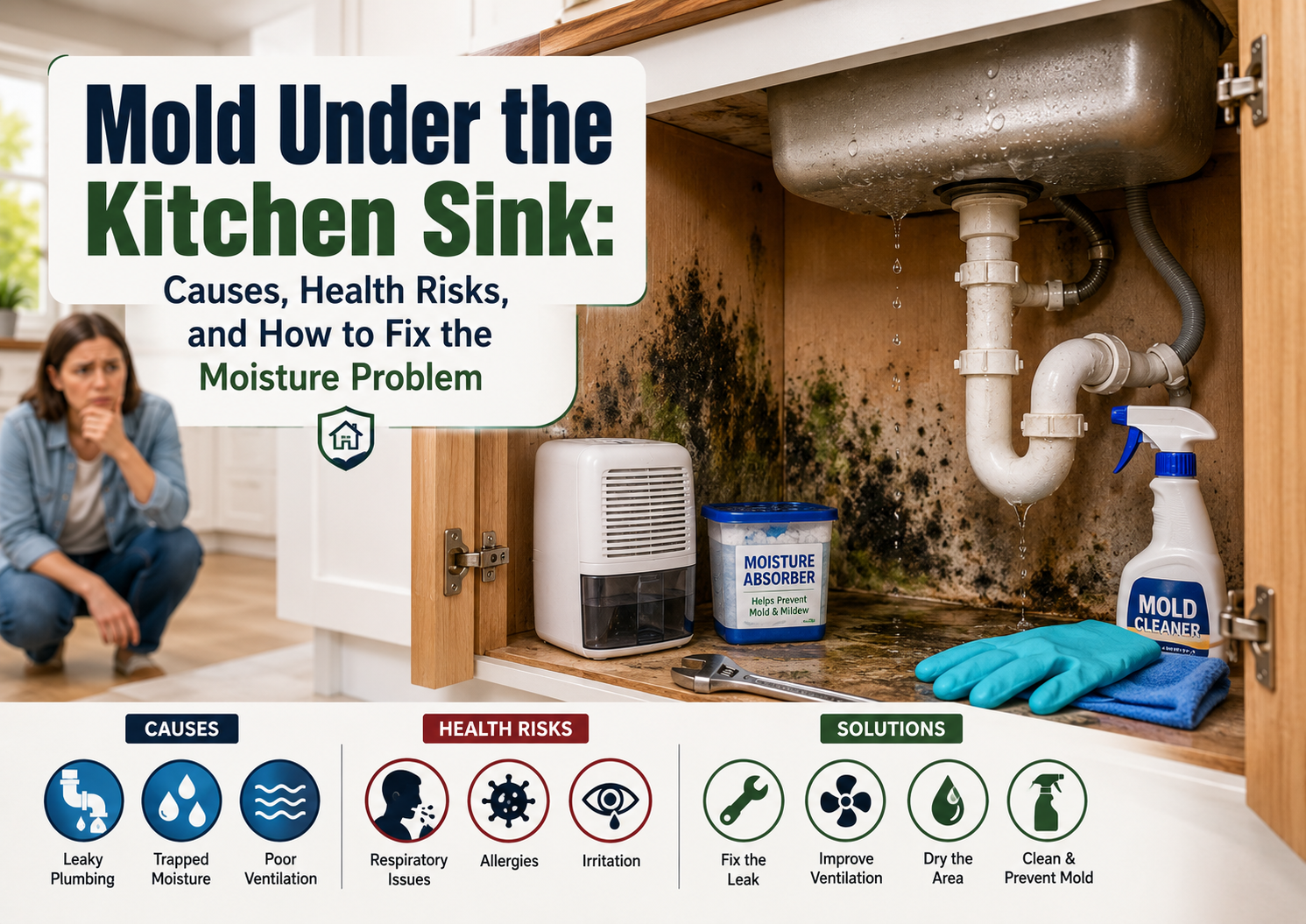
Mold Under the Kitchen Sink: Causes, Health Risks, and How to Fix the Moisture Problem
Minjin Park
·
Found mold under your kitchen sink? Learn what causes it, how it may affect your health, safe cleanup methods, and ways to prevent it from returning.
The cabinet under a kitchen sink is easy to ignore until you notice a musty smell, warped wood, or suspicious dark spots. Unfortunately, it is also one of the most common places for household mold to grow. Plumbing connections, condensation, poor airflow, and stored cleaning supplies can create a damp, enclosed environment where mold thrives unnoticed.
Cleaning the visible spots may make the cabinet look better temporarily, but mold usually returns unless you find and correct the moisture source. In some cases, the cabinet floor or wall behind it may already be damaged.
Here is how to identify the cause, understand the possible health risks, clean a manageable problem safely, and keep the space dry afterward.
Mold spores are naturally present in indoor and outdoor air. They become a problem when they land on a damp material that provides something to feed on, such as wood, drywall, paper, dust, or food residue.
A sink cabinet offers nearly ideal conditions: darkness, limited ventilation, plumbing lines, and plenty of organic material. Even a very small leak can keep particleboard or drywall damp enough for mold to develop.
A loose supply-line connection or worn shutoff valve may release only a drop at a time. Because the water often travels along the pipe before falling, the wet area may not be directly below the faulty connection.
Check the hot- and cold-water supply lines, valves, faucet connections, drain assembly, P-trap, and garbage disposal. Look for droplets, corrosion, mineral deposits, or discolored cabinet material.
Drain and Garbage Disposal Leaks
Drain leaks may appear only when water is flowing. A P-trap connection can remain dry while the faucet runs gently but begin dripping when a full sink is drained.
Garbage disposals can leak from the sink flange at the top, the dishwasher connection on the side, or the seals around the bottom. Water leaking from the body of the disposal usually indicates that the unit needs repair or replacement.
Dishwasher Hose Problems
Many dishwasher drain hoses pass through the sink cabinet and connect to the disposal or drainpipe. A cracked hose, loose clamp, or poorly sealed connection may leak only during a dishwasher cycle, making the problem difficult to spot during a quick inspection.
Failed Seals Around the Sink or Faucet
Water on the countertop can seep through deteriorated caulk or a loose faucet base. It may then run down the back of the cabinet, where it remains hidden behind pipes and stored products.
If the cabinet gets wet after washing dishes or wiping the countertop, inspect the seal around the sink rim, faucet, soap dispenser, and any accessory openings.
Condensation on Cold-Water Pipes
A pipe can be wet even when it is not leaking. In a warm, humid kitchen, moisture in the air may condense on a cold supply line and drip onto the cabinet floor.
Recurring condensation usually points to elevated indoor humidity, inadequate airflow, or a pipe that would benefit from proper insulation.
Spills and Wet Household Items
Leaking spray bottles, damp sponges, wet dishcloths, and partially closed detergent containers can create enough moisture to support mold. A waterproof tray may contain a spill, but it can also conceal moisture if it is never lifted and checked.
Signs of Mold or Hidden Water Damage
Mold does not always appear as a dramatic black patch. It may be green, white, gray, brown, orange, or almost any other color. Texture can range from powdery or fuzzy to flat and stain-like.
Moisture that returns after the cabinet has been dried
A persistent odor without visible growth may indicate mold behind the cabinet, inside the wall, or beneath the flooring. Avoid cutting into walls or removing large sections of cabinetry unless you understand how to contain the dust and have checked for plumbing and electrical hazards.
How to Find the Moisture Source
Begin by removing everything from the cabinet. Throw away wet cardboard and set washable items aside for cleaning. Use a flashlight to inspect the back corners, pipe openings, cabinet seams, and underside of the sink.
Dry all visible pipes and connections with a clean cloth. Then test the plumbing in stages:
Run the faucet while watching the supply lines and faucet connections.
Fill the sink and release the water to test the drain and P-trap under heavier flow.
Run the garbage disposal while water is flowing.
Run the dishwasher and recheck its hose connections during the drain cycle.
Wipe each joint with a dry paper towel to reveal small amounts of moisture.
Place fresh paper towels beneath suspected connections and inspect them again later.
If everything remains dry, look for failed countertop seals, condensation, or a leak coming from inside the wall. An inexpensive water-leak alarm can also help identify an intermittent problem.
Do not dismantle pressurized plumbing or electrical appliances if you are unsure how to do so safely. A plumber may be necessary when the source cannot be found or the leak is inside a wall.
Can Mold Under the Sink Affect Your Health?
Not everyone reacts to mold in the same way. Some people experience no obvious symptoms, while others develop nasal congestion, sore throat, coughing, wheezing, irritated eyes, or a skin rash. People with asthma or mold allergies may have stronger reactions. Those with weakened immune systems or chronic lung conditions can face a greater risk of lung infections, according to the Centers for Disease Control and Prevention.
Color alone cannot tell you how dangerous a particular mold is. The popular phrase “toxic black mold” can create unnecessary panic because many molds appear dark, and their appearance does not reliably identify the species or health risk.
The CDC does not recommend routine home mold testing in most situations. If you can see or smell mold, the practical response is usually the same: remove it safely and correct the moisture problem. Testing often adds expense without changing what needs to be done.
Contact a healthcare professional if you develop persistent coughing, wheezing, eye irritation, skin symptoms, or worsening asthma that seems connected to the moldy area. People with compromised immune systems or chronic respiratory illnesses should seek medical guidance before entering or cleaning a mold-contaminated space. Significant difficulty breathing requires prompt medical attention.
When Can You Clean Mold Yourself?
For a small, accessible area caused by clean household water, do-it-yourself cleanup may be reasonable. The EPA generally uses an area of approximately 10 square feet—about 3 feet by 3 feet—as the dividing point for small household cleanup projects.
Consider hiring a qualified mold-remediation professional when:
The affected area is larger than about 10 square feet.
Mold repeatedly returns after cleaning.
Water has spread beneath flooring or behind walls.
The cabinet is extensively rotted or structurally unstable.
The water came from sewage or another contaminated source.
Mold may have entered an HVAC system.
The problem followed major flooding.
Cleanup would disturb a large amount of moldy drywall or particleboard.
Someone in the household has severe asthma, immune suppression, or serious lung disease.
Renters should photograph the damage, record the date, and notify the landlord or property manager promptly. A plumbing leak can spread beyond the cabinet, so early documentation and reporting are important.
How to Clean a Small Moldy Area Safely
Before cleaning, repair the leak or stop the water source. If water is actively entering the cabinet, shut off the appropriate valve when it is safe to do so. Be particularly cautious if moisture is near an electrical outlet, dishwasher connection, or garbage disposal.
1. Wear Protective Equipment
The CDC’s mold cleanup guidance recommends wearing at least a NIOSH-approved N95 respirator, protective gloves, and goggles that provide complete eye protection. Wear long sleeves and clothing that can be washed immediately afterward.
People with asthma, significant allergies, immune suppression, or underlying lung disease should not perform mold cleanup.
Keep children and pets away from the work area. Open a nearby window or use appropriate ventilation when possible, but avoid directing a powerful fan across visible dry mold before it has been contained. Strong airflow can spread spores and contaminated dust into other rooms.
2. Remove Contaminated Contents
Discard water-damaged cardboard, paper, and other low-value porous items in sealed bags. Wash durable plastic or metal containers with detergent and water, and dry them thoroughly before returning them to the cabinet.
Inspect anything that was touching the moldy surface. Keeping a clean bottle that has mold on its base can reintroduce contamination after the cabinet is cleaned.
3. Clean Hard Surfaces
For sealed, nonporous surfaces, scrub visible mold with detergent and water. The goal is physical removal, not simply killing the growth. Wipe away residue and dry the surface completely.
Avoid dry brushing or sanding moldy material. These methods can release contaminated dust into the air.
4. Evaluate Porous Cabinet Materials
Solid, sealed wood with limited surface growth may sometimes be cleaned and dried successfully. Particleboard, medium-density fiberboard, drywall, and unfinished wood are more difficult because mold and moisture can penetrate below the surface.
If particleboard is swollen, soft, crumbling, or separating into layers, cleaning the top will not restore it. The damaged section will usually need to be removed and replaced. Moldy drywall and insulation often require replacement as well.
5. Dry the Cabinet Completely
Use ventilation, a dehumidifier, or controlled airflow to dry the area. Do not reinstall shelves or return stored products while the material is still damp.
Check the cabinet again over the next several days. If moisture or odor returns, the original source may not have been fully corrected.
Bleach also does not repair water-damaged particleboard or reliably solve mold that has penetrated porous material. If you choose to use a registered cleaning product, confirm that it is suitable for the surface and follow its label exactly.
Never mix bleach with ammonia, vinegar, acids, or any other household cleaner. Mixing products can release dangerous gases. Provide good ventilation and keep chemicals away from children and pets.
Common Mold Cleanup Mistakes
One of the biggest mistakes is treating the stain without fixing the leak. Mold will usually return as long as the material continues to get wet.
Other errors include:
Painting or caulking over moldy material
Returning supplies before the cabinet is completely dry
Mixing cleaning chemicals
Assuming dark-colored mold must be uniquely dangerous
Relying on air freshener to cover a musty odor
Sanding moldy wood without proper containment
Keeping swollen or deteriorated particleboard
Using fogging, ozone, or sprays as a substitute for removal
Ignoring moisture behind the cabinet or beneath the floor
The EPA specifically advises against painting or caulking over mold. The surface should be cleaned and completely dry first, while damaged porous material may need replacement.
How to Prevent Mold From Coming Back
Once the cabinet is clean and dry, a few simple habits can greatly reduce the chance of another problem.
Keep indoor relative humidity below 60 percent, ideally between 30 and 50 percent. If cold-water pipes regularly “sweat,” consider properly fitted pipe insulation and use a dehumidifier when indoor humidity remains high.
Place a battery-powered leak sensor at the lowest point in the cabinet. These inexpensive devices can sound an alarm before a slow drip causes major damage.
A removable waterproof tray can catch minor spills, but lift it regularly to check underneath. Do not use a liner that permanently traps water against the cabinet floor.
Store household products upright in easy-to-clean bins, and avoid keeping wet sponges or dishcloths inside the cabinet. Leave some open space around the plumbing so leaks are visible and air can circulate.
Finally, inspect the area once a month. Run your hand over dry supply lines, look around drain connections, and check the back corners with a flashlight. A two-minute inspection is far easier than replacing a cabinet base, drywall, and flooring later.
Mold under the kitchen sink is usually a moisture warning rather than a cleaning-only problem. Once you stop the leak, remove contaminated material, and dry the space thoroughly, the cabinet should remain usable and odor-free. Have you dealt with recurring mold, a hidden plumbing leak, or condensation under your sink? Share what caused it—and what finally worked—in the comments so other readers can learn from your experience.
Hi, I’m the creator and editor behind ZestyHabit. I research everyday safety, first aid, and practical wellness topics using official guidance and reliable public sources, then turn that information into clear, realistic steps for daily life.
My goal is to help readers make safer, better-informed choices at home and beyond.