Handball Precautions: How to Avoid Shoulder and Knee Strain
Minjin Park
·
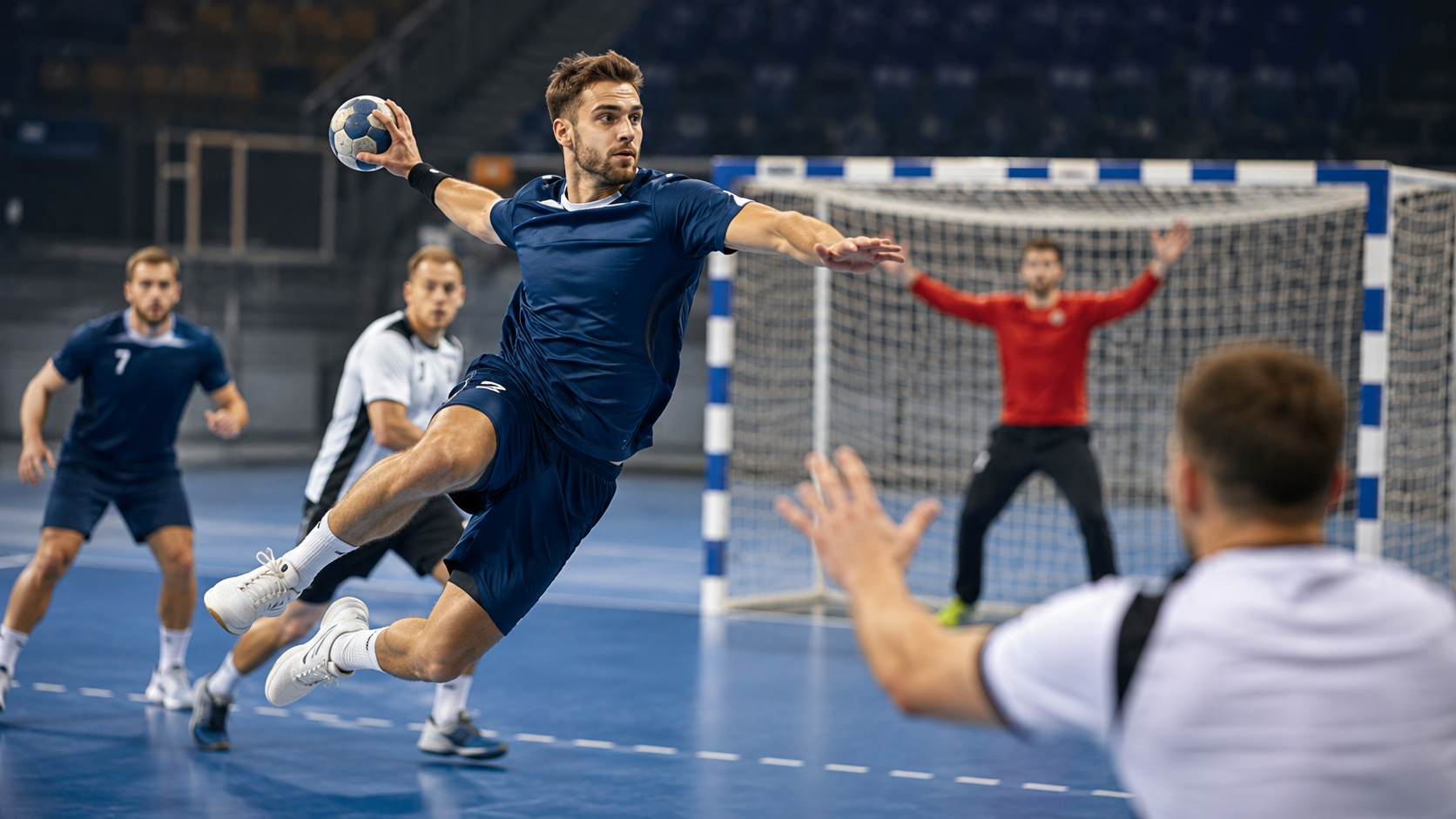
Handball is a fast, explosive sport that can look simple from the outside: run, pass, jump, throw, defend, repeat. But once you actually play, you realize how much stress the body handles in every match.
Your shoulder has to produce quick, powerful throws again and again. Your knees absorb sharp stops, jumps, landings, pivots, and sudden direction changes. Your core has to stabilize everything while you are being pressured by defenders. Even recreational handball can become intense very quickly.
That is why shoulder and knee strain are two of the most common concerns for handball players. You do not have to be a professional athlete to feel it. A few hard throws without warming up, a rushed jump shot, or a bad landing after contact can leave your shoulder aching or your knee feeling irritated for days.
The goal is not to make handball feel scary. It is to help you play with more control, better preparation, and less unnecessary strain. Handball will always involve speed and impact, but smart habits can protect your joints and keep you moving better on the court.
Handball combines overhead throwing with repeated lower-body impact. That combination places unique stress on the body.
The shoulder is involved every time you pass, shoot, fake, block, or reach. A powerful handball throw does not come only from the arm. It starts from the legs, hips, trunk, and shoulder blade before transferring through the arm and wrist. When that chain works well, the throw feels strong and smooth. When it does not, the shoulder often takes too much of the load.
The knees face a different kind of stress. Handball players sprint, stop, cut, jump, land, and pivot constantly. Many shots happen while jumping or twisting in the air. Defensive movement also requires repeated side steps, sudden braking, and physical contact.
Shoulder and knee problems often build gradually. A player may ignore a little tightness after practice, then keep playing through it until the discomfort becomes more noticeable. That is why prevention matters. It is much easier to manage small warning signs early than to deal with a longer break later.
Warm Up Before You Throw Hard
One of the easiest mistakes in handball is throwing too hard too soon.
Many players arrive at practice, casually pass a few times, then start firing strong shots before the shoulder is ready. The shoulder joint is mobile, but that mobility means it needs good muscle control. Cold, stiff shoulders do not respond well to sudden explosive throwing.
A proper warm-up should raise your body temperature, loosen the upper body, activate the shoulder muscles, and gradually increase throwing intensity.
Start with general movement: light jogging, side shuffles, skipping, arm swings, and gentle trunk rotations. Then move into shoulder-specific preparation, such as band pull-aparts, external rotations, wall slides, scapular push-ups, and controlled arm circles.
After that, begin throwing lightly. Short passes first. Then medium-distance passes. Then faster throws. Only after your shoulder feels warm and coordinated should you move into full-power shots.
Think of throwing as a progression, not a switch. Your first throw should not be your hardest throw.
Build Shoulder Strength Around the Whole Joint
A strong shoulder is not just a strong throwing arm. It needs support from the rotator cuff, shoulder blade muscles, upper back, chest, and core.
The rotator cuff helps keep the upper arm bone centered in the shoulder socket. The shoulder blade muscles help position the shoulder properly while the arm moves. If these smaller stabilizing muscles are weak or tired, the larger muscles may overpower the joint, creating irritation or strain.
Good shoulder care often includes simple, controlled exercises rather than flashy heavy lifting.
Useful exercises may include resistance band external rotations, internal rotations, rows, face pulls, Y-T-W raises, wall slides, push-up plus, and light overhead carries. These movements help build control around the shoulder, especially when performed slowly and with good form.
For handball players, shoulder endurance is just as important as strength. A player may throw well for the first ten minutes, then lose control as the shoulder gets tired. That is when technique often breaks down.
Adding regular shoulder maintenance work two or three times a week can make a noticeable difference over time. It does not need to be long. Even 10–15 minutes of focused shoulder work can help if done consistently.
Do Not Throw Only With Your Arm
A common reason for shoulder strain is relying too much on the arm during throws.
A strong handball shot should use the whole body. The legs create force. The hips rotate. The trunk transfers power. The shoulder and arm finish the movement. If the legs and core are not contributing enough, the shoulder has to work harder than it should.
This becomes especially important during jump shots. If your timing is off or your body is unstable in the air, you may force the throw with your shoulder instead of using a smooth full-body motion.
Pay attention to your throwing rhythm. Are you stepping properly? Are your hips rotating? Is your trunk involved? Are you finishing naturally, or are you muscling the ball with your shoulder?
Better throwing mechanics can reduce stress while improving power. That is the ideal combination.
If you are a beginner, it is worth learning technique before trying to throw harder. Power built on poor mechanics can lead to problems quickly.
Manage Throwing Volume
Even with good technique, too many hard throws can irritate the shoulder.
Handball players often underestimate throwing volume. Warm-up passes, drills, shooting practice, match play, and extra shots after practice all add up. The shoulder may tolerate one hard session, but repeated high-volume days without recovery can become a problem.
This is especially true if you are returning after a break. Your fitness may come back faster than your shoulder tolerance. You might feel energetic, but the tissues around the shoulder may not be ready for repeated high-speed throwing.
A smart approach is to increase throwing volume gradually. Avoid suddenly doubling your number of shots in one session. If your shoulder feels heavy, sore, or less controlled, reduce intensity before the pain becomes sharper.
Coaches and players should also separate technical practice from maximum-power shooting. Not every throw needs to be hard. Practicing accuracy, timing, and decision-making at moderate intensity can still be valuable without overloading the shoulder.
Strengthen the Legs to Protect the Knees
The knees absorb a lot in handball, but strong legs can help distribute the load more safely.
The quadriceps, hamstrings, glutes, calves, and hip muscles all support knee movement. When these muscles are weak or poorly coordinated, the knee may take more strain during landings, stops, and cuts.
Good lower-body training should include both strength and control. Squats, lunges, split squats, step-ups, deadlifts, hip thrusts, hamstring curls, calf raises, and lateral band walks can all be useful. The goal is not just to lift heavy weight. The goal is to move well.
Single-leg strength is especially important. Handball often puts players on one leg during jumping, landing, cutting, and pivoting. If one side is weaker or less stable, the knee may collapse inward or twist awkwardly.
Exercises like single-leg squats to a box, single-leg Romanian deadlifts, step-downs, and controlled lateral lunges can help improve knee control.
Strong legs do not make you invincible, but they give your knees better support during the fast, uneven movements of handball.
Learn to Land Softly and Quietly
Jumping is a major part of handball. Players jump to shoot, block, intercept, and avoid defenders. But every jump has a landing, and that landing matters.
A stiff landing places more stress on the knees. Landing with the knees collapsing inward can also increase strain. Landing off balance after contact can make the situation even riskier.
A better landing is soft, quiet, and controlled. Your knees should bend to absorb impact. Your hips should sit back slightly. Your feet should contact the floor with balance. Your knees should generally track in the same direction as your toes.
A simple cue is to “land like you are trying not to make noise.” Quiet landings usually mean your body is absorbing force more smoothly.
Practice landing when you are not under pressure. Start with small jumps. Jump and stick the landing for two seconds. Then try forward jumps, side jumps, and single-leg landings. Keep the quality high before adding speed.
In real handball, you will not always land perfectly. Defenders, momentum, and fatigue can all affect your position. But the more often you practice good landings, the more naturally your body can respond during play.
Be Careful With Pivoting and Cutting
Knee strain often happens during sudden direction changes.
In handball, you may plant one foot, turn sharply, fake a defender, or cut into open space. These movements are part of the game, but they can be risky if the knee twists while the foot stays planted.
To reduce strain, avoid planting too far away from your body. Keep your knees slightly bent. Lower your center of gravity before changing direction. Use quick footwork instead of forcing a large, awkward pivot.
Your hips matter here too. If your hip control is poor, your knee may collapse inward when you cut. Strengthening the glutes and practicing controlled side-to-side movement can help.
Deceleration training is also important. Many players practice sprinting, but not enough players practice stopping. A safe stop requires strength, balance, and body control.
Try drills that involve sprinting a short distance, slowing down under control, then changing direction. Start at moderate speed. Only increase intensity when your knees stay aligned and stable.
Keep Your Core Involved
Core strength is often mentioned casually, but in handball it has a real purpose.
Your core helps transfer power from the lower body to the upper body during throwing. It also helps control your trunk during contact, jumping, landing, and direction changes.
If your core is weak or poorly coordinated, your shoulder may take more strain during throws, and your knees may deal with more instability during movement.
Helpful core exercises include planks, side planks, dead bugs, bird dogs, Pallof presses, hollow holds, and controlled rotational movements. For handball, anti-rotation strength is especially useful because players often throw, twist, and resist contact at the same time.
A stable core does not mean being stiff. It means being able to control your body while moving quickly.
Use Proper Footwear for the Court
Handball requires shoes that can handle fast indoor movement, sudden stops, and lateral changes.
Running shoes are usually not ideal for handball because they are designed mainly for forward motion. They may not provide enough side-to-side stability. A court shoe or indoor handball shoe is usually a better choice.
Good shoes should fit securely, grip the court well, and support quick movement without your foot sliding inside. If your shoes are too loose, your knee and ankle may have to compensate during cuts and landings.
Check the soles regularly. Worn-out grip can make you slip during a plant or landing. Too much sliding can cause awkward reactions, while too much sticking on the wrong surface may also create twisting stress.
The court surface matters too. Dusty, slippery, or uneven floors increase injury risk. If the court feels unsafe, clean the surface if possible or adjust the intensity of play.
Do Not Ignore Shoulder or Knee Warning Signs
Small discomfort can be easy to dismiss, especially when you enjoy playing.
But repeated shoulder pain after throwing or knee pain after jumping deserves attention. Pain is not always a disaster, but it is information. It tells you something may need adjustment.
Shoulder warning signs may include pain during overhead throwing, loss of power, a heavy or dead-arm feeling, clicking with pain, reduced range of motion, or soreness that keeps returning after practice.
Knee warning signs may include swelling, sharp pain, giving way, catching, pain when landing, pain during stairs, or discomfort that changes your running or cutting.
If symptoms are mild, you may need rest, reduced intensity, technique adjustment, and strengthening. If pain is sharp, persistent, worsening, or associated with swelling or instability, it is better to get evaluated by a qualified medical professional.
Playing through serious warning signs can turn a manageable issue into a longer problem.
Balance Training Helps More Than You Think
Balance is not just for beginners. Handball players need balance constantly.
You throw while being bumped. You land on one leg. You change direction while watching defenders. You catch and pass while moving at speed. Better balance can help your body stay organized during unpredictable situations.
Single-leg balance is a good starting point. Stand on one foot with a slight bend in the knee. Keep your hips level and your foot active. Once that becomes easy, add gentle movements, ball passes, or small hops.
Progress to single-leg landing drills, lateral bounds, and controlled jump-and-stick exercises. These drills train the foot, ankle, knee, hip, and core to work together.
Better balance can reduce sloppy movement, especially late in a game when fatigue begins to affect coordination.
Respect Fatigue During Matches and Practice
Fatigue is one of the biggest reasons technique falls apart.
When you are tired, your shoulder may drop during throws. Your core may stop stabilizing well. Your knees may collapse inward during landings. Your footwork may become slower and heavier.
That is when strain becomes more likely.
It is normal to push yourself in sport, but there is a difference between healthy effort and careless exhaustion. If your movement quality is clearly getting worse, take a short break when possible. During training, coaches should watch for signs that players are landing poorly, throwing with bad mechanics, or cutting with unstable knees.
Conditioning helps because a fitter player can maintain technique longer. But even well-conditioned players need rest, hydration, and recovery.
Recover Well Between Sessions
Handball can be demanding, especially if you play multiple times per week. Recovery helps your shoulder and knees adapt to training instead of constantly feeling overloaded.
Sleep is one of the most important recovery tools. Nutrition also matters. Protein supports muscle repair, while carbohydrates help restore energy after intense sessions. Hydration helps performance and general recovery.
Gentle mobility work after practice can reduce stiffness. Light stretching for the calves, quads, hip flexors, chest, and shoulders may help you feel more comfortable. Avoid aggressive stretching into pain, especially around irritated joints.
If your shoulder or knee feels irritated, reduce throwing volume, jumping, or high-intensity cutting for a while. Complete rest is not always necessary, but modifying activity can prevent the issue from worsening.
Practical Takeaways for Safer Handball
Handball is exciting because it is fast, powerful, and physical. But that same intensity means your shoulders and knees need care.
Warm up properly before throwing hard. Build shoulder strength and endurance. Use your whole body when throwing instead of relying only on your arm. Manage throwing volume. Strengthen your legs and hips. Practice soft landings. Improve cutting and stopping mechanics. Wear proper court shoes. Pay attention to warning signs. Respect fatigue and recover between sessions.
You do not need to play timidly to play safely. In fact, better preparation often makes you more confident. When your shoulder feels stable, your knees feel supported, and your body knows how to land and move well, you can play with more freedom.
The best handball players are not just powerful. They are controlled, prepared, and aware of how their bodies move. That is what helps you stay on the court longer, enjoy the game more, and reduce the avoidable strain that can interrupt your progress.
Hi, I’m the creator and editor behind ZestyHabit. I research everyday safety, first aid, and practical wellness topics using official guidance and reliable public sources, then turn that information into clear, realistic steps for daily life.
My goal is to help readers make safer, better-informed choices at home and beyond.