Can You Use Too Much Mosquito Repellent? Health Risks and Safe-Use Tips
Minjin Park
·
Using too much mosquito repellent or indoor insecticide can irritate the skin, eyes, and lungs. Learn the warning signs of overexposure and how to prevent mosquito bites safely.
When mosquitoes invade a bedroom or swarm around the backyard, it is tempting to reach for every available solution. You may spray insecticide around the room, apply repellent to exposed skin, plug in an electric vaporizer, and light a mosquito coil—all at the same time.
This “more is better” approach may feel reassuring, but it can unnecessarily increase pesticide exposure without providing better protection. Applying extra skin repellent does not automatically make it work longer, and filling a room with aerosol spray may create breathing and eye-irritation risks.
That does not mean mosquito repellents are inherently dangerous. Mosquitoes can transmit illnesses such as West Nile virus, dengue, malaria, and Zika, so preventing bites is an important health measure. According to the Centers for Disease Control and Prevention, EPA-registered insect repellents are considered safe and effective when used as directed.
The key phrase is “when used as directed.” Knowing the differences between repellents and insecticides—and resisting the urge to overapply them—can help you protect your family without creating a new household hazard.
“Mosquito repellent” is often used as a general term, but several very different products may be involved.
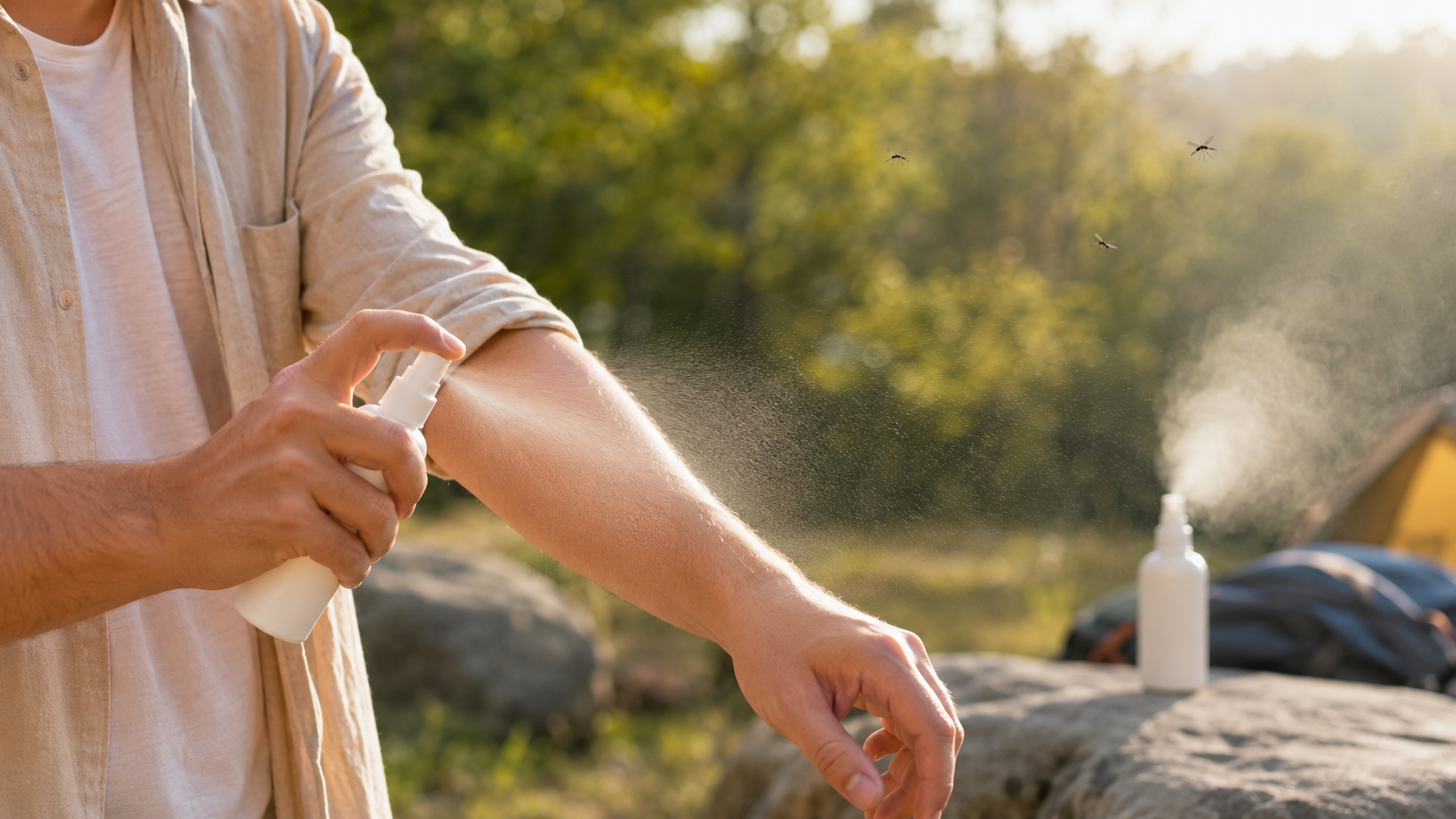
Skin-applied repellents discourage mosquitoes from landing and biting. Common active ingredients in EPA-registered products include DEET, picaridin, IR3535, oil of lemon eucalyptus, PMD, and 2-undecanone.
Indoor insecticide sprays are designed to kill mosquitoes. Many household aerosol products contain pyrethrins or synthetic pyrethroids. These chemicals affect the nervous systems of insects but may also irritate people when inhaled, swallowed, or sprayed into the eyes.
Electric vaporizers and plug-in products slowly release an insecticide or repellent into the surrounding air. They must be used only in the locations and for the periods described on the label.
Mosquito coils release smoke containing insect-control ingredients as they burn. In addition to pesticide exposure, they introduce smoke and create a potential fire hazard.
Permethrin products may be used to treat certain clothes, tents, mosquito nets, boots, and outdoor gear. Permethrin should not be applied directly to human skin unless a specific product label clearly authorizes that use. The CDC advises using it only on clothing and gear as directed.
Because these products work differently, their instructions are not interchangeable. A spray intended for a room should never be applied to the body, and a repellent intended for clothing may not be suitable for skin.
Why More Mosquito Repellent Is Not Better
One of the most common mistakes is repeatedly applying repellent whenever a mosquito is seen. This may result in far more product being used than the manufacturer tested or recommended.
Higher concentrations of some active ingredients can provide protection for a longer period, but applying a thick layer does not necessarily make the product repel mosquitoes more effectively. Protection time also varies according to perspiration, water exposure, temperature, and physical activity.
The U.S. Environmental Protection Agency recommends applying only the amount listed on the product label and reapplying according to its instructions. If the label says the product protects for several hours, spraying another layer every 20 minutes is unnecessary.
Using more than one repellent at the same time is generally unnecessary as well. Combining a DEET spray, a picaridin lotion, and a repellent wristband does not guarantee stronger protection. It may simply increase skin contact with multiple substances.
Skin Problems From Excessive Repellent Use
Most EPA-registered repellents have low toxicity when used correctly. However, excessive or improper application may cause local reactions.
Repellent should not be applied over cuts, eczema, rashes, fresh shaving irritation, or sunburn. Damaged skin may be more sensitive, and applying a chemical to an already painful area can make the irritation worse.
Do not apply repellent under clothing unless the label specifically says to do so. Clothing can trap the product against the skin, increasing contact and making it more difficult for sweat and heat to escape.
If a rash or burning sensation develops, stop using the product and wash the treated area with soap and water. Do not cover the reaction with another chemical product in an attempt to neutralize it.
Eye and Mouth Exposure
Repellent sprayed near the face can easily enter the eyes, nose, or mouth. Eye exposure may cause immediate burning, redness, tearing, and blurred vision. Some ingredients, including oil of lemon eucalyptus, can be especially irritating to the eyes.
Never spray aerosol repellent directly toward the face. Spray a small amount onto your hands first, then carefully apply it while avoiding the eyes, lips, nostrils, and ears. Wash your hands afterward, particularly before eating.
Accidental swallowing may happen when repellent is applied to the hands, stored near food, or left within reach of a child. Even a container that seems difficult to open should be kept in a locked or elevated storage area.
Children frequently touch their faces and place their fingers in their mouths, which is why repellent should not be applied to their hands.
Breathing Problems From Indoor Mosquito Sprays
A quick burst of indoor mosquito spray may not seem significant, but repeated spraying in a closed bedroom can allow mist and vapor to accumulate. The risk rises when windows are shut, ventilation is poor, or several aerosol products are used together.
Pyrethrins and pyrethroids, which are common in household insecticides, generally have lower toxicity to humans than to insects. Nevertheless, inhaling spray may cause:
Coughing
Throat or nose irritation
Headache
Dizziness
Nausea
Chest discomfort
Wheezing or difficulty breathing
People with asthma, allergies, or other respiratory conditions may be more sensitive. Babies, older adults, and pets may also be affected because they cannot easily leave a treated room on their own.
The EPA recommends applying indoor pesticides only in the quantities directed and ventilating the area properly afterward. It specifically warns that using more pesticide does not provide greater protection and may harm people, plants, and pets. More guidance is available on the EPA’s page about pesticides and indoor air quality.
Never walk around a room spraying insecticide continuously as if it were an air freshener. Remove or cover food, dishes, children’s toys, and pet supplies as directed by the label. Keep everyone—including pets—out of the treated area for the specified time.
The Risks of Combining Multiple Products
Families sometimes use an aerosol spray, plug-in vaporizer, mosquito coil, and skin repellent in the same small room. Each product may be acceptable when used correctly, but combining them can make total exposure difficult to judge.
Smoke from a coil may irritate the respiratory system, while an aerosol spray adds airborne droplets. A plug-in product may continue releasing its ingredients long after the initial spray has settled. In a poorly ventilated room, the combination can cause discomfort even when no single product seems excessive.
Mixing pesticide liquids together is especially dangerous. Different formulations may contain solvents, propellants, or other ingredients that were never intended to be combined. Never refill one mosquito-product container with another chemical or transfer pesticide into a drink bottle, food container, or unlabeled spray bottle.
The original container provides critical information, including the active ingredients, EPA registration number, first-aid directions, and emergency contact guidance. Keep the product in that container until it is properly disposed of.
Extra Precautions for Children
Children’s smaller size and frequent hand-to-mouth behavior make careful application especially important. An adult should always handle and apply a child’s insect repellent.
Follow these safety rules:
Read the minimum-age instructions on the label.
Do not use products containing OLE or PMD on children younger than three.
Spray the product onto your own hands before applying it to a child’s face.
Avoid the child’s hands, eyes, mouth, cuts, and irritated skin.
Use only enough to cover exposed skin.
Do not allow a child to play with the container.
Wash treated skin after returning indoors.
For babies and young children, physical protection can reduce the need for chemicals. Dress them in lightweight clothing that covers their arms and legs, and place mosquito netting over strollers and baby carriers. Make sure the netting is secure and does not rest directly against the child’s face.
Sunscreen and Mosquito Repellent
Sunscreen often needs to be reapplied more frequently than mosquito repellent. This creates a problem with combination sunscreen-repellent products: reapplying the sunscreen as needed may lead to excessive repellent use.
When using separate products, the CDC recommends applying sunscreen first and mosquito repellent second. Allow the sunscreen to settle before applying a light, even layer of repellent.
Do not automatically reapply both products together. Follow the separate timing instructions on each label.
What About Pets?
A product that is safe for a person is not automatically safe for a dog, cat, bird, or other animal. Animals may lick products from their fur, inhale mist near the floor, or walk across treated surfaces and later groom their paws.
Never apply human mosquito repellent to a pet unless the label specifically states that it can be used on that animal. Some substances may be much more toxic to certain species than they are to humans.
Move pets away before spraying indoor insecticide and follow the label’s reentry instructions. Protect food bowls, bedding, cages, and aquariums from spray or vapor. If a pet is accidentally exposed, contact a veterinarian or animal poison-control service promptly.
Warning Signs of Serious Overexposure
Mild irritation often improves after moving away from the product and washing the exposed area. However, serious symptoms require immediate medical attention.
Call emergency services if someone experiences:
Severe difficulty breathing
Loss of consciousness
A seizure
Severe confusion or unusual behavior
Blue or gray lips or skin
Repeated vomiting
Significant muscle weakness
Rapidly worsening swelling
Signs of a severe allergic reaction
In the United States, call Poison Control at 1-800-222-1222 for immediate, individualized guidance. People outside the United States should contact their local poison center or emergency medical service.
Have the product container nearby when calling. The product name, active ingredient, concentration, and registration number can help specialists determine the appropriate response.
First Aid After Mosquito-Product Exposure
The correct response may vary by product, so always check the first-aid section of the label. The EPA’s pesticide exposure guidance provides the following general steps.
If the Product Was Inhaled
Move the person into fresh air immediately. Open doors and windows only if this can be done without entering a dangerously contaminated area. Loosen tight clothing and monitor breathing.
Call 911 if the person is struggling to breathe, becomes unconscious, or has a seizure.
If It Gets Into the Eyes
Begin rinsing immediately with clean, gently running water. Hold the eyelids open and continue rinsing for at least 15 minutes. Remove contact lenses if possible, but do not delay irrigation to search for them.
Do not add eye drops, soap, or another chemical to the water unless a medical professional instructs you to do so.
If It Gets on the Skin
Remove contaminated clothing and wash the skin and hair thoroughly with soap and water. Wash contaminated clothes separately before wearing them again.
If irritation, numbness, blistering, or swelling persists, contact Poison Control or a healthcare professional.
If It Is Swallowed
Do not make the person vomit unless the product label or a poison specialist specifically tells you to do so. Some pesticide formulations contain solvents that may damage the lungs if vomited and inhaled.
Never give food or drink to an unconscious person. Call Poison Control promptly and follow its instructions.
Safer Ways to Reduce Mosquitoes Without Constant Spraying
Chemical products do not need to carry the entire burden of mosquito control. A few environmental changes can reduce both mosquito numbers and pesticide use.
Once a week, empty, scrub, cover, or discard objects that hold water, including:
Buckets and watering cans
Flowerpot saucers
Children’s outdoor toys
Birdbaths
Unused tires
Pet water containers
Trash-can lids
Small plastic pools
Repair damaged window and door screens, close unnecessary entry points, and use air conditioning when available. Outdoors, wear loose-fitting long sleeves and pants, particularly when mosquitoes are active.
These measures do not eliminate every mosquito, but they reduce the need to repeatedly spray living spaces.
A Simple Mosquito-Product Safety Checklist
Before using any mosquito-control product, pause and check the following:
Is the product intended for skin, clothing, indoor air, or outdoor use?
Is it EPA-registered, and have I read the entire label?
Am I using only the recommended amount?
Does the room need to be vacated or ventilated?
Are children, pets, food, and toys protected?
Am I applying it away from eyes, mouths, wounds, and irritated skin?
Do I know when—and whether—it should be reapplied?
Is the original container available in case of an emergency?
Mosquito repellents and insecticides can be valuable tools, especially where mosquito-borne diseases are a concern. The goal is not to avoid them completely but to use the right product, in the right place, at the right amount. Careful application protects against bites far better than turning your skin or bedroom into a cloud of chemicals.
Have you ever experienced coughing, skin irritation, or a headache after using too much mosquito spray, or do you have a chemical-free method that helps keep mosquitoes away? Share your experience and favorite mosquito-safety tip in the comments so other readers can benefit from it too.
Hi, I’m the creator and editor behind ZestyHabit. I research everyday safety, first aid, and practical wellness topics using official guidance and reliable public sources, then turn that information into clear, realistic steps for daily life.
My goal is to help readers make safer, better-informed choices at home and beyond.