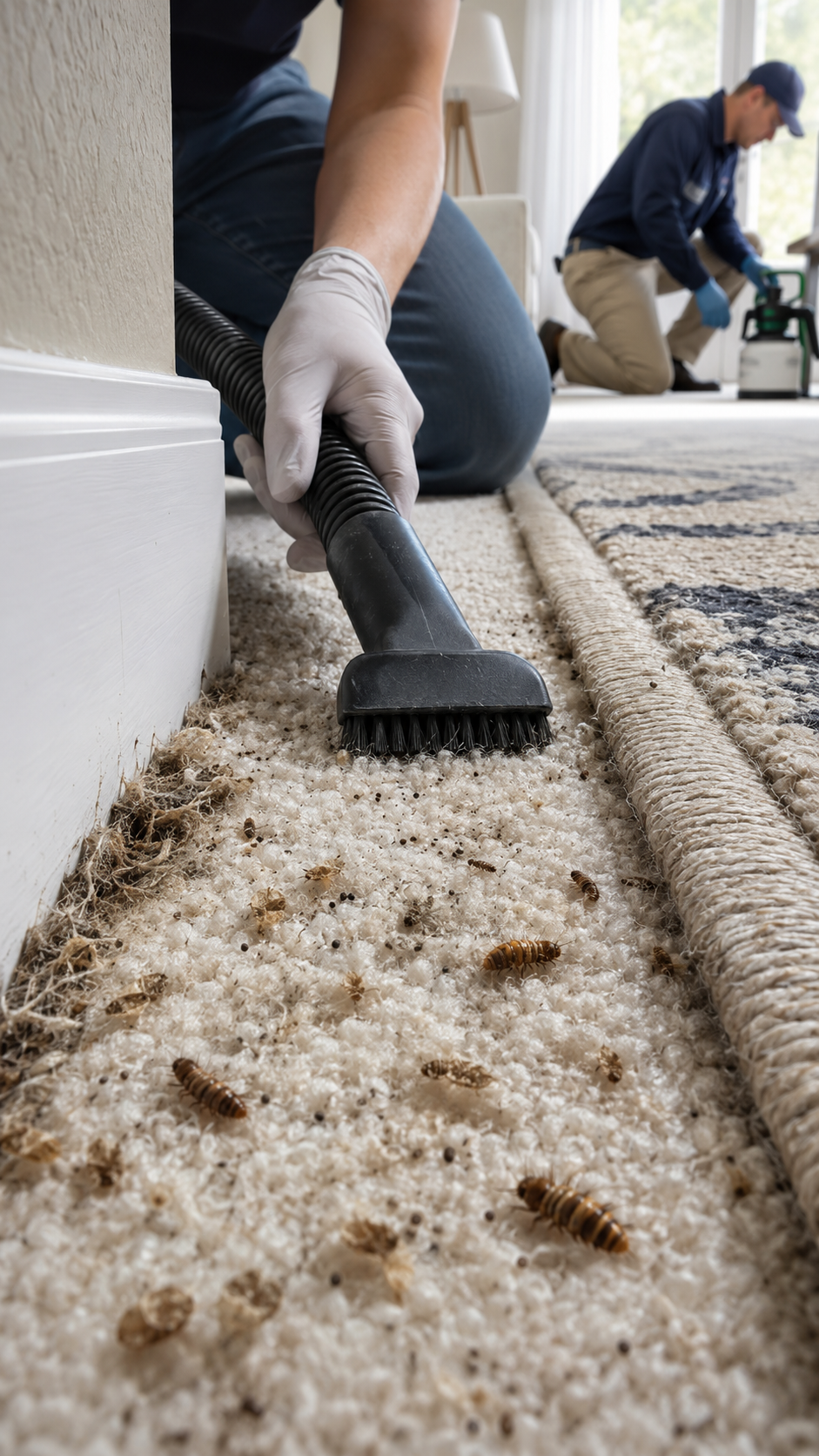
Carpet Beetle Larvae: Contamination Risks, Safe Cleanup, and When to Call a Professional
Minjin Park
·
Found carpet beetle larvae in your home? Learn about contamination risks, safe cleaning methods, prevention strategies, and signs that you need professional pest control.
Discovering a small, hairy larva crawling across a carpet or hiding inside a closet can be unsettling. Your first thought may be that the house is dirty, your belongings are contaminated, or something is biting your family. Fortunately, carpet beetle larvae are not blood-feeding parasites, and finding one does not automatically mean that your home is unsafe.
That does not mean you should ignore it. Carpet beetle larvae can damage clothing, rugs, upholstered furniture, stored foods, and other household items. Their tiny hairs and shed skins may also cause skin irritation in sensitive people. Because the larvae prefer dark, quiet places, the insect you see may be only a clue pointing to a hidden food source elsewhere.
Understanding what carpet beetle contamination really means—and cleaning the affected areas correctly—can help you solve the problem without unnecessarily covering your home in pesticides.
Carpet beetle larvae vary by species, but they are generally small, brown or tan, and covered with visible hairs or bristles. Some have alternating light and dark bands, while others have a tapered body with a noticeable tuft of hair at the rear.
The larvae are often described as looking like tiny, fuzzy caterpillars. You may also find their shed skins, which resemble dry, hollow versions of the larvae.
Adult carpet beetles look very different. They are small, rounded beetles that may be black or covered with mottled white, brown, and yellow scales. Adults are often found near windows because they are attracted to light. They normally feed on pollen and nectar rather than household fabrics.
Does Finding Carpet Beetle Larvae Mean Your Home Is Contaminated?
“Contamination” can sound more alarming than the actual situation. Carpet beetles are not comparable to rodents, cockroaches, or sewage contamination. Their main risks involve damaged materials, insects or debris in stored products, and exposure to larval hairs.
Carpet beetle larvae feed on materials containing animal proteins. Common food sources include:
Wool carpets, sweaters, blankets, and felt
Fur, feathers, leather, and silk
Natural-bristle brushes
Pet hair and human hair
Lint and dead skin accumulating under furniture
Dead insects and old spider webs
Taxidermy, insect collections, and decorative feathers
Some species, particularly black carpet beetles, may also infest grains, flour, cereal, spices, dry pet food, and other stored products. Synthetic fabric is usually not a preferred food, although blends and items stained with perspiration, food, or body oils may still be damaged.
One larva on a wall does not prove that the carpet beneath it is infested. Mature larvae sometimes wander away from their food source before pupating. The real source could be a wool coat in a nearby closet, pet hair beneath a cabinet, an abandoned bird nest in the attic, or an old package of dry pet food.
The goal of an inspection is therefore not simply to kill the visible larva. It is to find what has been supporting its development.
Can Carpet Beetle Larvae Cause a Rash?
Carpet beetle larvae do not bite people, drink blood, or live on human or animal bodies. However, the bristly hairs found on certain species can detach and come into contact with the skin.
Sensitive individuals may develop red, itchy bumps or patches sometimes called carpet beetle dermatitis. Because the reaction can resemble insect bites, it is frequently mistaken for bed bugs or fleas. Other family members may have no reaction at all.
A report published in the CDC’s journal Emerging Infectious Diseases described skin reactions caused by spear-shaped larval hairs rather than bites. The researchers also noted that washing affected clothing, vacuuming infested areas, disposing of vacuum bags, and cleaning air-conditioning systems helped remove the hairs from homes. You can read the CDC carpet beetle dermatitis report for more detail.
A rash alone cannot confirm which pest is present. Many insects, allergens, medications, and skin conditions can cause similar symptoms. Consult a healthcare professional if irritation is severe, widespread, persistent, painful, or showing signs of infection. Seek urgent medical assistance for breathing difficulty, facial swelling, or another serious allergic reaction.
Where to Inspect After Finding a Larva
Begin your search close to where the larva or shed skin was discovered, but do not stop there. Use a flashlight and inspect quiet areas that are rarely moved or cleaned.
Pay particular attention to:
Carpet edges and the undersides of rugs
Baseboards, floor cracks, and closet corners
Areas beneath beds, sofas, dressers, and radiators
Upholstered furniture seams and undersides
Wool clothing, blankets, hats, and scarves
Boxes containing fabric, yarn, feathers, or keepsakes
Pet beds and areas where pet hair accumulates
Heating vents, return-air grilles, and air-conditioning units
Attics, chimneys, wall voids, and crawl spaces
Window sills containing dead insects
Pantry shelves, dry pet food, and birdseed
Dried flowers, taxidermy, and animal-based decorations
Look for live larvae, bristly cast skins, irregular fabric damage, fecal pellets, and concentrations of hair or dead insects. Carpet beetle damage often affects a concentrated area, especially along a fold, seam, or hidden edge.
If identification is uncertain, place a specimen in a sealed container or take a clear close-up photograph. A local cooperative extension office or qualified pest-management professional may be able to identify it.
How to Clean Up Carpet Beetle Larvae Safely
A careful, source-focused cleanup is usually more effective than spraying every visible surface. UC IPM recommends sanitation and exclusion as the foundation of carpet beetle control and notes that insecticides may be unnecessary when those measures are successful.
1. Protect Yourself Before Disturbing the Area
Wear gloves and long sleeves, particularly if you have sensitive skin or have already developed an unexplained rash. Avoid rubbing your face or eyes while handling infested materials.
If the area contains considerable dust, shed skins, or larval hairs, consider using a well-fitting particulate respirator while cleaning. People with asthma, significant allergies, or other respiratory conditions may prefer to have someone else complete the cleanup.
Do not shake infested clothing or bedding inside the house. Shaking can spread larvae, eggs, dust, and detached hairs into the air.
2. Isolate Affected Items
Place infested or suspicious textiles in sturdy plastic bags before carrying them through the home. This reduces the chance of dropping larvae in other rooms.
Sort the items into three groups:
Washable belongings
Dry-clean-only or delicate belongings
Heavily damaged items that should be discarded
Seal discarded materials in bags before placing them in an outdoor trash container. Expensive rugs, antique textiles, taxidermy, fur, and fragile collections should be evaluated by an experienced cleaner, conservator, or pest professional rather than treated with a household spray.
3. Vacuum Thoroughly
Vacuuming removes larvae, some eggs, cast skins, debris, and the hair or lint they eat. Concentrate on carpet edges, baseboards, floor cracks, closet floors, upholstery seams, and spaces beneath heavy furniture.
Vacuum both sides of removable rugs when possible. Use crevice attachments around trim, vents, and furniture joints. A vacuum with effective filtration is helpful when dust or larval hairs are a concern.
When finished, remove the vacuum bag promptly, seal it inside another bag, and place it in an outdoor trash container. For a bagless vacuum, empty the canister outdoors into a sealable bag and clean the canister according to the manufacturer’s instructions.
One quick pass may not be enough. Repeat detailed vacuuming regularly over the following weeks while watching for new larvae or skins.
4. Launder or Dry-Clean Textiles
Wash affected clothing, blankets, and other washable fabrics using the hottest setting permitted by the care label. Dry the items completely. Dry-clean materials that cannot be safely washed.
UC IPM states that thorough hot-water laundering or dry cleaning can kill all carpet beetle life stages in suitable items. After treatment, place clean, completely dry textiles in airtight bags or sealed containers until you are confident the infestation has been eliminated.
Do not use high heat on items that may shrink, melt, discolor, or lose their shape. A professional cleaner is the safer choice for valuable or delicate belongings.
5. Check Stored Foods and Pet Supplies
Inspect flour, grains, cereal, spices, dry pet food, birdseed, and similar products, especially if larvae were found near a kitchen, pantry, or pet-feeding area.
Discard packages containing larvae, beetles, cast skins, unusual holes, or insect debris. Do not try to pick out the insects and keep the food. Seal affected products before putting them in the trash.
Vacuum shelf cracks and wipe hard pantry surfaces with detergent and water. Allow the area to dry before returning food. Store replacement products in tightly sealed containers made of glass, metal, or durable plastic.
6. Remove Hidden Food Sources
Cleaning the visible carpet will not solve an infestation if larvae are feeding behind an appliance or inside an attic.
Remove lint, accumulated hair, dead insects, old spider webs, and other organic debris. Have accessible vents and registers cleaned if activity is found around them. Address animal nests only after confirming that they are inactive and can be removed legally and safely.
Should You Use Insecticides?
Pesticides should not be the first response to a single carpet beetle larva. Broad spraying may expose people and pets without reaching larvae hidden inside furniture, wall voids, or stored materials.
Never apply insecticide to clothing, bedding, food, toys, pet bedding, or food-contact surfaces unless the product label specifically permits that use. Do not use outdoor pesticides indoors, and do not assume that applying extra product will improve control.
Total-release foggers, commonly called bug bombs, are particularly poor substitutes for locating the source. Their pesticides may fail to penetrate larval hiding places, while improper use can create exposure, fire, and explosion hazards. The EPA provides specific warnings about total-release fogger safety.
If sanitation does not resolve the problem, a product specifically labeled for carpet beetles and the intended indoor location may sometimes be used as a limited spot or crack-and-crevice treatment. When in doubt, let a licensed professional decide whether a pesticide is necessary.
When Should You Call a Pest-Control Professional?
Professional help is sensible when:
Larvae or damage continue after repeated cleaning
Multiple rooms or apartments are affected
You cannot locate the breeding source
The source may be inside walls, ducts, chimneys, or inaccessible attic spaces
Larvae are inside feather- or hair-filled furniture
Valuable rugs, furs, collections, or antiques are at risk
Stored-food contamination is widespread
Someone in the home has recurring skin or respiratory symptoms
Pesticide treatment appears necessary
You cannot distinguish carpet beetles from bed bugs or another pest
Ask the company to identify the insect and explain the source before proposing treatment. A reputable professional should be willing to discuss inspection findings, nonchemical measures, the exact products being considered, preparation requirements, and precautions for children and pets.
How to Prevent Carpet Beetles From Returning
Once the immediate problem is under control, prevention mainly comes down to cleaning, inspection, and protected storage.
Vacuum carpet edges, closets, upholstery, and spaces beneath furniture regularly. Remove pet hair and dead insects before they accumulate. Wash clothing before long-term storage because perspiration and food stains can attract fabric pests.
Store wool, silk, feathers, and other vulnerable materials in airtight containers only after confirming that they are clean and pest-free. Inspect secondhand rugs, upholstered furniture, dried flowers, and wool clothing before bringing them indoors.
Repair damaged screens and seal gaps around windows, doors, and vents. Check storage areas periodically rather than leaving them undisturbed for years. Sticky traps may help monitor a serious problem, but they should support—not replace—inspection and cleaning.
The Bottom Line
Finding carpet beetle larvae is a warning to investigate, not a reason to panic. These insects do not bite, but their hairs can irritate sensitive people, and their feeding can damage fabrics or contaminate stored products. Isolate affected belongings, vacuum carefully, clean or discard infested materials, and search for the hidden food source. If larvae keep appearing or the source is inaccessible, professional identification and targeted treatment can prevent wasted effort and unnecessary pesticide use.
Have you found carpet beetle larvae in an unexpected place, such as a closet, pantry, pet bed, or air vent? Share where you discovered them and what cleaning methods worked for you in the comments—your experience may help another reader track down a difficult hidden infestation.
Hi, I’m the creator and editor behind ZestyHabit. I research everyday safety, first aid, and practical wellness topics using official guidance and reliable public sources, then turn that information into clear, realistic steps for daily life.
My goal is to help readers make safer, better-informed choices at home and beyond.