
Learn how to thaw frozen breast milk safely, warm it without hot spots, follow the 24-hour and 2-hour rules, prevent contamination, and reduce wasted milk.

Freezing expressed breast milk can make feeding much more flexible. It allows parents to build a backup supply, prepare bottles for childcare, share feeding responsibilities, and save milk that will not be used within the next few days.
The difficult part is often knowing what to do after taking that milk out of the freezer.
Should frozen breast milk be thawed in the refrigerator or placed in warm water? How warm should it be before feeding? When does the 24-hour storage period begin? Can a partially used bottle go back into the refrigerator? And what should you do if the milk was accidentally microwaved or left on the counter?
The safest approach is gentle thawing, careful time tracking, clean handling, and avoiding extreme heat. This guide explains how to thaw, store, warm, and serve frozen breast milk while protecting both its quality and your baby.
Important: The general storage times in this guide are intended for healthy, full-term infants. Babies born prematurely, babies who are ill, and babies with weakened immune systems may require stricter handling procedures. Follow the instructions provided by your pediatrician, neonatal care team, hospital, or milk bank.
The Safest Ways to Thaw Frozen Breast MilkThe Centers for Disease Control and Prevention recommends three primary methods for thawing frozen breast milk:

- Thaw it overnight in the refrigerator.
- Place the sealed container in warm or lukewarm water.
- Hold the sealed container under lukewarm running water.
Microwaving is not considered a safe thawing method, and breast milk should not be heated directly on the stove.
The method you choose will usually depend on how soon the milk is needed.
Method 1: Thaw Breast Milk Overnight in the Refrigerator
Refrigerator thawing is usually the easiest option when you can plan ahead.

Move the oldest container of frozen breast milk from the freezer to the refrigerator before going to bed. Keep it toward the back of the refrigerator, where the temperature is generally more stable than it is in the door.
Depending on the amount of milk and the shape of the container, it may take several hours to thaw completely. A flat storage bag usually thaws faster than a thick bottle or a bag frozen in a large block.
Once the milk has completely thawed in the refrigerator, use it within 24 hours. The 24-hour countdown begins when the milk is fully thawed—not when you first remove it from the freezer.
For example, suppose you place a frozen bag in the refrigerator at 9 p.m., but the final ice crystals do not disappear until 7 a.m. The 24-hour period begins at approximately 7 a.m.
This distinction is useful because breast milk may remain partly frozen for much of the night.
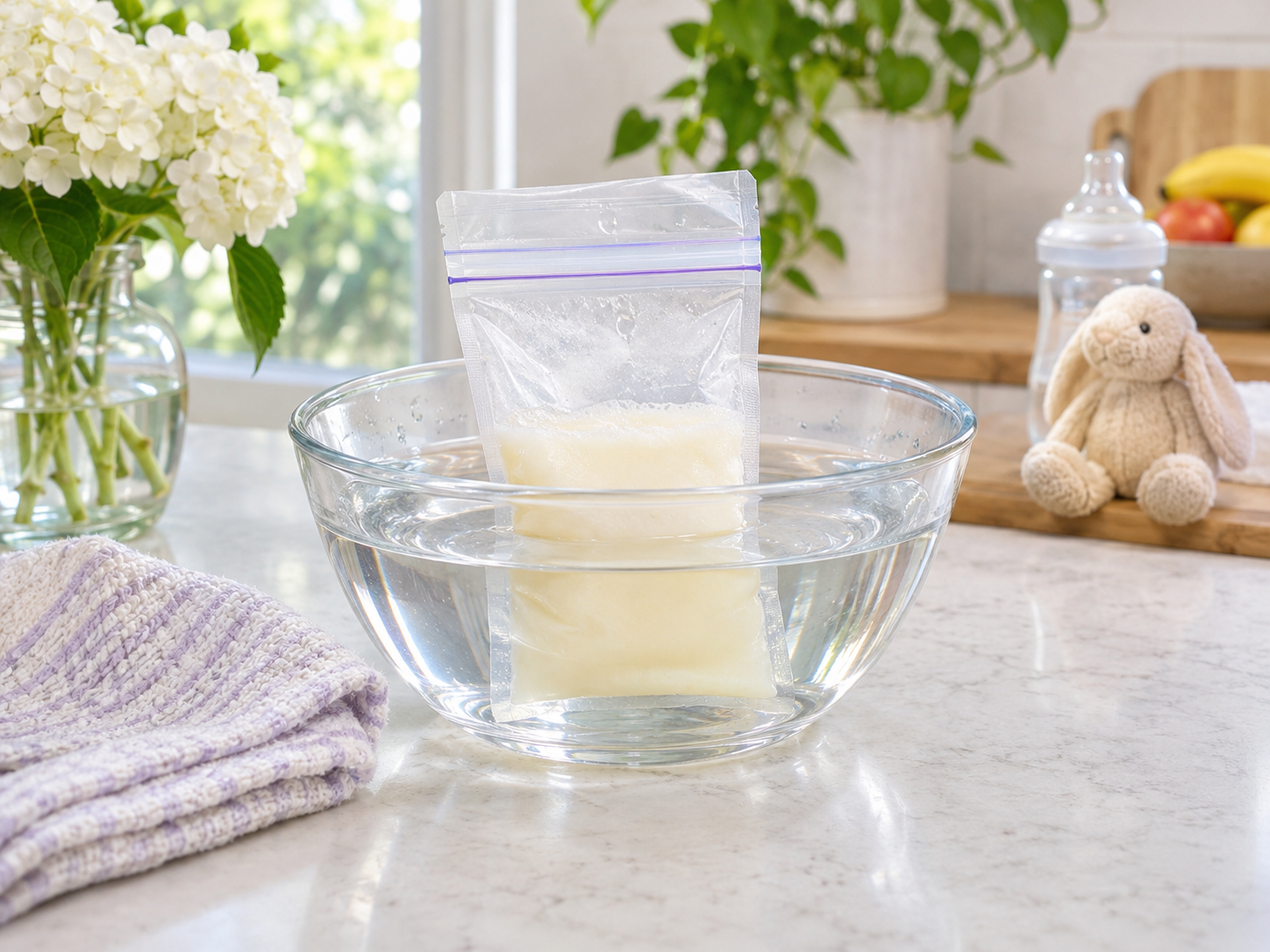
Method 2: Thaw the Milk in a Bowl of Warm Water
When milk is needed sooner, place the sealed breast milk bag or bottle in a clean bowl of warm or lukewarm water.

The water should feel comfortably warm, not hot. Very hot or boiling water may overheat portions of the milk and can damage the storage bag or make the bottle dangerously hot to handle.
Keep the container sealed so that water does not enter the milk. Replace the water if it becomes cold before the milk has finished thawing.
Gently move or swirl the container as the milk softens. Do not aggressively shake it. The fat in stored breast milk often separates and rises to the top, and gentle swirling is usually enough to mix it back into the milk.
Milk thawed and warmed this way should be used within two hours after it reaches room temperature or is warmed.
Method 3: Thaw Under Lukewarm Running Water
You may also hold the sealed container under lukewarm running water.

Start with water that is cool or only slightly warm, particularly when thawing a thin storage bag. Gradually make the water warmer as the frozen milk begins to soften. This can help the milk thaw more evenly and reduces the chance of overheating the outside while the center remains frozen.
Check the seal before placing a storage bag under running water. If the bag is torn, leaking, or has opened at the seal, it is safer not to use the milk because water or other contaminants may have entered it.
This method is convenient when a baby is ready to eat and there is no thawed milk available in the refrigerator. However, it can use more water than refrigerator thawing, so overnight thawing is generally more practical when feeding times are predictable.
Does Breast Milk Need to Be Warm?
Breast milk does not have to be warmed before feeding.

It can be served cold from the refrigerator, at room temperature, or gently warmed. Some babies readily accept cold milk, while others prefer it closer to body temperature. Both approaches can be reasonable when the milk has been stored and handled safely.
There is no need to reach a precise temperature unless your baby’s healthcare provider has given specific instructions. The main goal is to avoid milk that is hot enough to burn the baby’s mouth.
To check warmed milk, place a few drops on the inside of your wrist. It should feel comfortably warm or neutral, never hot.
Remember that the bottle itself may feel warmer or cooler than the milk inside. Gently swirl the container and test the milk before feeding.
Why You Should Never Microwave Breast Milk
A microwave may seem like the quickest solution during a late-night feeding, but it can heat milk unevenly.
Some areas may become dangerously hot while the rest of the bottle still feels cool. These hidden hot spots can burn a baby’s mouth or throat. Microwave heating can also reduce some of the beneficial nutritional and protective qualities of human milk.
For the same reasons, do not place a bottle or storage bag directly in a pan on the stove. Do not boil breast milk, and do not pour boiling water over a storage bag.
When a bottle has accidentally been overheated, allowing it to cool does not necessarily correct the changes caused by excessive heat. When you are uncertain whether it is safe, it is reasonable to use another properly handled portion and ask your pediatrician or lactation professional for guidance.
Frozen and Thawed Breast Milk Storage Times
One of the most confusing parts of handling breast milk is that the storage time changes depending on whether the milk is fresh, frozen, thawed, warmed, or left over from a feeding.
The following chart summarizes current CDC recommendations for healthy, full-term infants.
| Type of breast milk | Room temperature, 77°F/25°C or colder | Refrigerator, 40°F/4°C | Freezer, 0°F/−18°C or colder |
|---|---|---|---|
| Freshly expressed milk | Up to 4 hours | Up to 4 days | About 6 months is best; up to 12 months is acceptable |
| Previously frozen, fully thawed milk | 1–2 hours | Up to 24 hours | Do not refreeze |
| Milk left after a feeding | Use within 2 hours after the feeding ends | Follow the two-hour leftover rule | Do not freeze |
These time limits are maximum recommendations, not goals. Using milk sooner is generally better for quality.
The 24-Hour Rule
Breast milk that thaws completely in the refrigerator should be used within 24 hours.

Start the clock when the milk becomes fully liquid and no ice crystals remain. Do not start counting from the moment the frozen container enters the refrigerator.
Labeling the container with the date and approximate time it finished thawing can prevent confusion, especially when several caregivers prepare bottles.
The Two-Hour Rule After Warming
Once thawed breast milk has been brought to room temperature or warmed, use it within two hours.
Do not repeatedly warm and cool the same bottle. A practical approach is to thaw or warm only the amount the baby is likely to drink and keep any additional milk refrigerated until it is needed.
The Two-Hour Rule for an Unfinished Bottle
When a baby drinks from a bottle, bacteria from the baby’s mouth can enter the remaining milk.
The CDC recommends using leftover milk within two hours after the baby has finished feeding. After that period, discard what remains.
To reduce waste, begin with a smaller serving. You can offer more milk in a clean bottle or add another prepared portion if the baby still appears hungry.
Can Thawed Breast Milk Be Refrozen?
Completely thawed breast milk should not be refrozen.

Freezing, thawing, and refreezing may further reduce milk quality and create additional opportunities for unsafe handling or bacterial growth. Once frozen milk has thawed, keep it refrigerated and use it within the recommended period, or discard it when that period ends.
A freezer inventory can help prevent unnecessary thawing. Arrange containers by date and use the oldest milk first—a system often called “first in, first out.”
How to Freeze Breast Milk for Easier Thawing
Safe thawing begins with good freezing habits.
Use breast milk storage bags or clean, food-grade glass or plastic containers with tight-fitting lids. Ordinary household plastic bags and disposable bottle liners are not designed for long-term breast milk storage and may leak or tear.
Freeze milk in portions that match your baby’s typical feeding size. The CDC suggests storing approximately 2 to 4 ounces, or the amount usually offered at one feeding. Smaller portions thaw faster and make it easier to avoid wasting milk.
Leave space at the top of the container because breast milk expands as it freezes. For a storage bag, remove excess air carefully without pushing milk toward the seal, then close it securely.
Label every container with:
- The date the milk was expressed
- The amount of milk
- The child’s name when sending it to childcare
- Any information required by the childcare provider
Store milk toward the back of the freezer rather than in the door. Containers stored in the door experience more temperature changes as the freezer is opened and closed.
For the best quality, frozen breast milk should generally be used within about six months, although storage for up to 12 months at 0°F or −18°C or colder is considered acceptable under CDC guidance.
Safe Handling Before Thawing and Feeding
Wash your hands with soap and water before handling breast milk, bottles, nipples, storage bags, or pump parts.
Use clean feeding equipment and inspect containers before each use. Discard storage bags that have split or leaked. Bottle nipples, rings, valves, and other reusable parts should be cleaned according to their manufacturer’s instructions and allowed to air-dry thoroughly in a protected area.
Pump parts that come into contact with breast milk should be cleaned after use. The CDC notes that sanitizing at least once daily is especially important when a baby is younger than two months, was born prematurely, or has a weakened immune system.
Do not place pump or feeding parts directly into a kitchen sink for washing. A clean basin reserved for infant-feeding equipment can reduce contact with germs that may be present in the sink. After washing, let parts air-dry rather than wiping them with a used kitchen towel.
Thawing Breast Milk at Childcare
Clear labeling is essential when sending frozen or thawed milk to a daycare provider.
Write your baby’s full name, the date the milk was expressed, and any information required by the facility. Ask how the daycare tracks thawing times and unfinished bottles.
When possible, send milk in smaller portions rather than one large bottle. This allows the caregiver to offer another portion when needed without warming more milk than the baby is likely to drink.
If you transport milk in an insulated cooler with frozen ice packs, CDC guidance allows storage in the cooler for up to 24 hours. At your destination, use the milk, refrigerate it, or freeze it promptly as appropriate.
Common Breast Milk Thawing Mistakes
Even careful caregivers can make mistakes, particularly during rushed or overnight feedings. The most common problems include:
Leaving frozen milk on the counter
Thawing at room temperature makes it difficult to know how long the outer portion has been warm while the center remains frozen. Use the refrigerator or lukewarm water instead.
Starting the 24-hour clock too early—or too late
The countdown begins when refrigerated milk is completely thawed. Marking the thaw time on the container can help.
Using very hot water
Hot water can warm the milk unevenly and may damage thin storage bags. Use warm or lukewarm water.
Microwaving the bottle
Microwaves can create dangerous hot spots even when the bottle feels safe from the outside.
Refreezing thawed milk
Once milk has thawed completely, it should not return to the freezer.
Saving an unfinished bottle too long
After the baby finishes feeding, use any remaining milk within two hours and then discard it.
Thawing more than the baby needs
Smaller frozen portions reduce waste and make time limits easier to manage.
A Simple Step-by-Step Thawing Routine
For a predictable feeding, move the oldest frozen milk to the refrigerator the night before.
When the milk is fully thawed:
- Mark the time or note it in a feeding app.
- Keep the milk refrigerated until needed.
- Serve it cold, at room temperature, or gently warmed.
- To warm it, keep the container sealed and place it in warm water.
- Gently swirl to mix separated fat.
- Test a few drops on your wrist.
- Use warmed milk within two hours.
- Discard leftovers two hours after the feeding ends.
- Never refreeze completely thawed milk.
This routine becomes much easier when every caregiver follows the same storage and labeling system.
Final Thoughts
Safely thawing frozen breast milk does not require special equipment. The most reliable methods are slow thawing in the refrigerator or gentle thawing in warm, not hot, water. Milk can be served cold, room temperature, or warm, but it should never be microwaved or heated directly on a stove.
The key time limits are also straightforward once they become familiar: use refrigerated milk within 24 hours after it has completely thawed, use milk within two hours after warming or bringing it to room temperature, and discard unfinished milk two hours after the feeding ends. Never refreeze breast milk after it has completely thawed.
What does your breast milk storage and thawing routine look like? Do you label bags by date, freeze individual feeding portions, or use a system that makes nighttime bottles easier? Share your tips or questions in the comments—your experience may help another parent handle frozen breast milk more confidently and safely.

Hi, I’m the creator and editor behind ZestyHabit. I research everyday safety, first aid, and practical wellness topics using official guidance and reliable public sources, then turn that information into clear, realistic steps for daily life.
My goal is to help readers make safer, better-informed choices at home and beyond.


