Learn why secure food storage is essential in bear country, which items attract bears, and how to keep campsites, vehicles, and cabins safer.
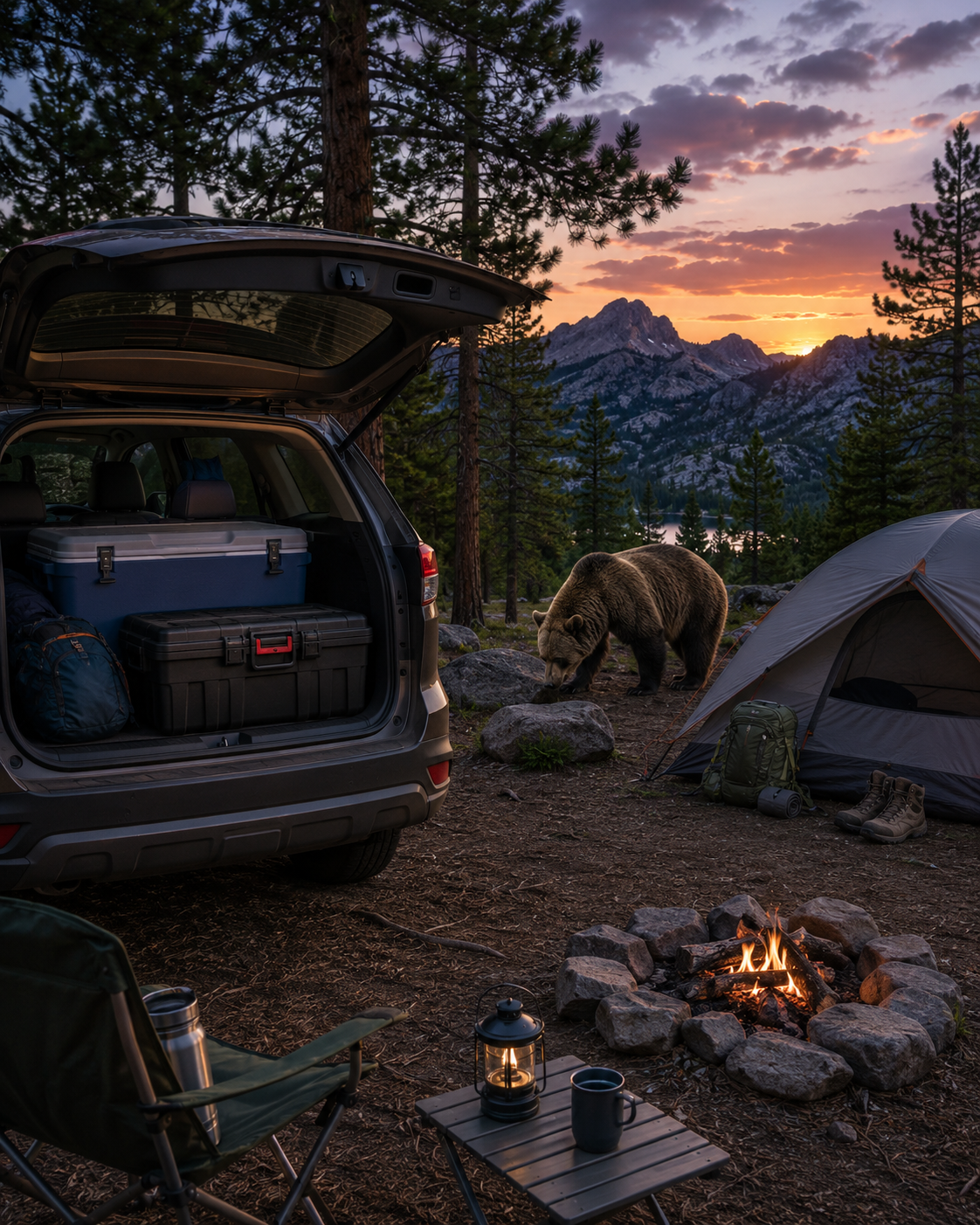
A cooler on a picnic table may not look like a serious problem. Neither does a bag of chips in a tent pocket, a greasy grill beside the fire ring, or a trash bag waiting to be carried out in the morning.
In bear country, however, these everyday items can become powerful attractants.
Bears are naturally motivated to search for calorie-rich food. When human food, garbage, toiletries, pet food, or cooking residue is accessible, a bear may learn that campsites and homes are easy places to find a meal. That creates problems for both people and the bear.
Proper food storage is one of the simplest ways to reduce these encounters. It requires knowing what counts as an attractant, following the rules for that area, and keeping a clean site even when you are tired or stepping away briefly.
Why Food Storage Is Such a Big Deal in Bear Country
Food storage rules are not just about saving your snacks.
They are meant to prevent bears from receiving a food reward from people. Once a bear gets food from a campsite, vehicle, trash can, or porch, it may return and repeat the behavior. Wildlife agencies advise visitors and residents not to make food, garbage, grills, or other scented items accessible.
Bears Learn From Successful Visits
A bear does not need to find a full meal to become interested in an area.
Food scraps, spilled grease, or an open cooler can teach it that people may be connected with food. The next time, it may search more confidently around tents, vehicles, decks, cabins, or picnic areas.
This is why “It was only left out once” is not a harmless excuse. One successful visit can affect future behavior.
A Clean Campsite Protects Everyone Nearby
A bear that finds food at one campsite may begin checking neighboring sites. It may approach occupied areas, damage property, or become difficult for land managers to redirect.
The goal is simple: bears should continue finding natural foods instead of learning to search around people.
What Counts as Food to a Bear?
Many people think food storage means putting sandwiches and meat into a cooler. That is only part of the job.
In many bear areas, storage guidance applies to food, trash, cooking equipment, coolers, and scented non-food items. Some parks tell visitors to store anything with an odor, including unopened food and beverages, whenever it is not being used.
Do not assume sealed packaging makes an item uninteresting. A bear-resistant locker is designed to prevent access, not eliminate every smell.
Less Obvious Attractants
Scented items can also include toothpaste, soap, lip balm, sunscreen, lotion, cosmetics, trash, dirty dishes, empty coolers, greasy grills, and food-stained clothing.
A useful rule is to ask, “Does this smell like food, fragrance, or something a curious animal might investigate?” If yes, store it with the other attractants.
Why a Tent Is Never a Food Locker
Keeping food inside the tent may feel convenient, especially when it is cold, raining, or late.
A tent is made to shelter people, not resist a bear. Food, toiletries, trash, and scented gear should not be stored where you sleep. Official guidance for bear-resistant canisters also separates cooking, eating, and storage areas from tents.
This includes the granola bar in a backpack pocket, the mint in a jacket, and the child’s snack cup that rolled under a sleeping bag.
Before bedtime, empty pockets, remove trash, and return every scented item to the approved storage location.
Use the Storage Method Required Where You Are
There is no single food-storage rule for every U.S. park, forest, or campground.
Some places require metal lockers. Others require an approved bear-resistant canister in the backcountry. Some allow a locked hard-sided vehicle in developed areas, while others have stricter location-specific rules.
The National Park Service advises visitors to check the exact regulations for the park they plan to visit because permitted methods vary.
Bear-Resistant Food Lockers
Many developed campgrounds provide large metal lockers, sometimes called bear boxes.
Place food, coolers, cookware, trash, and scented items inside, then fully close and latch the door. Yosemite notes that bears may still smell food inside a locker, but cannot access it when the locker is properly secured.
Do not leave the locker open while you eat, nap, or walk to the restroom.
Bear-Resistant Canisters
A bear canister is a hard-sided container designed to resist a bear’s attempts to open it.
Use an approved model where required and close it according to the manufacturer’s instructions. Ordinary plastic totes, soft bags, dry bags, and standard coolers may not meet local requirements.
Place the canister on level ground away from your sleeping area, cliffs, and water. Do not attach ropes, which can make it easier for an animal to carry or roll away. Follow the park’s specific placement rules.
Locked Hard-Sided Vehicles
Some developed areas allow food to be stored out of sight in a locked, hard-sided vehicle.
This is not universal. In places with highly food-conditioned bears, lockers may be required instead. Check current campground instructions before relying on your car. If vehicle storage is allowed, close the windows, lock the doors, and remove visible food.
Hanging Food
Traditional food hangs are still allowed in some locations, but not everywhere, and they can be difficult to do correctly.
Tree shape, branch height, local bear behavior, and park regulations all matter. Confirm the required height and distance from the trunk, and whether hanging is permitted at all.
Common Food Storage Mistakes
Most problems happen because a small task is postponed or an item is forgotten.
Leaving a Cooler on the Picnic Table
A closed cooler is not automatically bear-resistant.
Many standard coolers can be opened, crushed, or carried away. Unless yours is specifically approved and secured as required, place it inside a locker or another approved location.
Walking Away “Just for a Minute”
Food should be secured whenever it is unattended.
A trip to the restroom, trailhead, or water spigot is enough time for wildlife to investigate. Some National Park Service campgrounds require food and related items to be stored 24 hours a day whenever they are not actively in use.
Forgetting Trash Until Morning
Trash smells like food because it often contains food.
Do not leave garbage beside a fire ring, hanging near camp, or sitting in an open truck bed. Use designated bear-resistant dumpsters or keep it in approved storage until disposal.
Burning or Burying Scraps
A campfire is not a dependable garbage disposal system.
Partially burned food, foil, grease, and packaging can remain attractive to wildlife. Burying scraps leaves odors behind and encourages animals to dig. Pack out waste or use the proper receptacle.
Ignoring Grills and Cooking Surfaces
A grill may look empty while still holding grease and food residue.
Clean cooking grates, utensils, tables, and preparation areas after meals. Store portable grills and cookware as required. U.S. Forest Service guidance recommends cleaning utensils and food-preparation areas thoroughly.
Storing Pet Food Outside
At homes and cabins, pet food can be just as attractive as human food.
Bring bowls inside, clean up spilled kibble, and store bulk food securely. The same principle applies to bird seed, livestock feed, compost, garbage, and outdoor freezers.
Warning Signs That Bears May Be Visiting
Give food storage extra attention when you notice:
Fresh tracks or scat
Knocked-over trash cans
Torn food packaging
Claw marks or damage on doors, dumpsters, or sheds
Coolers or containers that have been moved
Reports or warning notices from rangers
A bear repeatedly appearing near campsites, cabins, or picnic areas
Do not leave food out to see whether the animal returns. Secure attractants, give wildlife space, and follow local instructions.
A Simple Food Storage Routine for Campers
A repeatable routine makes bear safety easier.
Before the Trip
Check the official website or contact the land manager for current rules. Confirm whether lockers are available, canisters are required, and which products are approved.
Plan space for toiletries, trash, pet items, and cookware—not only meals.
When You Arrive
Locate the food locker, storage area, and trash receptacles before unpacking.
Keep attractants together so they are easier to track. Remind children and other group members that snacks cannot be taken into tents.
After Every Meal
Put leftovers away immediately.
Pick up crumbs, wipe the table, wash dishes, and secure trash. Check chairs and the ground for dropped snacks.
Before Bed
Do one final scent check.
Look through backpacks, coat pockets, cup holders, tents, and the area around the fire ring. Store all attractants and make sure lockers, canisters, vehicles, or dumpsters are fully latched.
Before Leaving Camp
Do not abandon food or trash in a locker.
Clean the site, dispose of garbage correctly, and take everything you brought. A clean departure protects the next visitor too.
Food Storage Matters at Homes and Cabins Too
Bear country is not limited to remote campsites.
Homes near forests and mountain communities may attract bears with unsecured garbage, pet food, compost, bird feeders, barbecue grease, or food stored in accessible sheds.
Use bear-resistant garbage containers where recommended. Keep garage doors closed, clean outdoor cooking areas, bring pet food inside, and avoid leaving trash at the curb overnight when local guidance advises morning pickup. Federal wildlife officials emphasize securing trash and other attractants around homes to help keep bears wild and people safer.
Consistency across a neighborhood matters. One unsecured trash can can draw a bear back to the same street even when nearby households are careful.
What to Do If You Notice a Bear Near Food
Do not approach the bear or try to take food back from it.
Give it space and follow the bear-safety guidance for that area. Notify a ranger, campground host, or local wildlife authority about bears that obtain human food, damage property, or repeatedly enter developed areas.
After the bear has left and it is safe to check, look for what attracted it: an open locker, food in a pack, trash by the fire ring, spilled pet food, or an unsecured cooler.
The purpose is not to assign blame. It is to prevent the same situation from happening again.
Small Habits Make the Biggest Difference
Food storage in bear country becomes straightforward once it is part of your routine.
Treat food, trash, toiletries, pet supplies, coolers, and cooking residue as potential attractants. Use the storage method required for the area. Keep scented items out of tents, clean up after meals, and secure everything whenever it is unattended.
These steps protect food and property, but their larger value is preventing bears from learning that people are a source of easy meals.
A well-managed campsite may not look dramatically different from any other. The cooler is simply locked away, the trash is secured, and the table is clean.
Those quiet habits help people and bears share the same landscape more safely.
Hi, I’m the creator and editor behind ZestyHabit. I research everyday safety, first aid, and practical wellness topics using official guidance and reliable public sources, then turn that information into clear, realistic steps for daily life.
My goal is to help readers make safer, better-informed choices at home and beyond.
[…] swelling does not automatically indicate spoilage, but it should still be evaluated alongside the food’s storage history and the condition of the […]
Loading...
Discover more from
Subscribe now to keep reading and get access to the full archive.



[…] swelling does not automatically indicate spoilage, but it should still be evaluated alongside the food’s storage history and the condition of the […]