When most people think about E. coli, they picture undercooked ground beef, contaminated lettuce, or an unclean public restroom. They rarely imagine the dish sponge beside the kitchen sink or the cutting board used to prepare dinner.
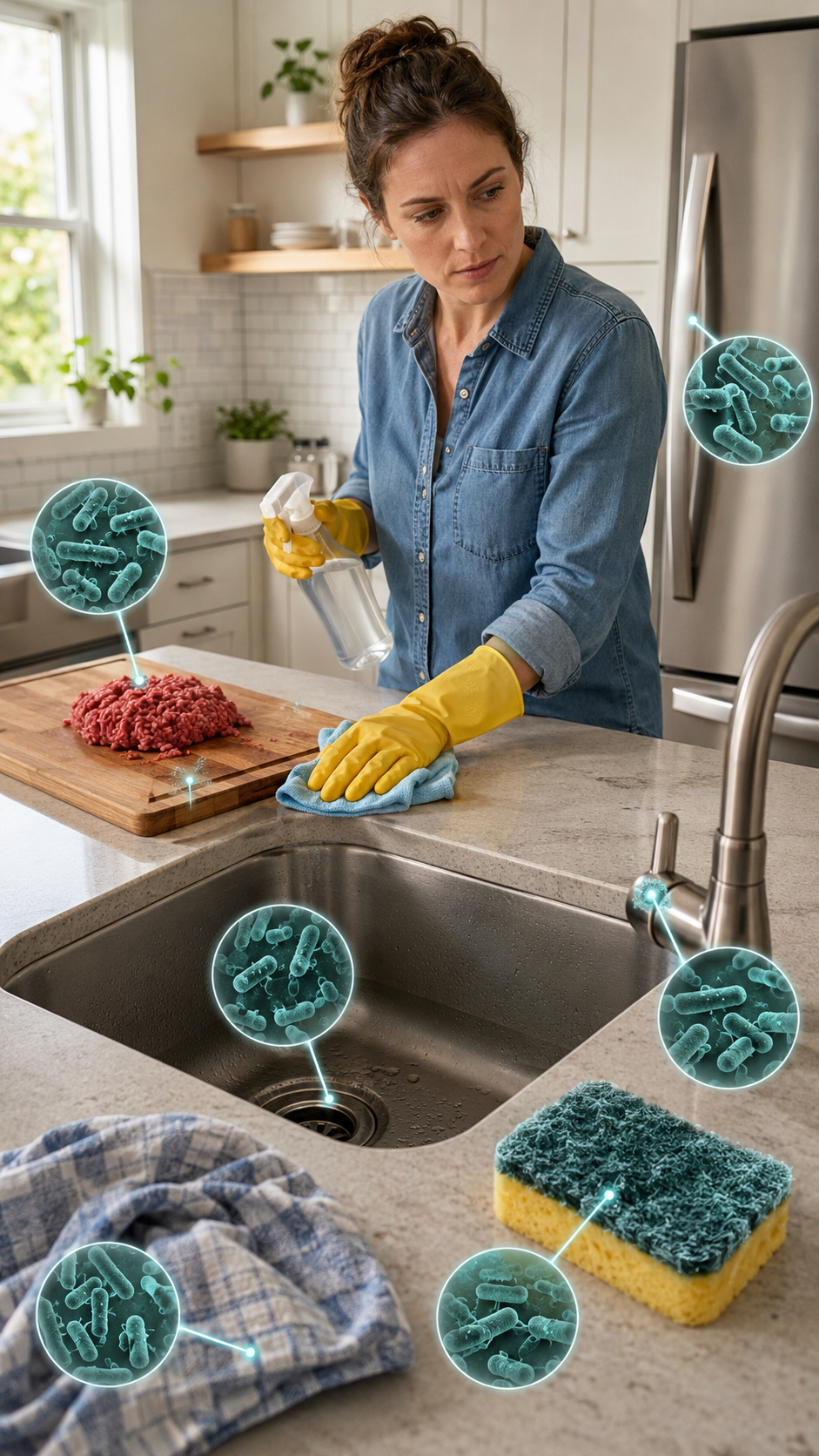
Yet household studies have repeatedly found that kitchens can contain more fecal indicator bacteria than many bathroom surfaces. Moisture, food particles, raw meat juices, reusable cleaning cloths, and frequent hand contact create ideal conditions for bacteria to survive and spread.
That does not mean every kitchen sponge contains a dangerous strain of E. coli, or that touching a sink will automatically make someone sick. Most types of Escherichia coli live harmlessly in the intestines of people and animals. However, certain strains can cause severe diarrhea, abdominal cramps, vomiting, and potentially serious complications.
Finding E. coli in the home is also an important warning sign because it may indicate fecal contamination or unsafe food-handling practices. The real concern is not simply that bacteria exist, but that they may be transferred from a contaminated surface to hands, food, dishes, or utensils.
E. Coli, Coliforms, and “Germs” Are Not the Same Thing
Before identifying household hotspots, it helps to understand a distinction that is often lost in alarming headlines.
Coliform bacteria are a broad group of organisms commonly used as indicators of sanitation. The group includes bacteria that live in soil, water, vegetation, and animal intestines. E. coli belongs to this group, but detecting coliform bacteria does not automatically mean that a surface contains E. coli—and detecting E. coli does not automatically mean that a dangerous disease-causing strain is present.
Many household studies test for total bacteria, coliforms, fecal coliforms, or a mixture of organisms. Their findings cannot always be described accurately as “dangerous E. coli.”
Still, the results reveal an important pattern: warm, damp kitchen items exposed to food residue often provide better environments for bacterial survival than dry, regularly cleaned surfaces.
One study of 100 U.S. homes found fecal coliforms in 44% of homes, most commonly in kitchen sinks, sponges, and dishcloths. E. coli was detected in 15% of the homes and was found mainly in kitchen samples. The findings were published in the journal Food Protection Trends and are indexed by PubMed.
1. Kitchen Sponges and Dishcloths
The kitchen sponge is one of the most likely places for bacteria to accumulate.
A sponge regularly collects moisture, grease, crumbs, vegetable debris, and traces of raw food. Its many pores provide protected spaces where microorganisms can remain even after the sponge has been rinsed. When that same sponge is used on dishes, countertops, appliances, and the sink, it may spread contamination instead of removing it.
In NSF’s household study, coliform bacteria were found on more than 75% of tested sponges and dish rags. Again, this does not mean that all of them contained dangerous E. coli. However, it demonstrates why reusable cleaning tools deserve special attention. Recent microbiological research has also confirmed that viable E. coli can be present in used household sponges.
To reduce the risk:
Do not use the same sponge to clean dishes, raw meat spills, floors, and pet bowls.
Wring it out and let it dry completely between uses.
Replace it if it smells, breaks apart, stays slimy, or has been used on raw meat juices.
Consider using a dishwasher-safe dish brush instead.
Wash reusable dishcloths frequently on an appropriate hot or sanitizing cycle.
Use disposable paper towels for raw meat or poultry spills.
NSF suggests replacing sponges approximately every two weeks, or sooner when needed. A heavily used sponge may require more frequent replacement.
2. The Kitchen Sink and Drain
Because water continually passes through it, the kitchen sink may look self-cleaning. In reality, food scraps, dirty dishwater, raw meat residue, and moisture can collect around the drain, strainer, disposal, faucet base, and seams.
Bacteria may form biofilms—thin communities of microorganisms attached to a damp surface. A quick rinse with water may remove visible debris without eliminating the bacteria beneath it.
The sink becomes especially important when people rinse raw poultry or allow raw meat packages to leak into it. Water striking contaminated food can splash droplets onto the faucet, surrounding counter, dish rack, utensils, and nearby food.
Clean the basin, drain cover, strainer, faucet base, handles, and surrounding countertop. Use a food-surface-safe sanitizer according to its label, and never combine bleach with ammonia, vinegar, acids, or other cleaners.
3. Cutting Boards
Cutting boards can receive bacteria directly from raw beef, poultry, seafood, and unwashed produce. Deep knife grooves make an older board harder to clean because moisture and food residue can remain below the surface.
The risk becomes greater when one board is used first for raw meat and then for bread, fruit, salad vegetables, or cooked food. Food eaten without further cooking has no final heating step to destroy transferred bacteria.
The federal FoodSafety.gov guidance recommends using separate cutting boards for raw animal products and foods that will not be cooked.
After use:
Wash the board thoroughly with hot, soapy water.
Sanitize it after contact with raw meat, poultry, or seafood.
Allow it to dry completely before storing.
Run dishwasher-safe nonporous boards through the dishwasher.
Replace boards with deep cracks, grooves, or areas that can no longer be cleaned effectively.
Color-coded boards can make separation easier, but the color itself does not prevent contamination. Each board still needs proper cleaning.
4. Kitchen Countertops
Countertops are exposed to grocery bags, raw food packaging, phones, keys, mail, reusable shopping bags, and hands that may not have been washed. A leaking meat package can contaminate a much larger area than the visible wet spot.
NSF’s household study detected coliform bacteria on 32% of tested kitchen countertops. The study was small and tested coliforms rather than dangerous E. coli specifically, but it illustrates how food-preparation areas can become contaminated.
Avoid placing ready-to-eat food directly on a counter. Use a clean plate or board, especially for bread, fruit, sandwiches, and cooked food.
Clean visible dirt first with soap or detergent. Sanitizing works best after food residue has been removed. Follow the product’s required contact time—the surface usually needs to remain wet for a specified period to work properly.
5. Faucet Handles, Refrigerator Handles, and Appliance Knobs
High-touch surfaces are easy to overlook because they do not directly hold food. However, people frequently touch them while their hands are contaminated.
Imagine preparing raw hamburger. You open the refrigerator, touch the faucet, adjust the stove, open a drawer, and reach for a seasoning container before washing your hands. Each contact can extend the contamination pathway.
Frequently touched kitchen surfaces may include:
Faucet handles
Refrigerator and freezer handles
Oven and microwave controls
Stove knobs
Cabinet and drawer pulls
Trash-can lids
Soap dispenser pumps
Reusable spice containers
Phones and tablets used for recipes
These surfaces do not necessarily support the same level of bacterial growth as a wet sponge, but they can help move bacteria from one location to another.
Wash your hands with soap and running water for at least 20 seconds after handling raw meat, using the bathroom, changing a diaper, handling pet waste, or touching raw pet food. Clean nearby handles after preparing raw animal products instead of waiting for a general weekly cleaning.
6. Refrigerator Meat Drawers and Lower Shelves
Cold temperatures slow the growth of many bacteria, but refrigeration does not instantly kill E. coli. A leaking package of raw ground beef or other meat can contaminate a drawer, shelf, storage container, or food beneath it.
Store raw meat, poultry, and seafood in sealed, leak-resistant containers on the lowest suitable shelf. Keep them separate from fruit, vegetables, cooked leftovers, and other ready-to-eat foods.
Clean spills promptly with hot, soapy water. If food has been recalled because of possible bacterial contamination, follow the CDC’s refrigerator-cleaning steps, including washing removable parts and cleaning areas touched by the recalled item.
Remember that a refrigerator handle may become contaminated during the cleanup, so wash your hands and clean the handle afterward.
7. Bathroom Surfaces and Toothbrush Holders
Bathrooms are obvious places for possible fecal contamination, especially around the toilet, flush handle, faucet, floor, diaper-changing area, and hand towels.
Flushing can produce droplets and aerosols, although the amount and spread vary according to toilet design, flushing pressure, lid position, and bathroom ventilation. Closing the lid before flushing may reduce larger droplets when a lid is available, but it cannot guarantee that all particles will remain inside.
Toothbrush holders deserve attention because they are often damp and may collect toothpaste residue and water. NSF found coliform bacteria on 27% of tested toothbrush holders—more often than on the bathroom faucet handles in the same study.
Keep toothbrushes upright and allow them to air-dry. Do not let brush heads touch one another. Clean the holder regularly in the dishwasher if it is dishwasher-safe, or wash it thoroughly with hot, soapy water.
Clean high-touch bathroom surfaces more frequently when someone in the household has diarrhea or another gastrointestinal illness. Use a disinfectant labeled for the organism of concern and follow its contact-time instructions.
8. Hand Towels, Bath Towels, and Soiled Laundry
Damp towels may receive microorganisms from hands that were not washed effectively. Reusing the same kitchen towel after touching raw meat packaging can transfer bacteria to clean dishes, hands, or food.
Laundry contaminated with feces, vomit, raw food residue, or illness-related secretions should be handled carefully. Avoid shaking it, since this can spread particles. Wash it using an appropriate detergent and the warmest setting allowed by the care label, then dry it thoroughly.
Ordinary household laundry does not need to be treated like medical waste. The priority is separating heavily contaminated items when practical, washing hands after handling them, and ensuring that towels do not remain wet in a pile.
Kitchen towels and dishcloths usually need to be changed more frequently than decorative or lightly used towels.
9. Pet Bowls and Pet-Feeding Areas
Pets can carry bacteria from their mouths, paws, fur, feces, food, and outdoor environments. Their bowls may also develop a film of saliva and food residue.
Raw pet food creates an additional cross-contamination risk because raw animal proteins can carry foodborne germs. The CDC warns that raw pet food can spread harmful organisms around the kitchen and home.
Wash pet bowls with hot, soapy water after use and keep pet-food preparation separate from human food preparation. If possible, do not wash raw pet-food containers beside clean baby bottles or ready-to-eat produce. Wash your hands after feeding pets and cleaning their bowls.
Do not allow pets to walk on food-preparation surfaces, especially shortly after they have used a litter box or been outdoors.
How E. Coli Moves Through a Home
The most important concept is not which single surface ranks as “dirtiest.” It is the path that contamination follows.
For example:
Raw meat juice leaks onto a refrigerator shelf.
A person touches the package and then the refrigerator handle.
The same hands touch the faucet and a dish towel.
The towel is later used to dry a cutting board.
Salad vegetables are placed on the board and eaten raw.
Breaking any step in that chain—containing the meat, washing hands, cleaning the handle, changing the towel, or using a separate board—can reduce the risk.
This is why the basic food-safety principles of Clean, Separate, Cook, and Chill remain more useful than trying to make the entire home sterile.
Clean First, Then Sanitize When Necessary
Cleaning and sanitizing are related but different.
Cleaning removes food, dirt, grease, and many germs using soap or detergent and water. Sanitizing or disinfecting uses heat or an approved chemical product to reduce or kill remaining microorganisms.
Routine cleaning is usually enough for many household surfaces. Additional sanitizing is particularly appropriate after contact with raw meat, poultry, seafood, feces, vomit, or a known foodborne illness.
Always:
Read the product label.
Use the correct dilution.
Allow the required contact time.
Ventilate the room when directed.
Keep chemicals away from children and pets.
Rinse food-contact surfaces when the label requires it.
Never mix cleaning chemicals.
Aggressively spraying every surface with disinfectant is neither necessary nor a substitute for handwashing and safe food separation.
Focus on Contamination Pathways, Not Fear
Bacteria are a normal part of every home, and detecting E. coli does not necessarily mean that someone will become ill. Risk depends on the strain, amount, route of exposure, surface conditions, and vulnerability of the people living there.
Young children, older adults, pregnant people, and anyone with a weakened immune system may face a greater risk of serious complications from foodborne illness. Homes with vulnerable residents should be particularly careful about raw food, hand hygiene, refrigerator storage, and reusable cleaning tools.
The biggest lesson is surprisingly simple: the kitchen sponge and sink may deserve more attention than the toilet seat. Replace worn sponges, wash dishcloths frequently, contain raw meat, clean high-touch handles, and keep contaminated objects away from food that will be eaten without cooking. Which of these household hotspots surprised you the most, and is there a cleaning habit you plan to change? Share your answer and your best kitchen hygiene tip in the comments below.
Hi, I’m the creator and editor behind ZestyHabit. I research everyday safety, first aid, and practical wellness topics using official guidance and reliable public sources, then turn that information into clear, realistic steps for daily life.
My goal is to help readers make safer, better-informed choices at home and beyond.



Do you like this posting?